Connector Housing Defect Detection
Catch cracks, flash, chips, and molding defects on plastic connector housings before they cause fit issues or field failures. AI that sees every surface.
Why Housing Defects Matter
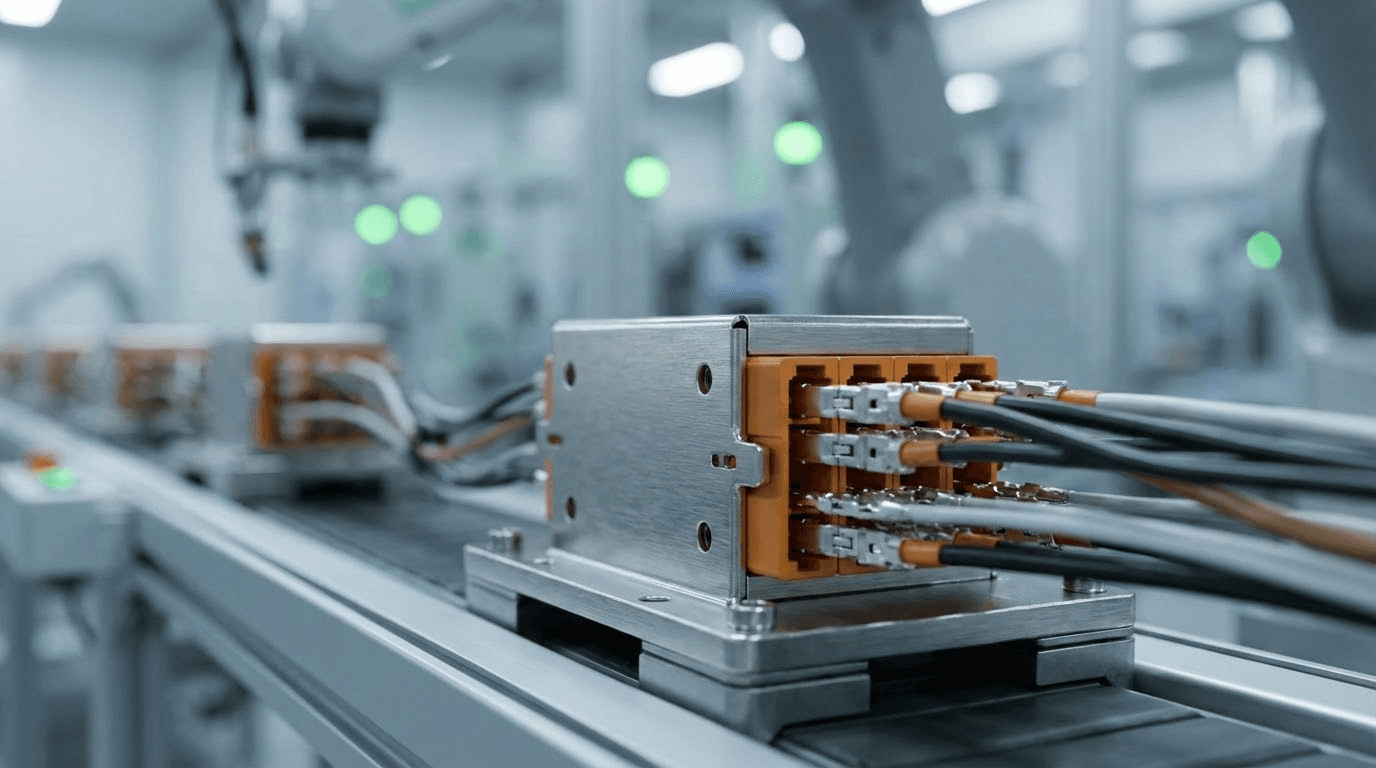
Connector housings protect delicate pins and maintain precise alignment during mating. Any defect in the housing (a crack, excess flash, a chip, or a short shot) can compromise the connector's mechanical integrity and electrical performance. In the connector industry, the plastic housing is as critical as the metal terminals: it provides terminal position assurance, environmental sealing, and the mechanical interface that enables thousands of mating cycles.
These defects are especially challenging to inspect because they occur on complex 3D surfaces with varying colors, textures, and geometries. What looks acceptable from one angle may reveal a critical defect from another. Modern connector housings feature intricate geometries: locking tabs, polarization keys, wire seal interfaces, and terminal retention features, all of which must be defect-free for reliable operation.
Injection molding defects are particularly costly in connector manufacturing. A cracked locking tab means the connector won't stay mated in a vibrating automotive environment. Flash on a mating surface prevents proper sealing. A short shot on a terminal cavity means terminals won't seat correctly. These defects cause field failures, warranty claims, and in safety-critical applications, potential recalls. Overview AI catches them before they ship.
- ✓Cracks can propagate under stress, causing field failures during thermal cycling or vibration
- ✓Flash can prevent proper mating, compromise IP67/IP68 sealing, or cause shorts between terminals
- ✓Chips on keying features can allow improper mating with wrong connector type
- ✓Warpage and dimensional issues cause terminal alignment and mating force problems

Housing Inspection Across Connector Types
Automotive Connectors
Sealed and unsealed housings, TPA clips, CPA features, wire seals, and terminal position assurance elements for harsh environment reliability.
Industrial Circular
M8, M12, and industrial circular connector housings with bayonet locks, keying features, and environmental seals for factory automation.
Board-to-Board
Fine-pitch plastic housings for PCB connectors where dimensional accuracy is critical for proper stacking and mating.
Power Connectors
High-current housings with proper creepage and clearance distances, requiring defect-free insulation surfaces.
Why Overview AI for Housing Inspection
Traditional vision systems struggle with housing inspection because defects can appear anywhere on complex 3D surfaces with varying lighting conditions. Overview AI's deep learning models are trained to understand the complete geometry of good parts, enabling detection of subtle defects that rule-based systems miss.
Our AI learns the expected appearance of every surface, feature, and edge on your connector housings. From injection-molded thermoplastics to high-temperature resins, from matte black housings to white or transparent materials, Overview AI adapts to your specific products. The result is consistent defect detection across all housing variants, colors, and materials with minimal false rejects that waste production time.
3D Surface Understanding
AI that understands complex housing geometries including locking features, keying elements, and terminal cavities
Color & Texture Invariant
Consistent detection across different housing colors (black, white, natural), finishes, and thermoplastic materials (PA, PBT, LCP)
Defect Classification
Automatically classify defects by type for process improvement, root cause analysis, and mold maintenance scheduling
Mold Cavity Tracking
Track defect rates by mold cavity to identify tooling issues before they cause quality escapes
Post-Mold Integration
Inspect immediately after molding or after assembly, catching defects at the optimal point in your process
Full Traceability
Every inspection result archived with images and measurements for IATF 16949 and ISO 13485 compliance
Defects We Detect
Cracks & Fractures
Stress cracks, mold line cracks, and structural fractures
Flash & Burrs
Excess material from molding process at parting lines
Chips & Breakage
Missing material on edges, corners, and locking features
Short Shots
Incomplete fill where material didn't reach all areas of the mold
Sink Marks
Surface depressions from cooling and shrinkage issues
Weld Lines
Visible lines where flow fronts met during molding
Related Articles
Stop Housing Defects at the Source
See how Overview AI inspects complex housing geometries and catches defects that traditional systems miss.
Book a Demo