AI Vision for High-Speed Beverage Can & Bottle Inspection
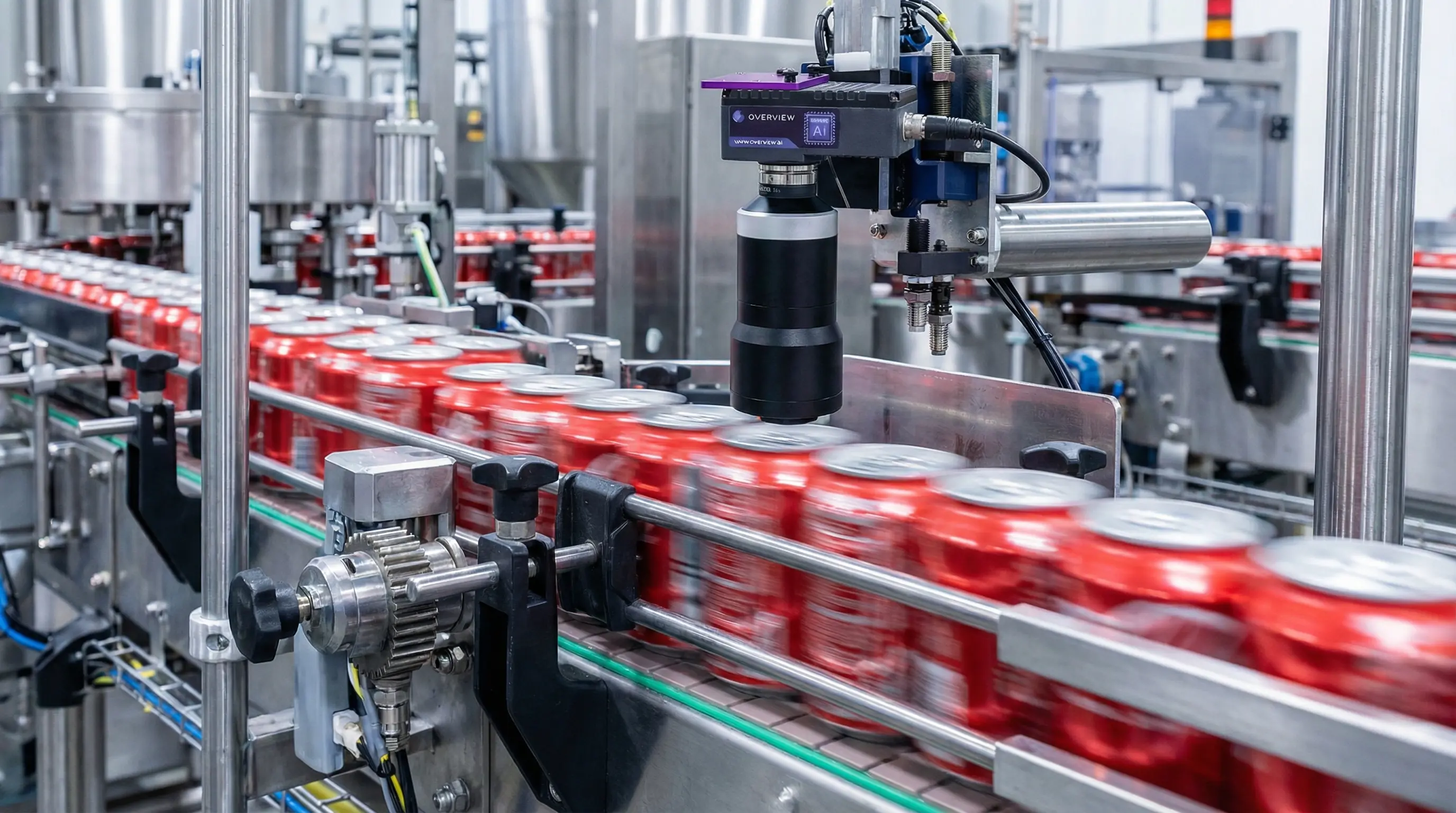
At 2,400 cans per minute, there's no time for second chances. A single contamination incident can force a recall of millions of units, destroy consumer trust built over decades, and cost hundreds of millions in direct expenses. For beverage manufacturers running high-speed lines, AI-powered vision inspection is the only way to achieve 100% quality coverage at modern production speeds.
The Speed Challenge: When Milliseconds Matter
Modern beverage canning lines represent the pinnacle of high-speed manufacturing. The numbers are staggering:
Production Reality
- •2,400 cans per minute on high-speed lines, that's 40 cans every second
- •25ms inspection window per container including image capture and decision
- •1 million+ cans per shift at a typical bottling plant
- •$0.00001 margin for error, every missed defect matters
Traditional inspection methods like periodic sampling, end-of-line spot checks, or slow rule-based vision systems cannot keep pace. Only AI vision, processing at the edge with sub-10ms inference, can deliver 100% inspection at these speeds.
What AI Vision Inspects on Beverage Lines
AI vision systems can be deployed at multiple points throughout the beverage packaging line, each catching different categories of defects:
Container Integrity
Dented cans, scratched bottles, chipped glass, and deformed containers are caught before filling. These defects can cause leaks, safety hazards, or consumer complaints.
Fill Level Verification
Under-fills cheat consumers and invite regulatory action. Over-fills waste product and can cause fobbing. AI verifies fill levels are within spec on every container.
Foreign Object Detection
Insects, glass shards, plastic fragments, and other contaminants are identified before sealing. A single publicized contamination incident can damage a brand for years.
Closure & Seal Quality
Crown caps, pull tabs, and screw caps must be properly applied and sealed. AI detects crooked caps, incomplete seams, and damaged closures that would cause leaks or spoilage.
Label & Print Quality
Labels must be present, correctly positioned, and properly adhered. Date codes, batch numbers, and barcodes are verified for presence and readability.
Why AI Vision Outperforms Traditional Beverage Inspection
Traditional beverage inspection systems rely on simple sensors and rule-based vision that struggle with the realities of high-speed wet environments:
Wet Environment Challenges
Containers exiting rinse stations carry water droplets that look like defects to rule-based systems. AI learns to distinguish between water and actual damage, reducing false rejects by 90%+.
Reflective Surfaces
Shiny aluminum cans and glass bottles create specular reflections that confuse threshold-based vision. AI models see through glare to identify actual defects.
Product Variety
A single line may run dozens of SKUs with different labels, colors, and can sizes. AI handles changeovers without reprogramming, reducing downtime and setup costs.
Implementing AI Inspection on Beverage Lines
Successful beverage line deployment requires cameras designed for the harsh environment and speeds involved:
Typical Inspection Stations
- •Pre-Fill Empty Inspection: Verify container integrity before product is added
- •Post-Fill Level Check: Confirm correct fill level with ±1mm accuracy
- •Closure Verification: Inspect seal quality and cap application
- •Label Inspection: Verify label presence, position, and print quality
- •Final QC: Comprehensive inspection before case packing
The OV20i smart camera ($9,450) with IP67 rating handles the wet, wash-down environments typical of beverage plants. The integrated NVIDIA Xavier NX processor (21 TOPS) delivers sub-10ms edge inference for 2,400+ CPM line speeds. For multi-line facilities, OV Fleet provides real-time yield monitoring across all filling lines from a single dashboard.
The ROI of Beverage AI Inspection
For high-volume beverage operations, AI inspection ROI comes from multiple sources:
Value Analysis (per filling line)
- Avoided recall cost (per incident)$50-500M
- False reject reduction savings$200K-500K/year
- Fill level optimization (reduced overfill)$100K-300K/year
- Labor savings (vs. manual QC)$150K-250K/year
- Typical payback period3-6 months
Common Questions About Beverage AI Inspection
Q: Can AI inspection work with carbonated beverages?
A: Yes. AI models can be trained to account for foam and bubbles when inspecting carbonated products, maintaining fill level accuracy despite the dynamic nature of carbonated liquids.
Q: How does the system handle line changeovers?
A: Product recipes can be stored and recalled instantly. When paired with MES integration via OPC UA or Ethernet/IP, the inspection system automatically loads the correct model when a new production order starts. No manual intervention required.
Q: What about glass bottle inspection?
A: AI vision excels at glass inspection, detecting chips, cracks, and internal contamination that can be difficult to see with traditional methods. Specialized lighting reveals stress fractures invisible under normal conditions.
Protect Your Brand at 2,400 Per Minute
Join the beverage leaders using AI vision to achieve 100% inspection coverage at full production speed. See how Overview can integrate with your filling lines.
Schedule a Demo