AI Vision for Semiconductor Wafer Inspection
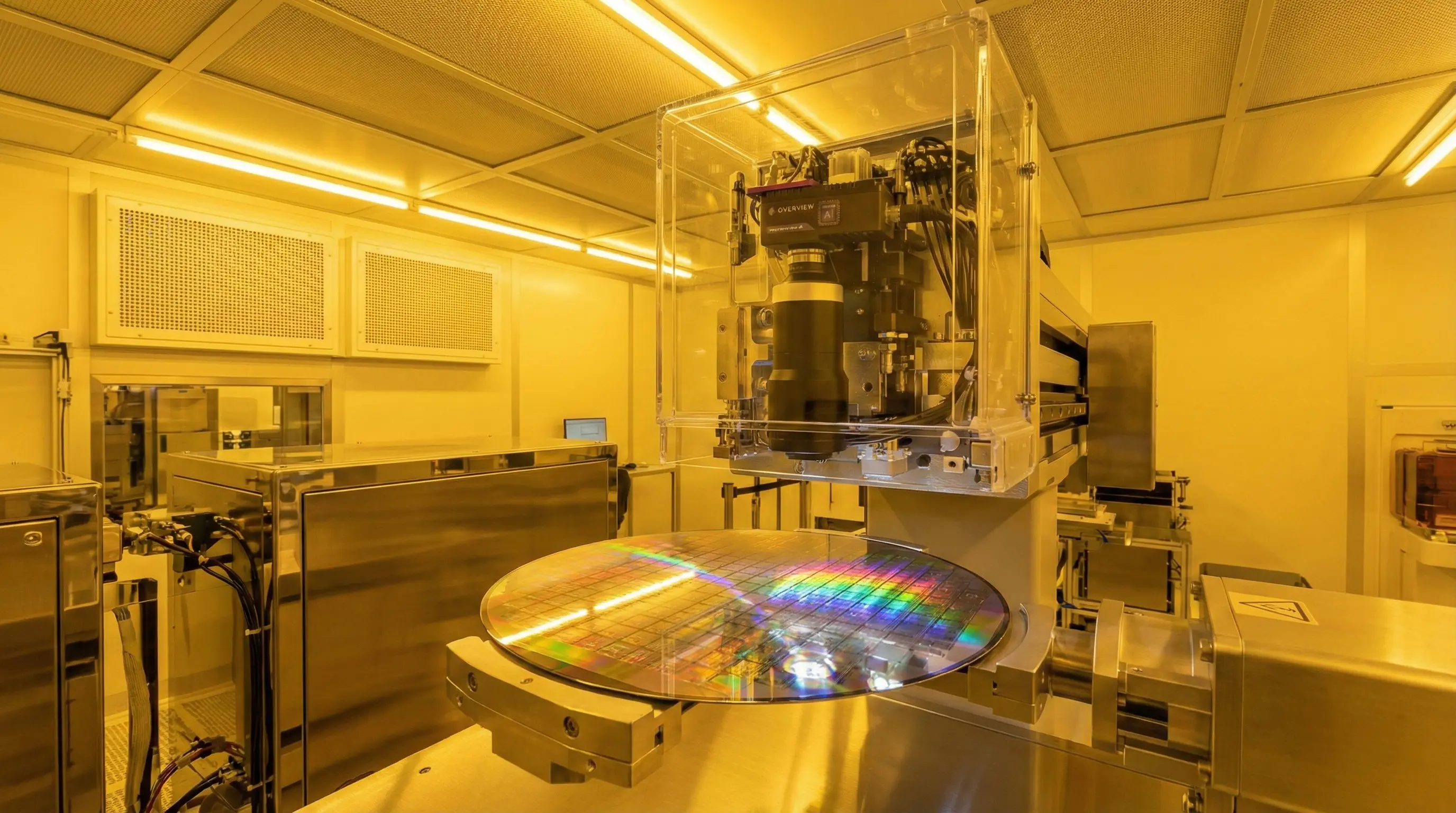
A single semiconductor wafer can carry $50,000 or more in value, and a single particle of contamination smaller than a human hair can destroy dozens of $1,000 chips. For leading semiconductor manufacturers, the difference between 85% and 90% yield translates to billions in revenue. AI-powered vision inspection is becoming the critical edge that separates profitable fabs from struggling ones.
The Billion-Dollar Battle for Yield
Semiconductor economics are brutally unforgiving:
Yield Economics
- •$20B+ fab investment requires maximum yield for payback
- •500+ process steps, each a potential defect source
- •Sub-10nm features, smaller than most inspection capabilities
- •1% yield improvement = $100M+ annual profit for a major fab
Traditional inspection systems use rule-based pattern matching that struggles with the complexity of modern chip designs. A 3nm process creates billions of transistors per chip. Traditional methods simply cannot scale to inspect them all meaningfully.
What AI Inspects in Semiconductor Manufacturing
AI vision addresses inspection challenges at multiple stages of wafer production:
Bare Wafer Inspection
Before processing begins, incoming wafers are inspected for surface defects, particles, scratches, and crystal imperfections. Catching these early prevents wasting expensive processing steps.
In-Process Layer Inspection
After each lithography, deposition, or etching step, AI checks for pattern defects, bridging, voids, and alignment errors. Earlier detection means lower cost to scrap or rework.
Final Wafer Inspection
Before dicing, complete wafers undergo comprehensive inspection to identify defective dies and mark them for exclusion, maximizing good die extraction.
Package & Assembly Inspection
After dicing, individual dies and packaged chips are inspected for wire bond quality, solder ball integrity, package cracks, and marking accuracy.
Types of Defects AI Vision Detects
Modern semiconductor inspection must identify an enormous variety of defect types:
Pattern Defects
- •Bridging (unintended connections)
- •Opens (broken connections)
- •Line width variation
- •Overlay misalignment
Surface Defects
- •Particle contamination
- •Scratches and pits
- •Residue and staining
- •Crystal defects
Why AI Vision Transforms Semiconductor Inspection
Learning Complex Patterns
Modern chip designs are too complex for rule-based inspection. A single GPU contains billions of transistors with intricate, repeating patterns. AI learns what "correct" looks like from examples, then identifies deviations at superhuman speed and accuracy.
Reducing False Positives
Traditional systems generate massive false positive rates, sometimes 90%+ of flagged "defects" are actually acceptable variations. AI dramatically reduces false positives, cutting manual review time and preventing good die disposal.
Defect Classification
Beyond detection, AI classifies defects by type, severity, and probable cause. This enables root cause analysis and process correction, preventing future defects rather than just catching them.
Technical Requirements for Semiconductor AI Inspection
Semiconductor inspection demands extreme performance:
Performance Specifications
- •Resolution: Sub-micron to nanometer scale detection capability
- •Throughput: Full wafer scan in under 60 seconds for high-volume production
- •Sensitivity: Detection of particles and defects smaller than feature size
- •Cleanroom compatibility: Equipment rated for Class 1-10 cleanrooms
Edge AI processing is essential. Sending gigabytes of high-resolution imagery to cloud servers would create unacceptable latency. The OV80i with 70 TOPS NVIDIA Orin NX delivers sub-second inference locally, with no cloud dependency or data leaving the facility.
The ROI of AI Inspection in Semiconductor
Value Analysis (per fab line)
- 1% yield improvement value$100M+/year
- False positive reduction (labor savings)$5-10M/year
- Earlier defect detection (scrap reduction)$20-50M/year
- Faster ramp on new products$10-30M/product
- Typical payback period6-12 months
Implementing AI Inspection in Semiconductor Fabs
Successful implementation requires integration with existing fab systems:
Integration Requirements
- •SECS/GEM connectivity for equipment integration
- •MES integration for lot tracking and defect correlation
- •Yield management system feeds for analytics
- •Recipe management for process-specific inspection profiles
Frequently Asked Questions
Q: Can AI inspection handle new chip designs?
A: Yes. AI models can be trained on new designs using golden samples or CAD-based reference data. Transfer learning allows rapid adaptation to new products based on knowledge from similar designs.
Q: How does AI handle the cleanroom environment?
A: AI processing hardware is designed for cleanroom deployment with proper filtration, materials, and contamination controls. Edge processing minimizes the equipment footprint in the cleanroom.
Q: What resolution is needed for advanced nodes?
A: Advanced nodes (sub-7nm) require electron beam or specialized optical inspection for pattern defects. AI enhances the analysis of data from these systems, dramatically improving defect detection and classification accuracy.
Step-by-Step Wafer & PCB Inspection Walkthroughs
See exactly how Overview.ai detects these defects in production:
Unlock Yield Improvements with AI Vision
Join semiconductor leaders using AI to maximize yield and accelerate time to production. See how Overview's AI platform can integrate with your fab operations.
Schedule a Demo