The Manufacturer's Guide to Artificial Intelligence in Industrial Automation
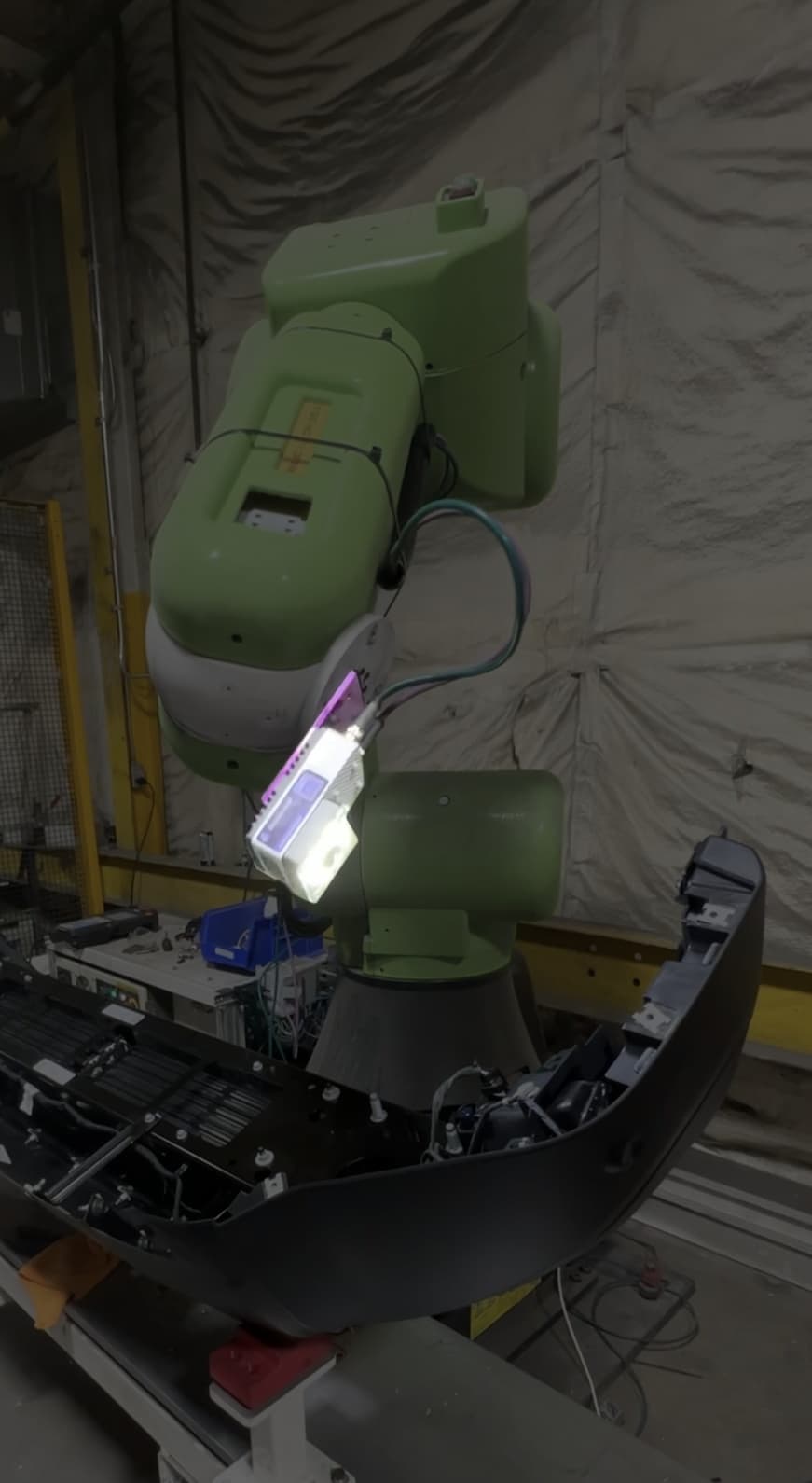
Artificial intelligence is reshaping industrial automation in ways that would have seemed like science fiction a decade ago. From quality inspection to predictive maintenance, AI is enabling manufacturers to achieve levels of efficiency, quality, and flexibility that traditional automation could never deliver.
This guide provides a comprehensive overview of how artificial intelligence is being applied in industrial automation, what benefits it delivers, and how manufacturers can successfully implement AI technologies in their operations.
The Evolution of Industrial Automation
Industrial automation has progressed through distinct phases. The first wave brought mechanization: machines performing repetitive tasks. The second wave introduced programmable automation with PLCs and robots following fixed sequences. The third wave added flexibility through computer-integrated manufacturing.

AI represents the fourth wave: intelligent automation that can perceive, learn, reason, and adapt. Unlike previous generations that required explicit programming for every scenario, AI systems learn from data and improve from experience. This fundamental shift unlocks automation for tasks that were previously too complex or variable for traditional approaches.
Key Applications of AI in Industrial Automation
Visual Quality Inspection
Perhaps the most mature application of AI in manufacturing is visual inspection. AI-powered vision systems analyze images of products to detect defects, verify assembly, and ensure quality standards are met. Unlike traditional machine vision that requires explicit programming of every defect type, AI learns what defects look like from examples.
Modern AI inspection systems can detect subtle defects that human inspectors miss, operate at speeds impossible for manual inspection, and maintain consistent performance 24/7. They handle natural product variation that confounds rule-based systems, finding true defects while ignoring acceptable variation.
Predictive Maintenance
AI algorithms analyze sensor data from machines to predict failures before they occur. By identifying subtle patterns in vibration, temperature, power consumption, and other signals, predictive maintenance systems alert operators to developing problems and recommend optimal maintenance timing.
This shifts maintenance from reactive (fixing breakdowns) or preventive (fixed schedules) to truly predictive, performing maintenance exactly when needed. The result is reduced unplanned downtime, lower maintenance costs, and extended equipment life.
Process Optimization
AI can optimize complex manufacturing processes by analyzing relationships between process parameters and outcomes. Machine learning models identify the optimal settings for temperature, pressure, speed, and other variables to maximize quality and yield while minimizing energy and material consumption.
Robotic Guidance
AI vision enables robots to see and adapt to their environment. Instead of requiring parts to be precisely positioned in fixtures, AI-guided robots can locate parts, recognize their orientation, and adjust their movements accordingly. This enables flexible automation for high-mix, low-volume production. This is transforming industries like automotive manufacturing.
Supply Chain Intelligence
AI analyzes patterns in demand, supply, and logistics to optimize inventory levels, predict disruptions, and automate replenishment decisions. Machine learning models can forecast demand more accurately than traditional statistical methods by incorporating many more variables and learning from outcomes.
Benefits of AI in Industrial Automation
Quality Improvement
AI inspection catches defects at rates exceeding 99%, compared to 80-90% for human inspectors, dramatically reducing escapes to customers. See how AI is transforming quality control.
Labor Efficiency
AI automates tasks requiring judgment that previously required skilled workers, addressing labor shortages and freeing staff for higher-value work.
Reduced Downtime
Predictive maintenance and quality insights prevent unplanned stops and reduce time spent on rework and troubleshooting.
Data-Driven Decisions
AI systems generate rich data about products and processes, enabling continuous improvement based on evidence rather than intuition.
Implementing AI in Your Factory
Start with a Clear Problem
Successful AI projects begin with well-defined problems. Rather than asking "How can we use AI?", ask "What specific challenge would benefit from automation that can learn and adapt?" Good candidates include inspection tasks that are difficult to program with rules, predictions that require pattern recognition in complex data, and decisions that benefit from analyzing more information than humans can process.

Evaluate Build vs. Buy
While it's possible to build AI systems from scratch using open-source tools, most manufacturers are better served by purpose-built solutions. Industrial AI platforms combine the algorithms, hardware, and software into systems designed for factory environments. This dramatically reduces implementation time, risk, and required expertise. Explore our AI vision solutions.
Plan for Data
AI systems learn from data, so data collection and management is essential. For visual inspection, this means capturing representative images of good products and various defect types. For predictive maintenance, it requires sensor data correlated with equipment condition. Ensure you have processes to collect, label, and store the data your AI systems will need.
Start Small, Scale Fast
Begin with a pilot project on a single line or application. This limits risk while you learn what works in your environment. Once the pilot proves successful, you'll have the knowledge and confidence to deploy more broadly. Choose an initial project with high visibility and clear success metrics to build organizational support for expansion.
Overcoming Implementation Challenges
Common Challenges and Solutions:
- Skill Gaps: Choose platforms designed for operations staff, not data scientists. Modern AI tools don't require programming expertise.
- Integration Complexity: Select systems with native support for industrial protocols and proven integration track records.
- Data Quality: Invest in proper data collection upfront. AI is only as good as the data it learns from.
- Change Management: Involve operators early. AI should augment their capabilities, not threaten their roles.
- Unrealistic Expectations: AI is powerful but not magic. Set clear, measurable objectives and celebrate incremental progress.
The Future of AI in Manufacturing
AI capabilities continue to advance rapidly. Today's systems require training data for every task; tomorrow's may learn from small amounts of data or even generalize across tasks. Edge computing power continues to increase while costs decrease. New sensor technologies expand what AI can perceive.
Manufacturers who develop AI competencies now will be better positioned to adopt these advances. The gap between AI leaders and laggards is likely to widen, making early adoption increasingly important for competitiveness.
Getting Started
For most manufacturers, visual quality inspection is the ideal entry point for AI in industrial automation. The technology is mature, the ROI is clear, and modern solutions are designed for easy deployment. A single AI inspection system can provide concrete experience with AI technology while delivering immediate value.
Companies like Overview.ai offer integrated AI vision systems specifically designed for manufacturing environments. These all-in-one solutions eliminate the complexity of piecing together components and provide a clear path from first inspection to factory-wide deployment.
Ready to Bring AI to Your Factory?
See how artificial intelligence can transform your industrial automation with a personalized demonstration of AI inspection technology.
Request a Demo