How to Build a Business Case for AI Vision Inspection
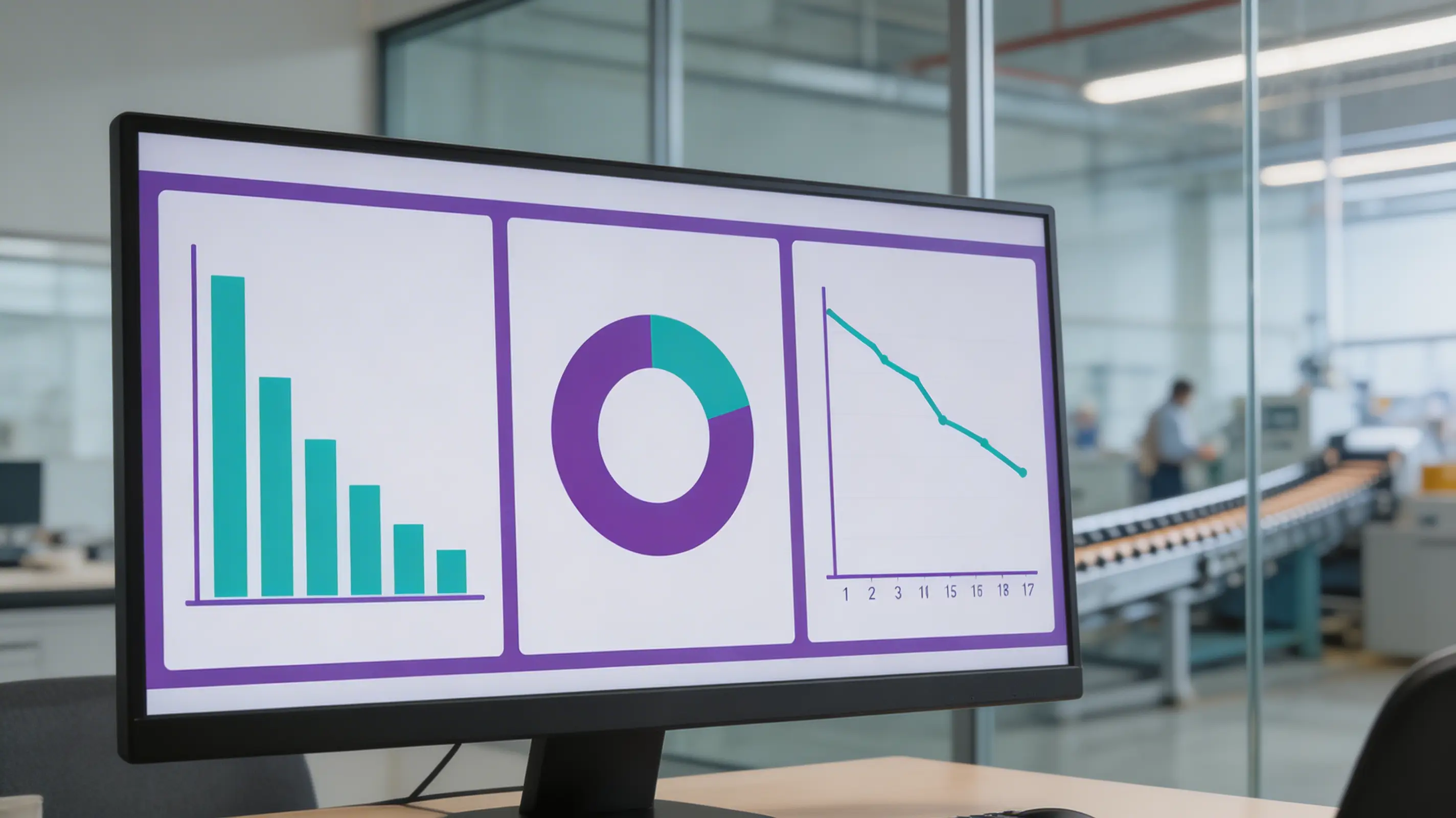
You know AI vision inspection can transform your quality operation, but your CFO needs numbers, your VP of Ops needs a timeline, and your plant manager needs to know it won't disrupt the line. This guide walks you through building a business case that gets approved.
Step 1: Quantify Your Current Quality Costs
Before you can show what AI saves, you need to know what poor quality costs today. Gather the following data for the target inspection point:
Scrap cost
Units scrapped due to defects that escaped inspection × cost per unit
Rework cost
Labour hours spent reworking defective units × loaded labour rate
Customer returns
Field returns, warranty claims, and penalties attributable to the defect type
Manual inspection labour
FTEs dedicated to visual inspection at this station × annual loaded cost
Downtime from escapes
Line stops caused by defective parts reaching downstream operations
Sorting & containment
Cost of sorting suspect lots after a quality escape is discovered
Pro tip: Even a rough estimate is better than nothing. Most manufacturers undercount quality costs by 40–60% because they don't track downstream impacts like line stops and sort campaigns. Ask your quality, operations, and finance teams for their numbers, the range itself is informative.
Step 2: Model the AI Inspection Investment
An AI vision inspection system typically includes hardware (cameras, lighting, edge compute) and software (AI platform, model training, integration). Here's a typical cost structure:
| Cost Category | Typical Range (per station) | Notes |
|---|---|---|
| Camera + optics | $3K–$15K | Depends on resolution and lens requirements |
| Lighting | $500–$3K | Application-specific (diffuse, backlit, structured) |
| Edge compute | $2K–$8K | GPU-accelerated inference node |
| AI platform license | $1K–$5K/mo | Includes model training, updates, cloud analytics |
| Integration & setup | $5K–$20K | PLC integration, mounting, calibration |
All-in platforms like Overview AI bundle camera, compute, and software into a single system: simplifying procurement and reducing total cost of ownership.
Step 3: Calculate ROI
Use this simplified ROI formula to get started:
ROI = (Annual Quality Cost Savings − Annual AI System Cost) ÷ Annual AI System Cost × 100%
Most manufacturers see 3–10× ROI within the first 12 months.
Be conservative with your estimates, it's better to under-promise and over-deliver. Common savings levers include: reduced scrap (20–50% improvement), eliminated manual inspection labour (1–3 FTEs), reduced customer returns (30–70% improvement), and faster root cause analysis (days → hours).
Step 4: Design the Pilot
A well-designed pilot de-risks the investment and generates the data you need for full-scale approval. Here's the blueprint:
Choose one high-impact inspection point
Pick the station with the highest defect escape rate, most manual labour, or most expensive rework. One station, one defect type.
Define success metrics upfront
Agree on measurable targets: detection rate (>99%), false positive rate (<1%), cycle time impact, and payback period.
Run parallel for 2–4 weeks
Deploy AI inspection alongside existing manual or AOI inspection. Compare results side-by-side to prove accuracy before cutting over.
Document everything
Log every defect caught, every escape prevented, every false positive, and every hour of manual inspection eliminated. This data builds the case for scaling.
Step 5: Align Stakeholders
Different stakeholders care about different things. Tailor your message:
CFO / Finance
ROI timeline, payback period, capital vs. opex structure, total cost of ownership
VP Operations
Throughput impact, integration complexity, line downtime during deployment, scalability
Quality Director
Detection accuracy, false positive rates, traceability, audit compliance, escape rate reduction
Plant Manager
Disruption to current operations, operator training requirements, maintenance burden
Business Case Template Outline
- 1. Executive Summary: One paragraph: problem, solution, expected ROI
- 2. Current State: Quality costs, escape rates, manual inspection limitations
- 3. Proposed Solution: AI visual inspection overview, hardware/software scope
- 4. Financial Analysis: Investment cost, annual savings, ROI, payback period
- 5. Pilot Plan: Station selection, timeline, success metrics, resources needed
- 6. Risk Mitigation: Parallel run plan, vendor support, rollback strategy
- 7. Scale-Up Roadmap: Path from 1 station → 10 stations → global deployment
Related Reading
Need Help Building Your Business Case?
Our team works with quality and operations leaders every day to build ROI models and design pilot programs. Let's build your business case together.
Talk to Our Team