Industrial Camera AI Inspection: Complete Hardware & Software Guide
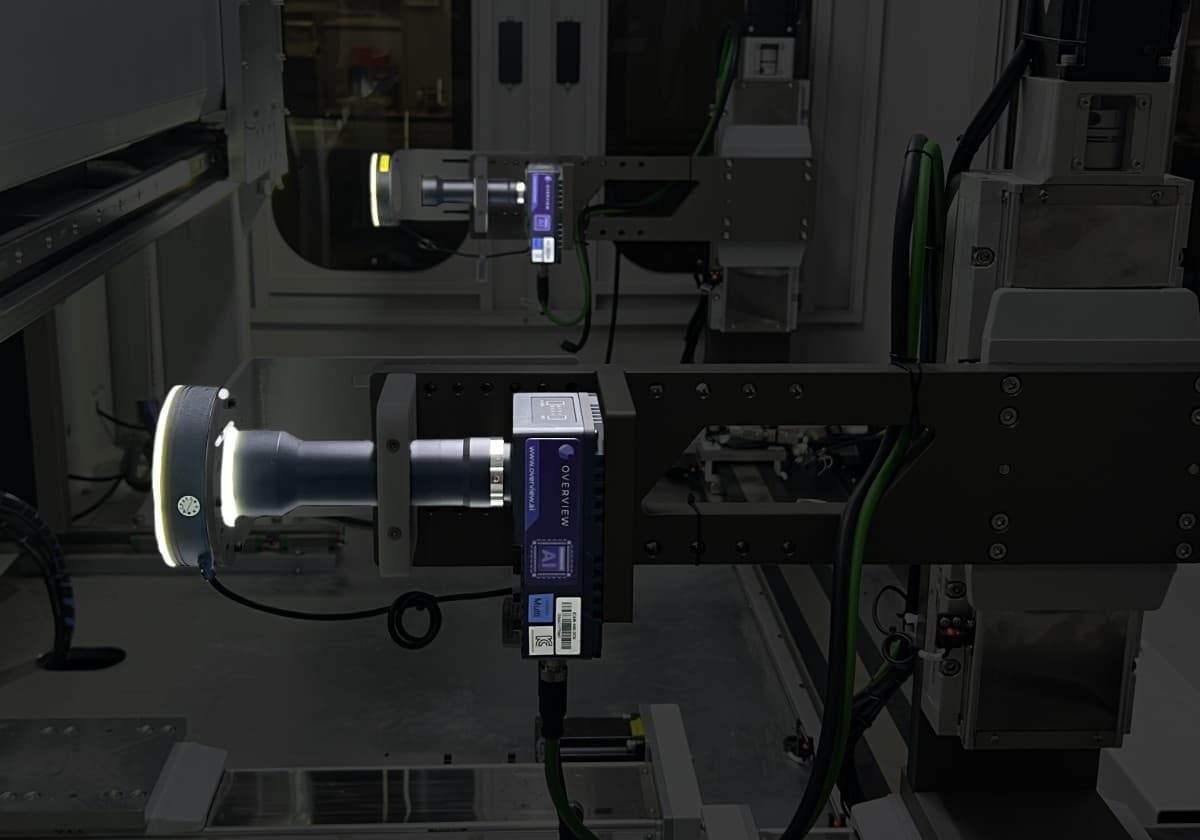
Industrial camera AI inspection represents the convergence of two powerful technologies: ruggedized imaging hardware built for factory environments and artificial intelligence capable of human-like visual understanding. Together, they enable automated quality inspection that was impossible just a few years ago.
This guide covers everything you need to understand about industrial camera AI inspection, from the hardware components to the AI software platforms to the integrated solutions that are simplifying deployment.
Components of an Industrial Camera AI Inspection System
1. Industrial Cameras
Industrial cameras differ from consumer cameras in critical ways:
- Global Shutter: Captures entire frame at once, essential for imaging moving parts
- Industrial Interfaces: GigE Vision, USB3 Vision, CoaXPress for reliable data transfer
- Rugged Construction: Built to handle vibration, temperature extremes, and dust
- Precise Triggering: Synchronize captures with production line events
- Consistent Performance: Same image quality unit-to-unit, year-to-year
2. Lighting Systems
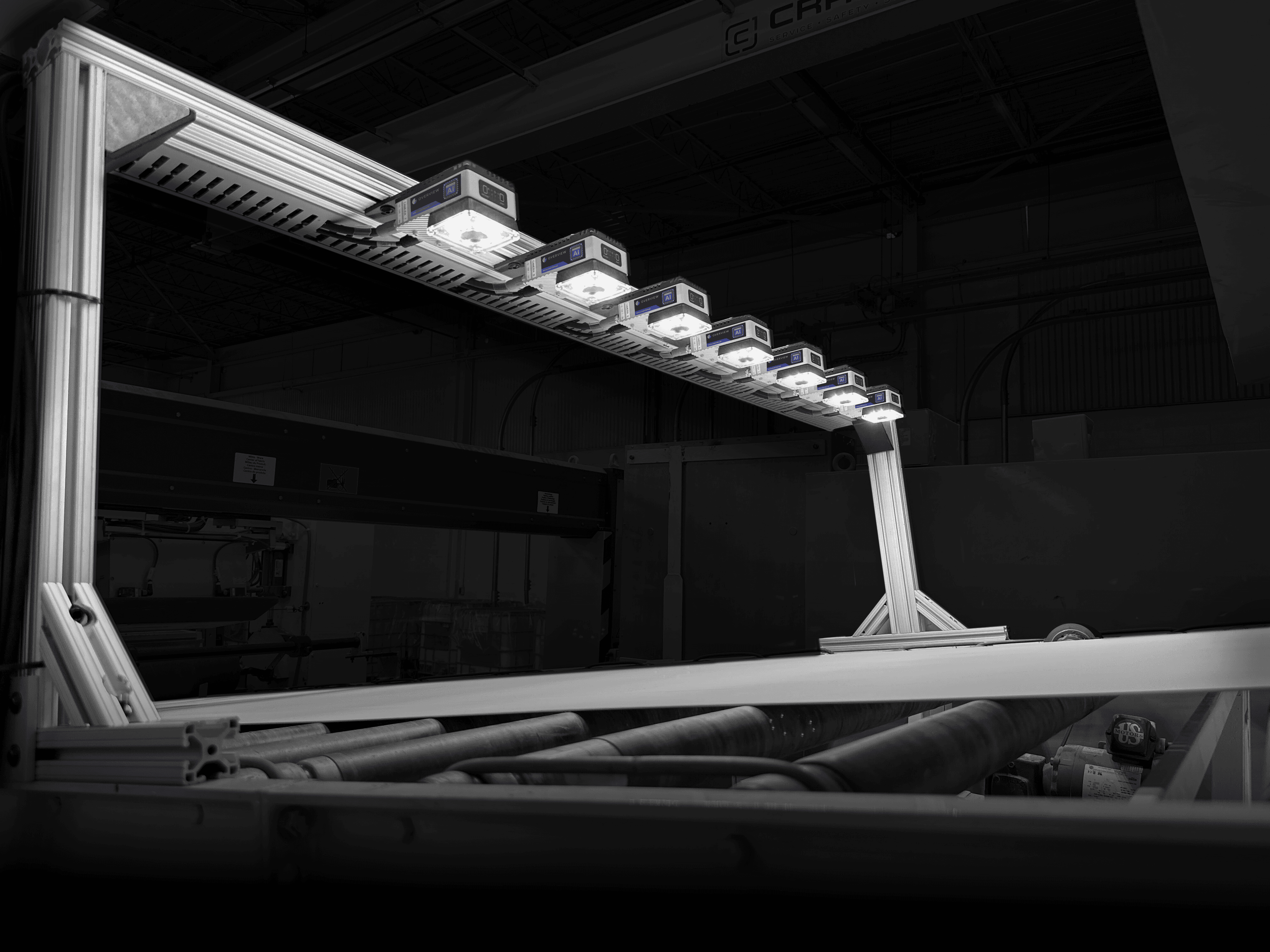
Proper lighting is arguably more important than the camera itself. Industrial LED lighting provides the consistent, controllable illumination that AI inspection requires:
- Ring Lights: Even, shadow-free illumination for flat surfaces
- Bar Lights: Directional lighting for emphasizing surface features
- Dome Lights: Diffuse, omnidirectional light that minimizes reflections
- Backlights: Silhouette imaging for edge detection and hole inspection
- Strobed/Pulsed: High-intensity bursts for fast-moving objects
3. Processing Hardware
AI inference requires significant computing power. Options include:
- Industrial PCs with GPU: Standard approach using NVIDIA GPUs for AI acceleration
- Edge AI Devices: Compact devices like NVIDIA Jetson for space-constrained installations
- Integrated Systems: All-in-one solutions like Overview.ai with built-in processing
4. AI Software Platform
The software handles image acquisition, AI model training, inference, and result communication. Key capabilities include:
- • Intuitive training interface (no coding required)
- • Real-time inference at production speeds
- • Result visualization and annotation
- • PLC and MES integration
- • Image and result logging for traceability
The Integration Challenge
Historically, building an industrial camera AI inspection system meant selecting and integrating components from multiple vendors:
- Camera from Vendor A
- Lighting from Vendor B
- GPU computer from Vendor C
- AI software from Vendor D
- Enclosure from Vendor E
This approach requires significant systems integration expertise, creates finger-pointing when issues arise, and often results in suboptimal performance due to component mismatches.
Overview.ai: The Integrated Solution
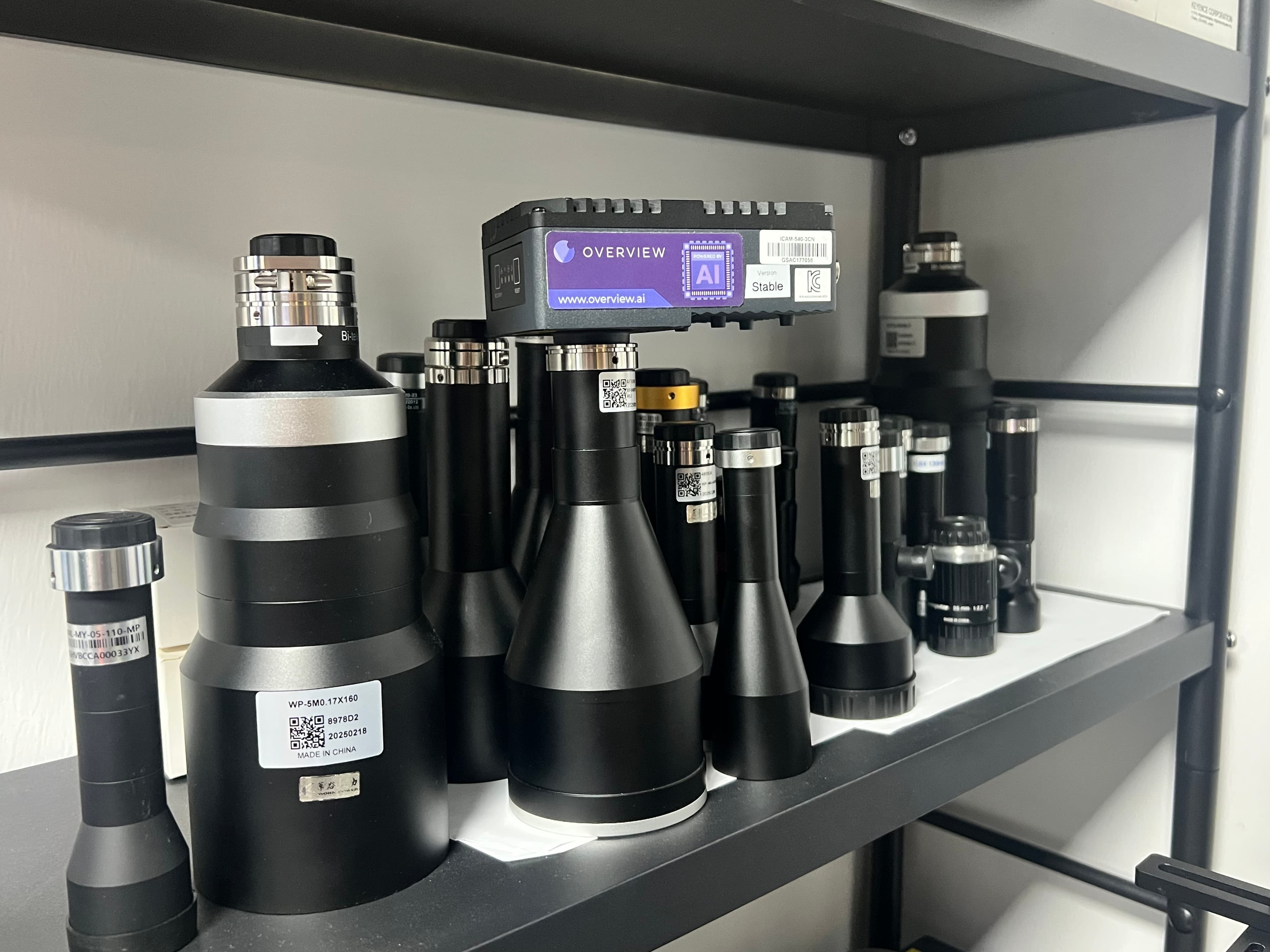
Overview.ai has simplified industrial camera AI inspection by integrating all components into a single, purpose-built system. Their OV20i and OV80i eliminate the integration challenge entirely:
Overview.ai Integrated System Features:
- High-Resolution Camera: Industrial-grade sensor optimized for inspection
- Integrated Lighting: Multiple lighting options built into the unit, including photometric stereo
- NVIDIA GPU Processing: Edge AI computing built in. No separate PC required.
- Proprietary AI Software: Train models in under an hour with minimal samples
- IP65 Enclosure: Ready for harsh factory environments out of the box
This integrated approach dramatically reduces deployment time, eliminates vendor coordination headaches, and ensures optimal performance since all components are designed to work together.
Choosing the Right Approach
When to Build a Component System
- • Very specialized requirements that off-the-shelf solutions can't meet
- • You have in-house vision engineering expertise
- • Integration with existing vision infrastructure
- • Budget constraints requiring repurposing existing equipment
When to Use an Integrated System (Overview.ai)
- • You want to be inspecting parts in days, not months
- • Limited in-house vision expertise
- • Single-vendor support is important
- • Standard inspection applications (defect detection, assembly verification)
- • Need proven, production-ready solution
For most manufacturers, the integrated approach offers the fastest path to value with the lowest risk. Overview.ai systems are deployed in Fortune 500 facilities worldwide, proving their capability at scale.
Key Specifications to Consider
| Specification | Consideration |
|---|---|
| Resolution | 3-5 pixels per smallest defect to detect |
| Frame Rate | Match to parts per minute × images per part |
| Field of View | Must capture entire inspection area |
| Working Distance | Physical constraints of installation |
| AI Training Time | Hours (Overview.ai) vs. days/weeks (others) |
| Inference Time | Must be faster than part cycle time |
| IP Rating | IP65+ for washdown, dusty environments |
Implementation Tips
- Define Success Criteria: What defects must be caught? What false positive rate is acceptable?
- Prototype Lighting: Test different lighting approaches before committing to hardware.
- Collect Sample Parts: Gather examples of good parts and all known defect types.
- Plan Integration: How will results reach your PLC? What triggers inspection?
- Start Small: Pilot on one application before broad rollout.
Ready to Deploy Industrial Camera AI Inspection?
Skip the integration headaches. See how Overview.ai's all-in-one systems can be inspecting your parts in days.
Get Started