BGA Connector with Voiding in the Solder Balls: A Complete Visual Inspection Guide

"BGA solder ball voiding compromises joint reliability and is notoriously difficult to inspect manually. AI-powered visual inspection delivers consistent, objective void detection at line speed—catching defects that rule-based systems and fatigued operators miss."
The Problem: Why BGA Solder Ball Voids Demand Precision Detection
Ball Grid Array (BGA) connectors are the backbone of modern high-density electronics, but voiding in solder balls remains one of the most challenging defects to detect. These internal gas pockets form during reflow when flux volatiles become trapped, compromising both electrical conductivity and long-term joint reliability.
Common Defects Associated with BGA Solder Ball Voiding:
- Excessive void percentage — Voids exceeding IPC-7095 thresholds (typically >25% of ball diameter) that reduce mechanical strength
- Void clustering — Multiple small voids concentrated in a single ball creating stress risers
- Planar voiding — Flat, disc-shaped voids at the pad interface causing poor wetting
- Head-in-pillow defects — Partial collapse where voiding combines with insufficient reflow
- Void migration — Voids positioned at the ball neck creating crack initiation points
- Non-wet open conditions — Severe voiding masking underlying solder joint failures
Manual X-ray inspection of BGA voids is notoriously inconsistent—operators must evaluate hundreds of solder balls per component while calculating void percentages mentally. Inspector fatigue sets in quickly, and subjective judgment leads to escaped defects during high-volume production runs.
The Solution: Machine Vision and Deep Learning for Void Detection
Traditional automated X-ray inspection (AXI) relies on rigid threshold algorithms that struggle with the natural variability in solder ball formation. Deep learning models, however, learn to recognize void patterns the way experienced inspectors do—but without fatigue, bias, or speed limitations.
Overview.ai's approach brings consistent, objective inspection at line speed to BGA void analysis. By training on your actual production data, the system adapts to your specific connector types, reflow profiles, and quality standards—catching defects that rule-based systems miss.
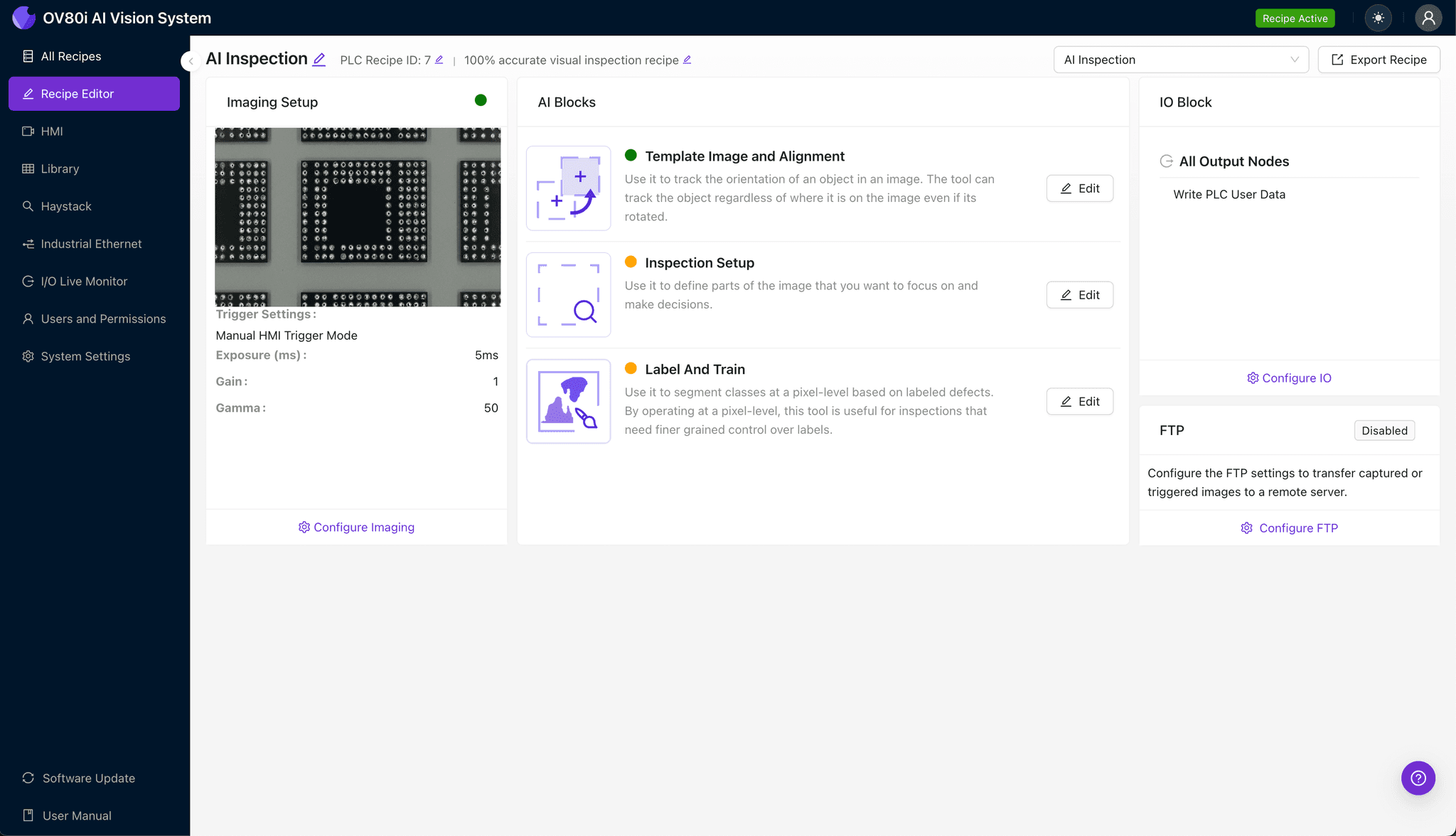
Step 1: Imaging Setup
Position your BGA connector sample with known voiding under the inspection camera, ensuring the solder ball array is clearly visible in the field of view. For void detection, proper lighting angle is critical to maximize contrast within the translucent solder material.
Click "Configure Imaging" to access the Camera Settings panel. Adjust exposure to prevent solder ball highlights from saturating, and fine-tune gain to reveal subtle void shadows within the balls.
Click "Save" to lock in your optimized imaging parameters.
Step 2: Image Alignment
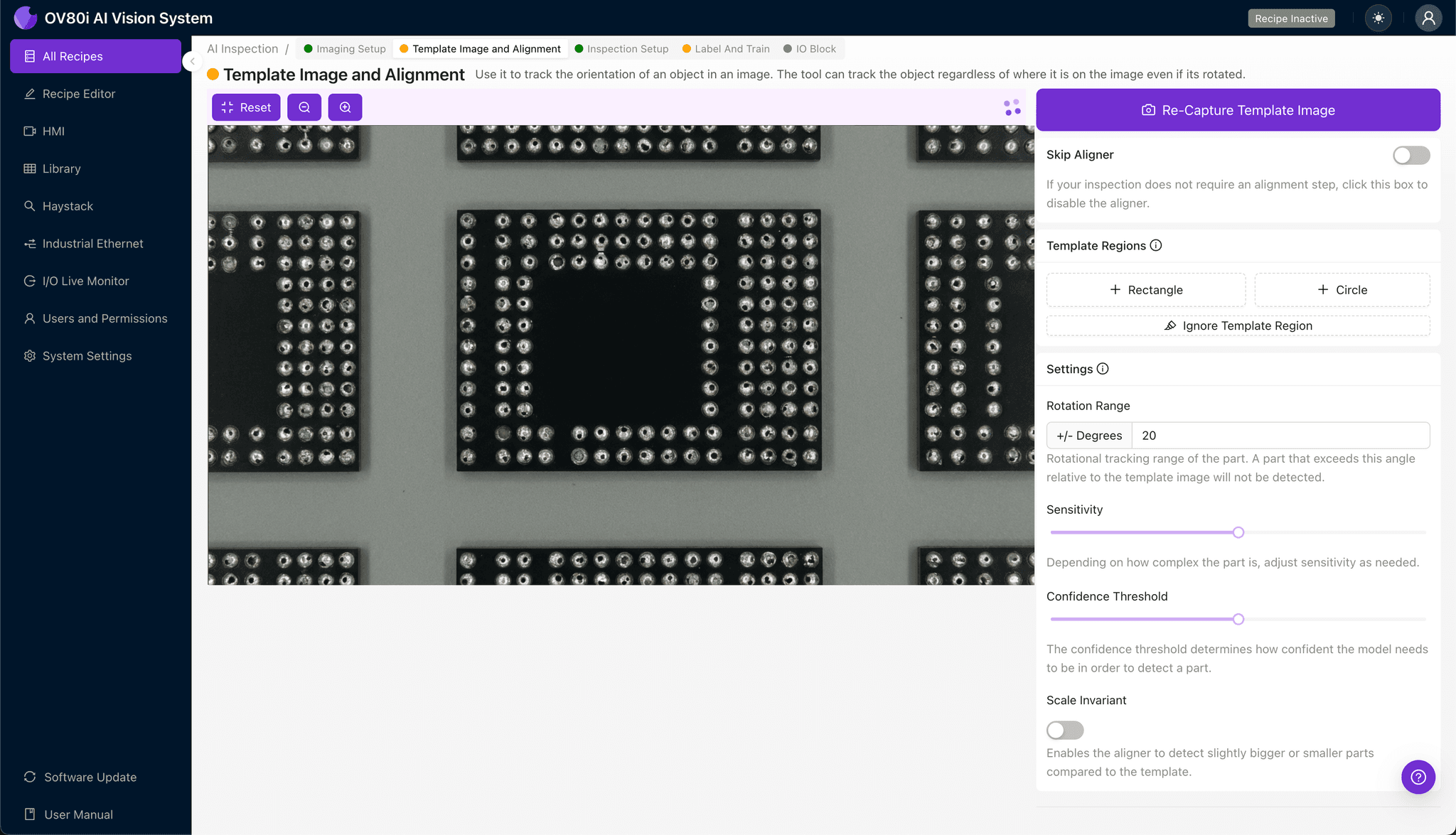
Navigate to the "Template Image" tab and capture a reference image of a properly positioned BGA connector. This template ensures consistent alignment even when connectors arrive at slightly different orientations on the line.
Click "+ Rectangle" and draw a region around the main connector body, encompassing the full solder ball array. Set the "Rotation Range" to 20 degrees to accommodate typical placement variation from upstream handling equipment.
Step 3: Inspection Region Selection
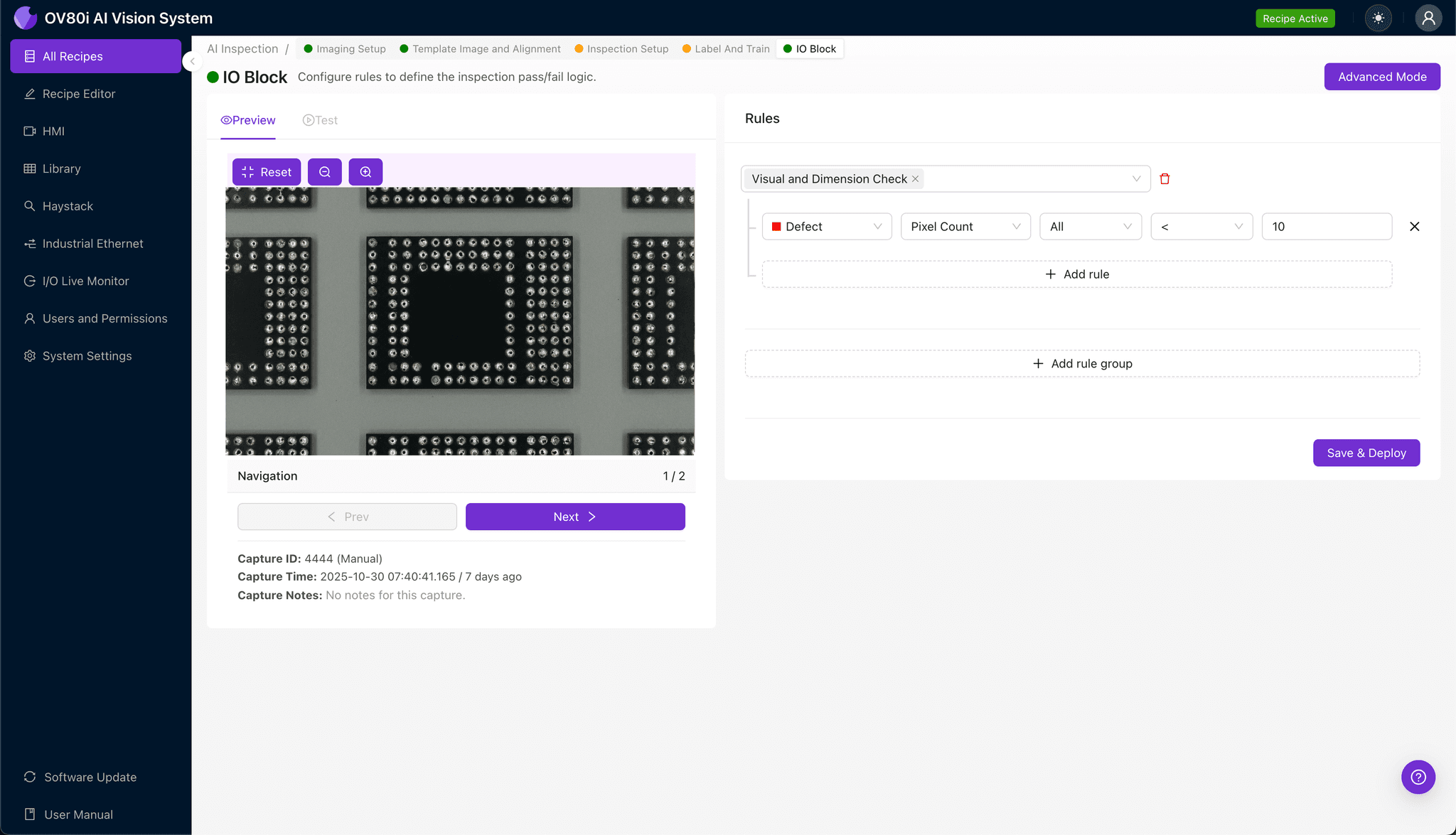
Navigate to "Inspection Setup" to define where the system should look for defects. Rename your "Inspection Types" with clear, descriptive labels such as "Corner_Ball_Voids," "Center_Array_Voids," or "Peripheral_Row_Voids."
Click "+ Add Inspection Region" for each critical zone. Resize the yellow bounding box precisely over high-risk areas—corner balls and thermal relief regions typically show higher void rates.
Click "Save" after defining all inspection zones.
Step 4: Labeling Data
The human-in-the-loop labeling process is where your team's expertise trains the AI model. Review captured images and classify each as Good (acceptable void levels) or Bad (excessive voiding, clustering, or critical positioning).
Include representative samples across your full production range—different lot codes, reflow temperatures, and paste batches. Deliberately add known failure modes from your defect library to ensure the model recognizes historical escape patterns.
Step 5: Creating Rules
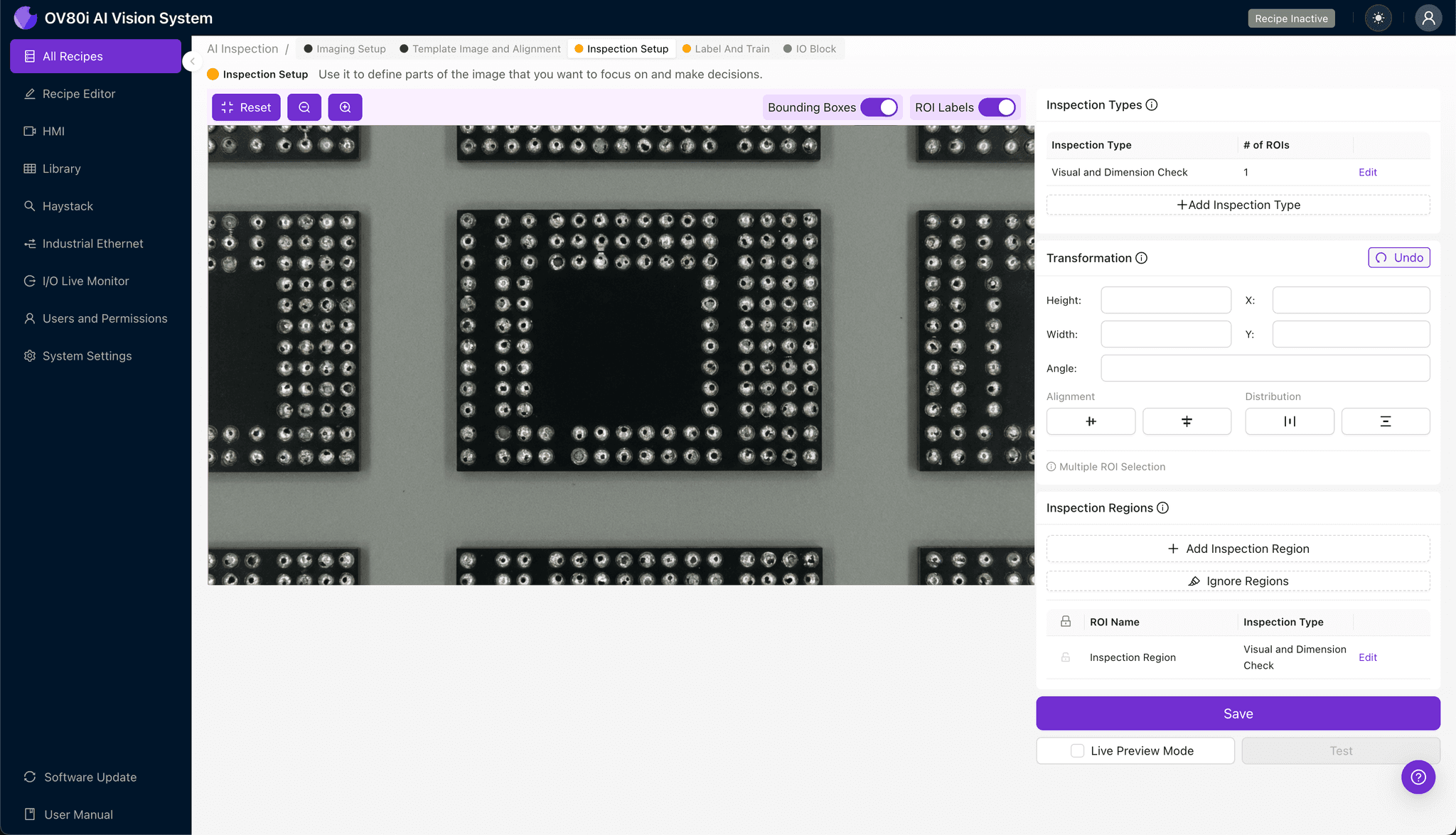
With labeled data in place, configure your pass/fail logic based on the Inspection Types you defined. Set thresholds that align with your quality standards—for instance, flagging any component where more than two balls show void percentages above 20%.
These rules gate automated acceptance on the line, instantly diverting suspect BGAs for secondary review while allowing conforming product to flow through uninterrupted.

Key Outcomes & ROI
Implementing AI-powered void inspection delivers measurable business impact:
- Reduced scrap rates — Catch voiding defects before downstream assembly, eliminating costly rework on populated boards
- Higher throughput — Inspect 100% of production at line speed without creating bottlenecks
- Compliance and traceability — Automatically document void measurements for IPC-7095 compliance and customer audit requirements
- Process improvement insights — Identify void trends correlated with paste lots, reflow profiles, or specific placement equipment
Conclusion
BGA solder ball voiding doesn't have to be a quality control guessing game. With Overview.ai's deep learning inspection platform, manufacturers gain the consistency of automated detection combined with the adaptability of human expertise—ensuring every connector meets specification before it ships.
Eliminate BGA Void Defects Today
Stop relying on inconsistent manual X-ray inspection. Deploy Overview.ai to catch solder ball voids instantly with AI precision.