Detecting Black Pad Syndrome (ENIG Defect) in Surface Mount Pads: A Complete Visual Inspection Guide
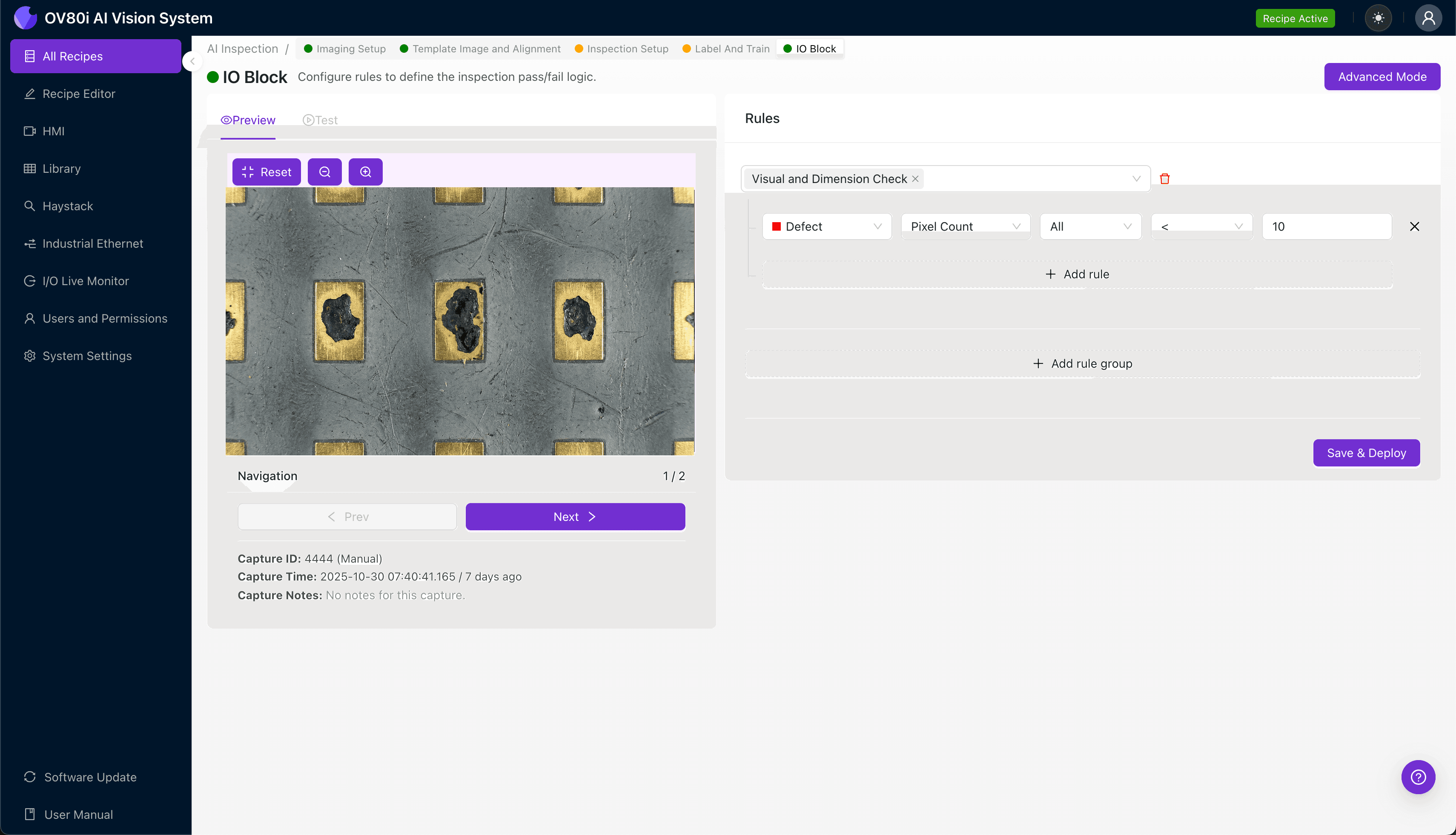
"Black pad syndrome is one of the most insidious ENIG defects in electronics manufacturing, often escaping detection until catastrophic field failures occur. Overview.ai's deep learning-powered visual inspection catches these defects consistently at production speed—protecting both your customers and your bottom line."
The Problem: Why Black Pad Syndrome Threatens PCB Reliability
Black pad syndrome remains one of the most insidious defects in electronics manufacturing, often escaping detection until catastrophic field failures occur. This electroless nickel immersion gold (ENIG) surface finish defect compromises solder joint integrity and can render entire assemblies worthless.
Common Defects Found in ENIG/Black Pad Affected Surface Mount Pads:
- Phosphorus-rich nickel layer – Excessive phosphorus concentration creating a brittle, corroded interface beneath the gold layer
- Mud-crack fracture patterns – Characteristic cracking visible on the nickel surface after gold stripping or cross-sectioning
- Hyper-corrosion zones – Localized areas of severe nickel oxidation causing complete solder joint separation
- Gold porosity and voids – Insufficient gold coverage allowing oxidation of the underlying nickel layer
- Intermetallic compound (IMC) deficiencies – Poor or absent nickel-tin intermetallic formation during reflow
- Solder dewetting and non-wetting – Visible solder pullback or refusal to bond on affected pads
Human inspectors struggle to identify early-stage black pad syndrome because the visual indicators are often microscopic and subtle. Inspector fatigue during high-volume production runs further compounds the problem, as consistency drops dramatically after the first few hours of a shift.
The Solution: Machine Vision and Deep Learning for ENIG Defect Detection
Traditional automated optical inspection (AOI) systems rely on rule-based algorithms that often miss the nuanced visual signatures of black pad syndrome. Deep learning changes the game by training neural networks on thousands of known-good and known-bad examples, enabling the system to recognize complex defect patterns that defy simple threshold-based rules.
Overview.ai's approach delivers consistent, objective inspection at full line speed—eliminating the variability inherent in manual quality control. The OV80i platform continuously analyzes every unit without fatigue, flagging suspicious pads before they become costly field returns.
Step 1: Imaging Setup
Position the surface mount pad assembly under the OV80i's high-resolution camera system, ensuring the ENIG-finished pads are clearly visible within the field of view. Proper lighting is critical for revealing the subtle surface anomalies associated with black pad syndrome.
Click "Configure Imaging" to access the Camera Settings panel. Adjust exposure to highlight surface texture variations and fine-tune gain to capture the contrast differences between healthy gold surfaces and compromised areas.
Click "Save" to lock in your optimized imaging parameters for consistent capture across production runs.
Step 2: Image Alignment
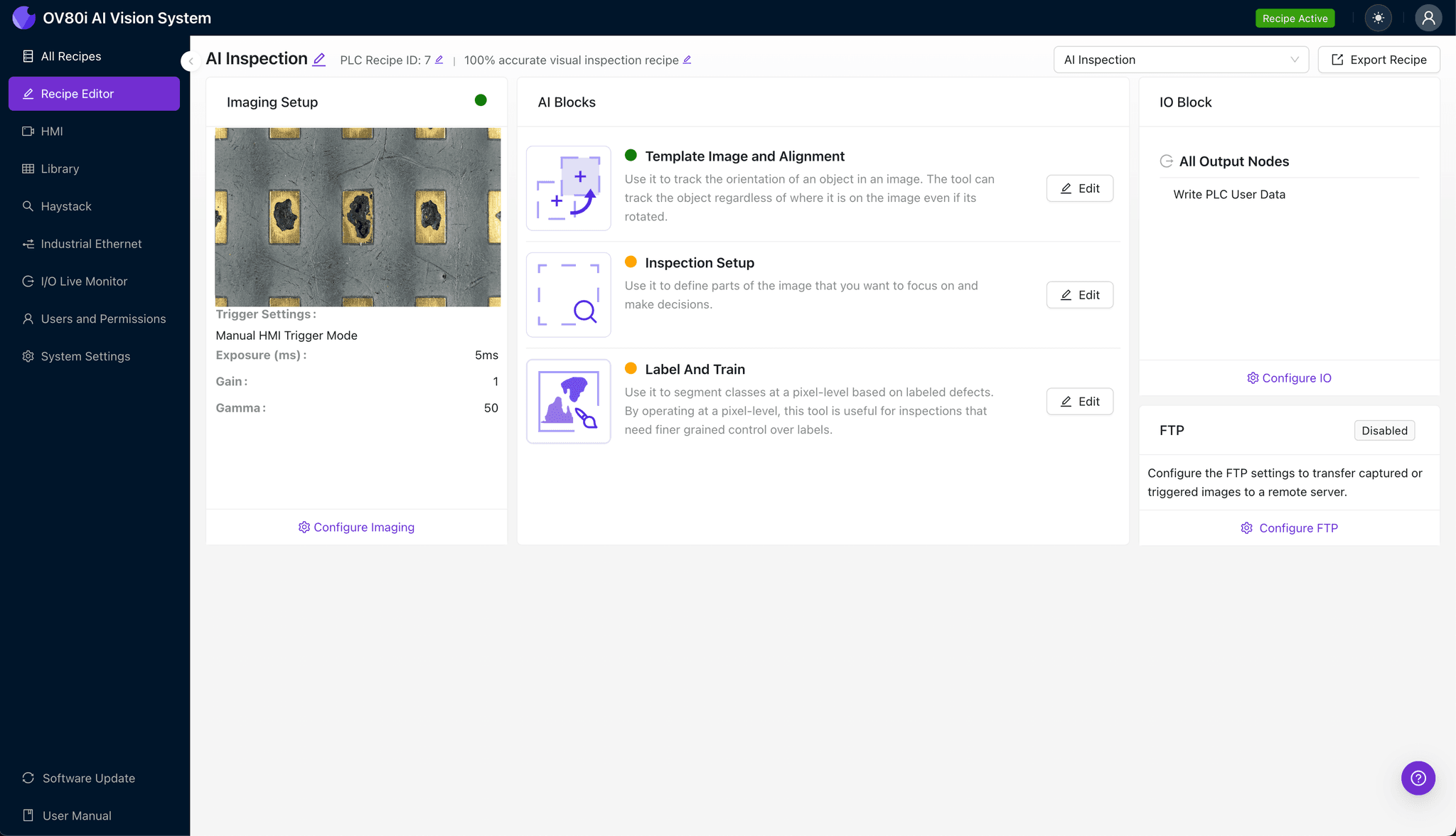
Navigate to the "Template Image" section to establish a reference baseline. Capture a Template using a known-good assembly that represents ideal pad placement and orientation.
Click "+ Rectangle" to add an alignment region around the main PCB body or fiducial markers. This ensures consistent positioning regardless of minor placement variations on the line.
Set the "Rotation Range" to 20 degrees to accommodate normal handling variations while maintaining accurate defect localization.
Step 3: Inspection Region Selection
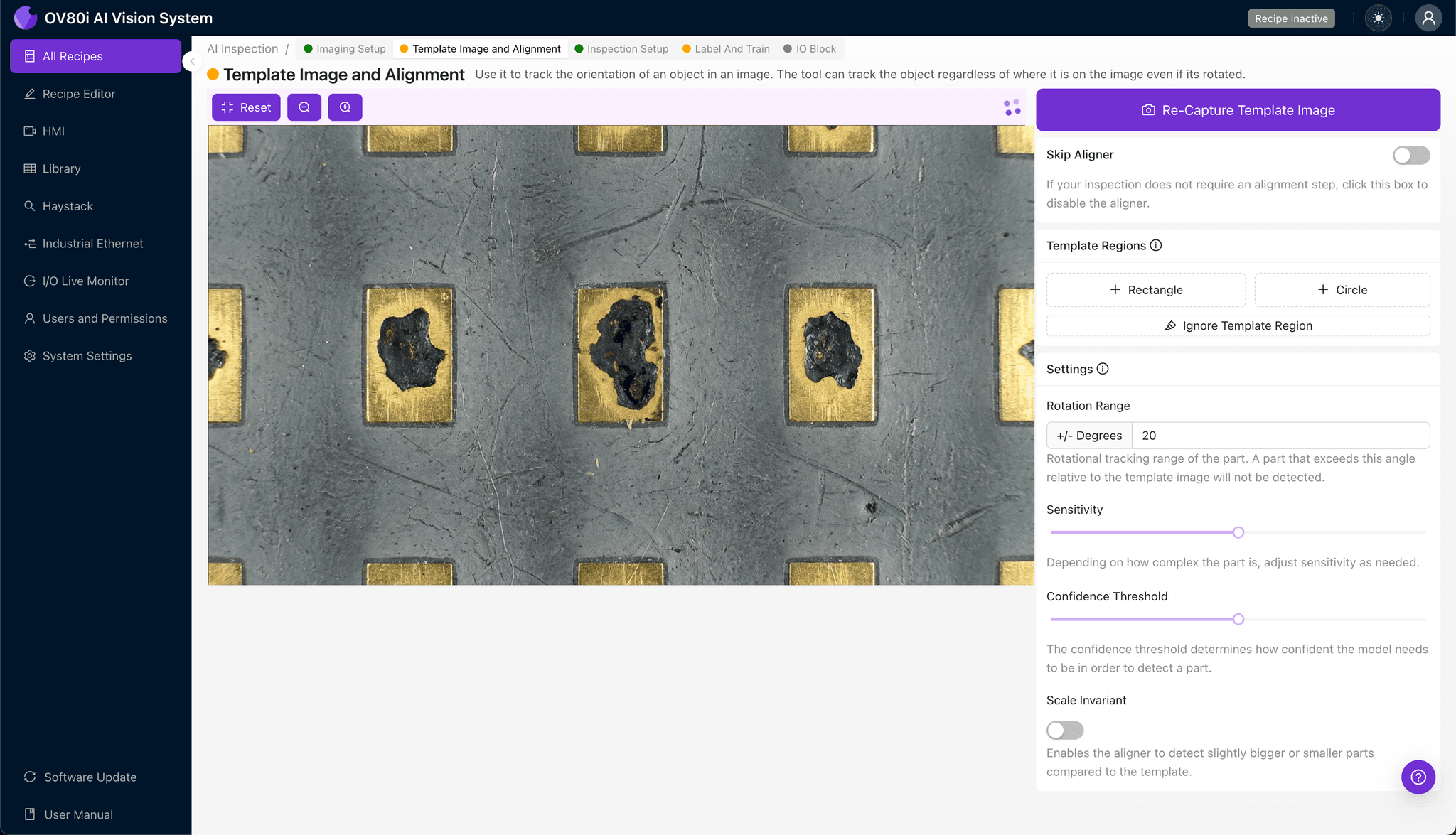
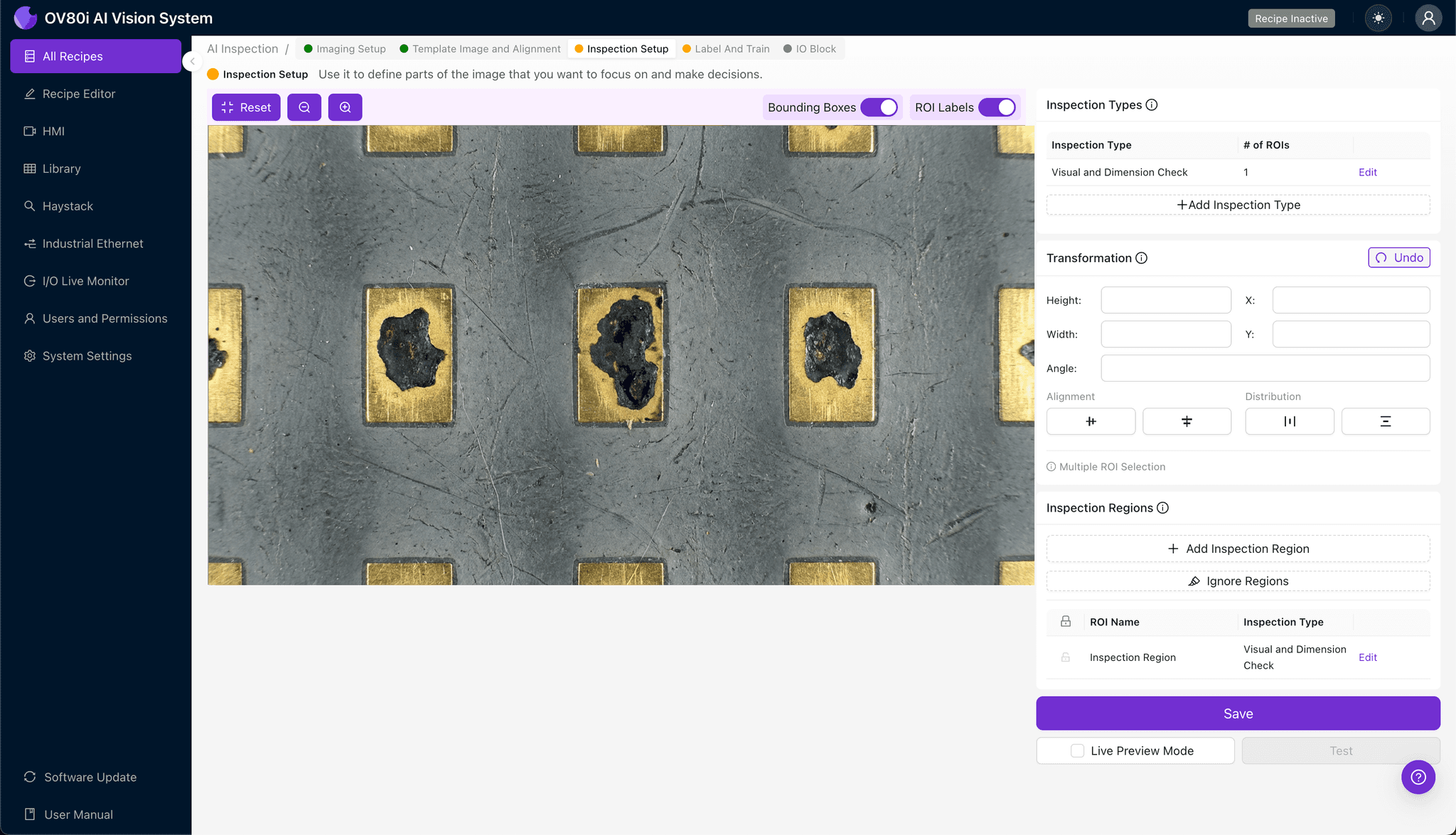
Navigate to "Inspection Setup" to define the critical areas for black pad analysis. Rename your "Inspection Types" to reflect the specific defect categories—such as "ENIG_Surface_Corrosion" or "Pad_Discoloration."
Click "+ Add Inspection Region" to create targeted detection zones. Resize the yellow bounding box to cover each surface mount pad area where black pad syndrome typically manifests.
Click "Save" after positioning regions over all critical solder pad locations. Prioritize fine-pitch components and BGA landing pads, which are most susceptible to ENIG defects.
Step 4: Labeling Data
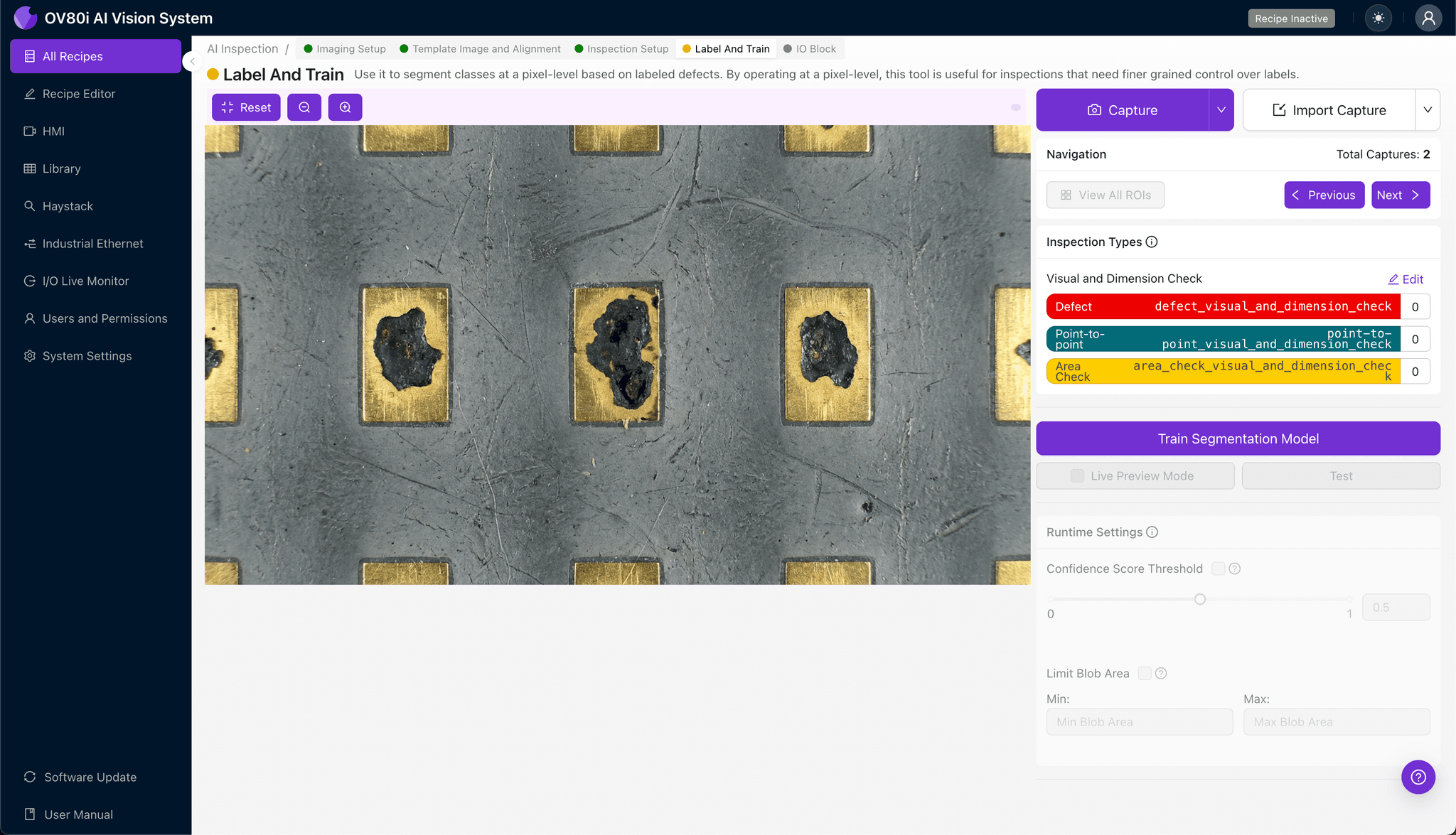
The human-in-the-loop labeling process is where your domain expertise trains the AI. Review captured images and categorize each sample as Good or Bad based on visual indicators of black pad syndrome.
Include representative samples across the full spectrum of production variation—different board batches, lighting conditions, and solder paste volumes. Most importantly, incorporate known failure modes from previous quality escapes or customer returns.
This labeled dataset becomes the foundation for the deep learning model's understanding of what constitutes an acceptable versus rejectable unit.
Step 5: Creating Rules
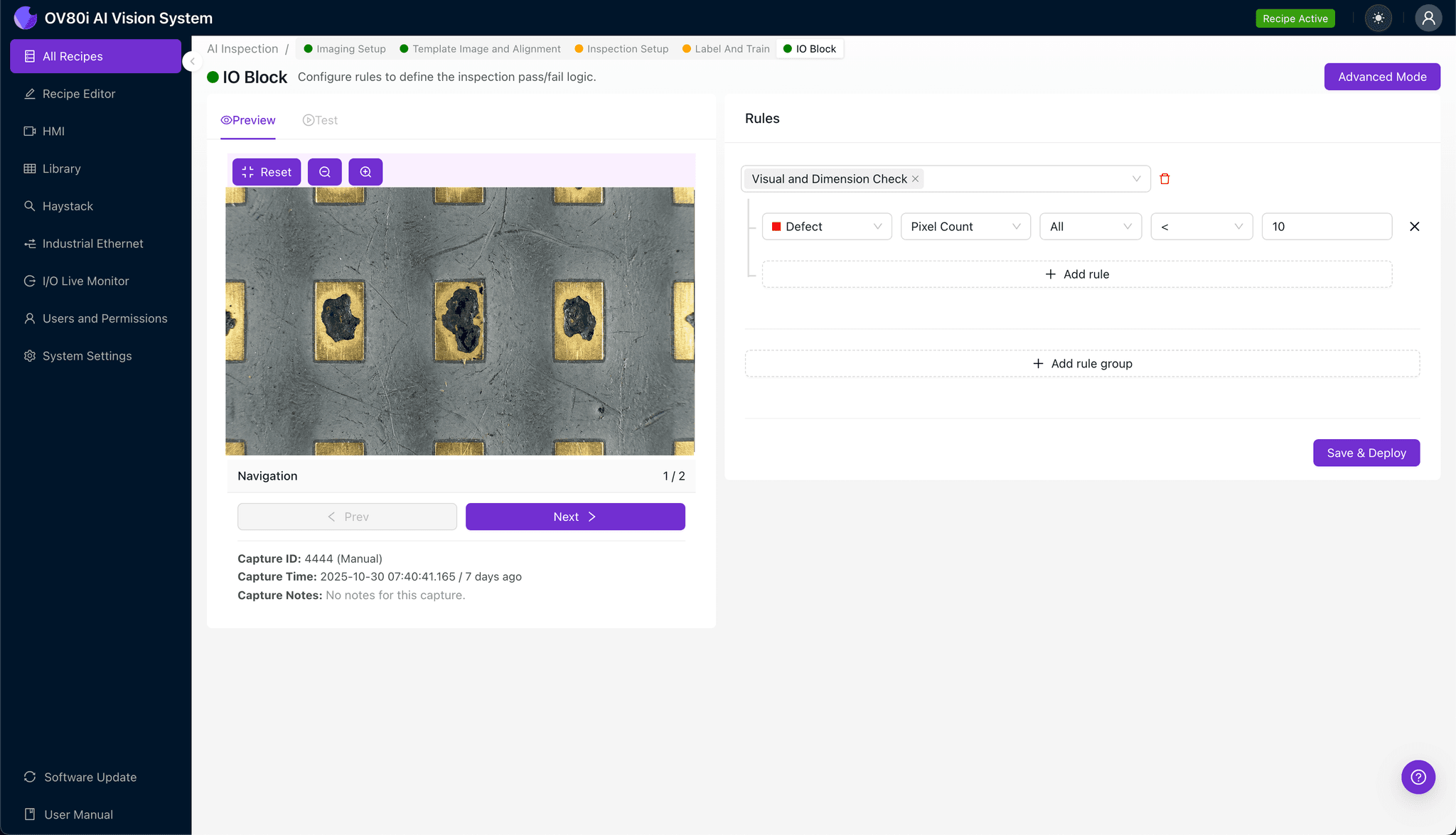
Configure your pass/fail logic based on the defined Inspection Types to establish automated quality gates. Set confidence thresholds that balance false positive rates against escape risk for your specific quality requirements.
Gate automated acceptance on the line by integrating the OV80i's output with your reject mechanism or diverter system. Units flagged for black pad indicators are automatically routed for secondary inspection or disposition.
Key Outcomes & ROI
Implementing automated visual inspection for black pad syndrome delivers measurable business impact across multiple dimensions:
- Reduced scrap and rework costs – Catching ENIG defects before assembly prevents costly downstream failures and component waste
- Higher throughput with 100% inspection – Eliminate sampling-based quality gates while maintaining or increasing line speed
- Enhanced compliance and traceability – Automatically logged inspection data supports customer audits, IPC standards, and root cause investigations
- Process improvement insights – Trend analysis reveals upstream process drift in your ENIG plating operation before it becomes a quality crisis
Conclusion
Black pad syndrome doesn't have to be a silent killer of product reliability. With Overview.ai's deep learning-powered visual inspection, manufacturers gain the ability to detect ENIG defects consistently, objectively, and at production speed—protecting both their customers and their bottom line.
Eliminate Black Pad Defects Today
Stop relying on manual inspection for ENIG defects. Deploy Overview.ai to catch black pad syndrome instantly.