Automating Quality Control for Blind-Mate Fluid Couplers with Leaking Valve Seals
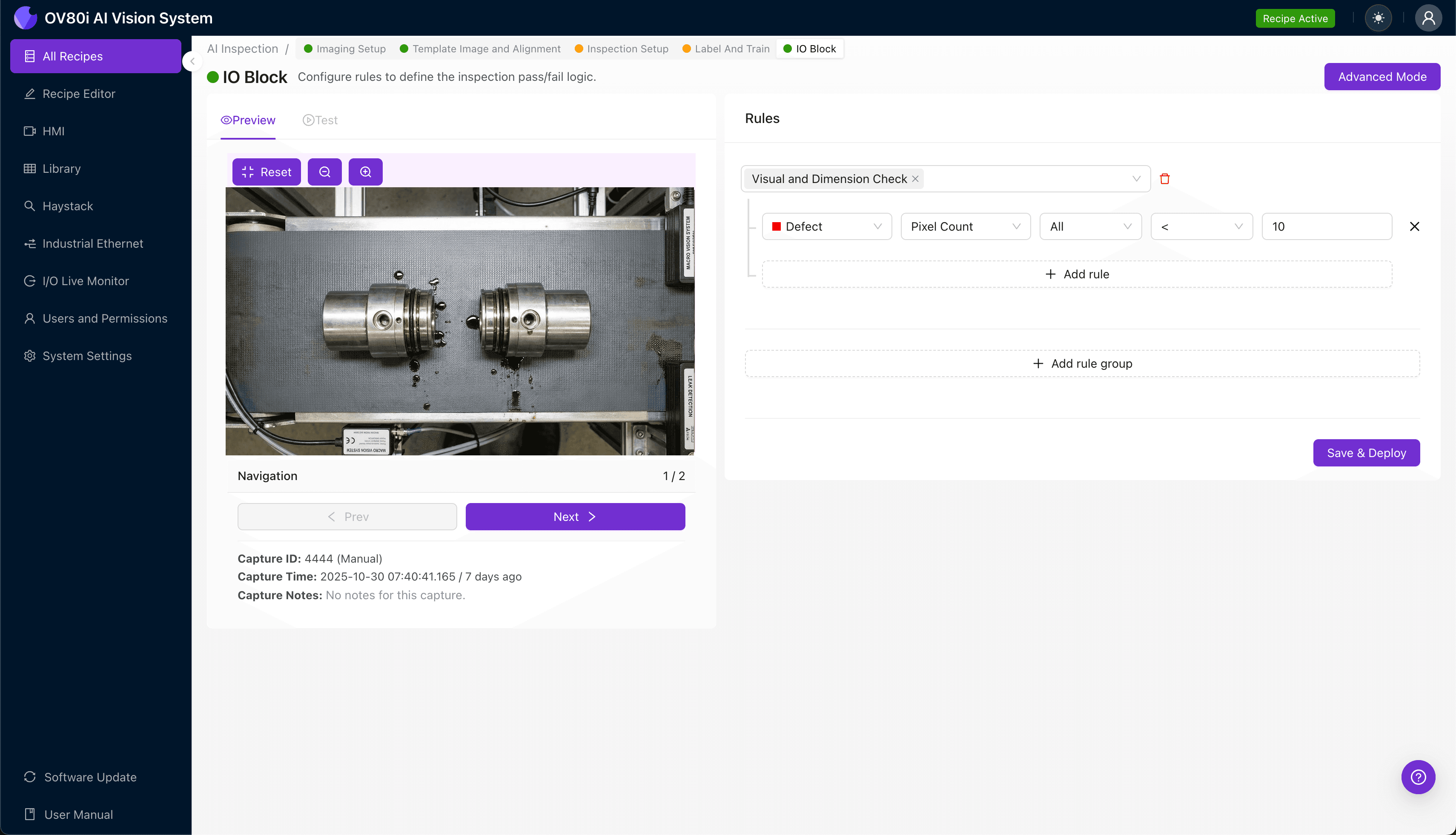
"Valve seal defects in blind-mate fluid couplers often measure in microns and occur on curved, reflective surfaces—making them nearly impossible to catch consistently with manual inspection. Overview.ai's machine vision system detects O-ring extrusion, surface scoring, and seal misalignment at full line speed with complete traceability."
The Problem: Why Valve Seal Defects Slip Through Manual Inspection
Blind-mate fluid couplers are critical components in aerospace, medical devices, and industrial fluid handling systems where reliable, leak-free connections are non-negotiable. When valve seals fail, the consequences range from minor fluid loss to catastrophic system failures—making early defect detection essential.
Common Defects Found in Blind-Mate Fluid Coupler Valve Seals:
- O-ring extrusion or nibbling – seal material squeezed beyond the gland, creating micro-tears
- Surface scoring or scratches – damage to the sealing face from contamination during assembly
- Compression set deformation – permanent seal flattening from over-torquing or thermal cycling
- Flash or parting line defects – excess material from molding that compromises seal geometry
- Chemical degradation or swelling – incompatible fluid exposure causing elastomer breakdown
- Improper seat alignment – valve poppet misalignment preventing full seal engagement
These defects often measure in microns and occur on curved, reflective surfaces that are difficult to illuminate consistently. Human inspectors struggle with the repetitive nature of seal inspection, experiencing fatigue-induced accuracy drops after just 20-30 minutes on the line.
The Solution: Machine Vision + Deep Learning for Consistent Seal Inspection
Machine vision systems eliminate the variability inherent in human inspection by capturing high-resolution images under precisely controlled lighting conditions. Deep learning models then analyze these images, detecting subtle anomalies that even experienced inspectors miss—without getting tired or distracted.
Overview.ai's approach delivers consistent, objective inspection at full line speed. The system learns what "good" looks like from your actual production data, then flags deviations in real-time—ensuring every coupler meets specification before it leaves the cell.
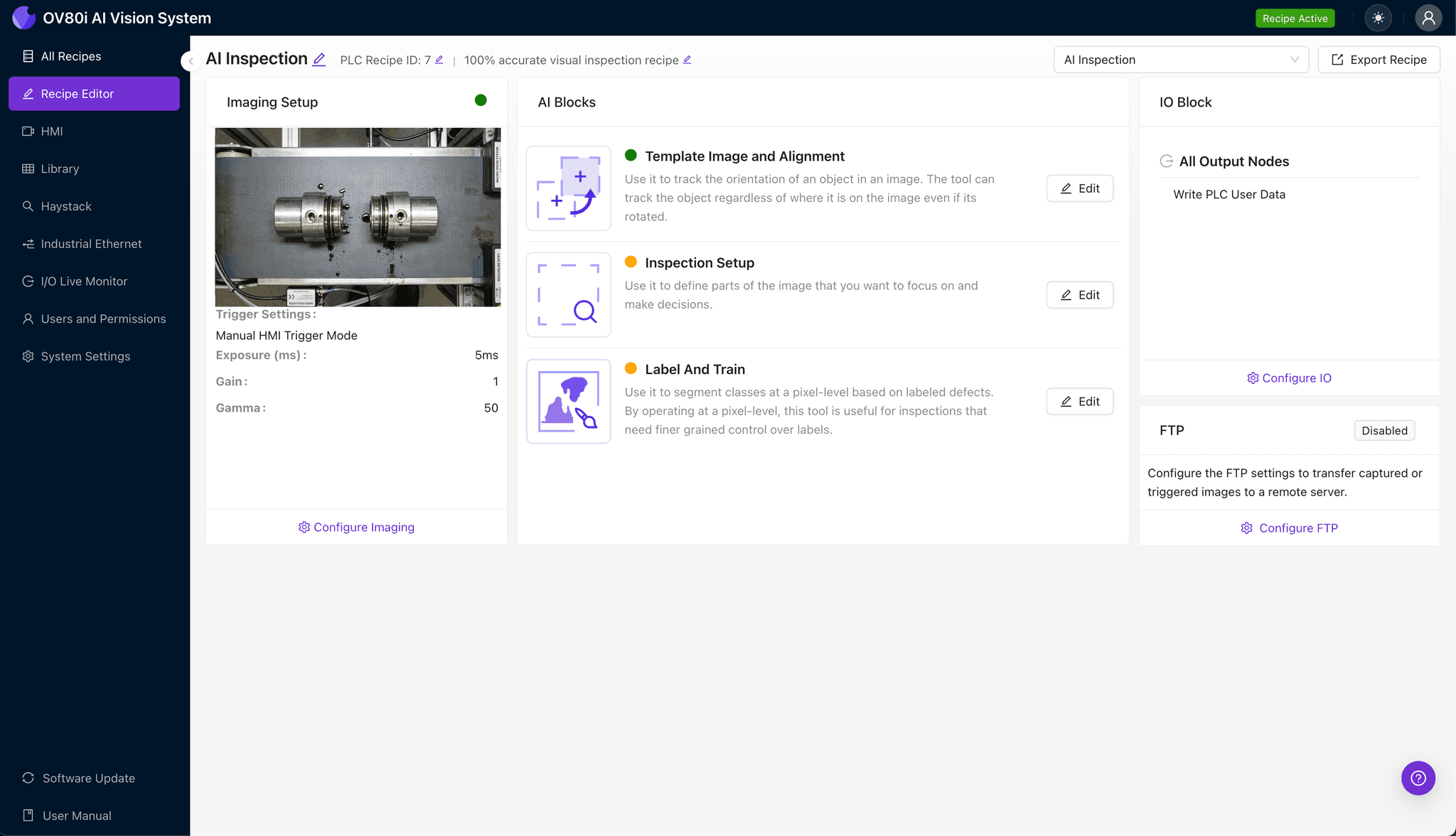
Step 1: Imaging Setup
Position the blind-mate fluid coupler under the OV80i camera, orienting it to expose the valve seal area clearly. Ring lights or angled diffuse lighting work best to minimize specular reflections on the elastomer surface.
Navigate to "Configure Imaging" in the Overview interface. Adjust Camera Settings including exposure time and gain until seal surface details are crisp without blown-out highlights.
Click "Save" to lock in your imaging parameters.
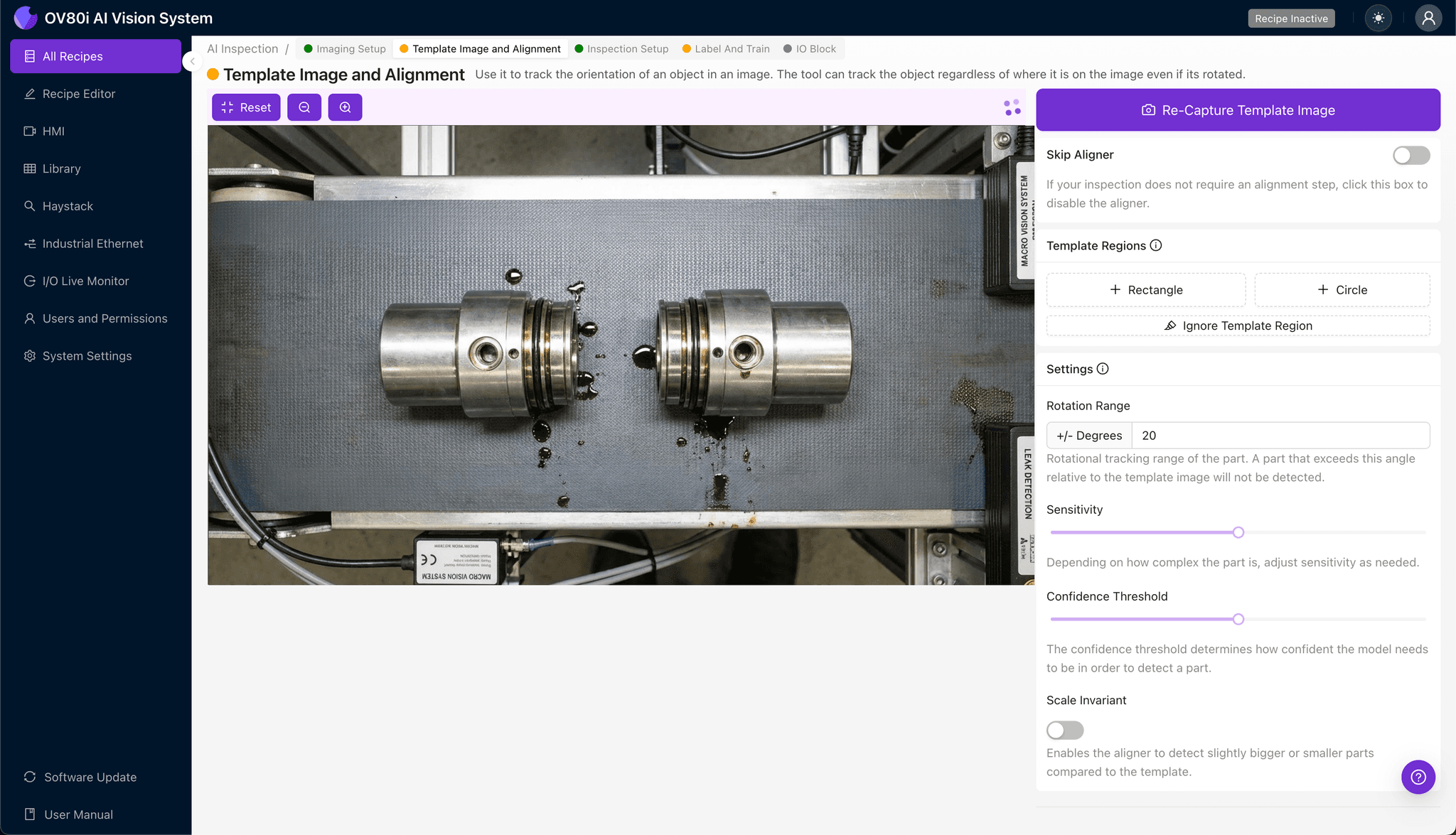
Step 2: Image Alignment
Navigate to "Template Image" in the setup menu. Capture a reference image of a known-good coupler in the standard inspection orientation.
Click "+ Rectangle" to add an alignment region around the coupler's main body—this helps the system track part position despite minor placement variations. Set the "Rotation Range" to 20 degrees to accommodate typical fixturing tolerance.
Step 3: Inspection Region Selection
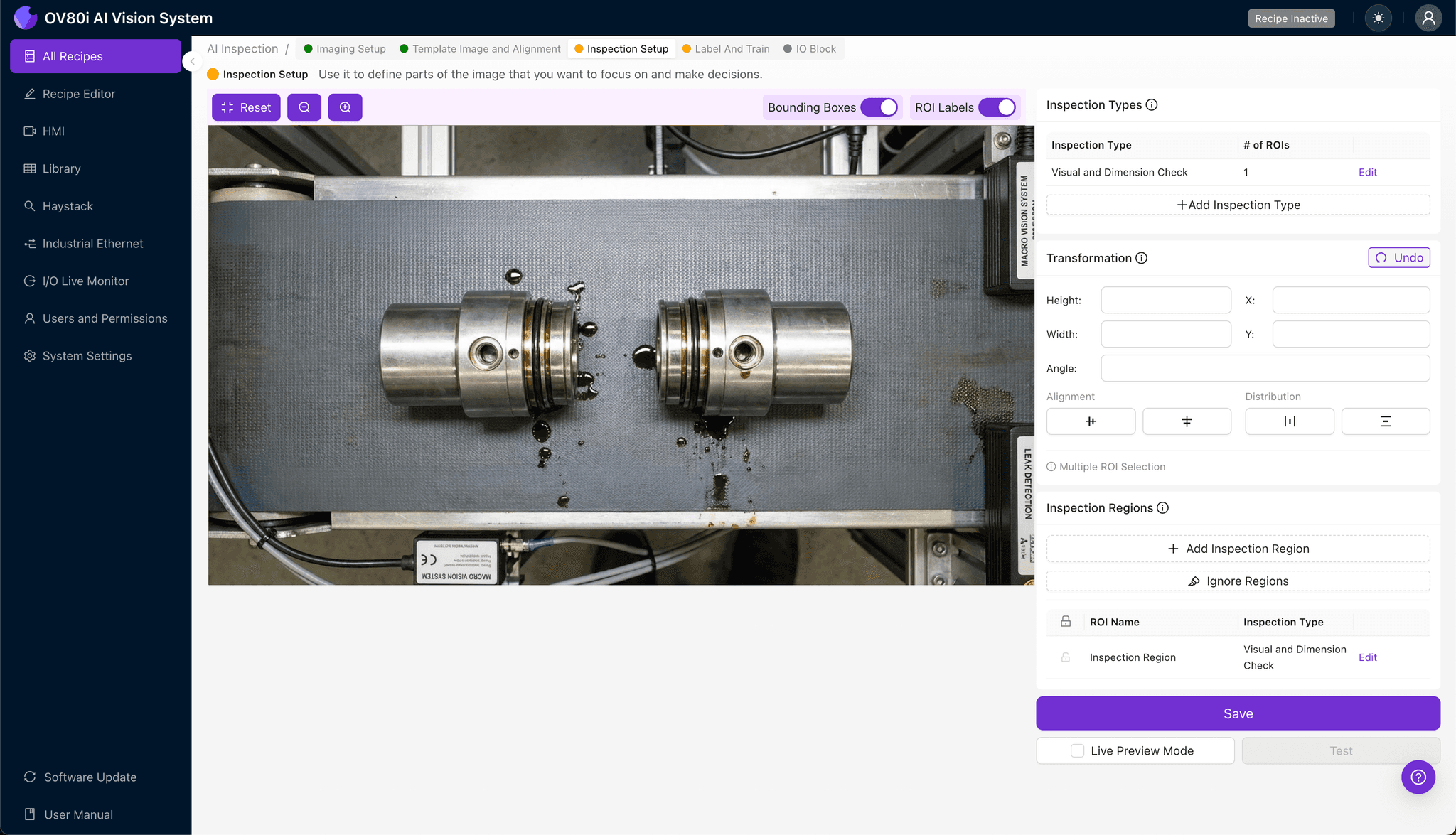
Navigate to "Inspection Setup" to define where the system should focus its analysis. Rename your "Inspection Types" to reflect the specific defect categories—for example, "Seal_Surface_Defects" and "Seat_Alignment."
Click "+ Add Inspection Region" and resize the yellow bounding box to cover the critical valve seal interface area. Repeat for secondary inspection zones like the poppet seating surface.
Click "Save" to confirm your regions.
Step 4: Labeling Data
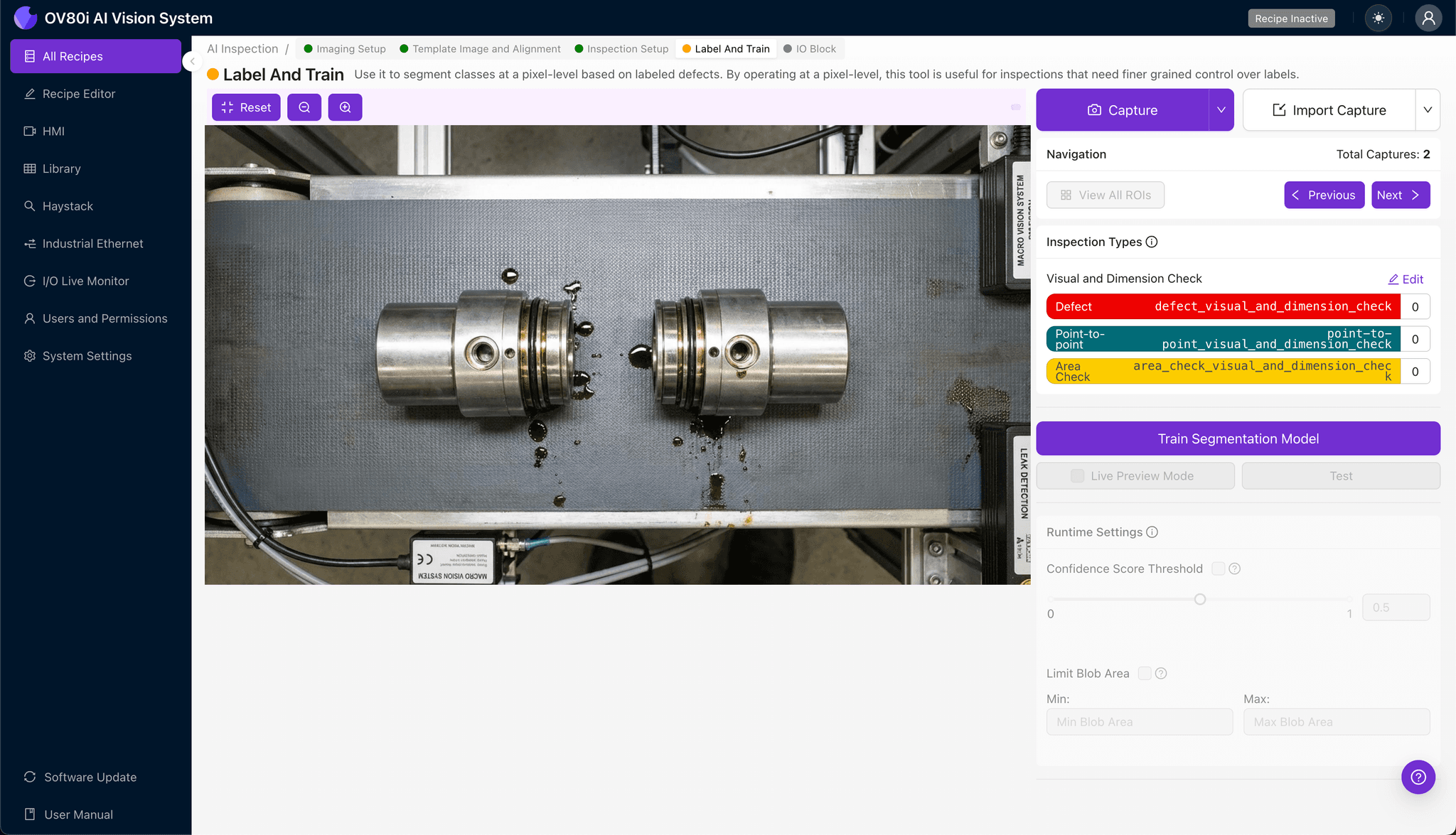
This is the human-in-the-loop phase where your expertise trains the AI. Review captured images and label each as Good or Bad based on your quality standards.
Include representative samples across your normal production variation—different material lots, acceptable cosmetic variations, and lighting edge cases. Critically, ensure your training set contains known failure modes: extruded seals, scored surfaces, and misaligned seats.
The more diverse your labeled dataset, the more robust your model becomes.
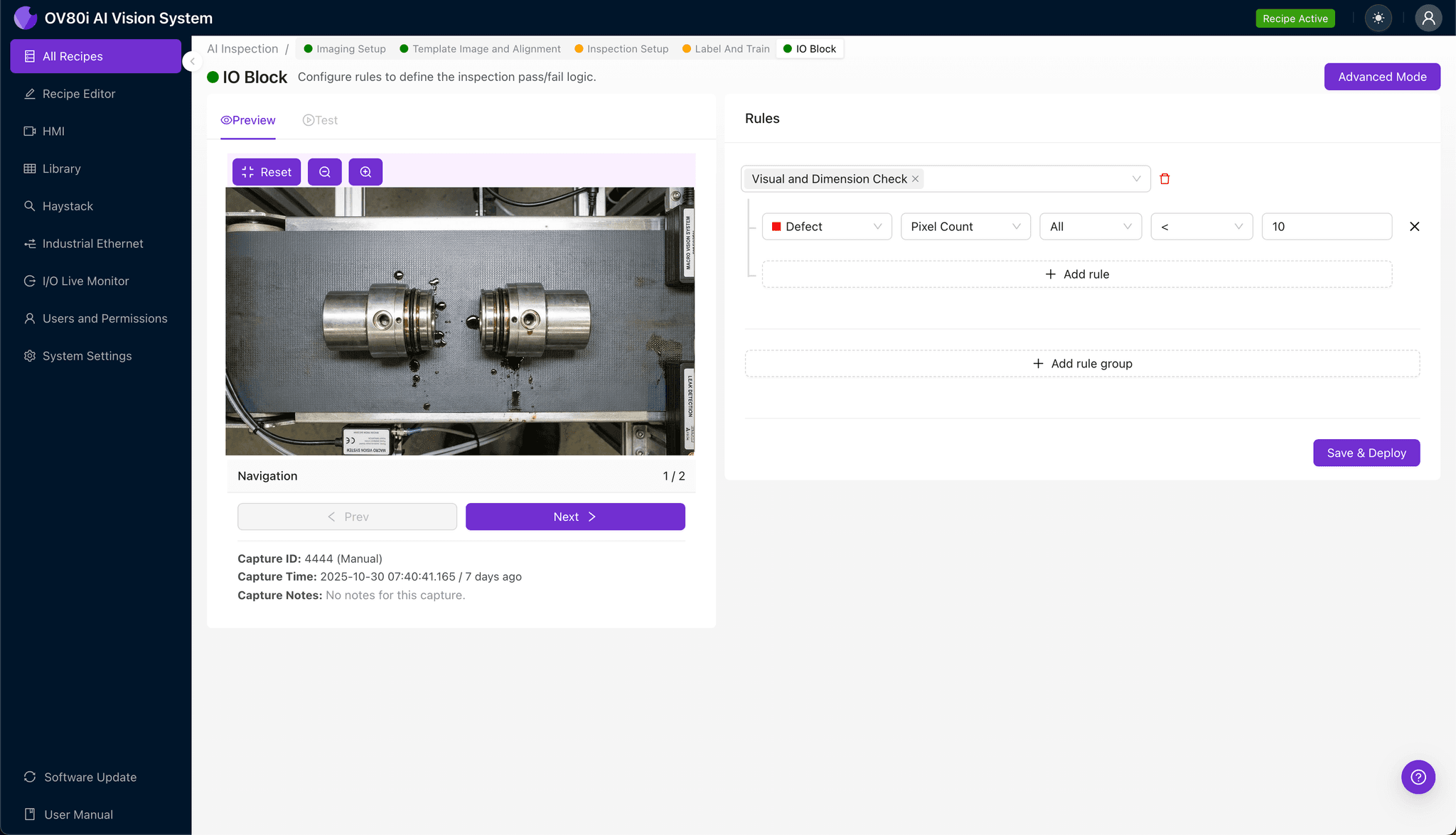
Step 5: Creating Rules
Define your pass/fail logic based on the Inspection Types you created. For example: any detection in "Seal_Surface_Defects" triggers rejection, while "Seat_Alignment" might allow a confidence threshold.
These rules gate automated acceptance on the line—passing parts continue to packaging while flagged units divert for secondary review or scrap. The system logs every decision for full traceability.
Key Outcomes & ROI
Implementing automated visual inspection for blind-mate fluid coupler valve seals delivers measurable business impact:
- Reduced scrap and rework – catch defects before value-added assembly operations
- Higher throughput – inspect at line speed without creating bottlenecks
- Compliance and traceability – maintain auditable records for aerospace AS9100 or medical ISO 13485 requirements
- Process improvement insights – trend data reveals upstream issues like tooling wear or material inconsistencies
Conclusion
Leaking valve seals in blind-mate fluid couplers represent both a quality risk and a liability exposure. Automated visual inspection with Overview.ai transforms this critical checkpoint from a subjective human judgment call into a consistent, data-driven process.
Ready to eliminate seal defects from your production line? Contact Overview.ai to schedule a feasibility study with your actual parts.
Eliminate Valve Seal Defects Today
Stop relying on manual inspection for critical fluid coupler components. Deploy Overview.ai to catch seal defects instantly with full traceability.