Coax Center Pin with Pitting from the Plating Bath: A Complete Visual Inspection Guide
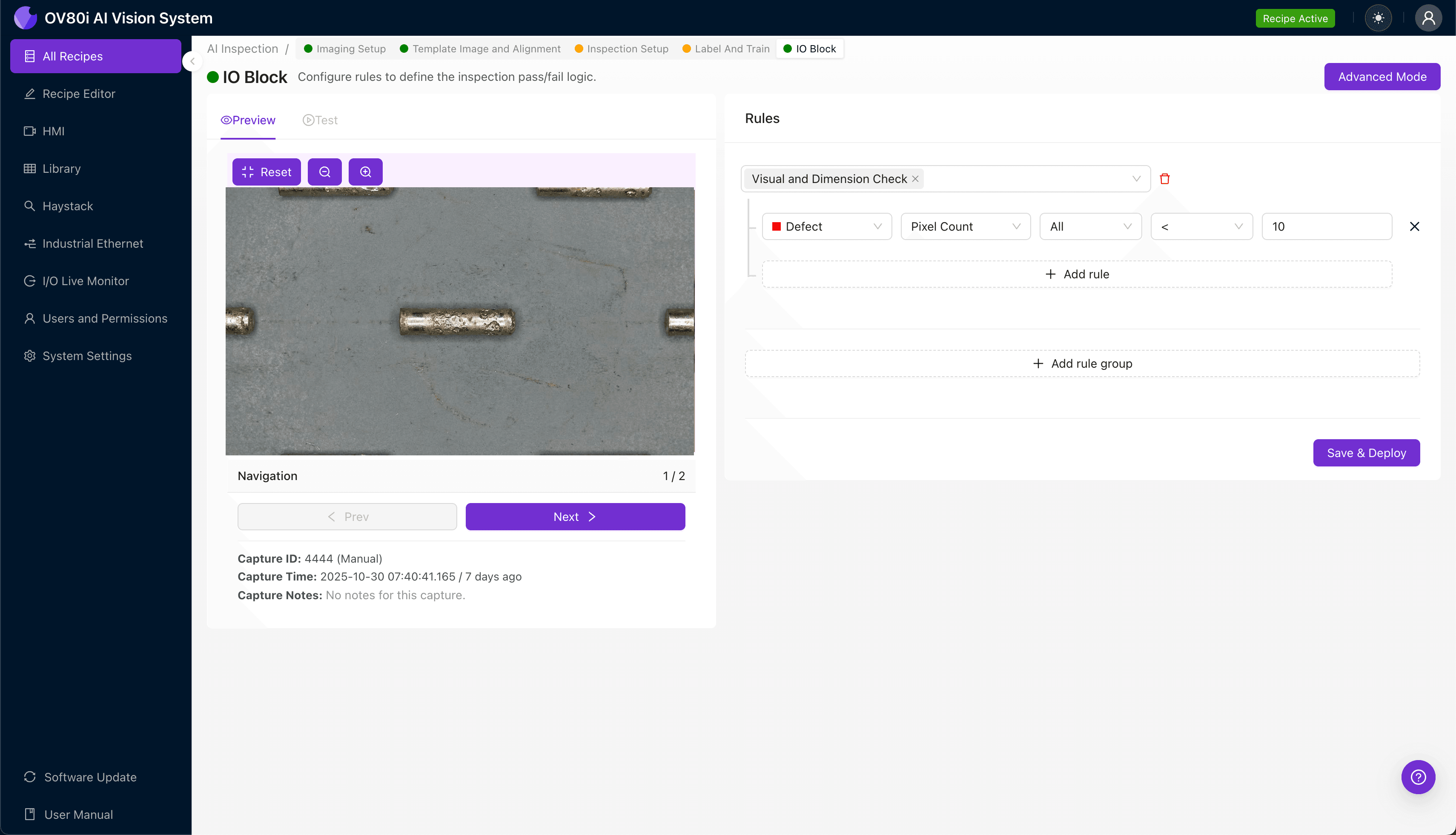
"Pitting defects from electroplating baths create surface irregularities on coax center pins that compromise RF signal integrity. Overview.ai's deep learning-powered inspection systems detect these microscopic anomalies consistently at full production speed, eliminating the variability of manual quality control."
The Problem: Why Plating Bath Defects Threaten Coax Connector Quality
Coax center pins are precision-machined conductors that form the critical signal pathway in RF connectors. When pitting occurs during the electroplating process, it creates surface irregularities that can devastate electrical performance and long-term reliability.
Common Defects Found in Coax Center Pins from Plating Bath Issues:
- Micro-pitting — Tiny crater-like voids in the plated surface caused by hydrogen gas evolution during electrodeposition
- Orange peel texture — Uneven, dimpled surface finish resulting from poor bath chemistry or contamination
- Nodular deposits — Raised metallic bumps from particulate contamination or current density irregularities
- Skip plating — Bare spots where plating failed to adhere due to surface contamination or inadequate cleaning
- Burn marks — Discolored or rough areas caused by excessive current density at pin edges and tips
- Porosity clusters — Grouped microscopic holes that compromise corrosion resistance and conductivity
Human inspectors struggle to maintain accuracy when examining these defects at production speeds. Fatigue sets in quickly when evaluating thousands of pins per shift, and the subjective nature of "acceptable" surface finish leads to inconsistent pass/fail decisions across operators and shifts.
The Solution: AI-Powered Visual Inspection for Plating Defects
Machine vision systems equipped with deep learning algorithms excel at detecting subtle surface anomalies that escape human perception. These systems analyze every pin against trained models, identifying deviations in texture, reflectivity, and surface topology with sub-pixel precision.
Overview.ai's approach delivers consistent, objective inspection at full line speed—eliminating the variability inherent in manual quality control. By deploying systems like the OV80i directly on the production line, manufacturers achieve 100% inline inspection without sacrificing throughput.
Step 1: Imaging Setup
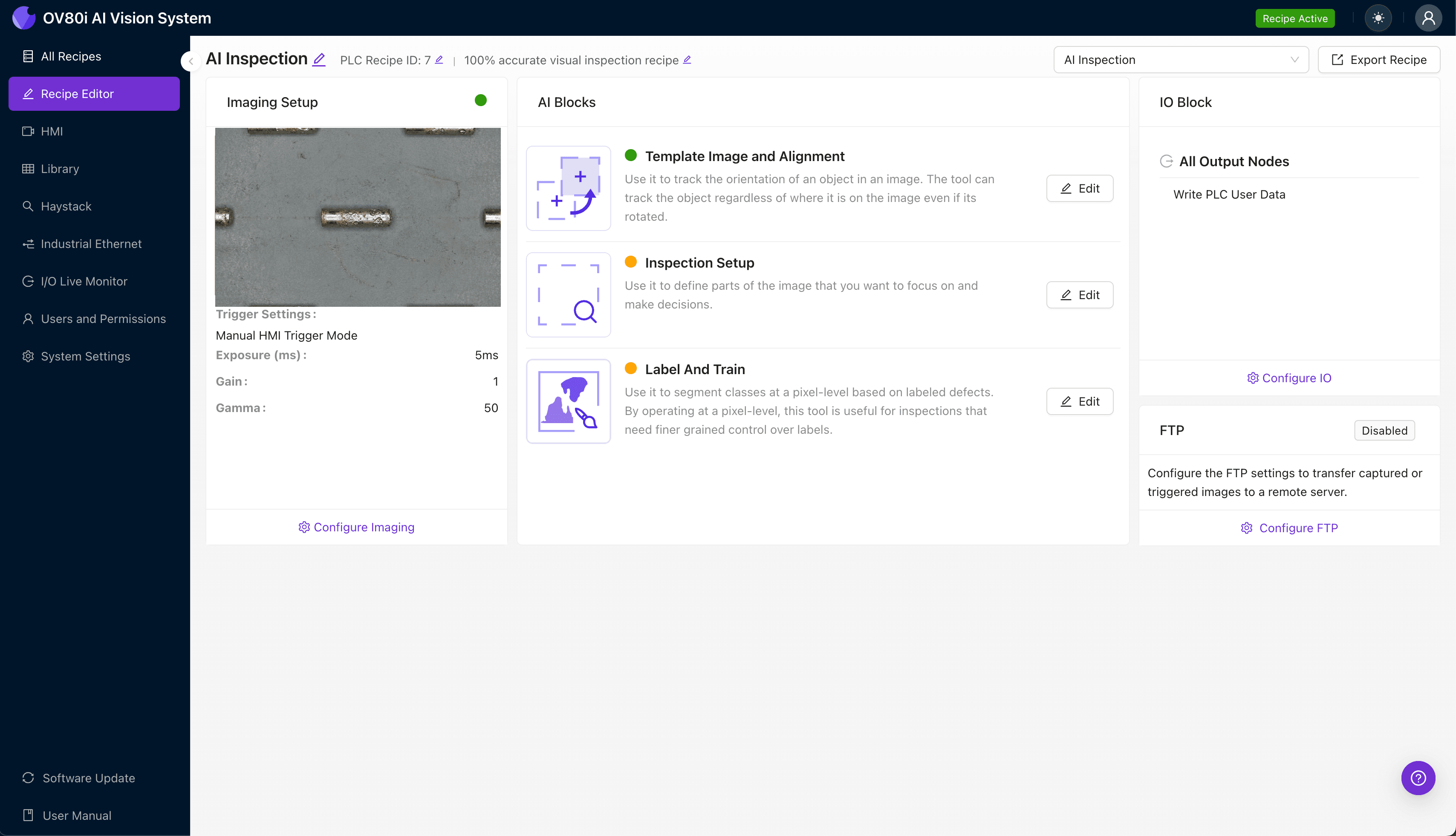
Begin by placing a representative coax center pin with visible plating defects under the OV80i camera system. Position the pin to capture the full circumference of the plated surface where pitting typically occurs.
Click "Configure Imaging" to access the Camera Settings panel. Adjust the exposure to reveal surface texture without washing out reflective areas, and fine-tune the gain to balance signal-to-noise ratio for detecting micro-pitting.
Click "Save" to lock in your optimized imaging parameters.
Step 2: Image Alignment
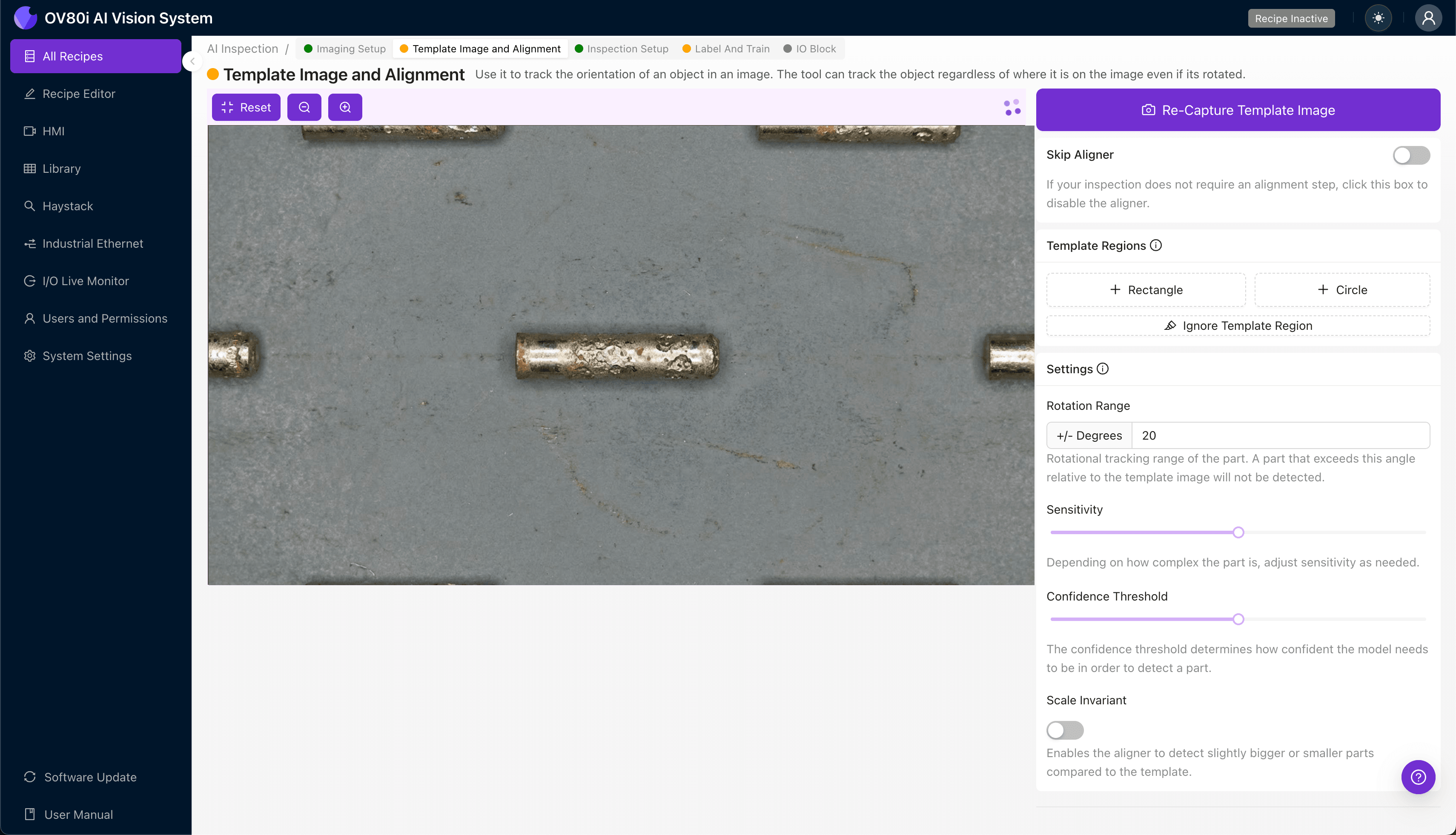
Navigate to the "Template Image" section within the configuration interface. Capture a Template image of a properly positioned center pin that represents your standard orientation.
Click "+ Rectangle" to add an alignment region around the main body of the pin. This teaches the system to locate and orient each part consistently regardless of how it enters the inspection zone.
Set the "Rotation Range" to 20 degrees to accommodate normal variation in pin presentation on your conveyor or fixture.
Step 3: Inspection Region Selection
Navigate to "Inspection Setup" to define where the system should focus its analysis. Rename your "Inspection Types" to reflect the specific defects you're targeting—for example, "Surface_Pitting" or "Plating_Porosity."
Click "+ Add Inspection Region" to create a new detection zone. Resize the yellow bounding box to cover the critical plated surfaces where bath-related defects manifest—typically the pin shaft and contact tip areas.
Click "Save" to confirm your inspection region configuration.
Step 4: Labeling Data
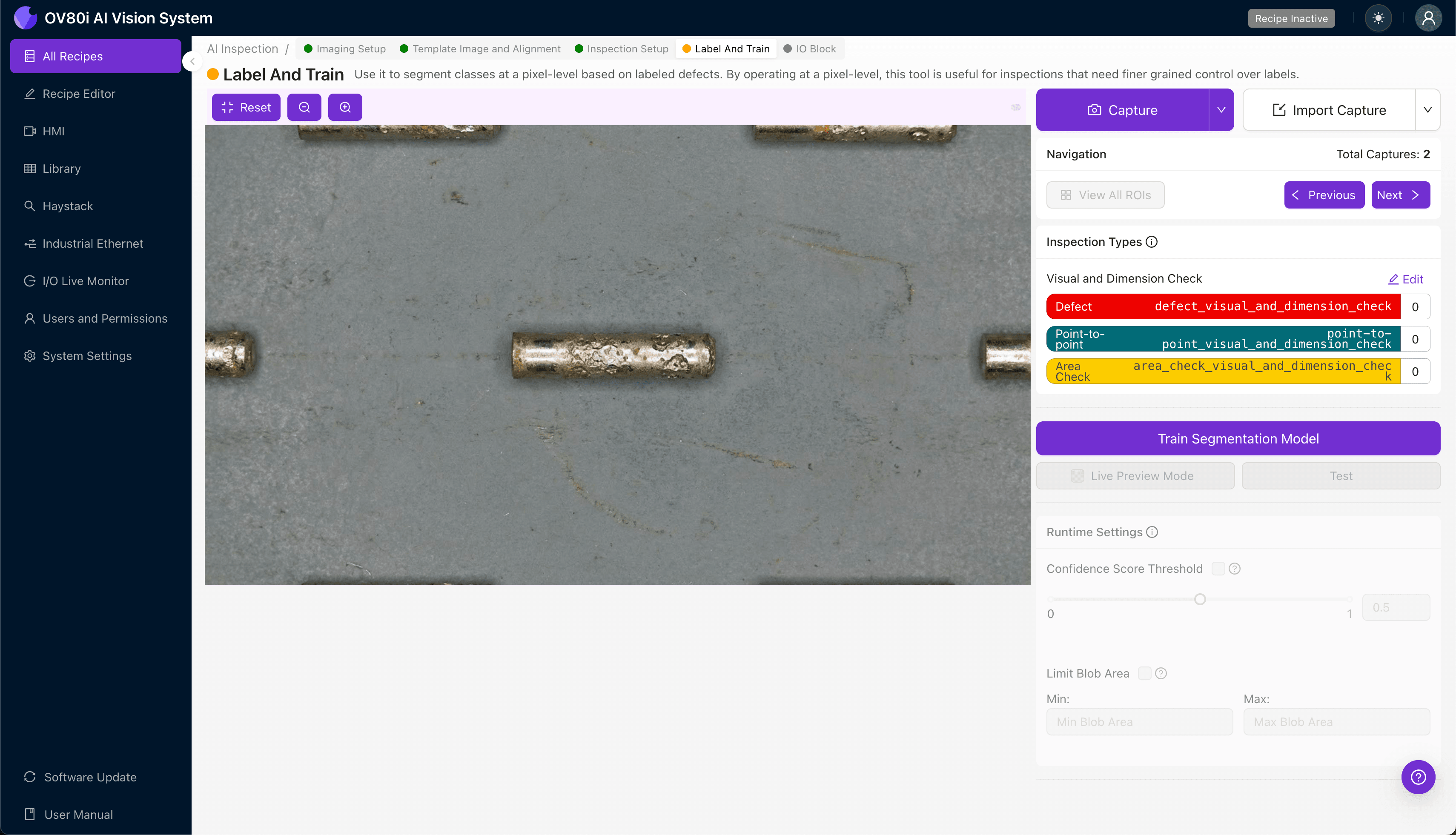
The human-in-the-loop labeling process is where your quality expertise trains the AI model. Review captured images and categorize each as Good (acceptable plating quality) or Bad (defective surface condition).
Include representative samples across your full range of acceptable parts and known failure modes. The more examples of subtle pitting, borderline porosity, and clear rejects you provide, the more accurate your model becomes.
Label at least 50-100 images per defect category to establish a robust training foundation.

Step 5: Creating Rules
Configure your pass/fail logic based on the Inspection Types you've defined. Set thresholds that align with your quality specifications—for instance, rejecting any pin with detected pitting above a certain confidence score.
These rules gate automated acceptance on the line, triggering reject mechanisms or alerts when defective pins are identified. Fine-tune sensitivity based on initial production runs to balance escape rate against false rejection costs.
Key Outcomes & ROI
Implementing automated visual inspection for coax center pin plating defects delivers measurable business value:
- Reduced Scrap — Catch plating bath issues early before defective pins proceed to assembly, cutting material waste by 15-30%
- Higher Throughput — Inspect 100% of production at line speed without bottlenecking, replacing slow sample-based QC methods
- Compliance & Traceability — Generate automatic inspection records with timestamped images for customer audits and root cause investigations
- Process Improvement Insights — Trend defect data over time to identify plating bath degradation, contamination events, or parameter drift before they cause major quality excursions
Conclusion
Pitting defects from electroplating baths represent a persistent challenge in coax center pin manufacturing. With Overview.ai's deep learning-powered inspection systems, manufacturers can detect these surface anomalies consistently, objectively, and at full production speed—protecting downstream quality and customer satisfaction.
Eliminate Plating Defects Today
Stop relying on manual inspection for critical RF connector components. Deploy Overview.ai to catch pitting and plating defects instantly.