Connector Shell with a Broken Polarization Key: A Complete Visual Inspection Walkthrough
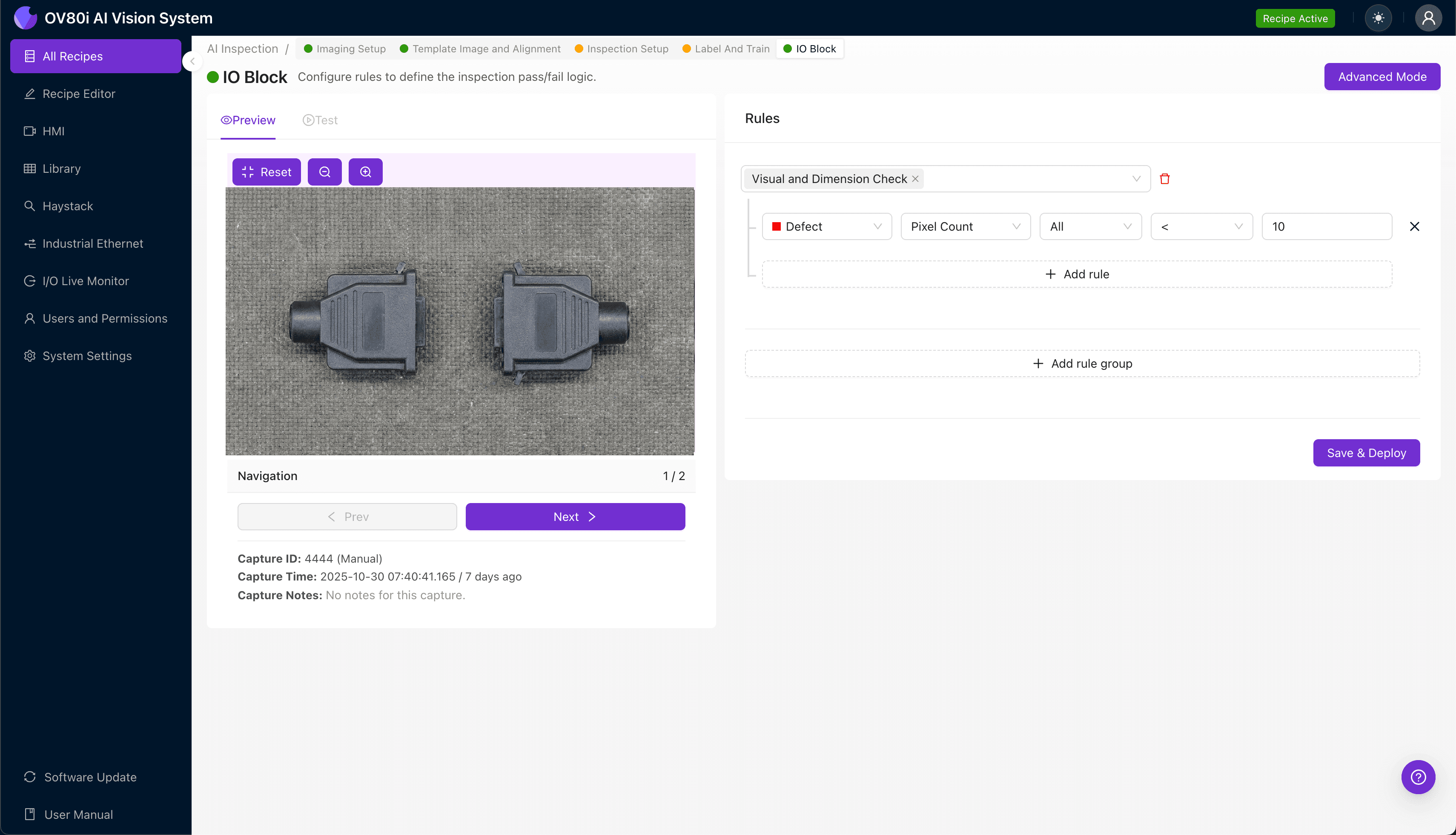
"Broken polarization keys on connector shells cause assembly failures and field returns. Overview.ai's deep learning platform automates 100% inline inspection, catching fractures, chips, and stress cracks that manual inspectors miss—delivering consistent quality at production speed."
The Problem: Why Broken Polarization Keys Slip Through the Cracks
Polarization keys are small but critical features on connector shells that ensure proper mating orientation and prevent electrical damage from incorrect insertion. When these keys break, chip, or deform during manufacturing or handling, the consequences downstream can range from assembly line stoppages to field failures in mission-critical applications.
Common Defects Found in Connector Shells with Polarization Key Issues:
- Complete key fracture – The polarization key has snapped off entirely at the base
- Partial chipping – Small fragments missing from the key edge or tip
- Stress cracks – Hairline fractures that compromise structural integrity without visible separation
- Dimensional deviation – Key height or width falls outside tolerance specifications
- Flash or burrs – Excess material from molding that interferes with proper keying function
- Warping or deflection – Key bent out of alignment due to ejection damage or thermal stress
Manual inspection of polarization keys is notoriously unreliable. Inspectors experience fatigue after examining hundreds of nearly identical parts per hour, and the small scale of these features—often just a few millimeters—makes consistent detection nearly impossible at production speeds.
The Solution: Machine Vision and Deep Learning
Machine vision systems eliminate the variability inherent in human inspection by capturing high-resolution images and analyzing them with pixel-level precision. Deep learning models trained on thousands of examples learn to recognize subtle defect patterns that even experienced inspectors might miss, including stress cracks invisible to the naked eye.
Overview.ai's approach combines consistent, objective analysis with true line-speed throughput. The OV80i platform delivers 100% inline inspection without creating bottlenecks, ensuring every connector shell receives the same rigorous evaluation regardless of shift changes, lighting conditions, or production volume.
Step 1: Imaging Setup
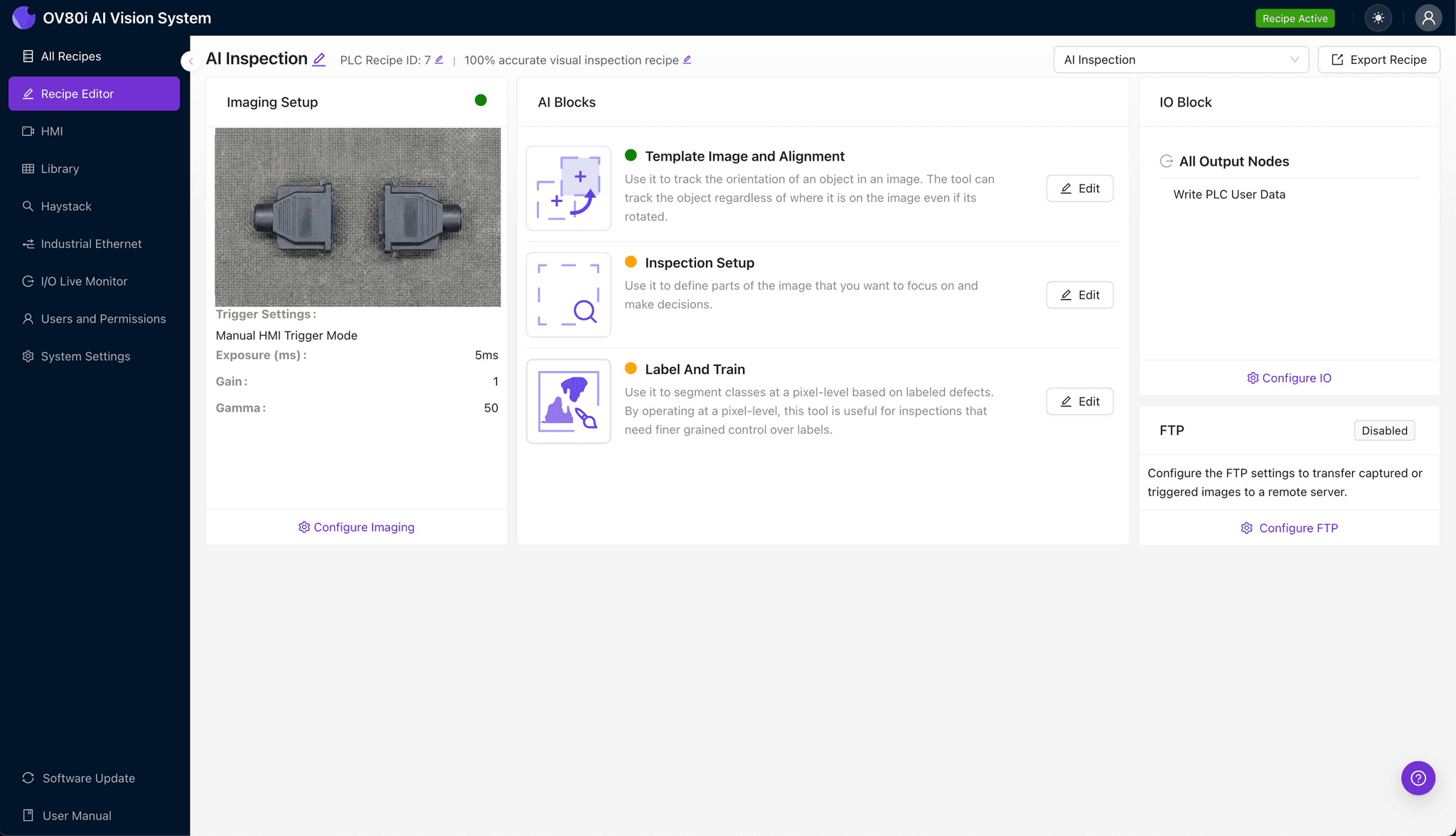
Position the connector shell with the suspected broken polarization key under the OV80i camera, ensuring the key feature faces upward with clear visibility.
Click "Configure Imaging" in the Overview interface to access the Camera Settings panel. Adjust the exposure to eliminate shadows around the key geometry and fine-tune the gain to capture crisp edge definition without introducing noise.
Click "Save" to lock in your optimized imaging parameters.
Step 2: Image Alignment
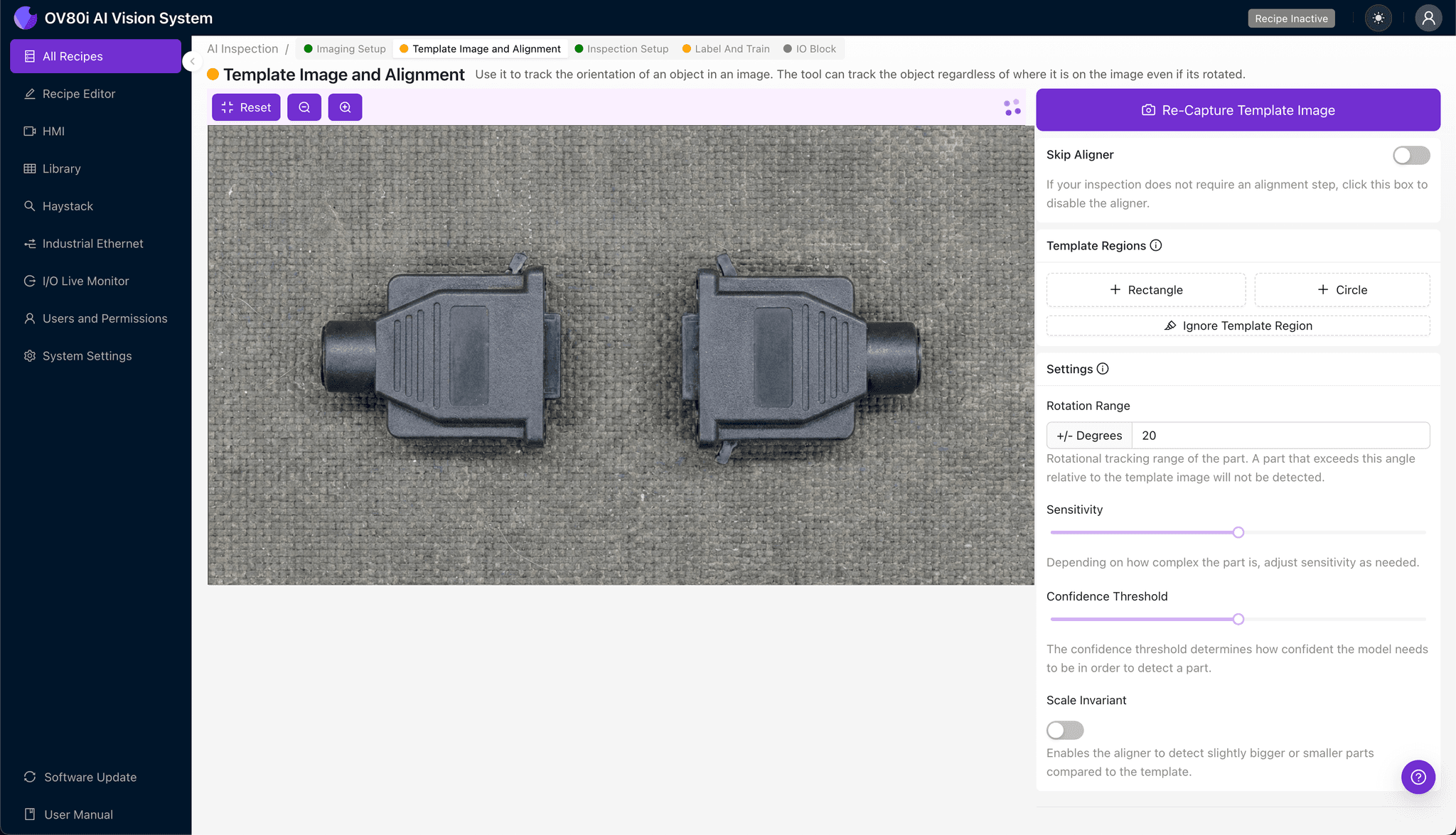
Navigate to the "Template Image" section and capture a reference image of a known-good connector shell.
Click "+ Rectangle" to add an alignment region around the main body of the connector shell, excluding any variable background elements.
Set the "Rotation Range" to 20 degrees to accommodate minor orientation variations as parts move through the inspection station.
Step 3: Inspection Region Selection
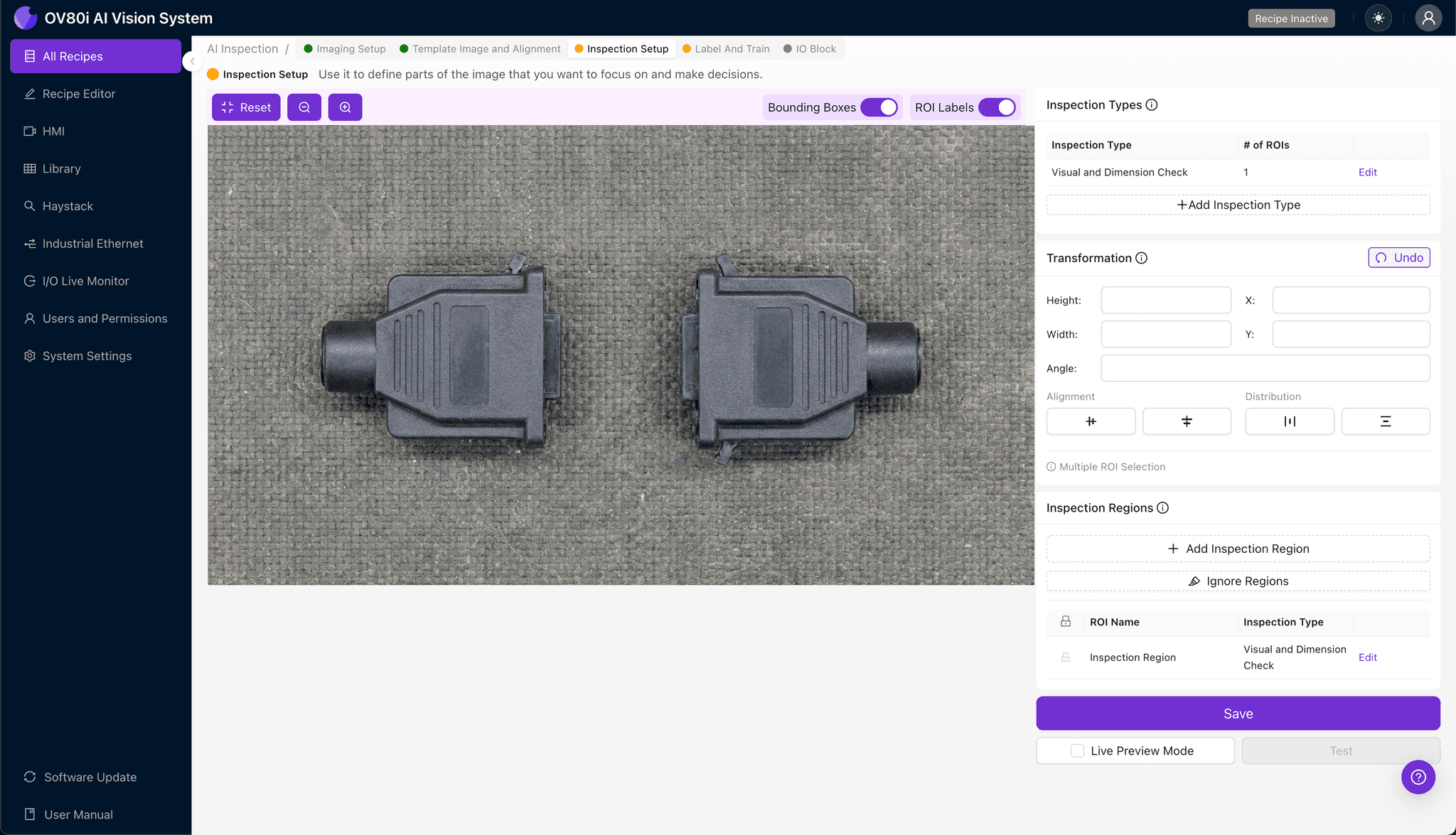
Navigate to "Inspection Setup" to begin defining your detection zones.
Rename your "Inspection Types" with descriptive labels such as "Polarization Key Integrity" or "Key Fracture Detection" for clear traceability.
Click "+ Add Inspection Region" and resize the yellow bounding box to cover the polarization key and its immediate base area. Click "Save" to confirm the region placement.
Step 4: Labeling Data
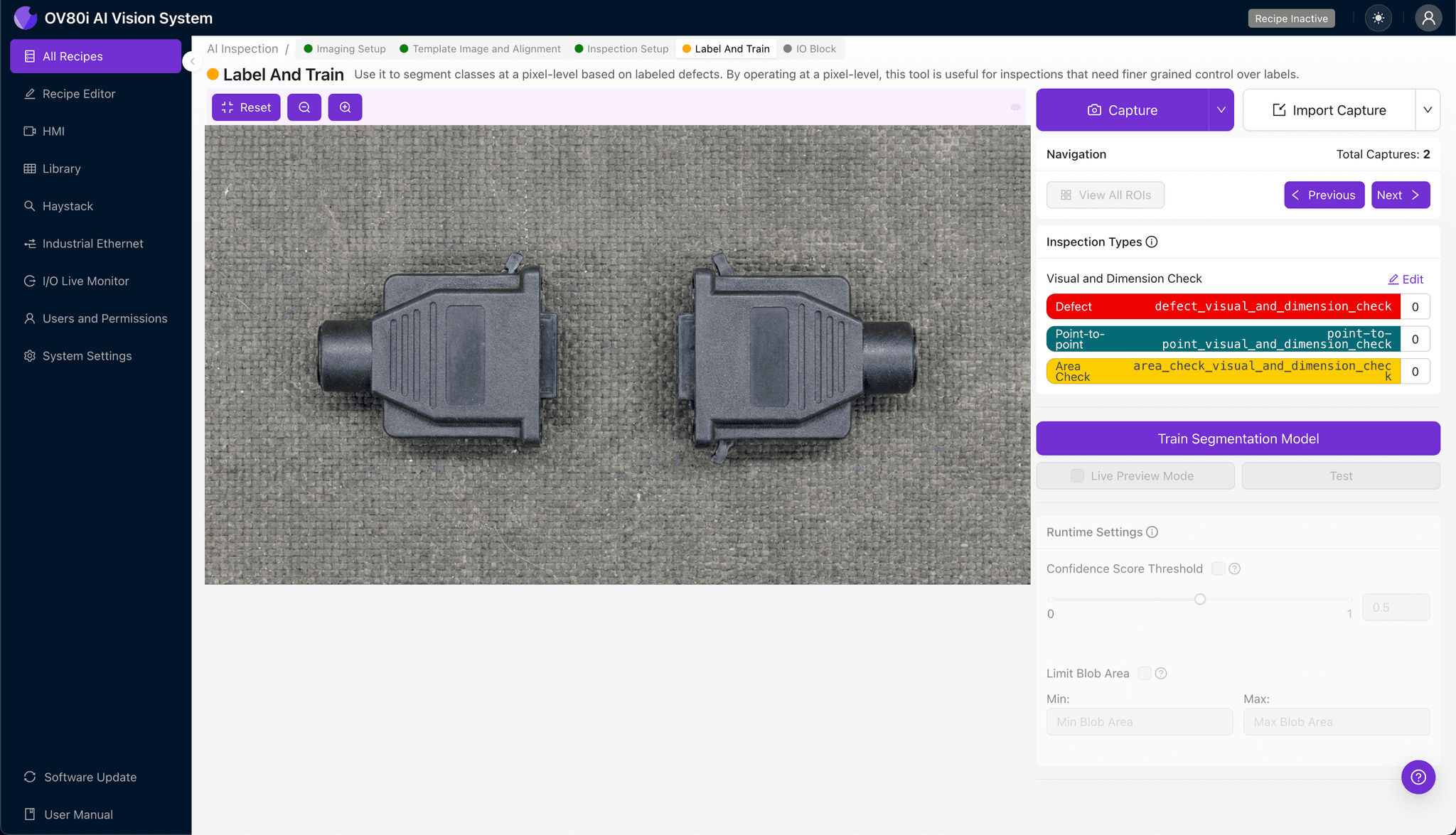
The human-in-the-loop labeling process trains the deep learning model to distinguish acceptable parts from defective ones.
Review captured images and label each as Good (intact polarization key) or Bad (broken, chipped, or compromised key). Include representative samples across the full spectrum of defect severities and known failure modes from your production history.
The more diverse your training set, the more robust your model becomes at catching edge cases.
Step 5: Creating Rules
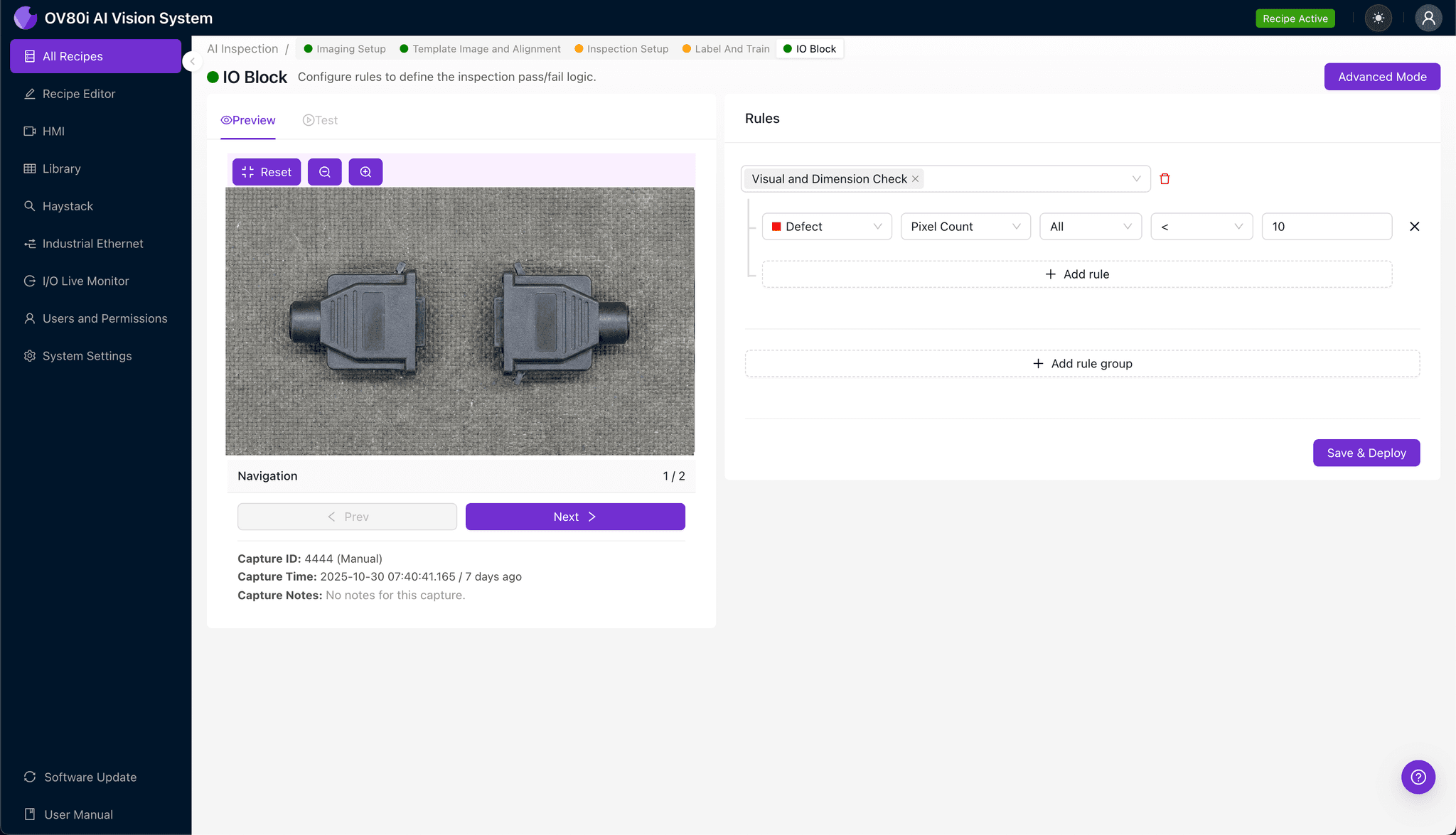
Configure your pass/fail logic based on the Inspection Types you defined earlier.
Set threshold rules that automatically reject any connector shell flagged with polarization key defects, routing failed parts to quarantine bins.
Gate automated acceptance on the line so that only verified good parts proceed to downstream assembly or packaging operations.
Key Outcomes & ROI
Implementing automated visual inspection for connector shell polarization keys delivers measurable business value:
- Reduced scrap and rework – Catch defects at the source before they contaminate downstream processes
- Higher throughput – Inspect 100% of parts at line speed without adding manual inspection stations
- Compliance and traceability – Automatically log inspection results with timestamped images for quality audits and customer documentation
- Process improvement insights – Identify defect trends by shift, machine, or material lot to address root causes proactively
Ready to Automate Your Connector Inspection?
Overview.ai's deep learning platform transforms polarization key inspection from a subjective, error-prone manual task into a consistent, scalable quality gate.