How to Detect Crushed Sealing Tape Defects in Tape-and-Reel Pockets Using AI-Powered Visual Inspection
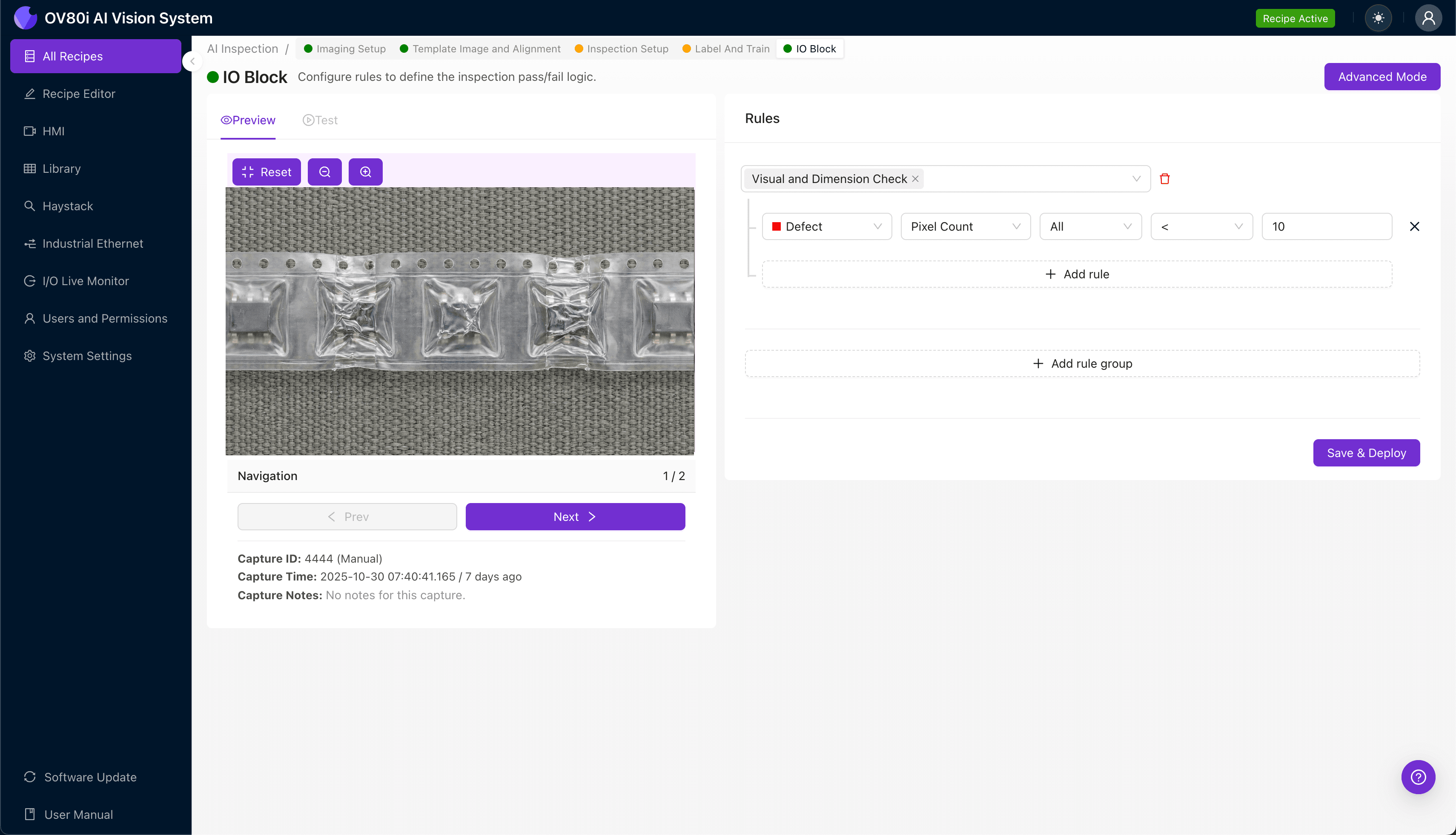
"Crushed sealing tape in tape-and-reel packaging leads to component damage, feeding failures, and costly line stoppages. AI-powered visual inspection delivers consistent, objective analysis at full production speed—catching defects that manual inspection misses."
The Problem: Why Crushed Sealing Tape Defects Slip Through Manual Inspection
Tape-and-reel packaging is the backbone of automated SMT assembly, protecting sensitive electronic components during storage, shipping, and pick-and-place operations. When the sealing tape (cover tape) becomes crushed or improperly sealed, it compromises the entire packaging integrity—leading to component damage, feeding failures, and costly production line stoppages.
Common Defects Found in Tape-and-Reel Pockets with Crushed Sealing Tape:
- Deformed pocket walls — Crushing force collapses the carrier tape pocket, damaging housed components
- Incomplete tape adhesion — Crushed areas create gaps where the cover tape fails to bond properly
- Wrinkled or folded sealing tape — Compression causes visible creases that interfere with automated peeling
- Component shift or rotation — Pocket deformation allows parts to move out of pick-position alignment
- Exposed or partially covered components — Tape damage leaves components vulnerable to contamination or loss
- Adhesive residue contamination — Crushed tape forces adhesive into the pocket cavity
Manual inspection of tape-and-reel packaging fails because operators must examine thousands of pockets per reel at production speeds. Visual fatigue sets in quickly, and the subtle variations between acceptable and defective sealing tape are nearly impossible to judge consistently across an 8-hour shift.
The Solution: Machine Vision and Deep Learning for Consistent, Objective Inspection
Traditional rule-based machine vision struggles with crushed sealing tape defects because the damage presents differently every time. Deep learning changes the game by training neural networks to recognize the concept of a defect rather than relying on rigid threshold measurements.
Overview.ai's approach leverages AI-powered visual inspection to deliver consistent, objective analysis at full line speed. The system learns from your actual production samples—capturing the nuanced variations that define "good" versus "bad" in your specific tape-and-reel application.
Step 1: Imaging Setup
Position your tape-and-reel sample with the suspected crushed sealing tape defect under the OV80i camera. Ensure the lighting reveals both the tape surface texture and pocket depth—angled illumination often highlights crushing damage that flat lighting misses.
Click "Configure Imaging" in the Overview.ai interface. Adjust the Camera Settings including exposure time and gain to achieve clear visibility of the sealing tape edges and adhesion boundaries.
Click "Save" once the image shows crisp detail of both the carrier tape pockets and cover tape surface.
Step 2: Image Alignment
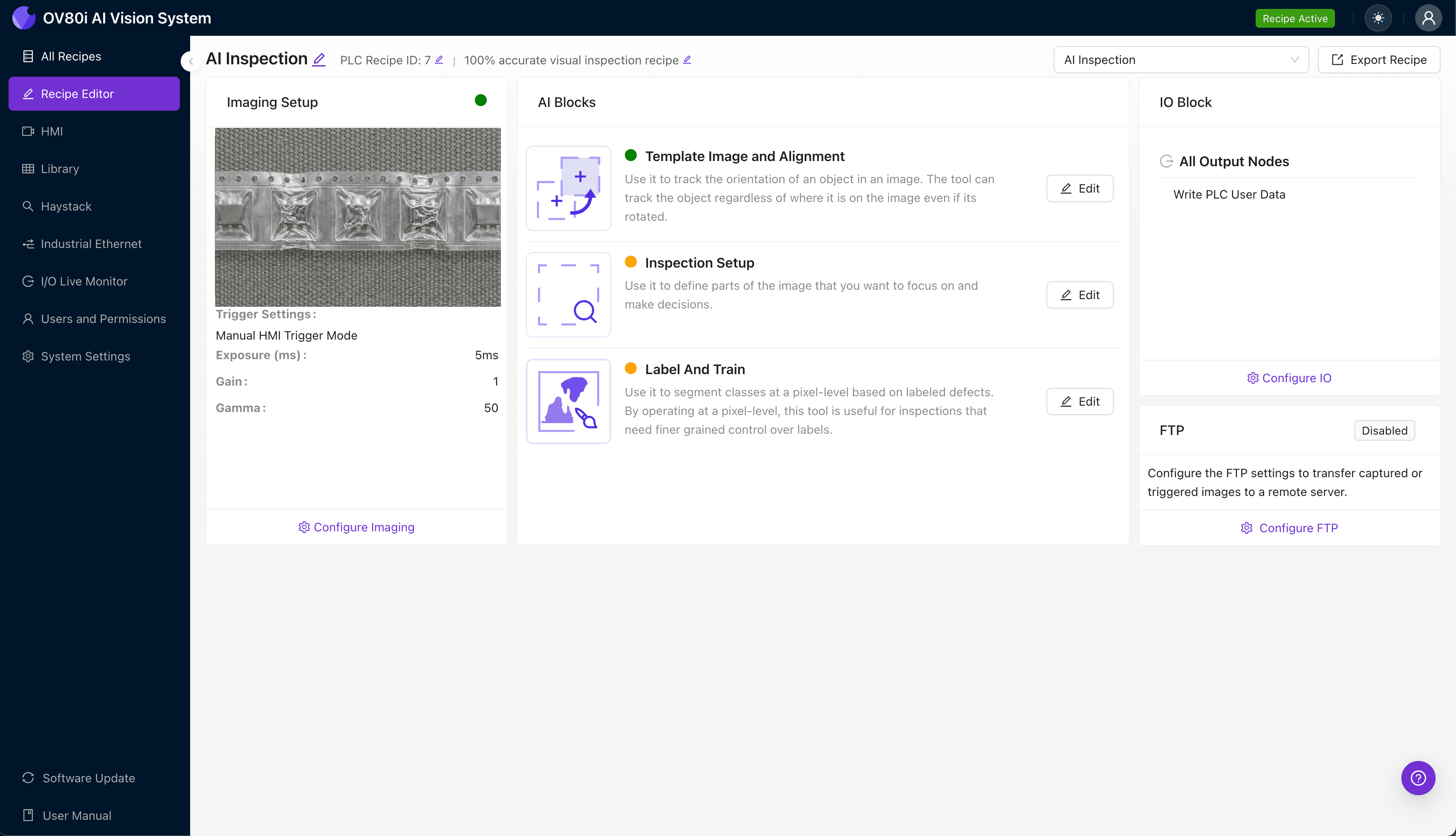
Navigate to the "Template Image" section within the configuration menu. Capture a Template showing a properly centered tape-and-reel segment with multiple pockets visible.
Click "+ Rectangle" to add an alignment region around the main pocket array. This teaches the system to locate and track your tape-and-reel consistently.
Set the "Rotation Range" to 20 degrees to accommodate minor variations in how the tape feeds through your inspection station.
Step 3: Inspection Region Selection
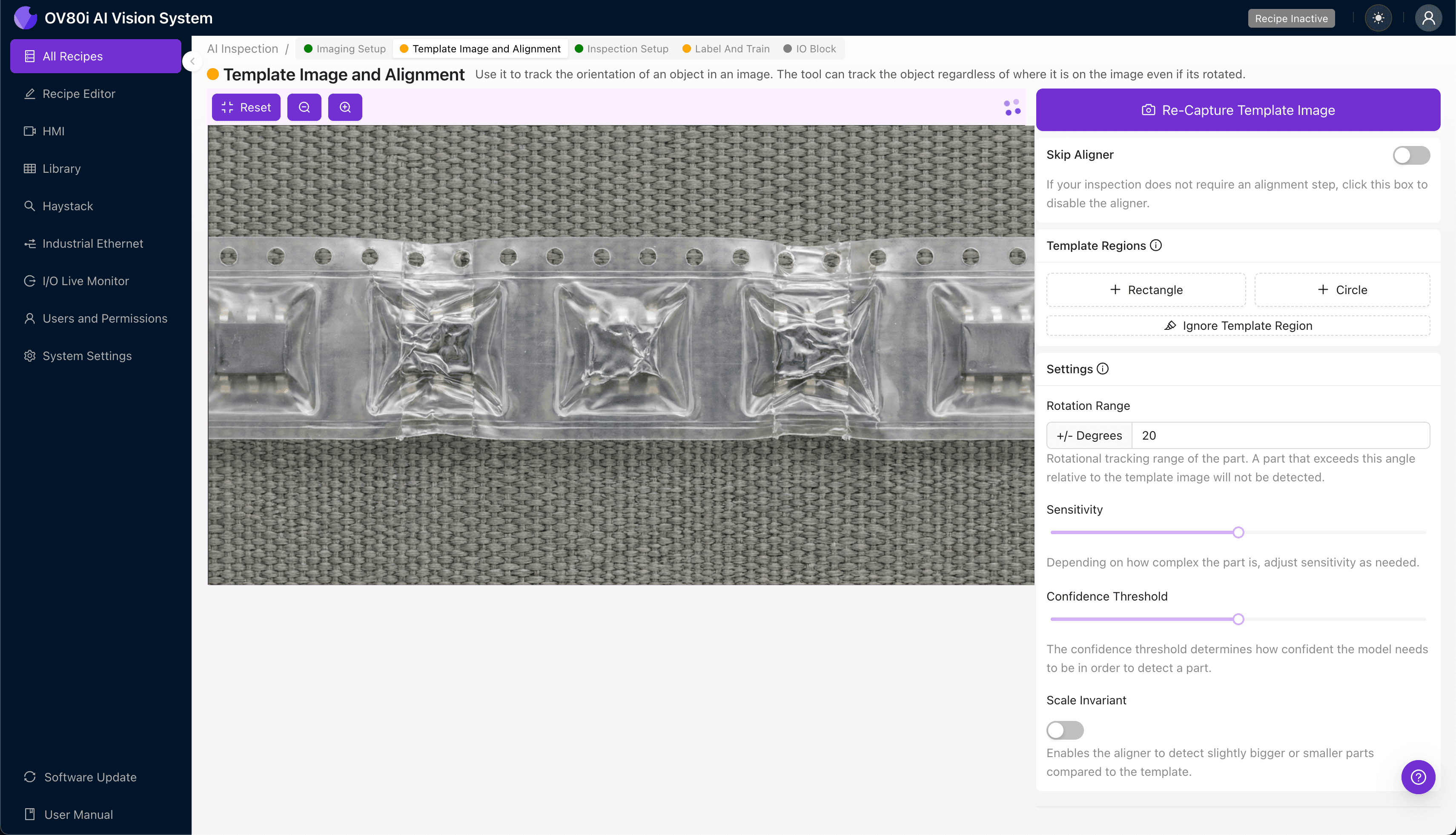
Navigate to "Inspection Setup" to define where the system should look for defects. Rename your "Inspection Types" to match specific failure modes—for example, "Crushed_Tape_Surface" and "Pocket_Deformation."
Click "+ Add Inspection Region" to create targeted zones. Resize the yellow bounding box to cover critical defect areas: the sealing tape bond line, pocket walls, and component seating area.
Click "Save" after positioning regions over all areas where crushing damage typically appears.
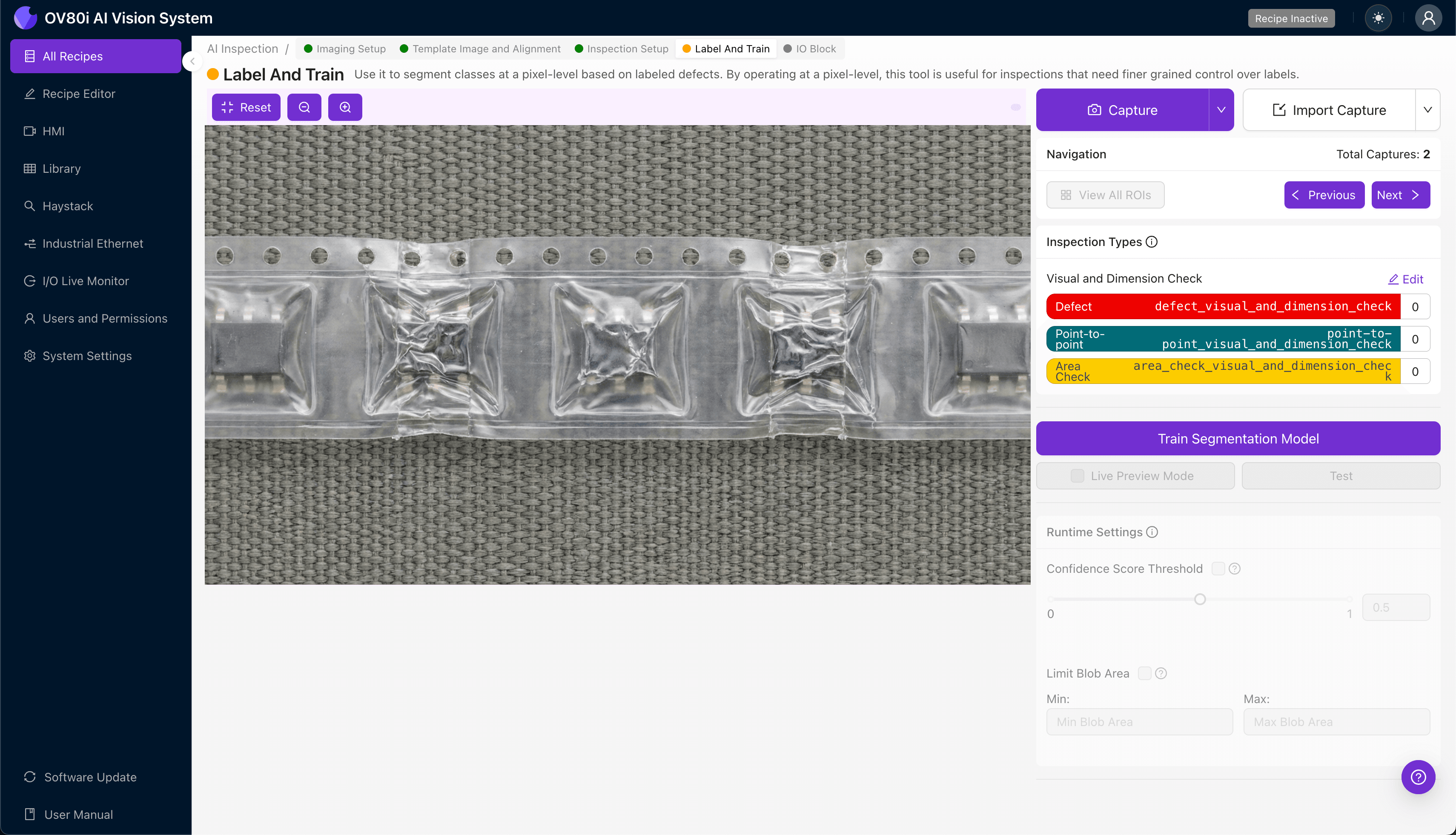
Step 4: Labeling Data
This human-in-the-loop process is where your expertise trains the AI. Review captured production images and label each as Good (acceptable seal) or Bad (crushed, wrinkled, or compromised tape).
Include representative samples across the full spectrum of defects you encounter. Add known failure modes from customer complaints, internal rejections, and edge cases that have historically caused debate among inspectors.
The more diverse your labeled dataset, the more robust your trained model becomes.
Step 5: Creating Rules
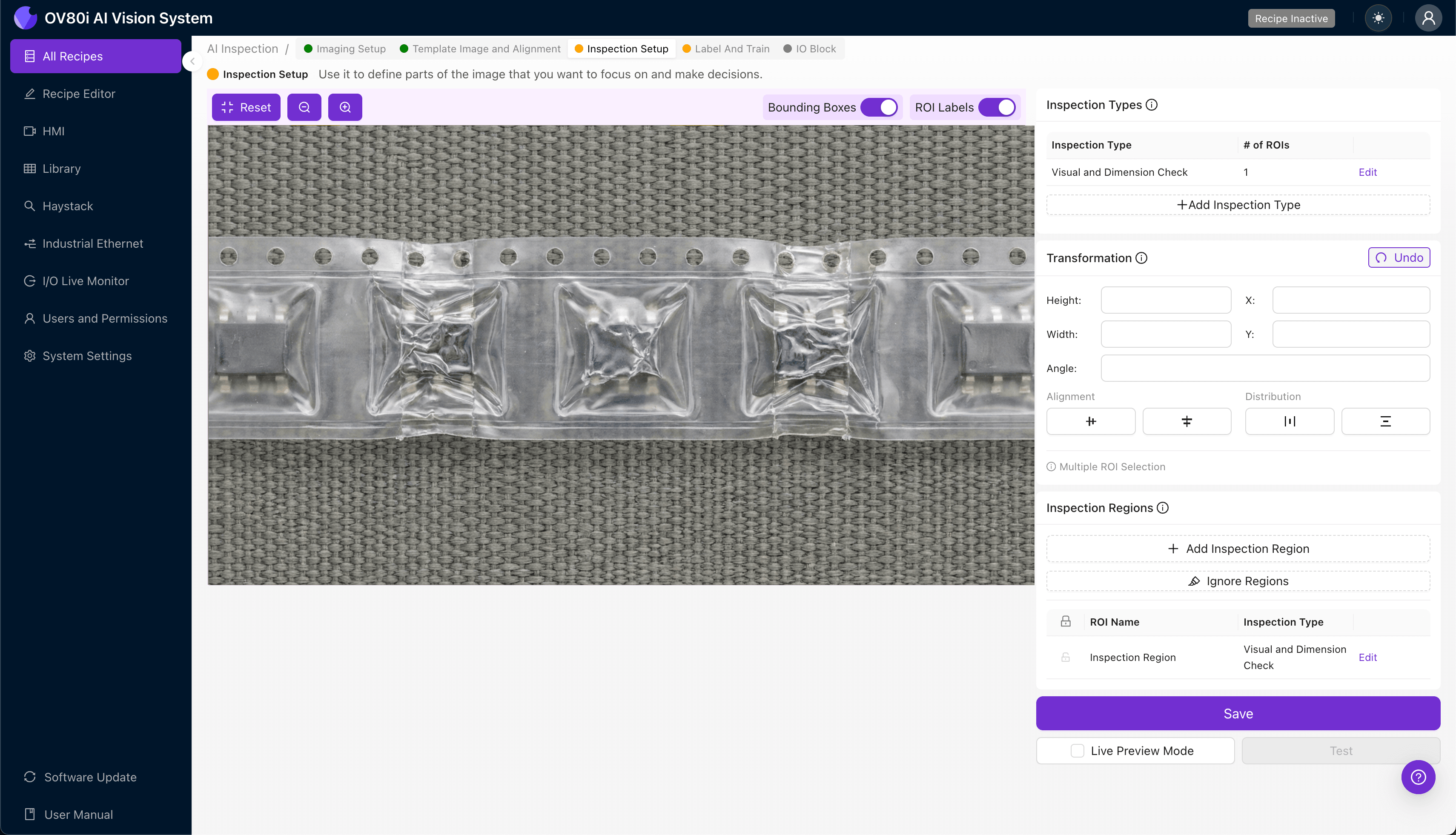
Set your pass/fail logic based on the Inspection Types you defined earlier. Configure thresholds that align with your quality standards—for example, any detection of crushed tape triggers automatic rejection.
Gate automated acceptance on the line by connecting inspection results to your reject mechanism. Parts passing inspection continue downstream; flagged reels are diverted for secondary review or scrapped automatically.
Key Outcomes & ROI
Implementing AI-powered inspection for tape-and-reel sealing tape defects delivers measurable business impact:
- Reduced scrap and rework — Catch crushed tape before reels ship to customers or enter your SMT line
- Higher throughput — Inspect at full production speed without bottlenecking on manual sampling
- Enhanced compliance and traceability — Automatically log every inspection result with timestamped images for quality audits
- Process improvement insights — Identify upstream causes of crushing (handling, storage, equipment wear) through defect trend analysis
Stop Letting Crushed Sealing Tape Defects Reach Your Customers
Overview.ai's visual inspection platform transforms tape-and-reel quality control from a sampling-based gamble into a 100% inline guarantee.