Detecting Differential Pair Defects with Dielectric Constant Variance in PCB Resin
"Dielectric constant variance in PCB resin creates impedance mismatches that devastate high-speed signal integrity. AI-powered visual inspection detects resin starvation, void formation, and fiber weave effects invisible to human inspectors—enabling 100% inline inspection at full production speed."
The Problem: Why Dielectric Variance Threatens Signal Integrity
Differential pairs are the backbone of high-speed digital communication on PCBs, carrying everything from USB and HDMI signals to critical data buses. When the dielectric constant (Dk) varies within the resin system surrounding these trace pairs, impedance mismatches occur that can devastate signal integrity and cause catastrophic field failures.
Common defects caused by dielectric constant variance include:
- Impedance discontinuities — localized Dk variations create reflection points along the differential pair routing
- Skew-induced timing errors — uneven dielectric properties cause signal propagation differences between the positive and negative traces
- Resin-starved regions — insufficient resin coverage exposes glass weave patterns, creating periodic Dk fluctuations
- Void formation in prepreg layers — trapped air pockets dramatically alter local dielectric properties
- Fiber weave effect artifacts — glass bundle alignment creates systematic Dk patterns beneath traces
- Delamination at resin-copper interfaces — separation introduces air gaps that shift effective dielectric constant
Manual inspection of these defects is virtually impossible. Human inspectors cannot visually detect subtle resin density variations or subsurface voids, and the microscopic scale of fiber weave effects makes consistent identification unreliable across production volumes.
The Solution: AI-Powered Visual Inspection
Machine vision combined with deep learning transforms how manufacturers detect dielectric-related defects in differential pair assemblies. By analyzing high-resolution imagery across multiple spectral bands, AI systems identify patterns invisible to human inspectors—including subtle surface indicators of subsurface resin anomalies.
Overview.ai's approach delivers consistent, objective inspection at full line speed. The system learns the visual signatures associated with Dk variance, from surface texture changes indicating resin starvation to reflection patterns suggesting void formation, enabling 100% inline inspection without production bottlenecks.
Step 1: Imaging Setup
Position the PCB panel containing your differential pair routing under the OV80i camera system. Ensure the board lies flat with consistent working distance across the inspection zone.
Click "Configure Imaging" in the Overview.ai interface to access Camera Settings. Adjust exposure to reveal subtle resin surface textures without overexposing copper traces, and fine-tune gain to maximize contrast in transition regions between resin and conductor.
Click "Save" to lock in your optimized imaging parameters.

Step 2: Image Alignment
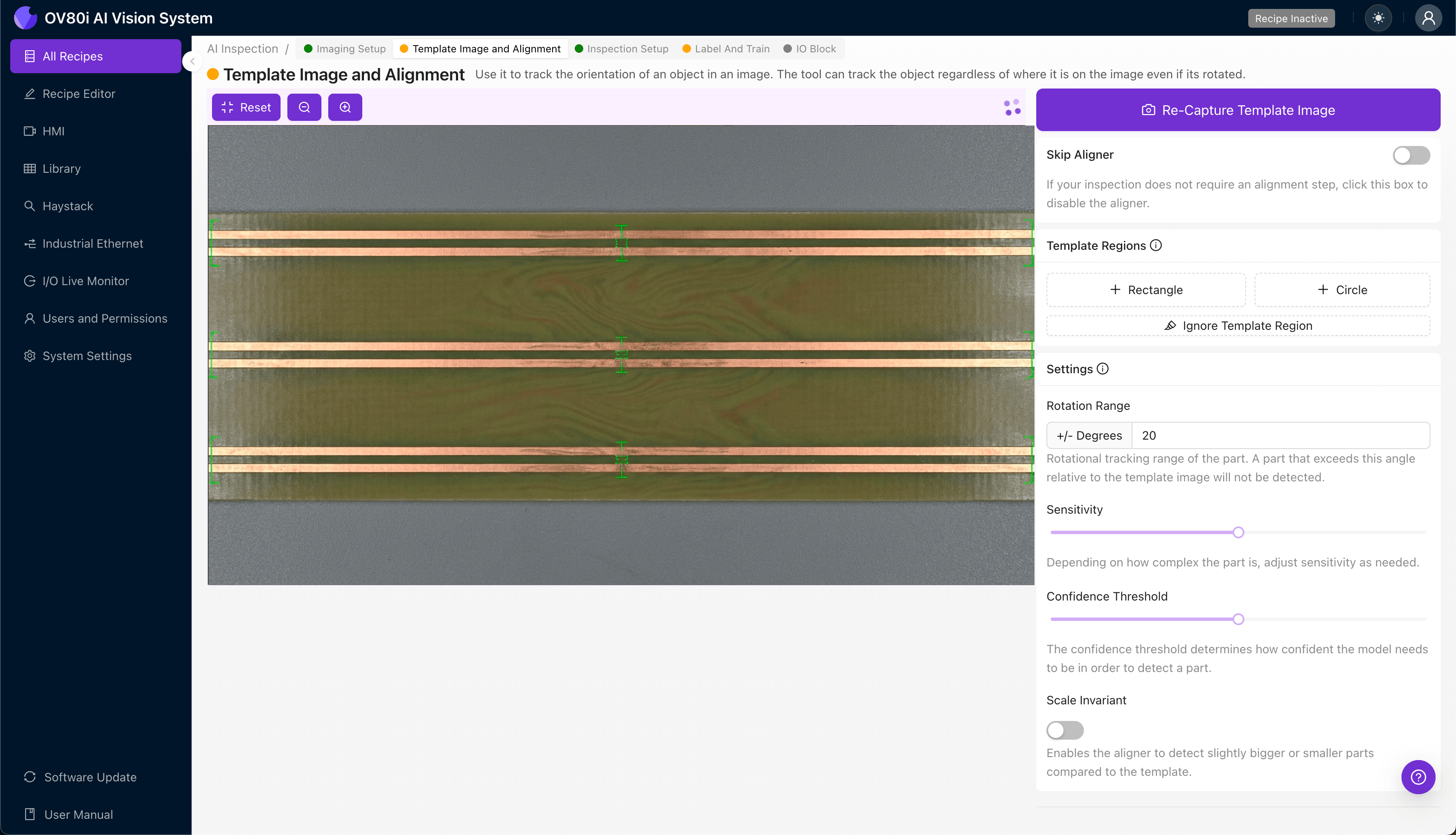
Navigate to "Template Image" in the configuration menu. Capture a Template using a known-good reference board with consistent dielectric properties.
Click "+ Rectangle" to add an alignment region around the main differential pair routing area or a fiducial marker. Set "Rotation Range" to 20 degrees to accommodate panel orientation variance during automated handling.
Step 3: Inspection Region Selection
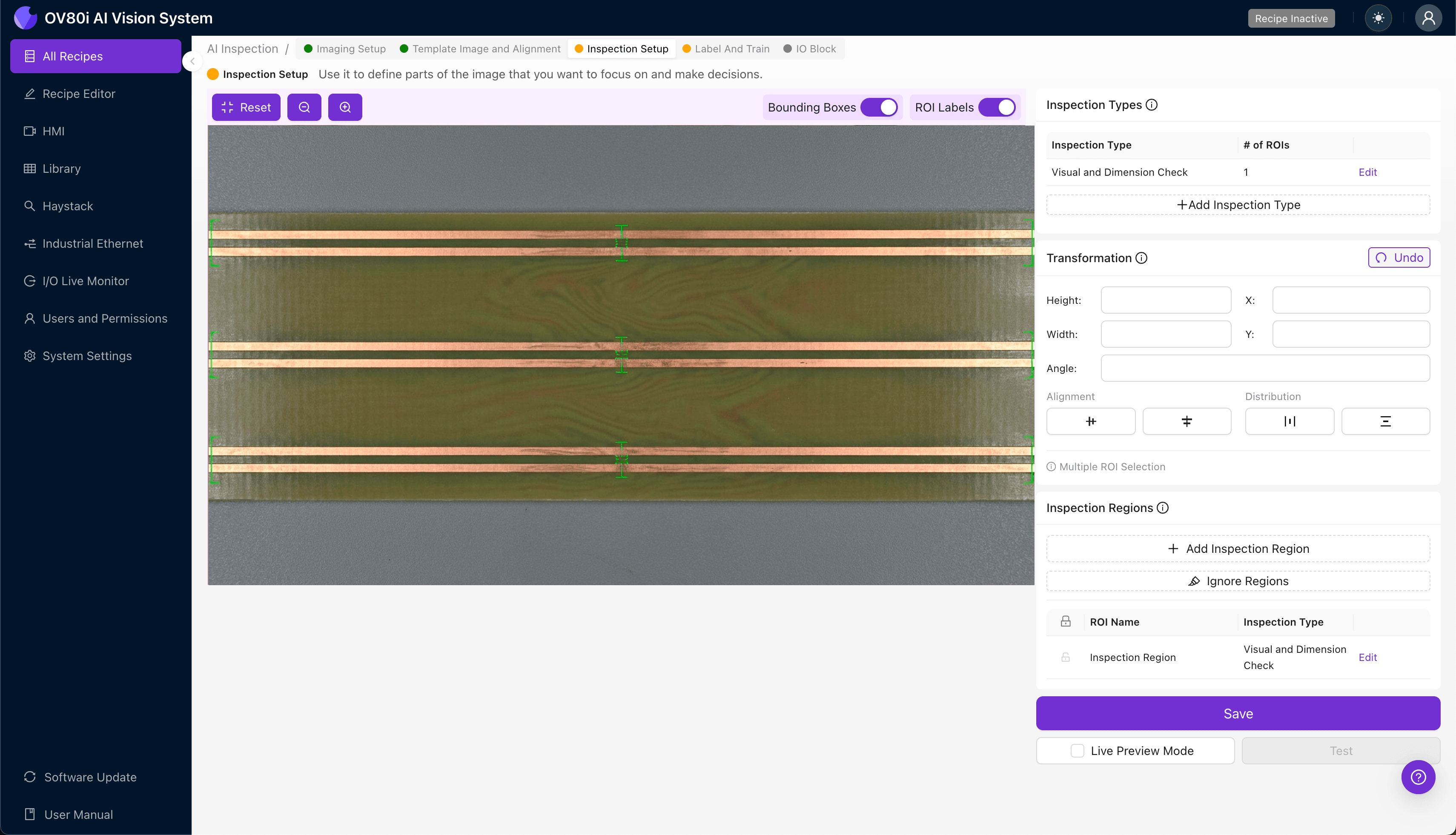
Navigate to "Inspection Setup" to define your critical inspection zones. Rename your "Inspection Types" to reflect specific defect categories—for example, "Resin_Void", "Fiber_Weave_Exposure", and "Surface_Delamination".
Click "+ Add Inspection Region" for each differential pair segment requiring analysis. Resize the yellow bounding box to cover critical areas: trace edges, via transitions, and regions where routing crosses perpendicular to glass weave direction.
Click "Save" to confirm your inspection geometry.
Step 4: Labeling Data
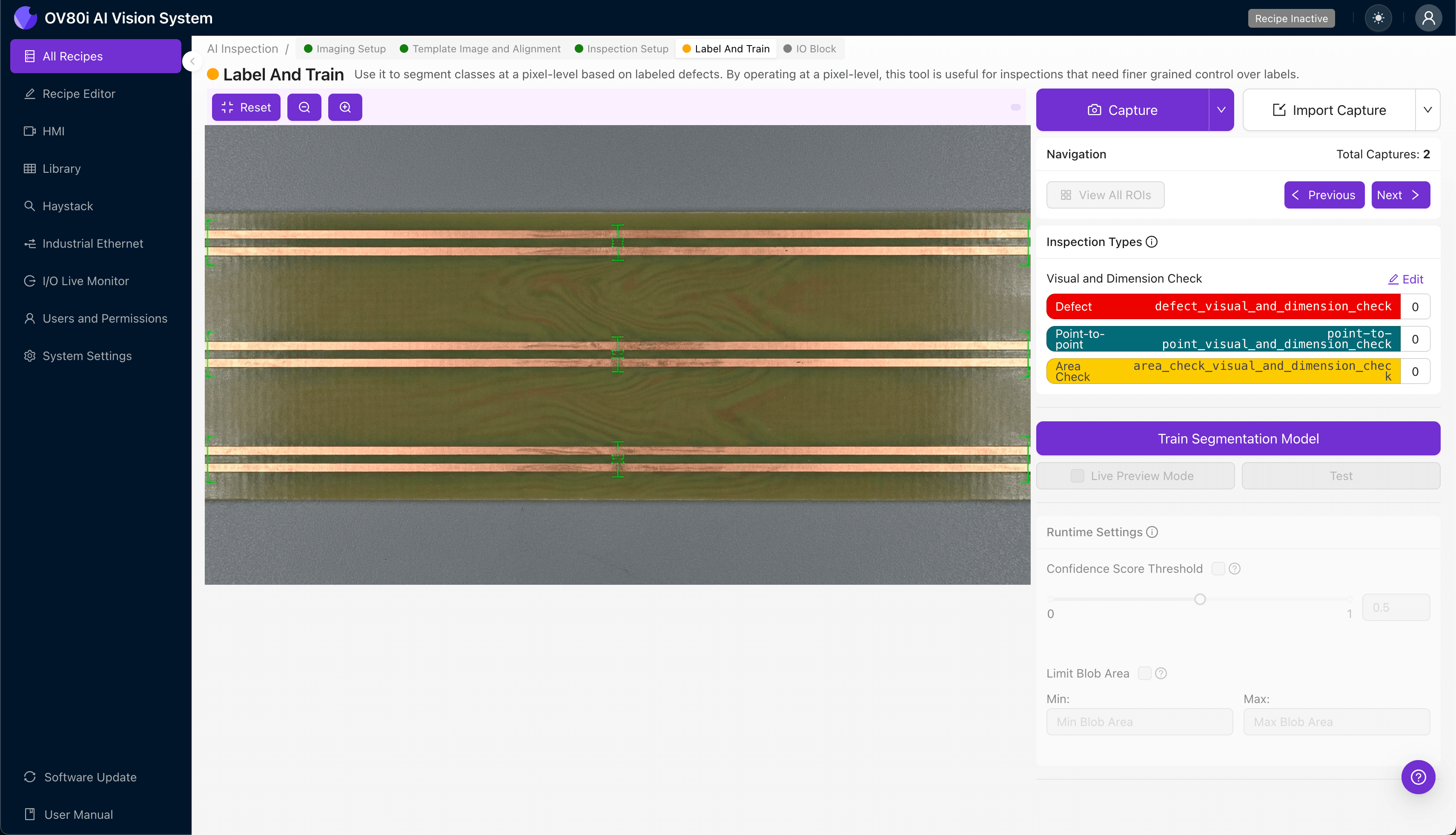
The human-in-the-loop labeling process trains your deep learning model to recognize production-specific defect presentations. Review captured images and label each as Good or Bad based on your quality criteria.
Include representative samples across your full defect spectrum: boards with known impedance failures, samples exhibiting visible resin starvation, and units that passed electrical test despite marginal dielectric properties. This diversity ensures the model generalizes effectively across real-world variance.
Step 5: Creating Rules
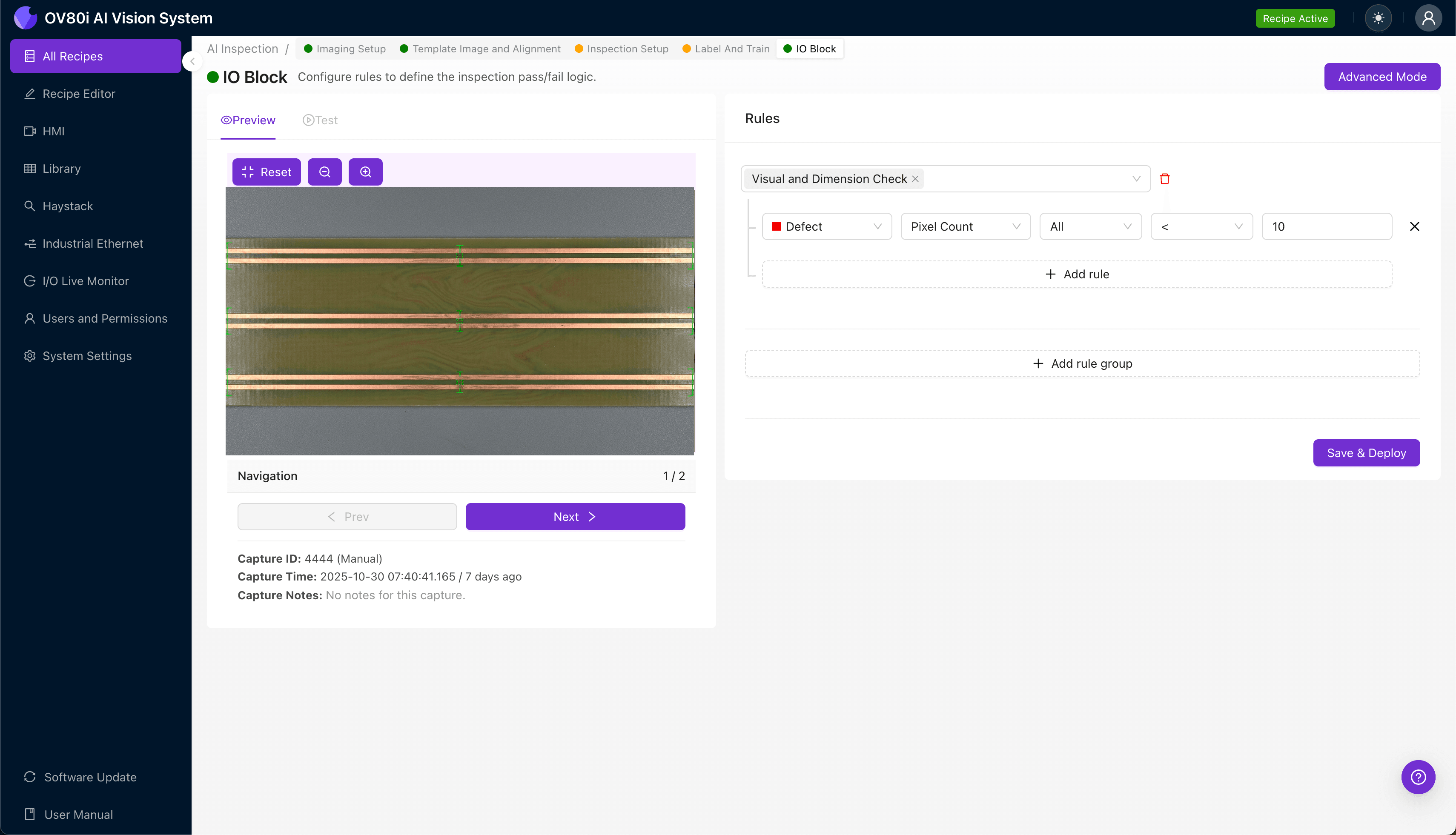
Configure pass/fail logic based on your defined Inspection Types. Set confidence thresholds for each defect category—you may require higher certainty for critical high-speed differential pairs versus less sensitive routing.
Gate automated acceptance on the line by linking inspection results to your reject mechanism. Boards flagged for dielectric anomalies route automatically to rework or detailed analysis stations.
Key Outcomes & ROI
Implementing AI-powered inspection for differential pair dielectric variance delivers measurable business impact:
- Reduced scrap rates — catch resin defects before downstream assembly adds cost to defective boards
- Higher throughput — eliminate manual sampling bottlenecks with 100% inline inspection at production speed
- Enhanced compliance and traceability — maintain complete inspection records linking specific boards to detected anomalies for ISO and automotive quality standards
- Process improvement insights — trend analysis reveals lamination process drift, resin batch variations, or environmental factors affecting dielectric consistency
Dielectric constant variance in differential pair routing represents a hidden quality risk that traditional inspection methods cannot address. Overview.ai's intelligent visual inspection brings this critical parameter under control—protecting your customers from field failures while optimizing your manufacturing process.
Take Control of Signal Integrity
Stop letting dielectric variance compromise your high-speed PCBs. Deploy Overview.ai to detect defects invisible to human inspectors.