Detecting Heat-Shrink Tubing with Incomplete Recovery: A Machine Vision Walkthrough
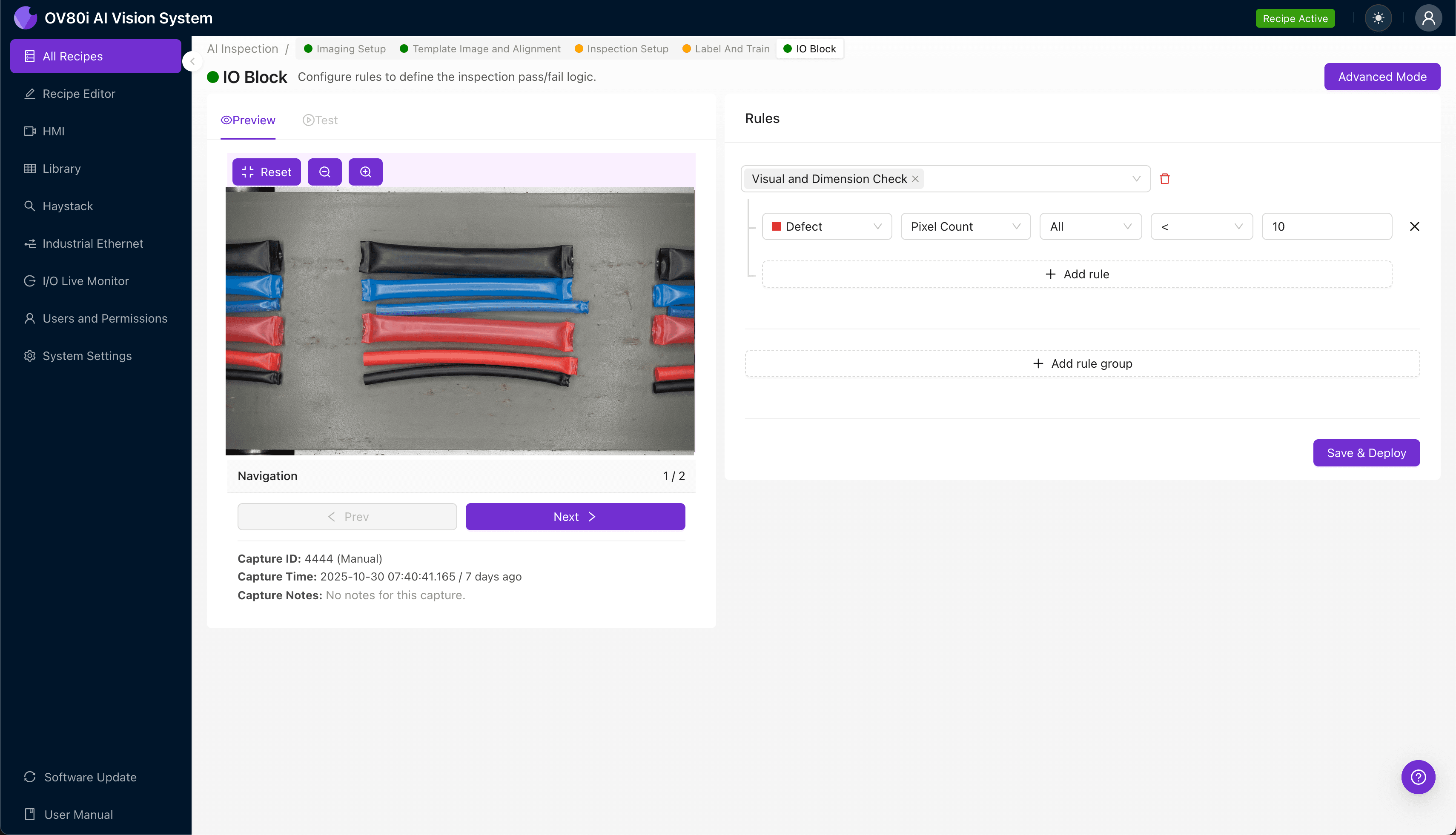
"Heat-shrink tubing that fails to fully recover compromises wire insulation and electrical safety. Overview.ai's machine vision platform detects incomplete recovery defects—gaps, wrinkles, and loose fit—with pixel-level accuracy at full production speed."
The Problem: When Heat-Shrink Fails to Perform
Heat-shrink tubing is critical for wire insulation, strain relief, and environmental protection across aerospace, automotive, and electronics manufacturing. When the tubing fails to fully recover around its substrate, it compromises both mechanical integrity and electrical safety.
Common Defects Associated with Incomplete Recovery:
- Loose fit or air gaps – Tubing that hasn't constricted fully, leaving visible space between the tubing and wire bundle
- Uneven shrinkage – Sections that have recovered at different rates, creating bulges or necked-down areas
- Wrinkling or pleating – Surface deformations caused by insufficient or uneven heat application
- Exposed substrate – Critical connection points or splices left unprotected due to tubing that stopped short
- Adhesive line failure – Inner adhesive layer that hasn't activated or flowed properly to create a seal
- Longitudinal splitting – Stress fractures from forced recovery or material degradation
Manual inspection of heat-shrink applications is notoriously unreliable. Operators experience visual fatigue when examining hundreds of nearly identical assemblies per shift, and subtle variations in fit—especially on dark tubing over dark substrates—are easily missed at production speeds.
The Solution: AI-Powered Visual Inspection
Machine vision systems equipped with deep learning overcome the limitations of human inspection by analyzing every unit with pixel-level consistency. Unlike rule-based systems that struggle with the organic variations in heat-shrink recovery, neural networks learn to recognize the subtle visual signatures of incomplete shrinkage across diverse lighting conditions and tubing colors.
Overview.ai's approach delivers objective, repeatable inspection at full line speed—eliminating the subjectivity that plagues manual QC. The OV80i platform captures high-resolution images and applies trained models to flag defective assemblies before they reach downstream processes or end customers.
Step 1: Imaging Setup
Position the heat-shrink assembly under the OV80i camera, ensuring the tubing-to-substrate interface is clearly visible. Consistent part placement is essential for reliable detection of recovery defects.
Click "Configure Imaging" to access the Camera Settings panel. Adjust exposure and gain until surface details—including any gaps, wrinkles, or loose sections—are clearly distinguishable without overexposure on reflective substrates.
Click "Save" to lock in your imaging parameters.

Step 2: Image Alignment
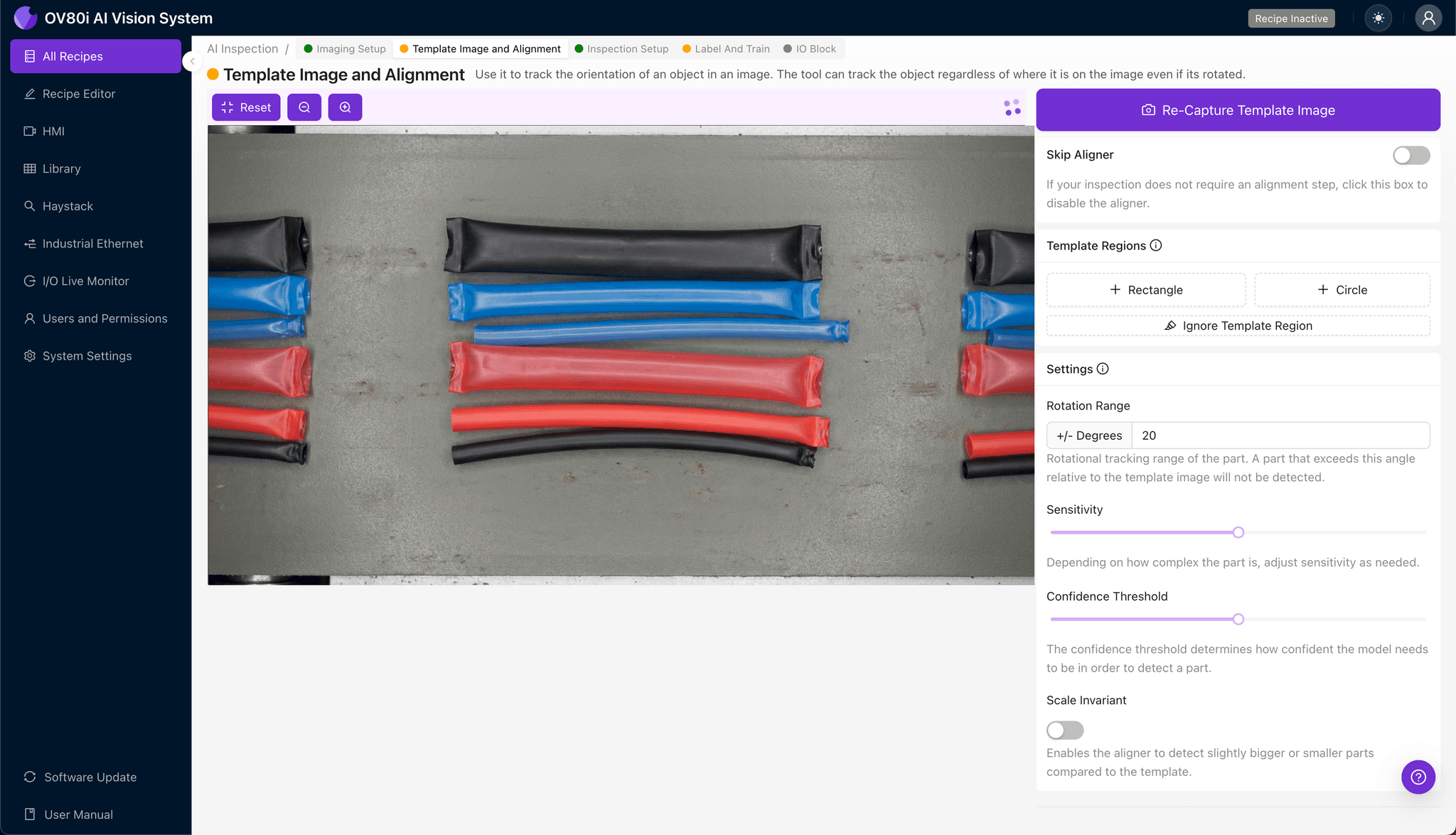
Navigate to the "Template Image" tab and capture a reference image of a properly positioned assembly. This template anchors all subsequent inspections to a consistent orientation.
Click "+ Rectangle" to draw a region around the main body of the heat-shrink tubing. Set the "Rotation Range" to 20 degrees to accommodate minor variations in part presentation on the line.
Step 3: Inspection Region Selection
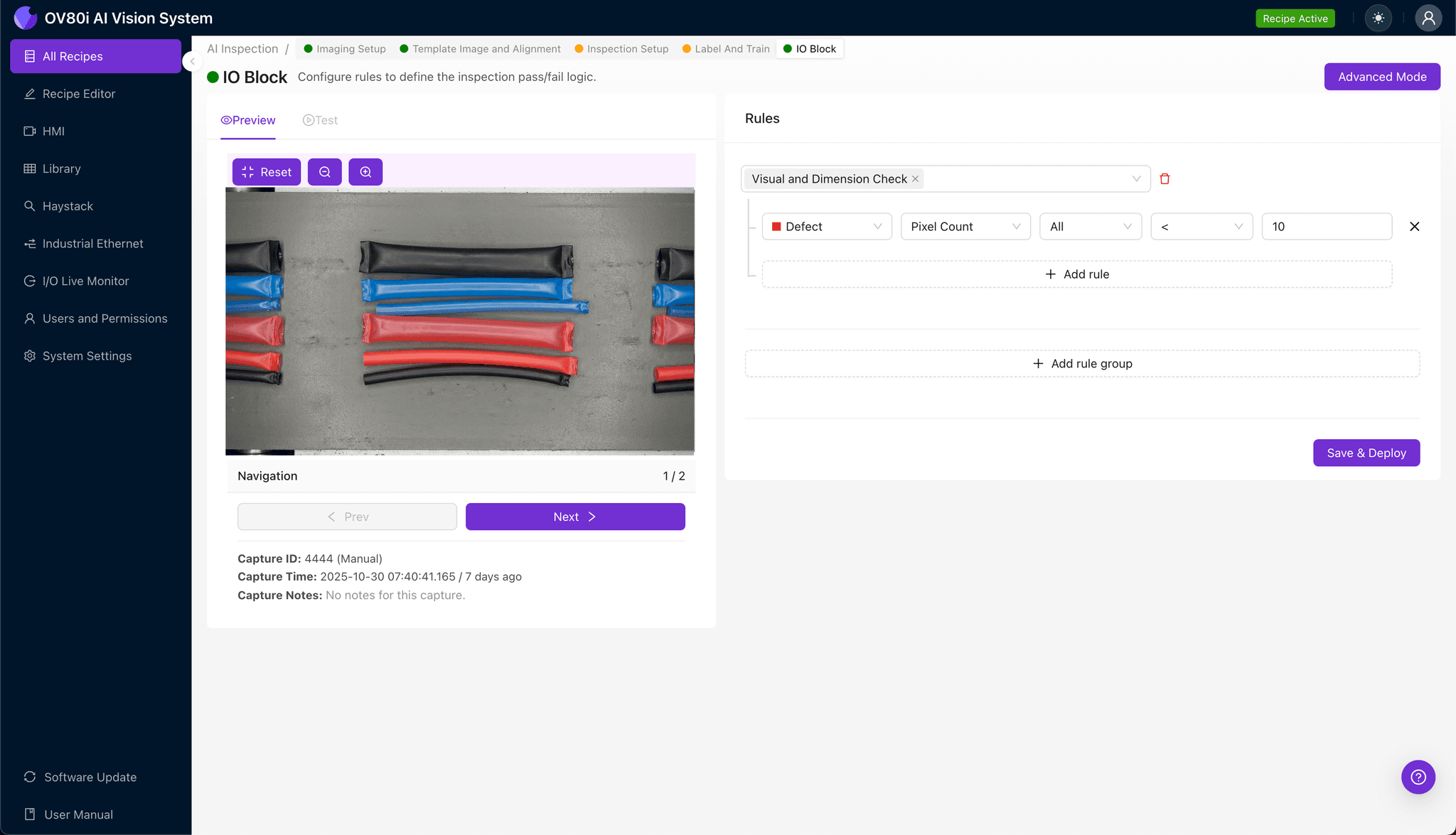
Navigate to "Inspection Setup" to define where the system should focus its analysis. Rename your "Inspection Types" to reflect the specific defect categories—for example, "Recovery_Gap" or "Surface_Wrinkle."
Click "+ Add Inspection Region" to create a new detection zone. Resize the yellow bounding box to cover critical areas: the tubing ends, the substrate interface, and any high-stress transition points.
Click "Save" to confirm your inspection configuration.
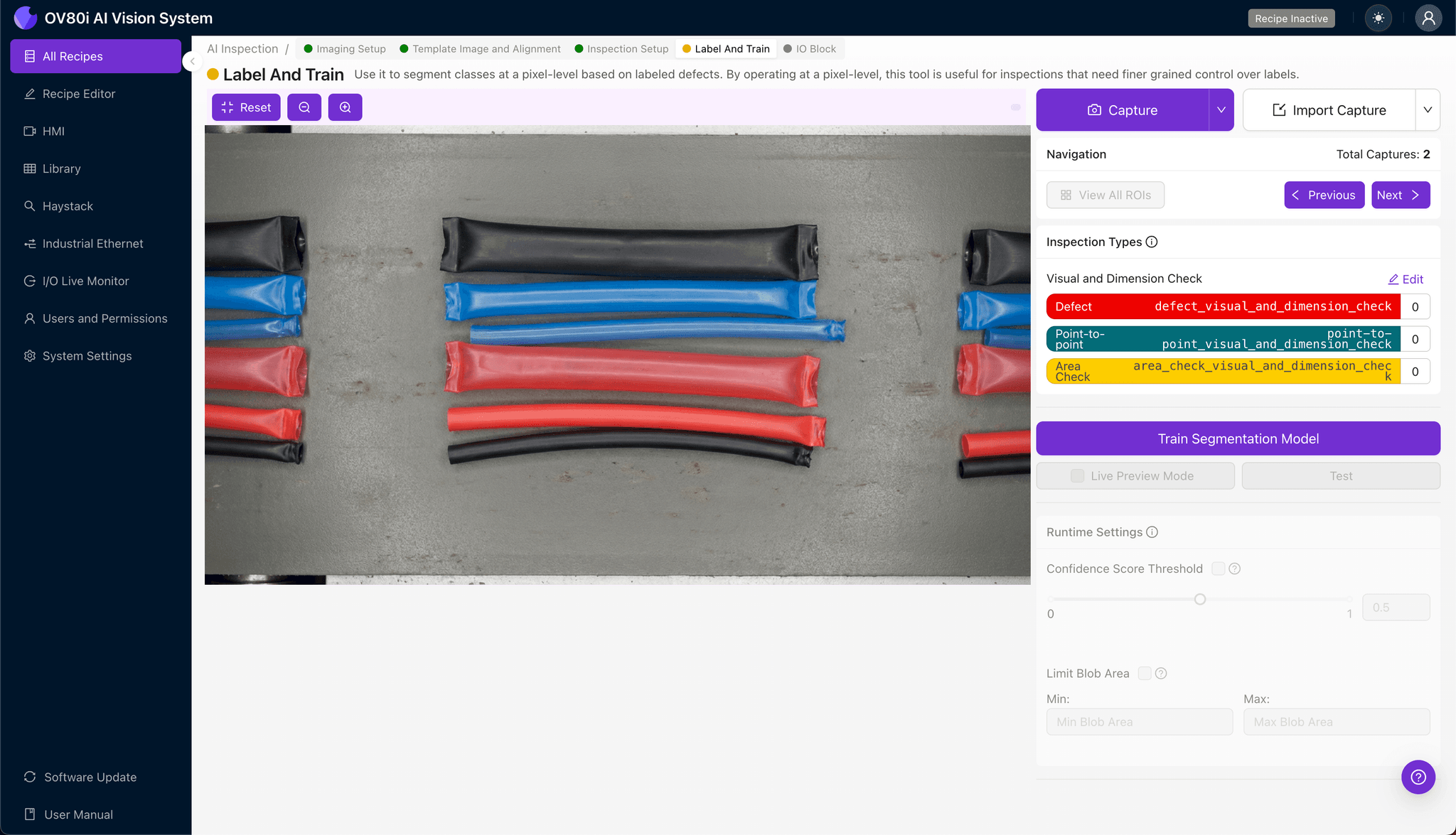
Step 4: Labeling Data
The human-in-the-loop labeling process is where your quality expertise trains the AI. As production images stream in, operators review and classify each sample as Good or Bad based on recovery quality.
Include representative samples across the full spectrum: ideal recovery, borderline cases, and known failure modes like loose fit or wrinkling. The more diverse your labeled dataset, the more robust your model becomes in distinguishing acceptable variation from true defects.
Step 5: Creating Rules
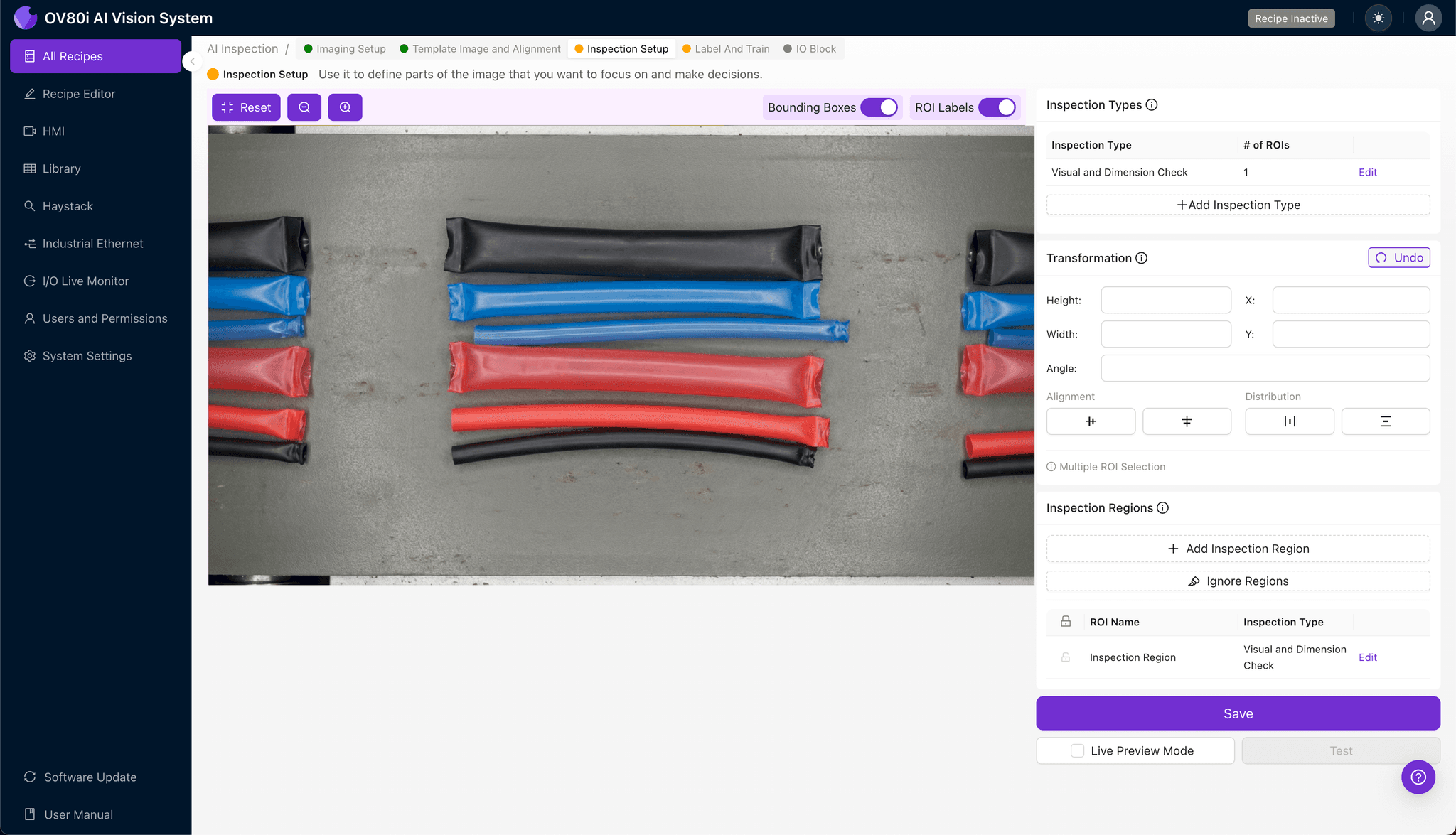
With your model trained, navigate to the Rules engine to set pass/fail logic based on your defined Inspection Types. Configure thresholds that align with your quality specifications—for instance, flagging any assembly where "Recovery_Gap" confidence exceeds 85%.
These rules gate automated acceptance on the line, diverting suspect parts for secondary review while allowing conforming assemblies to proceed without bottlenecks.
Key Outcomes & ROI
Implementing AI-powered inspection for heat-shrink tubing delivers measurable business impact:
- Reduced scrap and rework – Catch incomplete recovery before assemblies move to potting, overmolding, or final packaging
- Higher throughput – Eliminate manual inspection bottlenecks while maintaining 100% coverage
- Compliance and traceability – Automatically log inspection images and results for aerospace, automotive, or medical device audits
- Process improvement insights – Identify upstream issues like inconsistent heat gun application or material lot variation through defect trend analysis
Conclusion
Heat-shrink tubing with incomplete recovery represents a subtle but consequential quality risk. With Overview.ai's machine vision platform, manufacturers gain the consistency, speed, and accuracy needed to catch every defect—protecting both product reliability and brand reputation.
Eliminate Heat-Shrink Defects Today
Stop relying on manual inspection for critical wire assemblies. Deploy Overview.ai to catch incomplete recovery defects instantly.