Automating Visual Inspection of Immersion-Rated Connectors with Elastomer Swelling
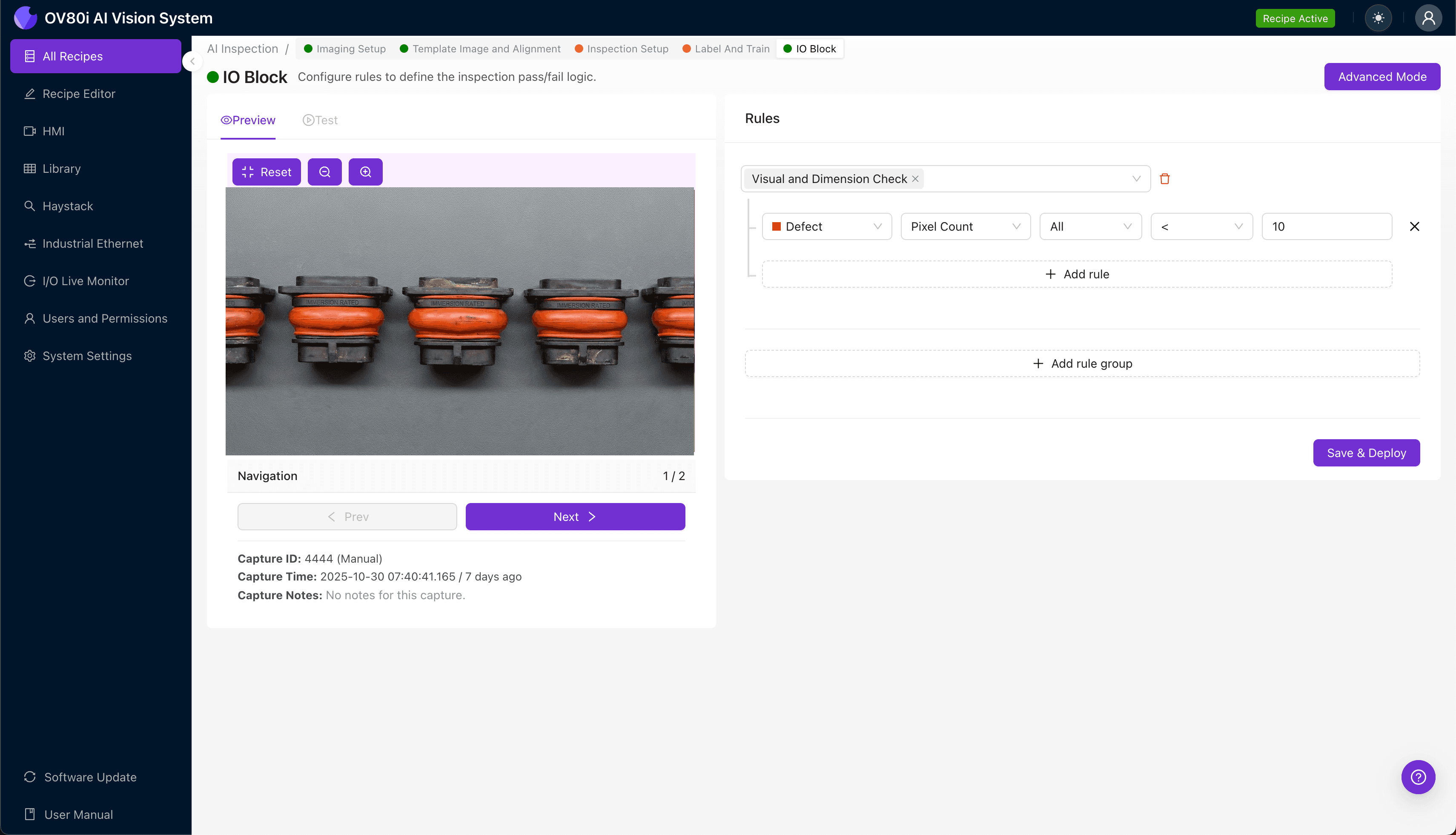
"Elastomer swelling in immersion-rated connectors creates subtle dimensional changes that compromise seal integrity—often invisibly. Overview.ai's machine vision platform detects these defects consistently at line speed, eliminating the subjectivity of manual inspection."
The Problem: Why Elastomer Seal Integrity Demands Precision Inspection
Immersion-rated connectors are critical components in automotive, marine, aerospace, and industrial applications where reliable sealing against fluids is non-negotiable. When elastomer seals swell due to chemical exposure, temperature cycling, or material incompatibility, connector integrity becomes compromised—often invisibly.
Common Defects in Immersion-Rated Connectors with Elastomer Swelling
- Excessive radial expansion — Elastomer swelling beyond tolerance causes interference with mating surfaces and housing walls
- Uneven swell distribution — Asymmetric expansion creates gaps in sealing surfaces, compromising IP ratings
- Surface cracking and crazing — Chemical degradation manifests as micro-fractures invisible to casual observation
- Extrusion and cold flow — Swollen elastomers push into unintended cavities, blocking pin insertion or fluid channels
- Dimensional out-of-spec — Overall seal geometry exceeds allowable tolerances after fluid exposure
- Hardness degradation — Material softening reduces compression set recovery, leading to long-term seal failure
Human inspectors struggle to maintain consistency when evaluating subtle dimensional changes across thousands of units per shift. Fatigue sets in rapidly when distinguishing between acceptable and excessive swell levels—variations often measured in fractions of a millimeter.
The Solution: Machine Vision and Deep Learning for Consistent Detection
Traditional go/no-go gauging catches gross failures but misses the nuanced defects that cause field returns. Machine vision systems equipped with deep learning algorithms can detect subtle variations in elastomer geometry, surface texture, and dimensional conformance that human inspectors simply cannot perceive consistently.
Overview.ai's approach delivers objective, repeatable inspection at line speed—eliminating the subjectivity inherent in manual QC processes. By training AI models on actual production data, the system learns to identify the specific failure signatures unique to your elastomer materials and connector designs.
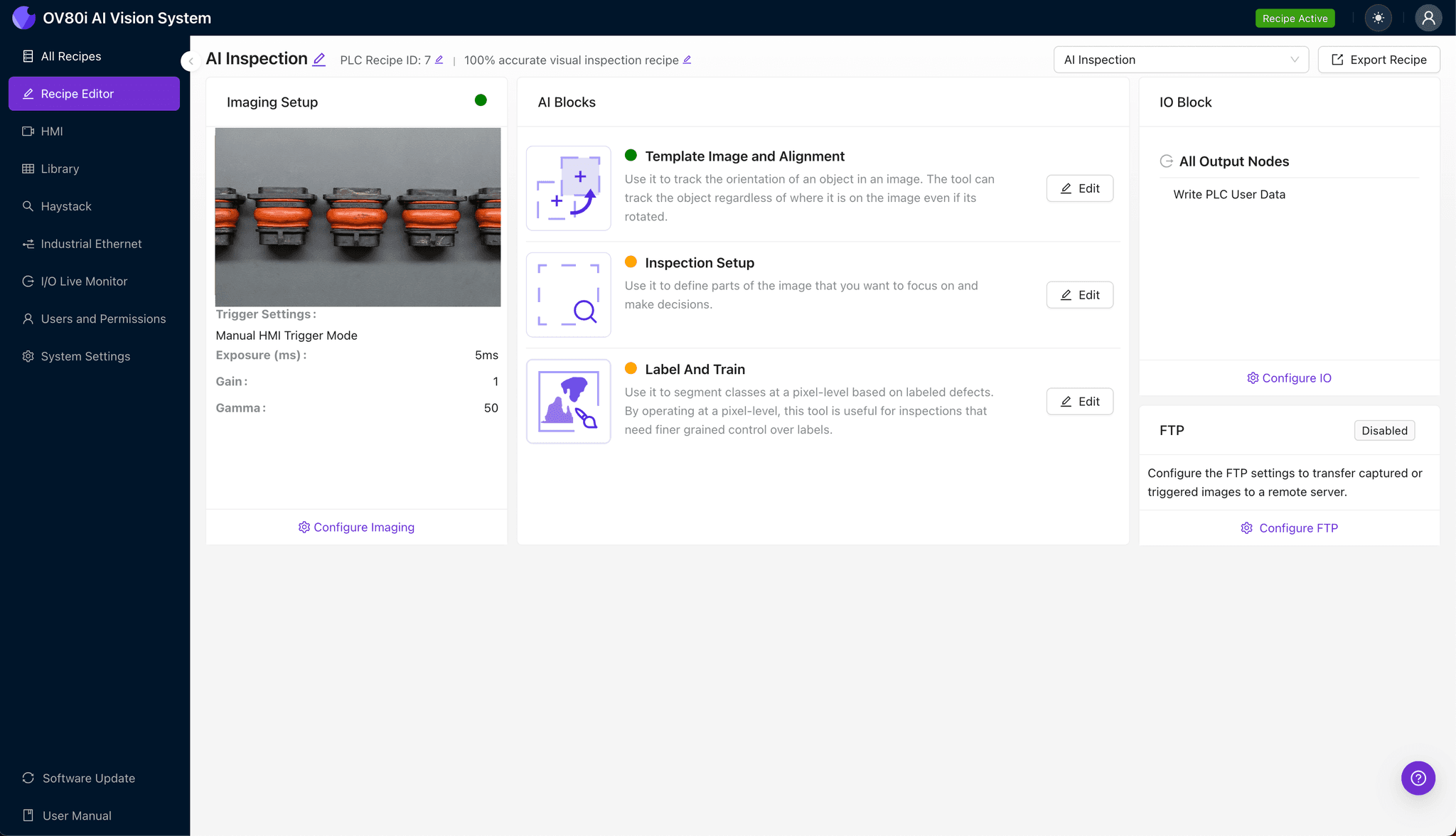
Step 1: Imaging Setup
Position the immersion-rated connector under the camera with the elastomer seal clearly visible. Consistent part presentation is essential—consider fixturing that exposes the seal's radial profile.
Click "Configure Imaging" to access Camera Settings. Adjust exposure to capture elastomer surface detail without overexposure on reflective housing surfaces, and fine-tune gain to minimize noise while maintaining edge definition.
Click "Save" to lock in your imaging parameters.
Step 2: Image Alignment
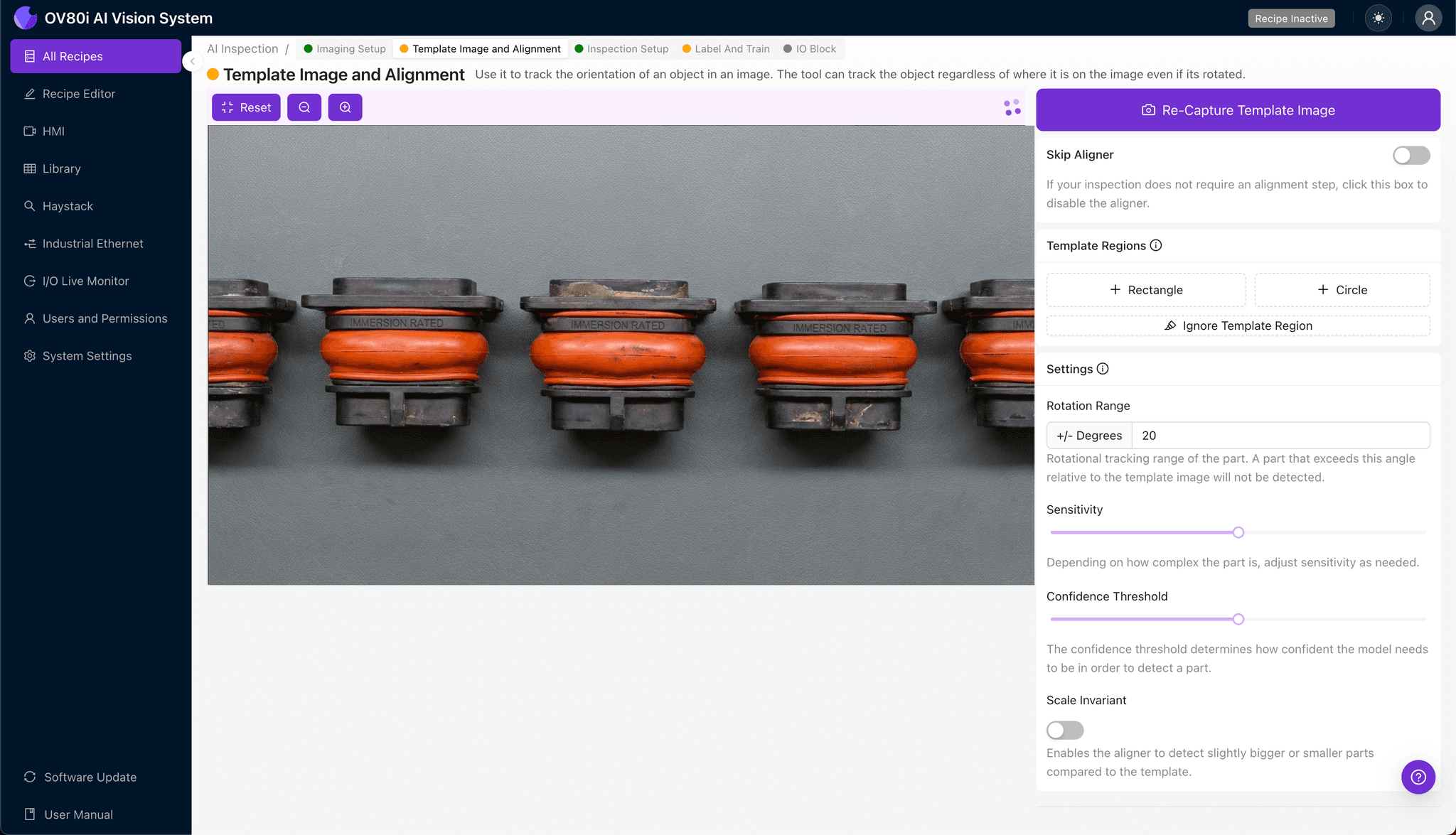
Navigate to the "Template Image" tab and capture a reference image of a known-good connector. This template anchors the inspection system to consistent part positioning.
Click "+ Rectangle" to draw a region around the connector's main body, encompassing the housing perimeter. Set the "Rotation Range" to 20 degrees to accommodate minor orientation variations during automated handling.
Step 3: Inspection Region Selection
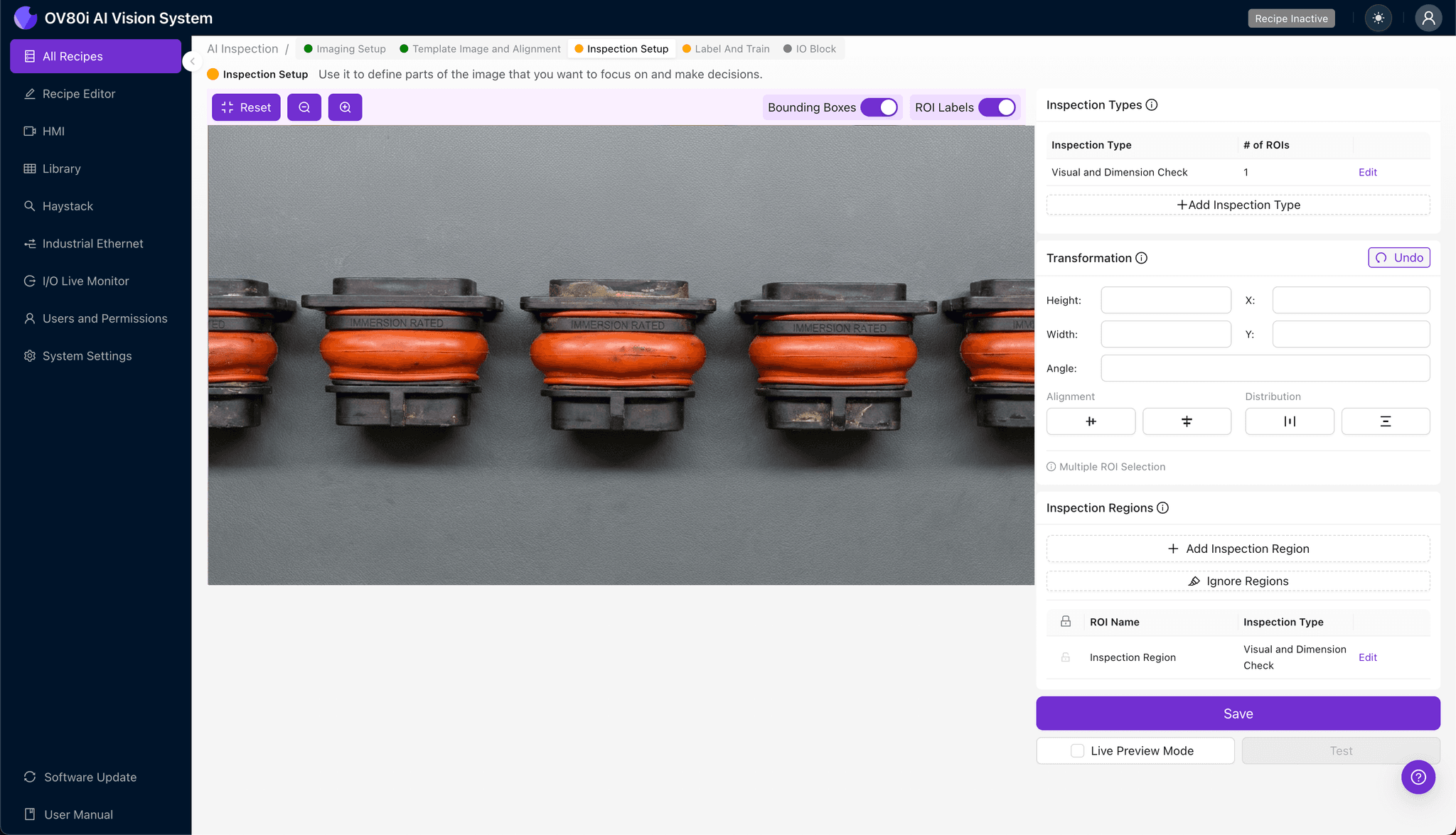
Navigate to "Inspection Setup" to define your detection zones. Rename your "Inspection Types" to match your defect categories—for example, "Seal_Swell", "Surface_Cracking", and "Extrusion".
Click "+ Add Inspection Region" for each critical area. Resize the yellow bounding box to cover the elastomer seal perimeter, paying special attention to areas prone to asymmetric swelling or extrusion.
Click "Save" after defining all inspection zones.
Step 4: Labeling Data
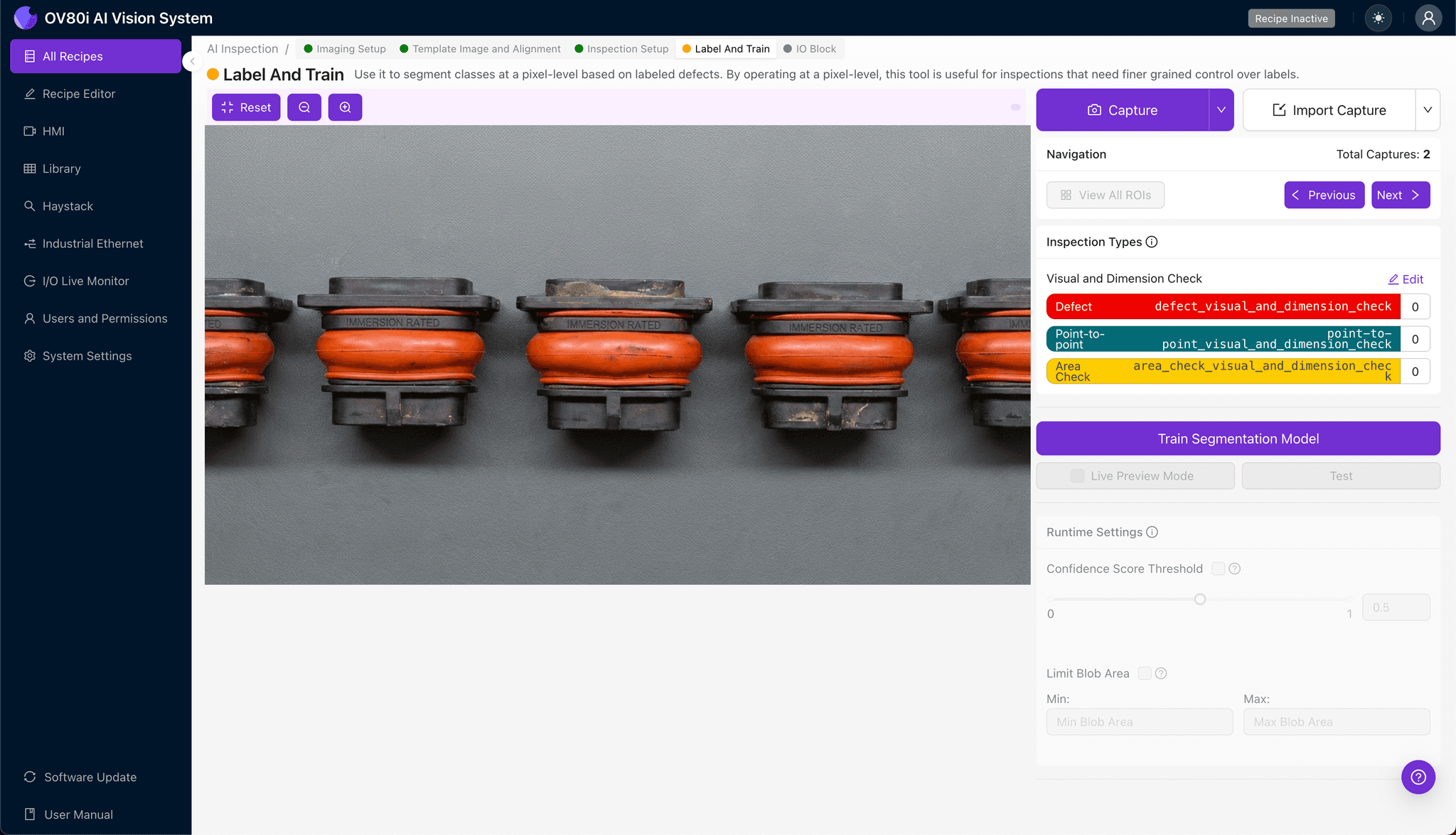
The human-in-the-loop labeling process trains your AI model to recognize your specific pass/fail criteria. Review captured images and categorize each as Good or Bad based on your quality standards.
Include representative samples across the full spectrum of acceptable variation. Deliberately incorporate known failure modes—swollen seals from accelerated aging tests, field returns, and intentionally stressed samples—to build robust detection capability.
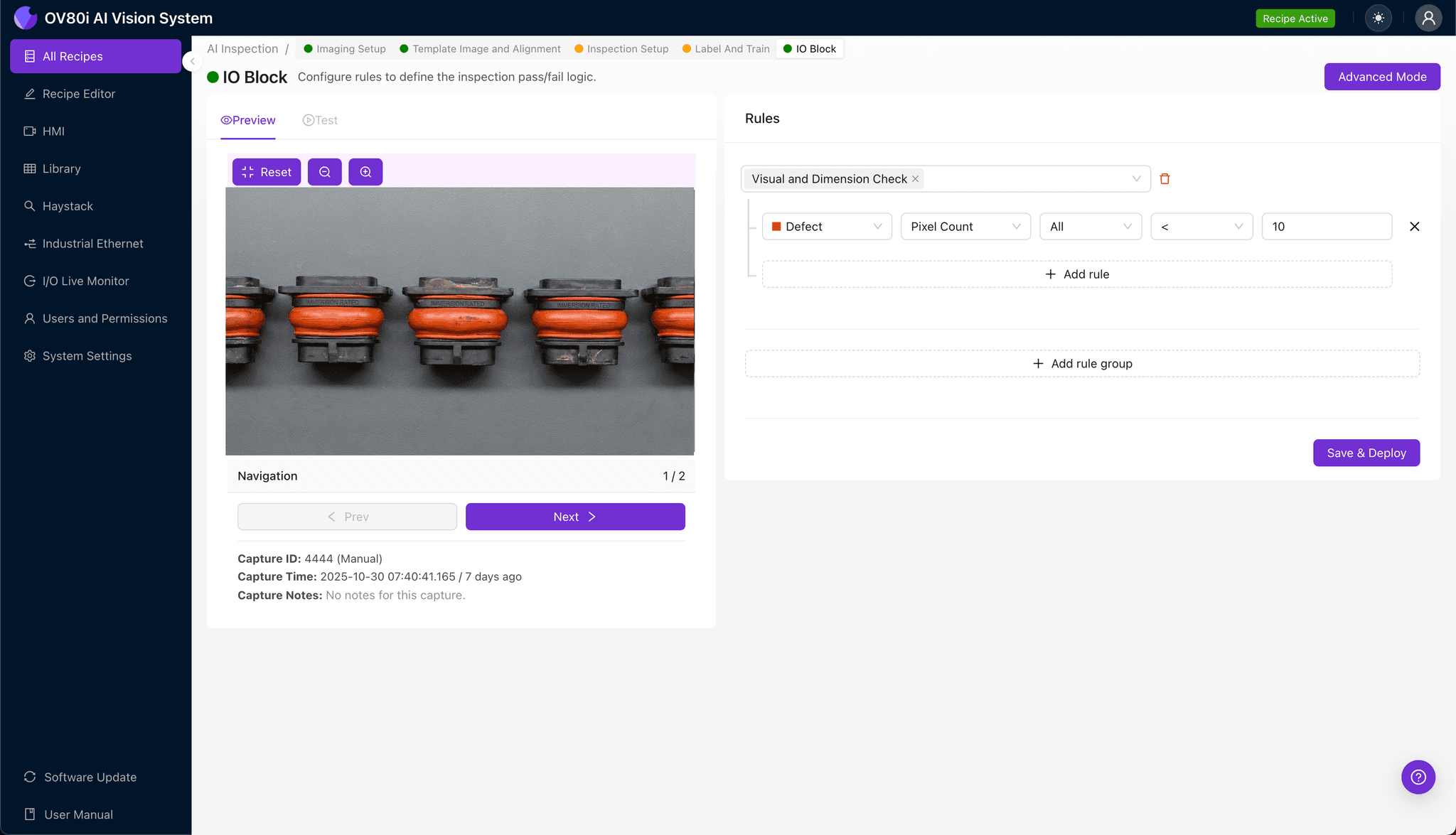
Step 5: Creating Rules
Configure pass/fail logic based on your defined Inspection Types. Set confidence thresholds that balance escape rate reduction against false rejection costs.
Gate automated acceptance on the line by linking inspection outcomes to reject mechanisms or line-stop triggers. This ensures non-conforming connectors never reach downstream assembly or shipping.
Key Outcomes & ROI
Implementing automated visual inspection for immersion-rated connectors delivers measurable business impact:
- Reduced scrap and rework — Catch elastomer defects before connectors proceed to expensive potting, overmolding, or final assembly operations
- Higher throughput — Inspect 100% of production at line speed, eliminating the bottleneck of sampling-based manual QC
- Compliance and traceability — Maintain timestamped inspection records for every unit, supporting ISO 9001, IATF 16949, and customer audit requirements
- Process improvement insights — Trend data reveals upstream issues like incoming material variation, environmental exposure during storage, or tooling wear
Conclusion
Elastomer swelling in immersion-rated connectors presents a challenging inspection problem—one where subtle dimensional changes determine the difference between reliable field performance and costly warranty claims. Overview.ai's machine vision platform transforms this subjective, fatigue-prone task into a consistent, data-driven process that protects both quality and productivity.
Eliminate Defects Today
Stop relying on manual inspection. Deploy Overview.ai to catch elastomer seal defects instantly.