Detecting LCP Housing Knit-Line (Weld Line) Fractures with AI-Powered Visual Inspection
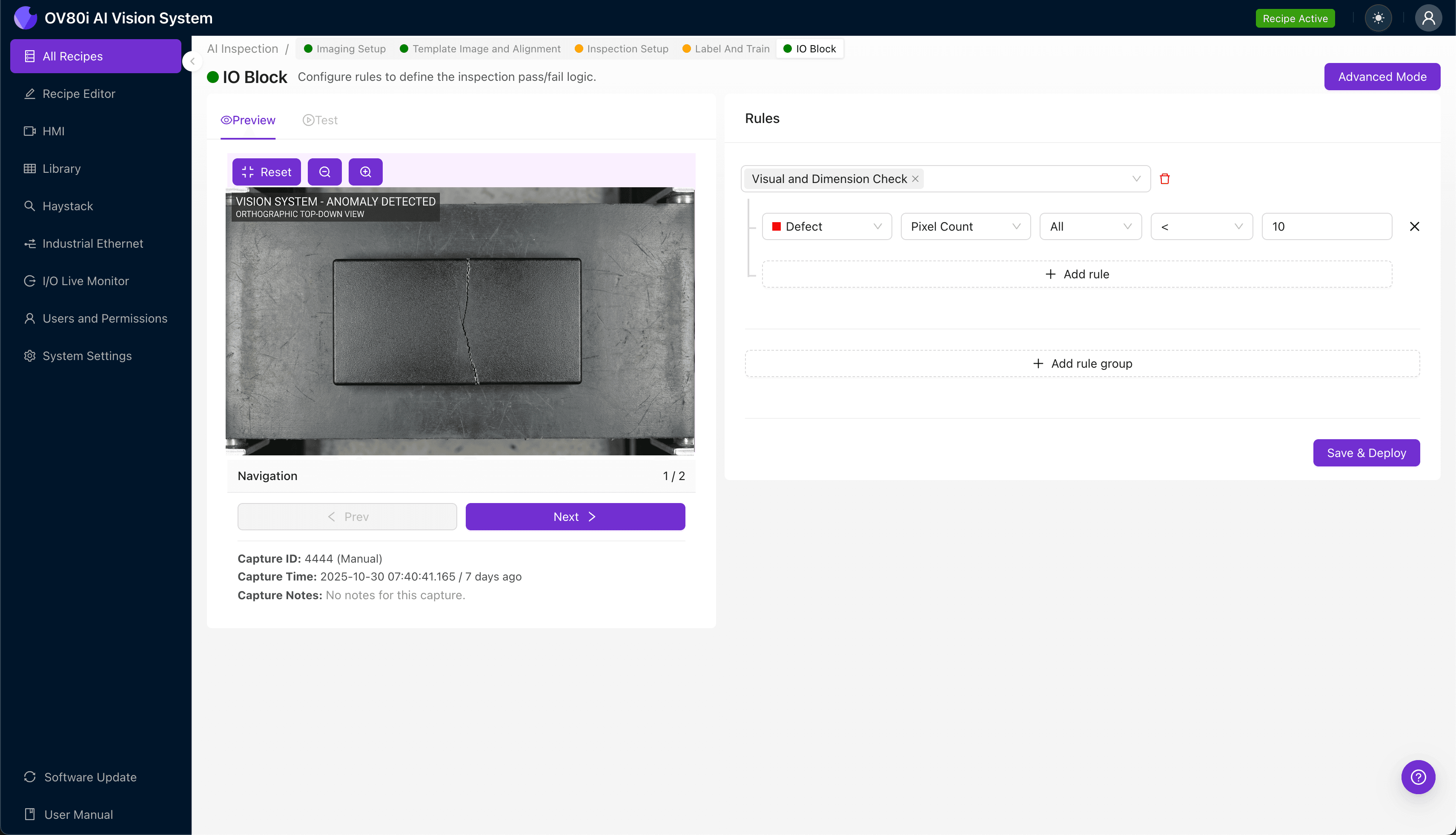
"Knit-line fractures in LCP housings are nearly invisible to the human eye yet cause catastrophic field failures. Overview.ai's deep learning-powered inspection catches these defects consistently at full production speed, eliminating the variability of manual inspection."
The Problem: Why Knit-Line Fractures in LCP Housings Are So Difficult to Catch
Liquid Crystal Polymer (LCP) housings are critical components in connectors, sensors, and electronic enclosures—prized for their dimensional stability and high-temperature performance. However, the injection molding process that forms these parts creates inherent weak points where flow fronts meet, making knit-line fractures one of the most challenging defects to detect consistently.
Common Defects Found in LCP Housing Knit-Line Failures:
- Visible weld line cracking — hairline fractures propagating along the flow-front junction, often only microns wide
- Sub-surface delamination — internal separation at the knit-line interface invisible to the naked eye until stress testing
- Incomplete molecular bonding — weak fusion zones that appear intact but fail under thermal cycling or mechanical load
- Flash at weld intersections — excess material buildup where multiple flow fronts converge
- Discoloration along knit lines — subtle color variation indicating poor melt temperature or flow imbalance
- Micro-voids at junction points — tiny air pockets trapped during the merging of polymer flow fronts
Manual inspection of LCP housings is notoriously unreliable because knit-line fractures often present as faint, low-contrast lines against the polymer's natural surface texture. Inspector fatigue sets in quickly when examining hundreds of parts per hour, and the human eye simply cannot maintain the consistency needed to catch defects measuring just 50-100 microns across an entire shift.
The Solution: Machine Vision and Deep Learning for Consistent Detection
Traditional rule-based machine vision struggles with knit-line fractures because these defects vary significantly in appearance—some present as dark lines, others as subtle surface irregularities, and many only become visible under specific lighting angles. Deep learning changes the game by training neural networks on thousands of labeled examples, enabling the system to recognize the pattern of a knit-line defect rather than relying on rigid threshold parameters.
Overview.ai's approach delivers what human inspectors cannot: consistent, objective evaluation of every single part at full production line speed. The OV80i system examines each LCP housing with the same precision on part #10,000 as it did on part #1, eliminating the variability that makes manual inspection a quality control liability.
Step 1: Imaging Setup
Position the LCP housing under the OV80i camera, ensuring the knit-line region is fully visible within the field of view. Proper lighting is critical—consider using low-angle or darkfield illumination to enhance the contrast of subtle fracture lines against the LCP's semi-translucent surface.
Click "Configure Imaging" to access the Camera Settings panel. Adjust exposure to capture fine surface detail without washout, and fine-tune gain to optimize signal-to-noise ratio for detecting low-contrast defects.
Click "Save" to lock in your imaging configuration.
Step 2: Image Alignment
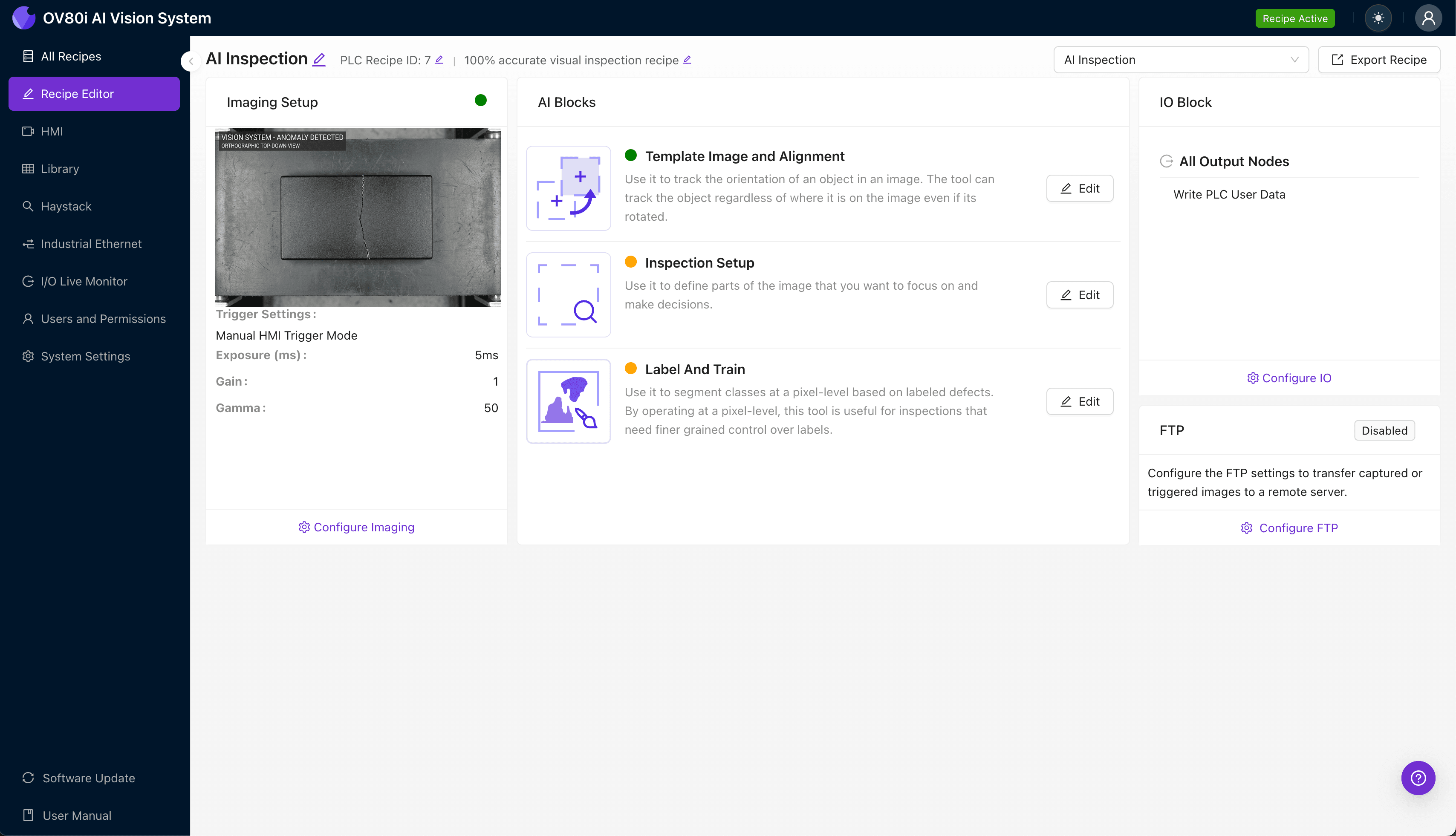
Navigate to the "Template Image" section and capture a reference image of a correctly positioned, defect-free LCP housing. This template serves as the baseline for aligning all subsequent parts during inspection.
Click "+ Rectangle" to add an alignment region around the main body of the housing, focusing on stable geometric features like mounting holes or corner profiles. Set the "Rotation Range" to 20 degrees to accommodate minor orientation variations as parts arrive on the conveyor.
Step 3: Inspection Region Selection
Navigate to "Inspection Setup" to define where the system should focus its analysis. Rename your "Inspection Types" to reflect the specific failure modes—for example, "Knit_Line_Fracture" and "Weld_Junction_Void."
Click "+ Add Inspection Region" to create a targeted zone. Resize the yellow bounding box to cover the critical knit-line areas—typically where flow fronts converge near gates, around thin-wall sections, or at geometric transitions.
Click "Save" to confirm your inspection regions.
Step 4: Labeling Data
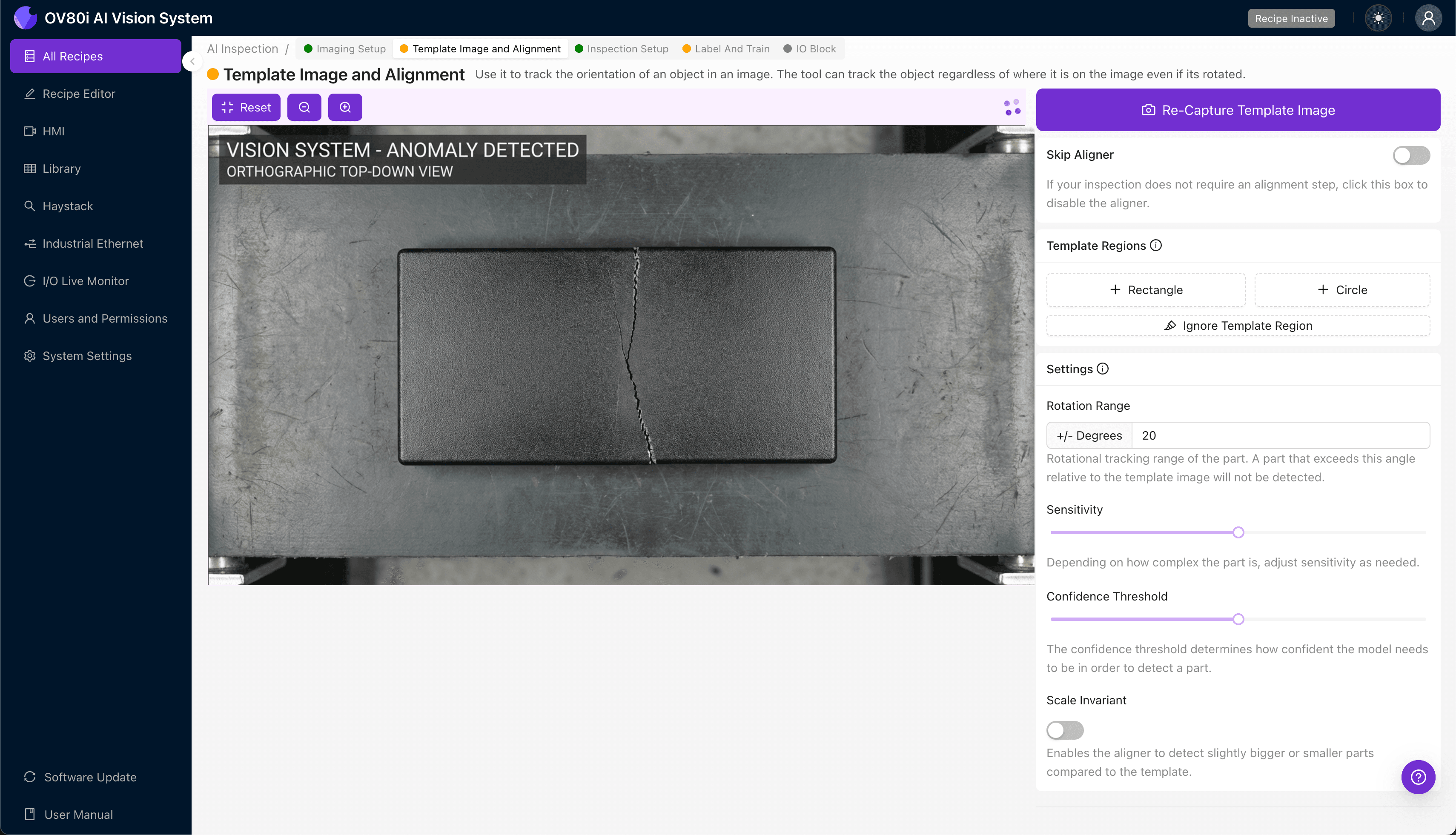
This is where the human-in-the-loop process builds the AI's intelligence. As parts run through the system, inspectors review captured images and label them as Good (acceptable parts) or Bad (defective parts with knit-line fractures).
Include representative samples across the full spectrum of defect severity—from obvious cracks to borderline cases. Incorporate known failure modes from customer returns, stress-test rejects, and process upset conditions to ensure the model learns what matters most.

Step 5: Creating Rules
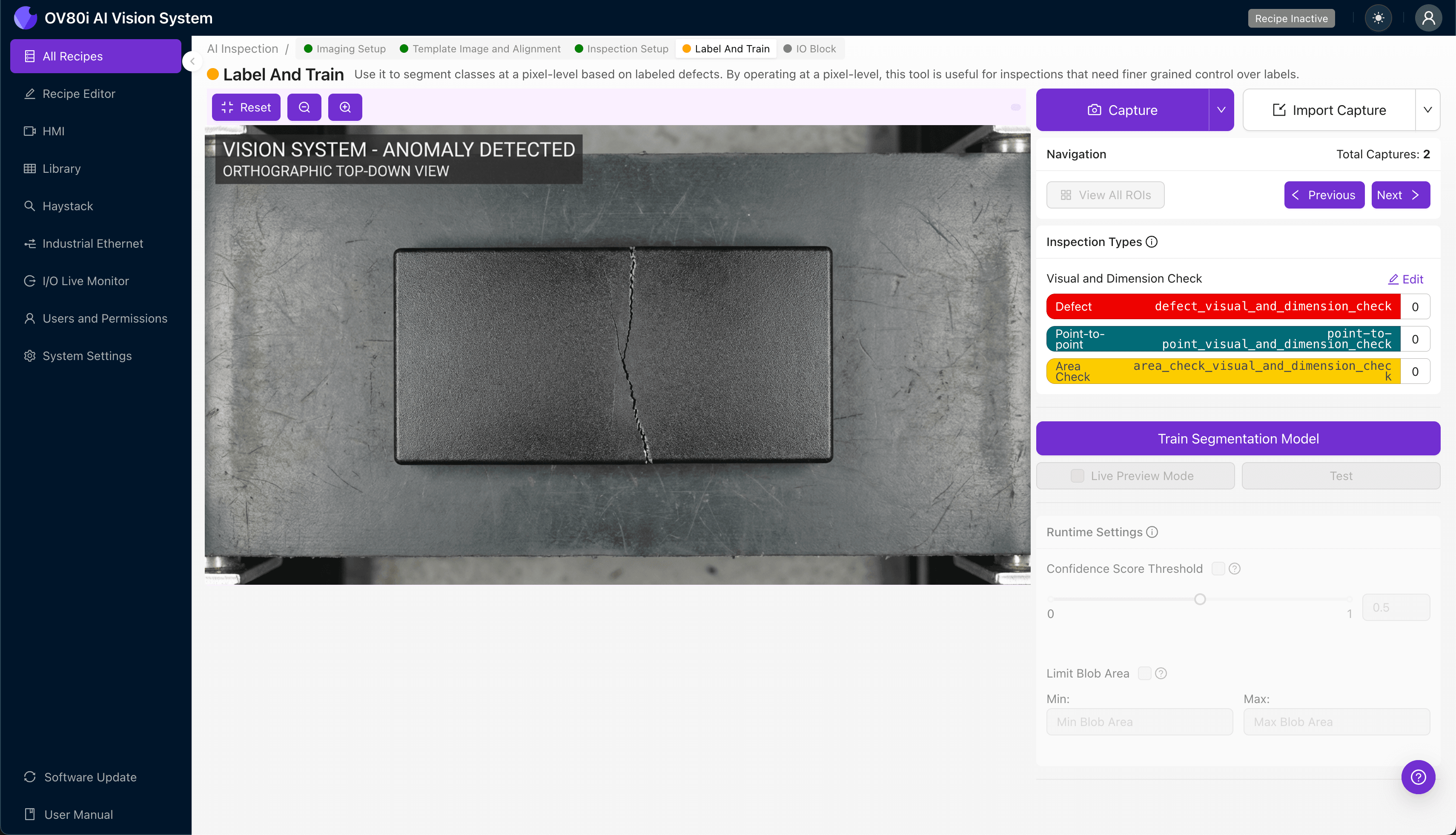
With labeled data training the model, configure your pass/fail logic based on the defined Inspection Types. Set confidence thresholds that balance escape rate against false reject rate for your specific quality requirements.
Gate automated acceptance on the line by linking inspection results to your reject mechanism—whether pneumatic diverter, robotic pick, or conveyor stop. Parts flagged as "Bad" are automatically removed before reaching downstream assembly or shipping.
Key Outcomes & ROI
Implementing AI-powered inspection for LCP housing knit-line fractures delivers measurable business impact:
- Reduced scrap and rework costs — catch fractures at the molding cell rather than after assembly, avoiding compounded waste
- Higher throughput with 100% inspection — eliminate the sampling bottleneck while maintaining full production speed
- Compliance and traceability — generate timestamped inspection records for every part, supporting automotive (IATF 16949) and medical device (ISO 13485) audit requirements
- Process improvement insights — trend data reveals correlations between knit-line defects and upstream variables like mold temperature, cycle time, or material lot
Conclusion
Knit-line fractures in LCP housings represent exactly the type of defect that slips past human inspectors but causes catastrophic field failures. Overview.ai's deep learning-powered visual inspection transforms this quality challenge into a solved problem—delivering the consistency, speed, and documentation that modern manufacturing demands.
Eliminate Defects Today
Stop relying on manual inspection. Deploy Overview.ai to catch knit-line fractures in your LCP components instantly.