MPO Ferrule Endface Pit and Scratch Detection: A Complete Machine Vision Walkthrough
"Pits and scratches on MPO ferrule endfaces cause signal loss and network failures in high-density fiber optic connections. AI-powered visual inspection eliminates these defects by analyzing every fiber core simultaneously with micron-level precision, delivering consistent quality at production speed."
The Problem: Why MPO Ferrule Endface Defects Threaten Network Performance
MPO (Multi-fiber Push On) ferrules are the backbone of high-density fiber optic connections in data centers and telecommunications infrastructure. When pits or scratches compromise the ferrule endface, signal loss and network failures follow.
Common Defects Found on MPO Ferrule Endfaces
- Pits — Small cavities or voids in the polished endface surface that cause light scattering and insertion loss
- Scratches — Linear abrasions across fiber cores or the ferrule surface that disrupt optical transmission
- Chips — Edge fractures along the ferrule perimeter that compromise connector mating
- Contamination particles — Debris embedded in or adhered to the endface that blocks light paths
- Polish defects — Uneven surface finish or improper apex offset causing poor physical contact
- Fiber core damage — Cracks or deformations within the individual fiber cores themselves
Manual inspection of MPO ferrules pushes human vision to its limits. Inspectors must evaluate 12, 24, or even 72 fiber cores per connector—each requiring micron-level scrutiny. Fatigue sets in quickly, and consistency drops as shifts progress. The speed demands of modern production lines make thorough manual inspection virtually impossible.
The Solution: AI-Powered Visual Inspection for MPO Ferrules
Machine vision systems equipped with deep learning algorithms transform MPO ferrule inspection from a bottleneck into a competitive advantage. These systems capture high-resolution images and analyze every fiber core simultaneously, detecting defects invisible to the human eye.
Unlike rule-based vision systems that struggle with the variability of real-world defects, deep learning models learn from examples. They recognize subtle pits, faint scratches, and complex defect patterns with remarkable accuracy.
Overview.ai's approach delivers consistent, objective inspection at line speed. The OV80i system doesn't get tired, doesn't lose focus, and applies the same rigorous standards to the first part as the ten-thousandth.
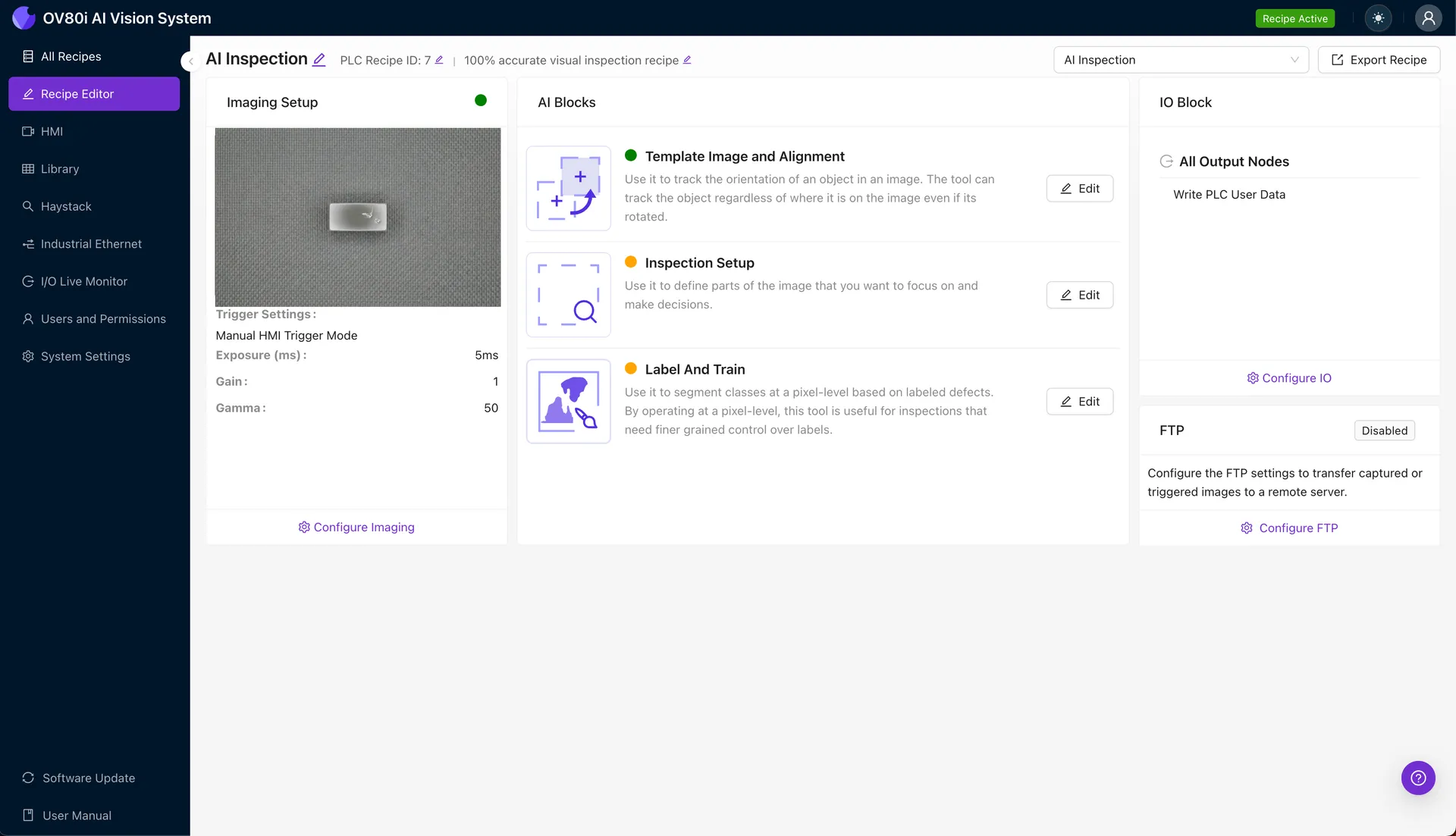
Step 1: Imaging Setup
Begin by positioning the MPO ferrule under the camera system, ensuring the endface is perpendicular to the lens. Proper positioning is critical for capturing the detail needed to identify microscopic pits and scratches.
Click "Configure Imaging" to access the camera settings panel. Adjust the exposure to illuminate the polished endface without creating glare, and fine-tune the gain to balance brightness with noise reduction.
Click "Save" to lock in your imaging configuration.
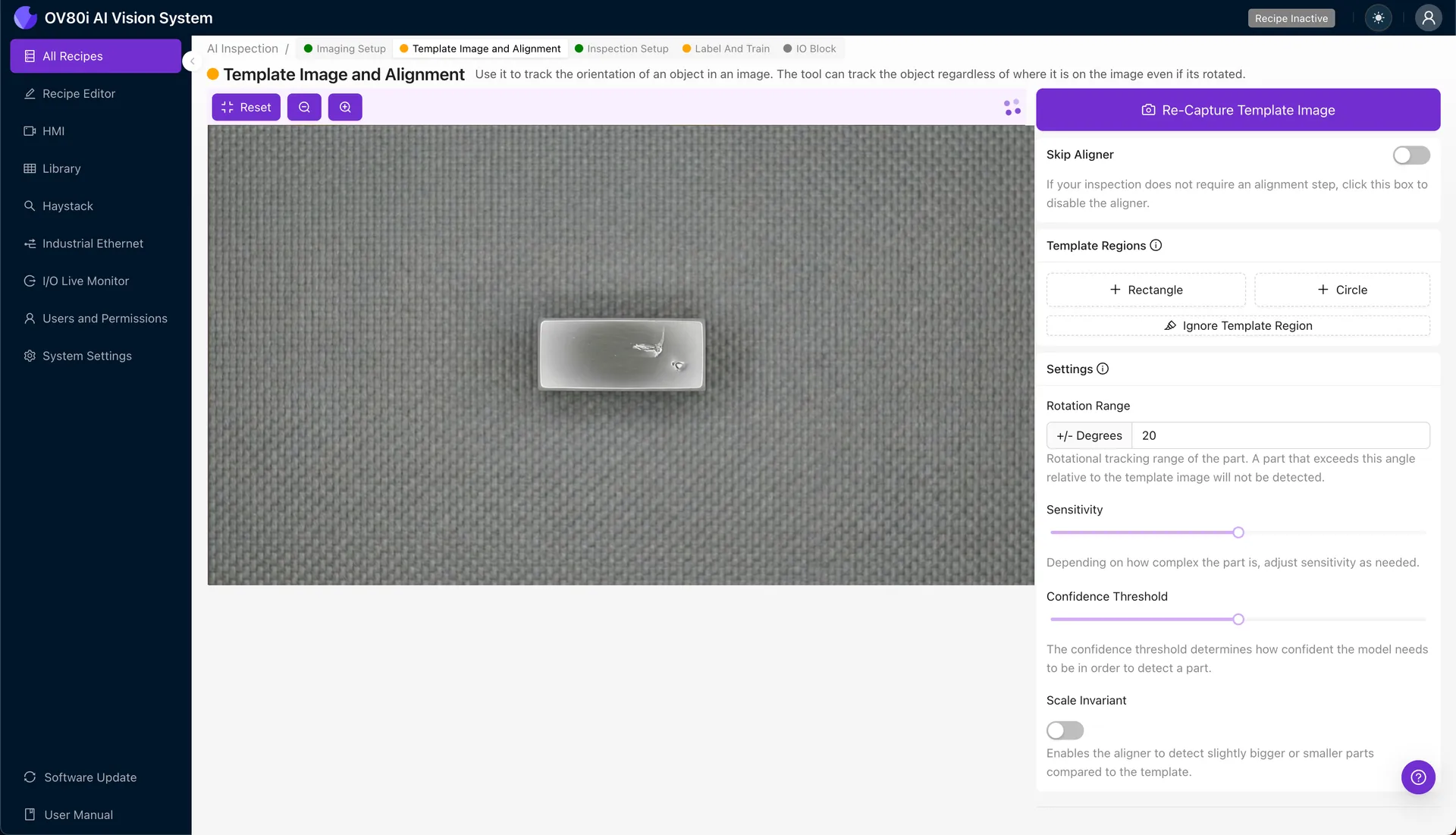
Step 2: Image Alignment
Navigate to the "Template Image" section within the software interface. Capture a reference image of a properly positioned ferrule to serve as your alignment template.
Click "+ Rectangle" to draw an alignment region around the main ferrule body. This teaches the system to recognize and orient incoming parts consistently.
Set the "Rotation Range" to 20 degrees to accommodate slight variations in how ferrules enter the inspection zone.
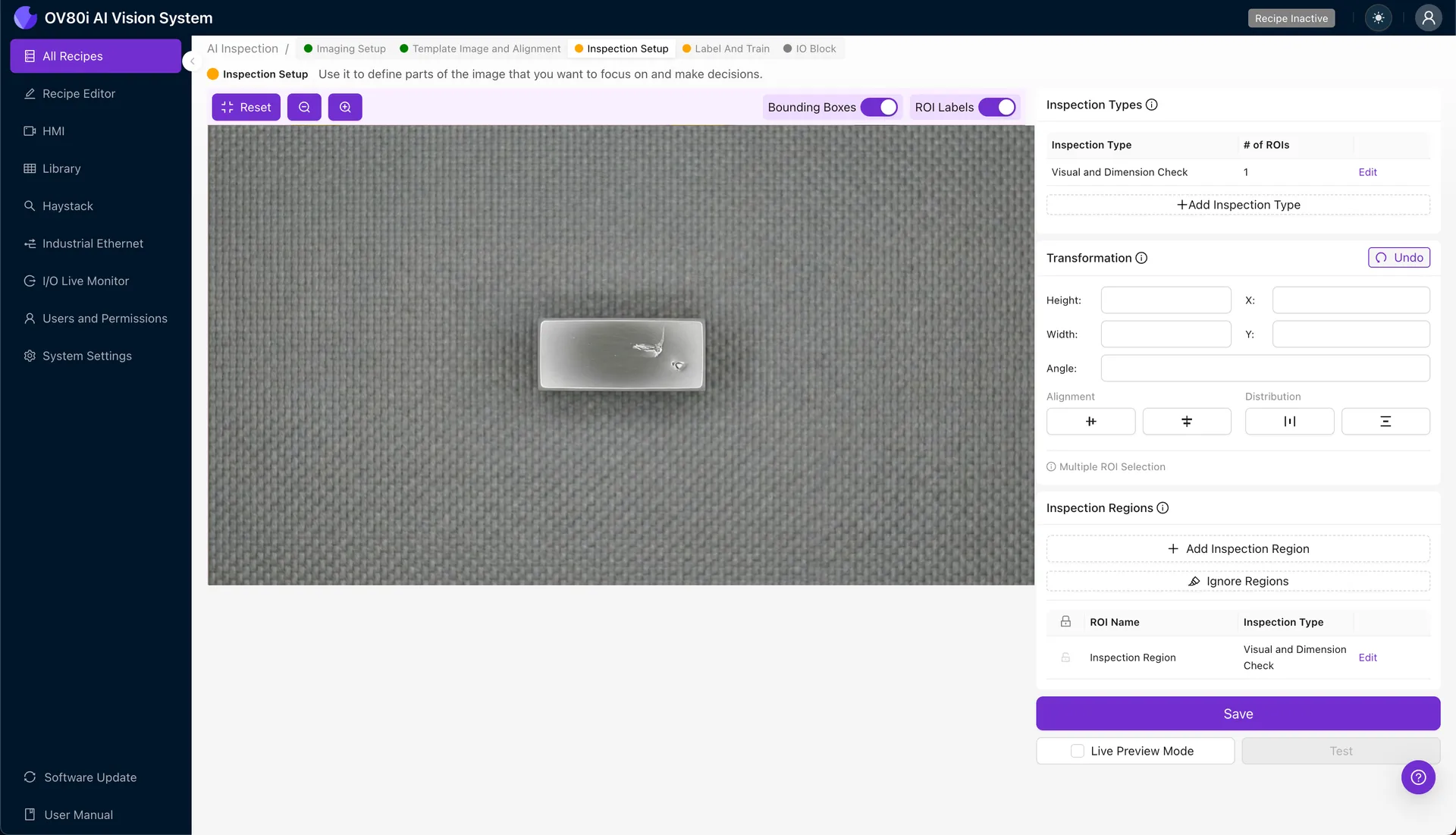
Step 3: Inspection Region Selection
Navigate to "Inspection Setup" to define where the system should focus its analysis. Rename your "Inspection Types" to reflect the specific defects you're targeting—such as "Endface Pits," "Surface Scratches," or "Core Damage."
Click "+ Add Inspection Region" to create a new zone. Resize the yellow bounding box to cover the critical fiber core area and surrounding endface surface where defects most commonly appear.
Click "Save" to confirm your inspection regions.
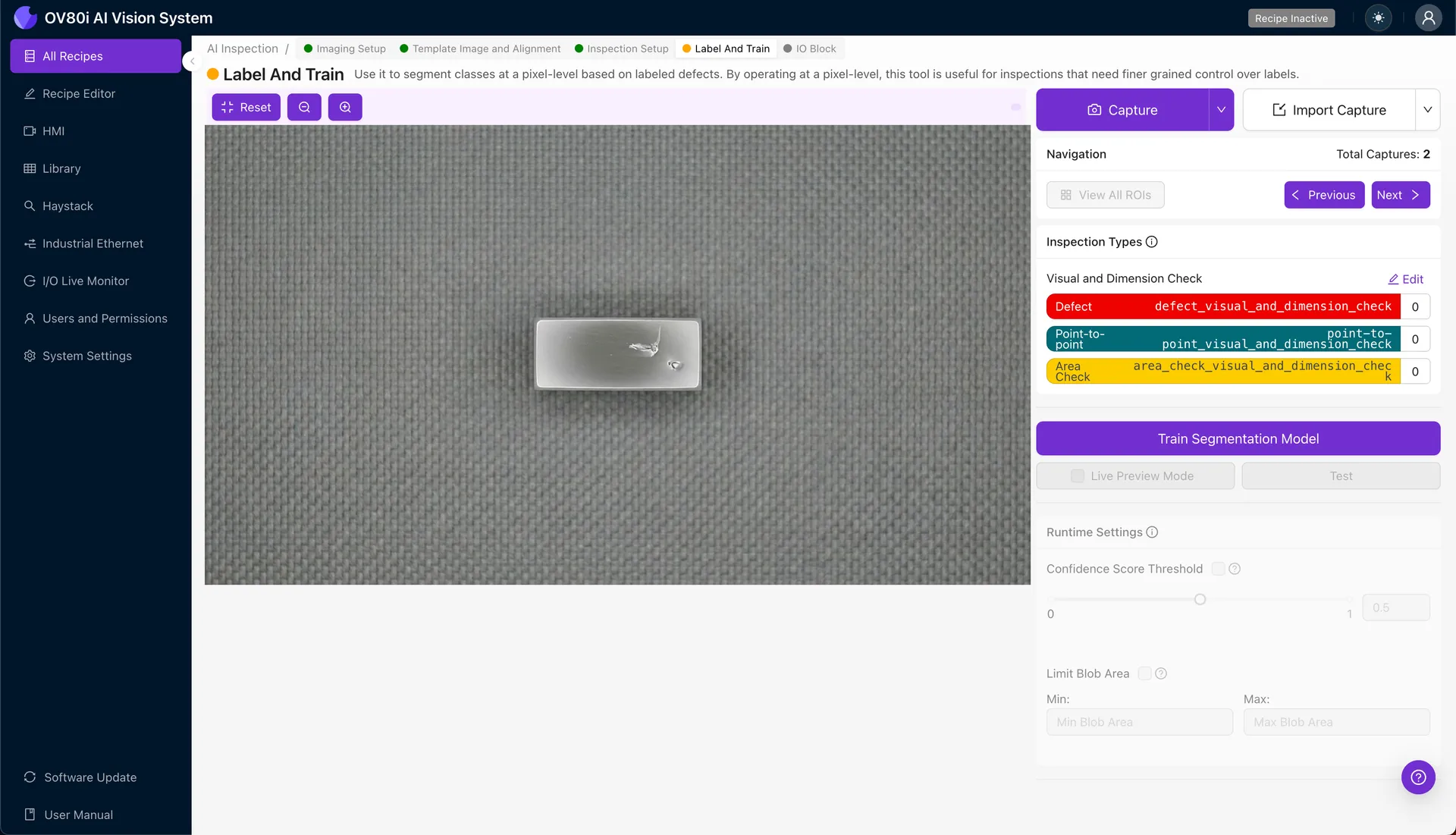
Step 4: Labeling Data
The human-in-the-loop labeling process is where your team's expertise trains the AI. Review captured images and categorize each as "Good" or "Bad" based on your quality standards.
Include representative samples across the full spectrum of acceptable parts. Don't shy away from edge cases—these teach the model where your quality boundaries truly lie.
Incorporate known failure modes from your defect library. The more examples of pits, scratches, and other defects you provide, the more robust your inspection model becomes.
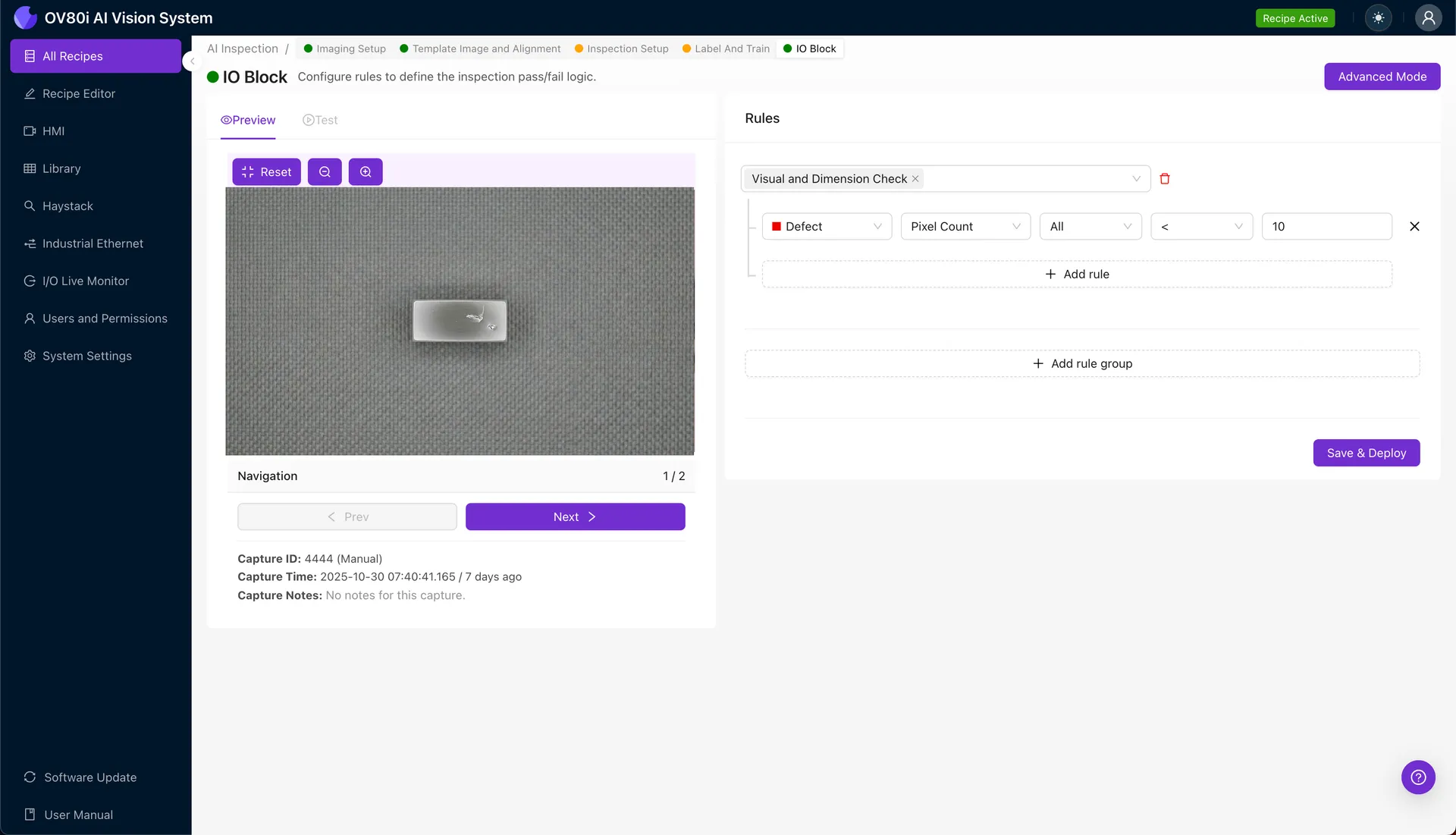
Step 5: Creating Rules
With your model trained, establish pass/fail logic based on your defined Inspection Types. Configure thresholds that align with industry standards like IEC 61300-3-35 or your internal specifications.
Gate automated acceptance directly on the production line. Parts meeting criteria proceed automatically, while suspect units route to quarantine or secondary review—all without slowing throughput.
Key Outcomes & ROI
Implementing AI-powered inspection for MPO ferrules delivers measurable business impact:
- Reduced scrap rates — Catch defects before they propagate downstream, minimizing waste and rework costs
- Higher throughput — Inspect at production speed without creating inspection bottlenecks
- Enhanced compliance and traceability — Automatically log every inspection result with timestamped images for audit trails and customer documentation
- Process improvement insights — Analyze defect trends to identify upstream issues in polishing, handling, or material quality
Conclusion
MPO ferrule endface defects don't have to be a quality control nightmare. With Overview.ai's machine vision platform, manufacturers gain the precision, speed, and consistency needed to deliver flawless fiber optic components.
Ready to eliminate pits and scratches from your production line? See how the OV80i can transform your MPO ferrule inspection process.
Eliminate MPO Ferrule Defects Today
Stop relying on manual inspection for fiber optic connectors. Deploy Overview.ai to catch pits and scratches instantly.