Detecting Skived Plating Barrel Defects in PCB Through-Holes: A Machine Vision Walkthrough
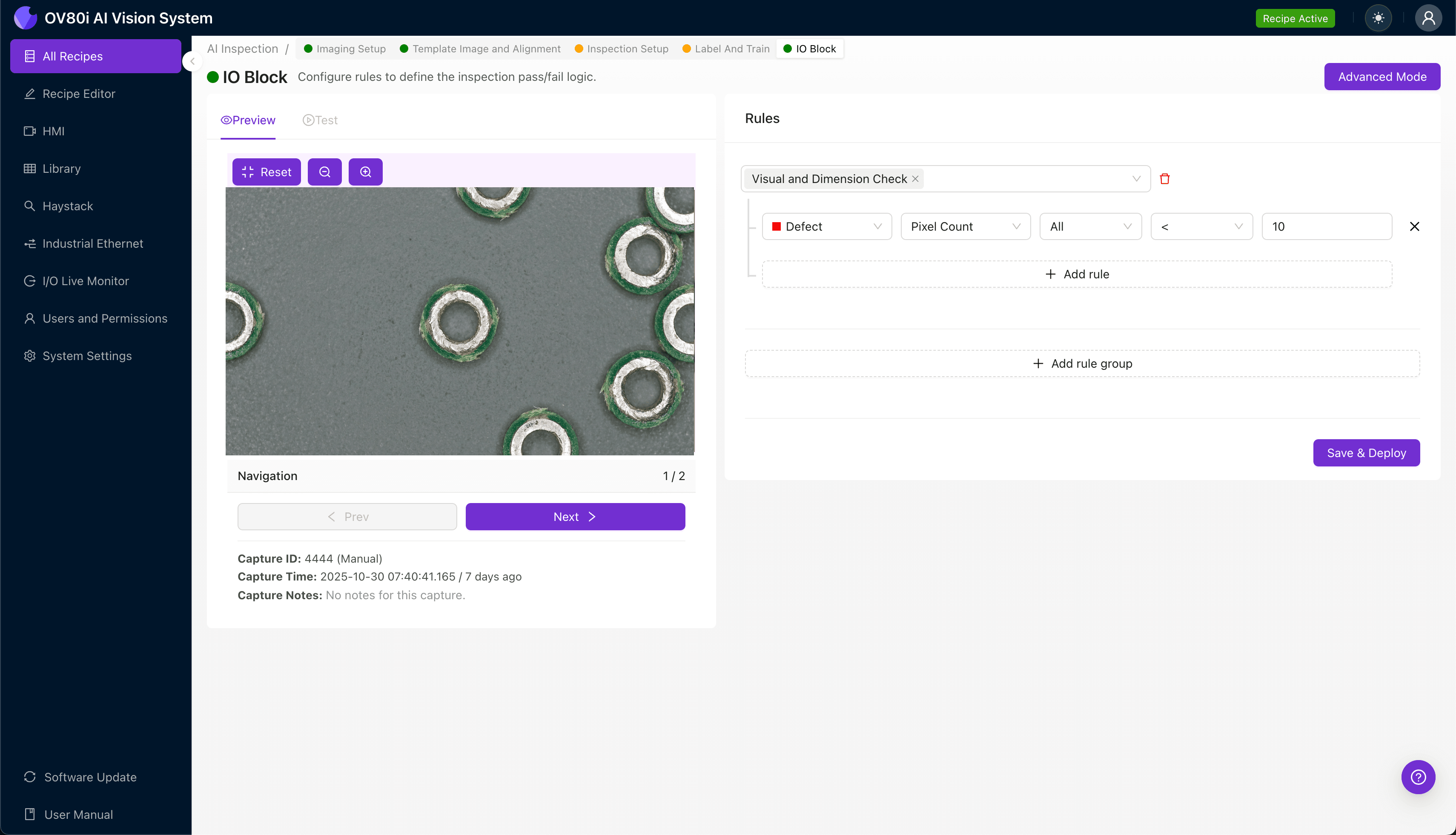
"Skived plating barrel defects in PCB through-holes are nearly invisible to manual inspection yet cause catastrophic field failures. AI-powered machine vision delivers 100% inline inspection at production speed, catching barrel wall thinning, plating voids, and circumferential cracking before defective boards advance downstream."
The Problem: Why Skived Barrel Defects Slip Through Manual Inspection
Skived plating barrels in PCB through-holes represent one of the most insidious quality challenges in electronics manufacturing. These defects occur when mechanical damage or plating irregularities create thin spots, voids, or separation within the barrel wall—often invisible to the naked eye until field failure.
Common Defects Found in Skived Plating Barrels:
- Barrel wall thinning — Uneven copper distribution creating weak points prone to thermal stress cracking
- Plating voids and nodules — Gaps or bumps in the electrodeposited copper layer disrupting electrical continuity
- Separation at the knee — Delamination where the barrel meets the surface pad connection
- Circumferential cracking — Hairline fractures around the barrel interior from drilling or thermal cycling
- Rough or pitted interior surfaces — Surface irregularities affecting solder wicking and joint reliability
- Insufficient corner coverage — Thin plating at the drill entry and exit points
Manual inspection of through-hole barrels requires cross-sectioning—a destructive, time-consuming process that only samples a fraction of production. Even trained inspectors experience fatigue-induced variability, and the microscopic scale of these defects makes consistent detection at production speeds virtually impossible.
The Solution: Machine Vision + Deep Learning
Modern machine vision systems equipped with deep learning algorithms fundamentally change how manufacturers approach barrel inspection. Unlike rule-based systems that require explicit programming for every defect type, AI models learn to recognize the subtle visual signatures of plating anomalies across thousands of labeled examples.
Overview.ai's approach delivers consistent, objective inspection at full line speed—eliminating the sampling limitations of destructive testing. The system captures high-resolution imagery of every board, applying trained models that never fatigue, never lose focus, and flag defects with repeatable precision shift after shift.
Step 1: Imaging Setup
Position your PCB sample under the OV80i camera system, ensuring the through-hole array is centered within the field of view. Proper lighting angle is critical for barrel inspection—angled illumination helps reveal surface irregularities and depth variations within the via.
Click "Configure Imaging" to access the Camera Settings panel. Adjust exposure to capture clear detail within the barrel interior without washing out the surrounding pad areas, and fine-tune gain to optimize signal-to-noise ratio.
Click "Save" to lock in your imaging parameters.
Step 2: Image Alignment
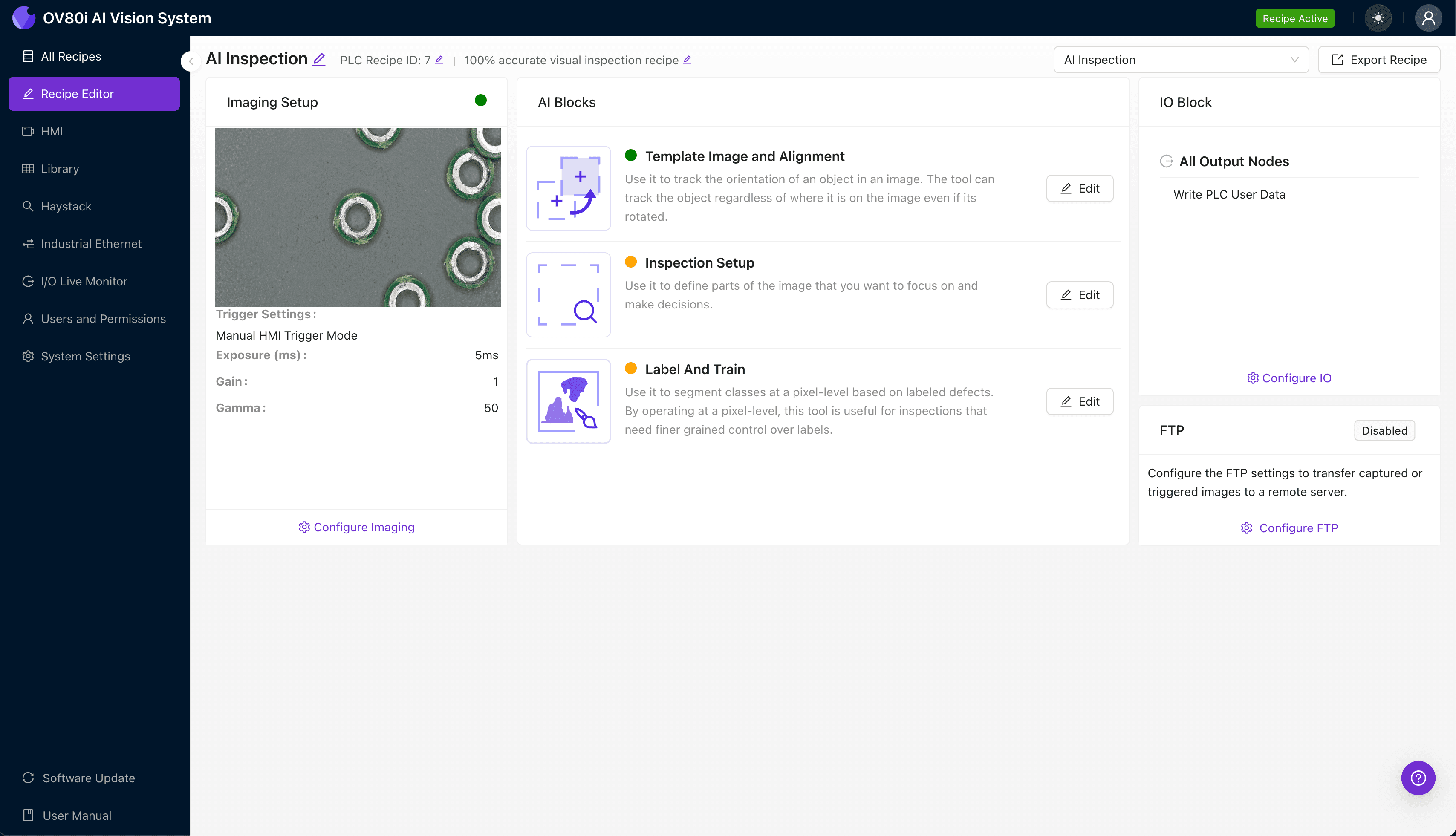
Navigate to "Template Image" in the configuration menu. Capture a Template using a known-good reference board with clearly defined fiducials or board edges.
Click "+ Rectangle" to add an alignment region around the main PCB body or a distinctive feature near your inspection zone. Set the "Rotation Range" to 20 degrees to accommodate minor orientation variations as boards enter the inspection station.
Step 3: Inspection Region Selection
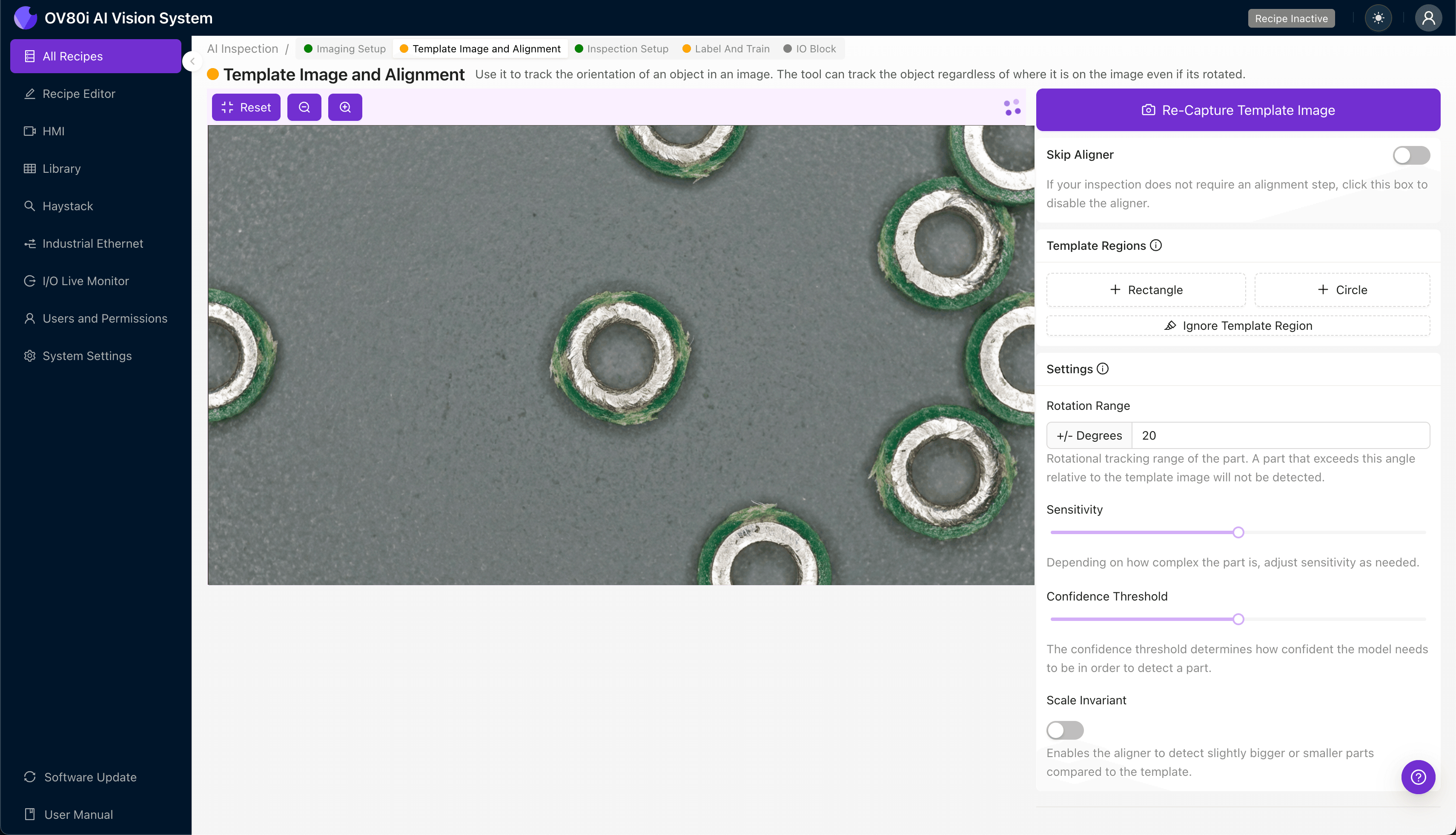
Navigate to "Inspection Setup" to define where the system should focus its analysis. Rename your "Inspection Types" with descriptive labels such as "Barrel_Wall_Integrity" or "Plating_Void_Detection" for clear traceability.
Click "+ Add Inspection Region" to create a new zone. Resize the yellow bounding box to cover the critical through-hole areas, ensuring you capture the full barrel opening plus surrounding annular ring.
Click "Save" to confirm your inspection regions.
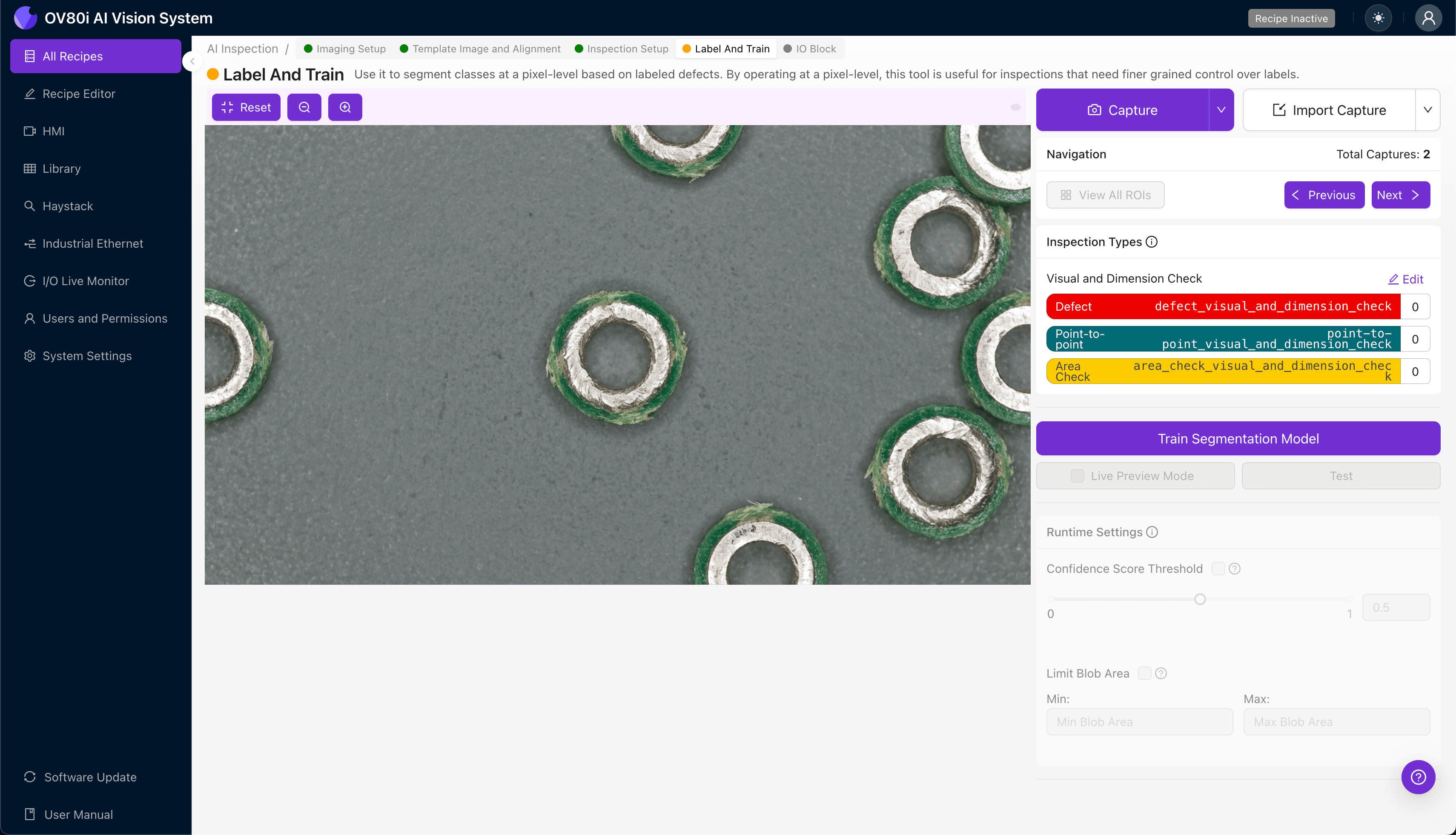
Step 4: Labeling Data
This human-in-the-loop step is where your process expertise trains the AI. As production images flow into the system, operators label each sample as Good or Bad based on your quality standards.
Include representative samples across normal process variation—different board lots, slight color differences, acceptable surface textures. Critically, incorporate known failure modes: confirmed skived barrels, voided plating, and cracked specimens from your defect library.
The model learns from this diversity, building robust detection capability that generalizes beyond the specific examples it has seen.
Step 5: Creating Rules
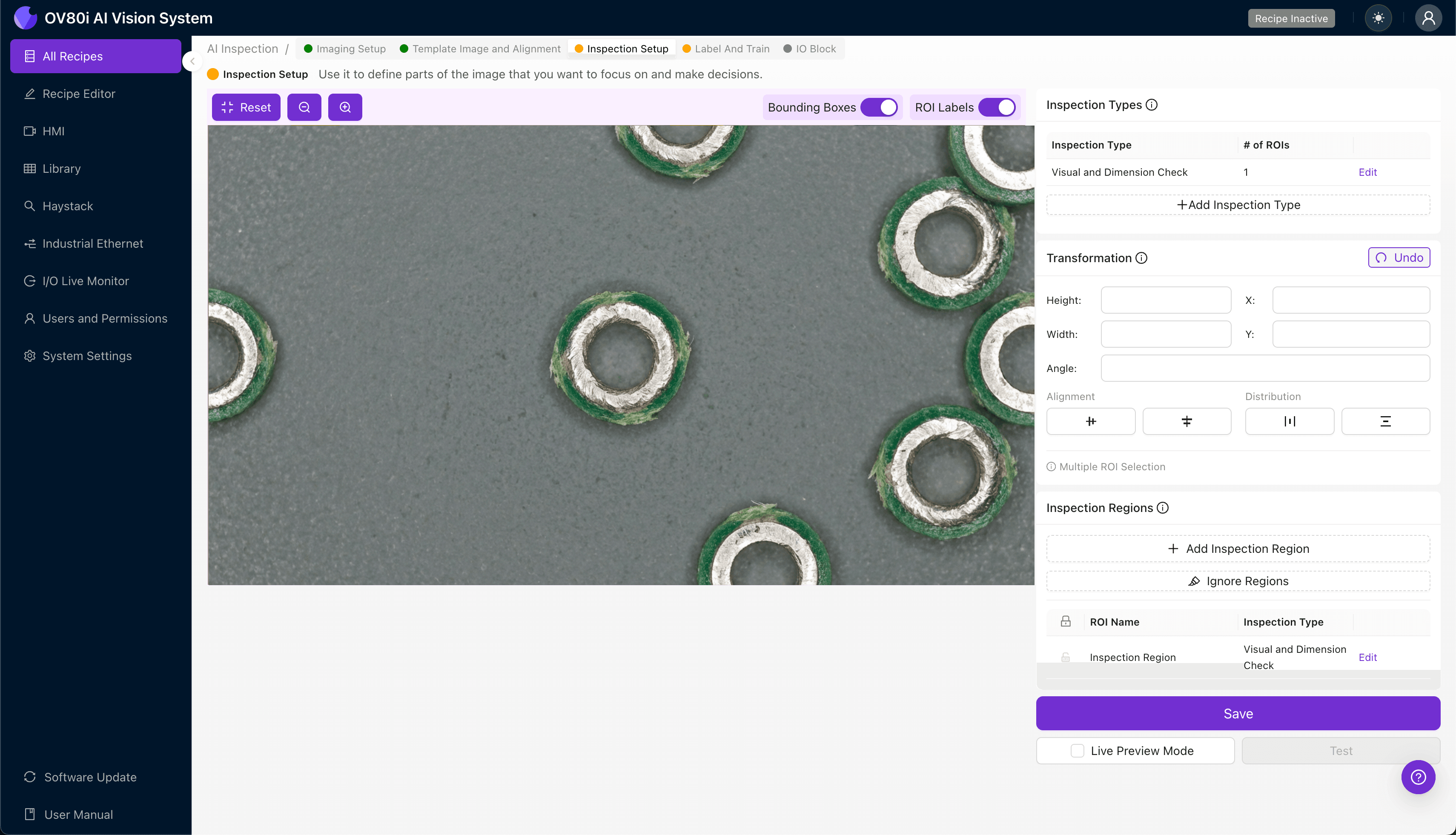
With your trained model in place, establish pass/fail logic based on your defined Inspection Types. Configure threshold settings that align with your quality specifications and customer requirements.
Gate automated acceptance decisions directly on the line—boards meeting criteria proceed to the next operation, while flagged units route automatically to quarantine or secondary review. This closed-loop control prevents defective product from advancing without manual intervention.
Key Outcomes & ROI
Implementing AI-powered inspection for through-hole barrel defects delivers measurable business impact:
- Reduced scrap and rework — Catch plating defects before downstream assembly adds cost to defective boards
- Higher throughput — Eliminate inspection bottlenecks with 100% inline coverage at full production speed
- Enhanced compliance and traceability — Maintain complete inspection records with timestamped images for every board, supporting IPC standards and customer audits
- Process improvement insights — Trend data reveals upstream issues in drilling, cleaning, or plating operations before they cause yield loss
Conclusion
Skived plating barrel defects don't have to be a hidden reliability risk. With Overview.ai's machine vision platform, manufacturers gain the consistent, objective inspection capability needed to catch these critical defects at production speed—protecting both product quality and customer trust.
Eliminate Through-Hole Defects Today
Stop relying on destructive sampling. Deploy Overview.ai to catch skived plating barrel defects on every board, every time.