Plating Bath with Metallic Contamination Causing Brittle Deposits: A Machine Vision Inspection Guide
"Metallic contamination in plating baths silently accumulates, causing brittle deposits that fail under mechanical load. AI-powered visual inspection catches micro-cracks, delamination, and surface anomalies invisible to human inspectors—ensuring contamination-compromised parts never reach final assembly."
The Problem: When Contamination Compromises Coating Integrity
Metallic contamination in plating baths represents one of the most insidious quality challenges in electroplating operations. Even trace amounts of foreign metals—copper, zinc, iron, or lead—can accumulate over time and fundamentally alter deposit characteristics, resulting in brittle, stressed coatings that fail under mechanical load.
Common defects from contaminated plating baths include:
- Micro-cracking – Fine surface fractures caused by excessive internal stress in the deposit
- Peeling and delamination – Poor adhesion where the brittle layer separates from the substrate
- Haze and dullness – Loss of brightness indicating co-deposition of contaminant metals
- Pitting and porosity – Small voids and holes from irregular plating behavior
- Blistering – Raised areas where hydrogen embrittlement creates subsurface voids
- Uneven thickness distribution – Irregular deposit buildup from disrupted current density
Human inspectors struggle to catch these defects consistently, especially micro-cracking and early-stage embrittlement indicators. Inspector fatigue across high-volume plating lines leads to missed defects, while subtle variations in lighting and viewing angle make visual assessment inherently subjective.
The Solution: AI-Powered Visual Inspection
Machine vision systems equipped with deep learning algorithms excel at detecting the subtle surface anomalies that indicate brittle deposits from contaminated baths. Unlike human inspectors, these systems maintain pixel-level consistency across thousands of inspections per hour, identifying micro-cracks and surface irregularities invisible to the naked eye.
Overview.ai's approach delivers objective, repeatable inspection at full line speed—ensuring every plated component receives the same rigorous evaluation. By training neural networks on known contamination-related defects, manufacturers can catch quality issues before brittle parts reach downstream assembly or end customers.
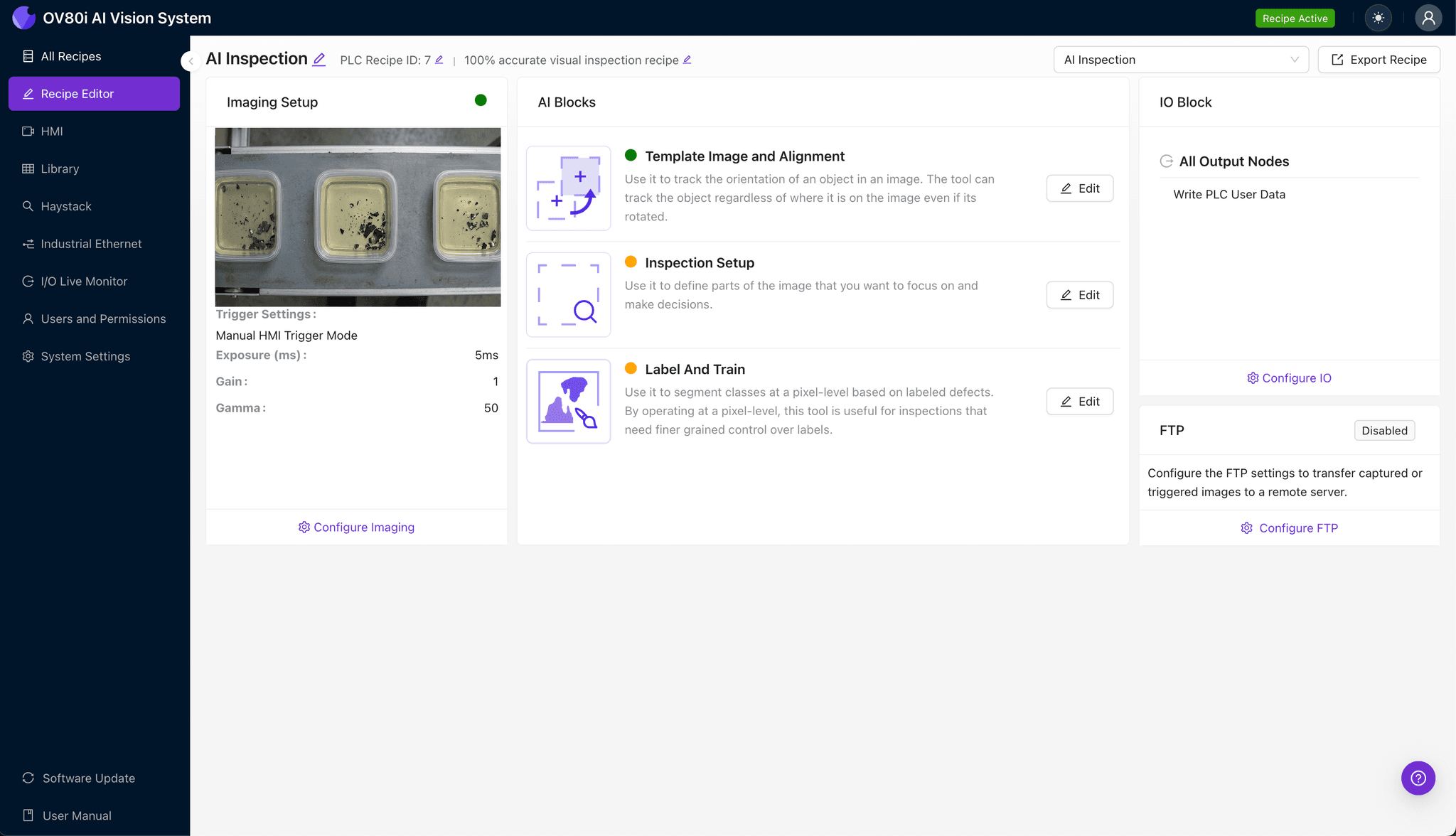
Step 1: Imaging Setup
Position your plated samples directly under the OV80i camera system, ensuring consistent placement for repeatable imaging. Click "Configure Imaging" to access the Camera Settings panel.
Adjust exposure and gain values until surface defects like micro-cracks and haze become clearly visible against the plated finish. Fine-tune lighting angles to maximize contrast on reflective metallic surfaces, then click "Save" to lock in your configuration.
Step 2: Image Alignment
Navigate to the "Template Image" section and capture a reference image of a properly positioned plated component. This template ensures consistent part orientation across all subsequent inspections.
Click "+ Rectangle" to draw an alignment region around the main body of the plated part. Set the "Rotation Range" to 20 degrees to accommodate minor positioning variations on the production line.

Step 3: Inspection Region Selection
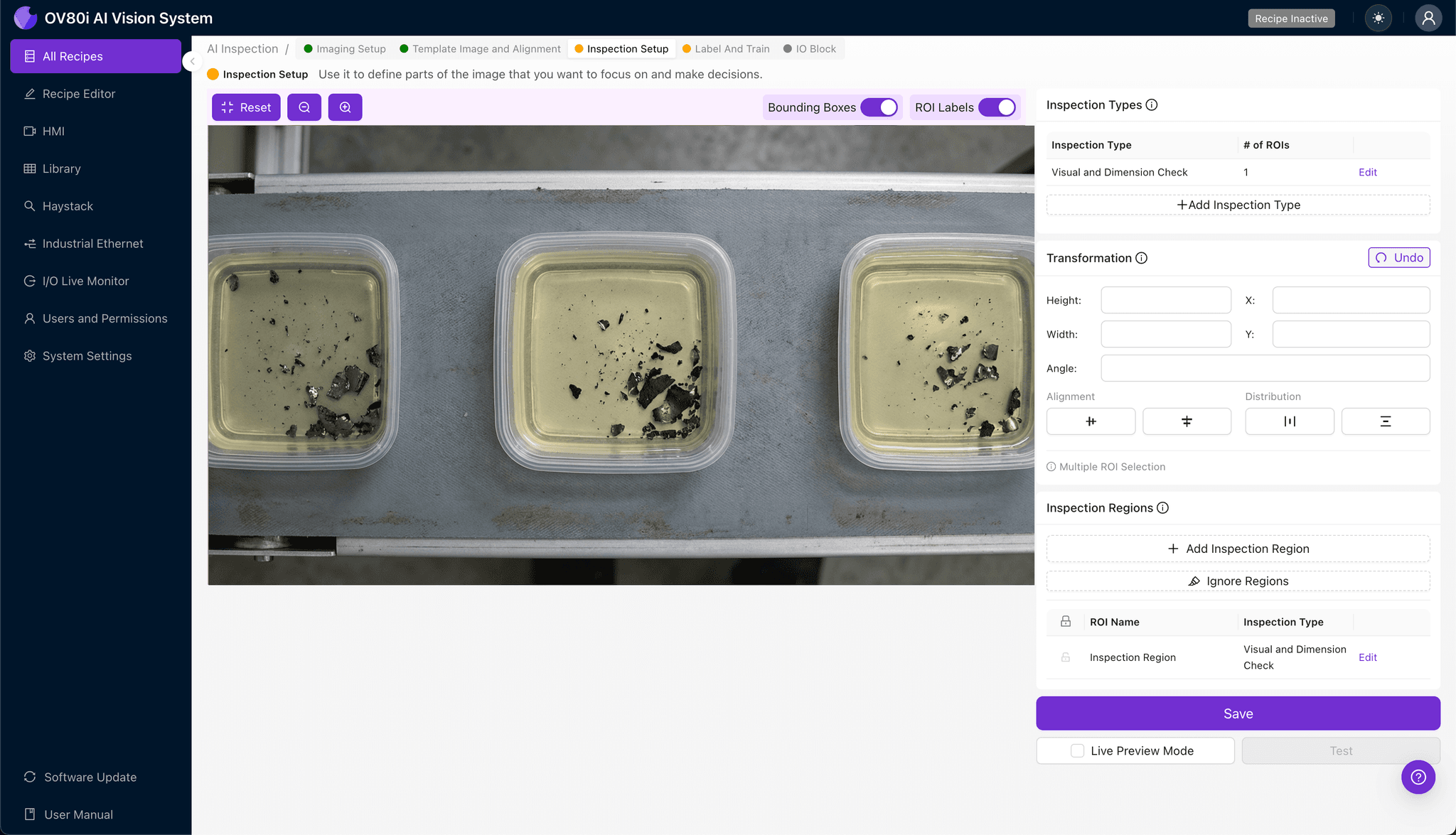
Navigate to "Inspection Setup" to define where the system should focus its analysis. Rename your "Inspection Types" to reflect specific contamination defects—for example, "Surface Cracking," "Delamination Zone," or "Brightness Anomaly."
Click "+ Add Inspection Region" for each critical area requiring evaluation. Resize the yellow bounding box to cover high-stress zones, edges prone to peeling, and flat surfaces where haze appears most visibly, then click "Save."
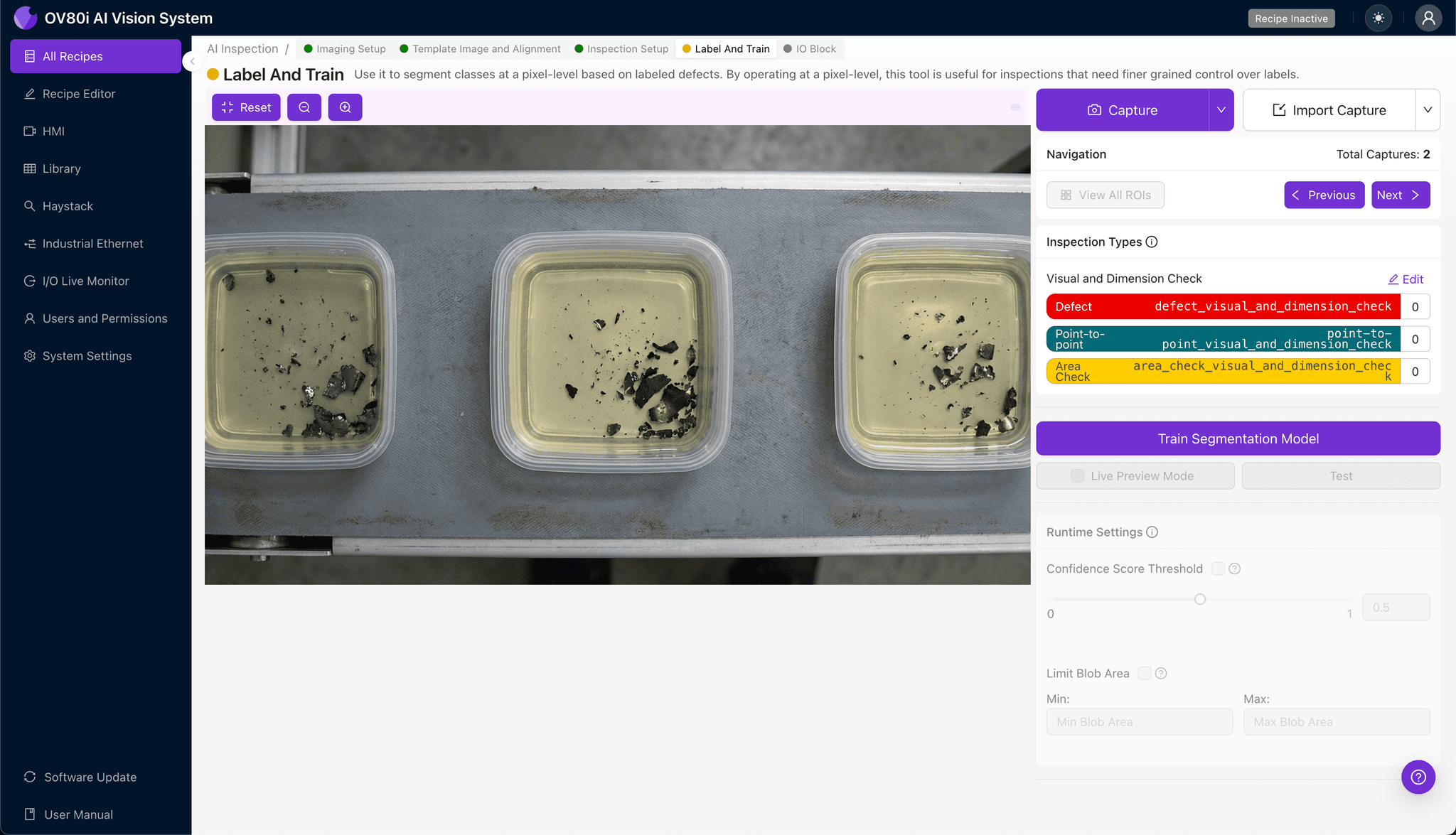
Step 4: Labeling Data
The human-in-the-loop labeling process trains the AI to recognize contamination-related defects specific to your plating operation. Review captured images and classify each as Good (acceptable deposit quality) or Bad (showing brittleness indicators).
Include representative samples across your full defect spectrum—from severe cracking to subtle early-stage haze. Incorporate known failure modes from historical quality escapes to ensure the model learns from real production issues.
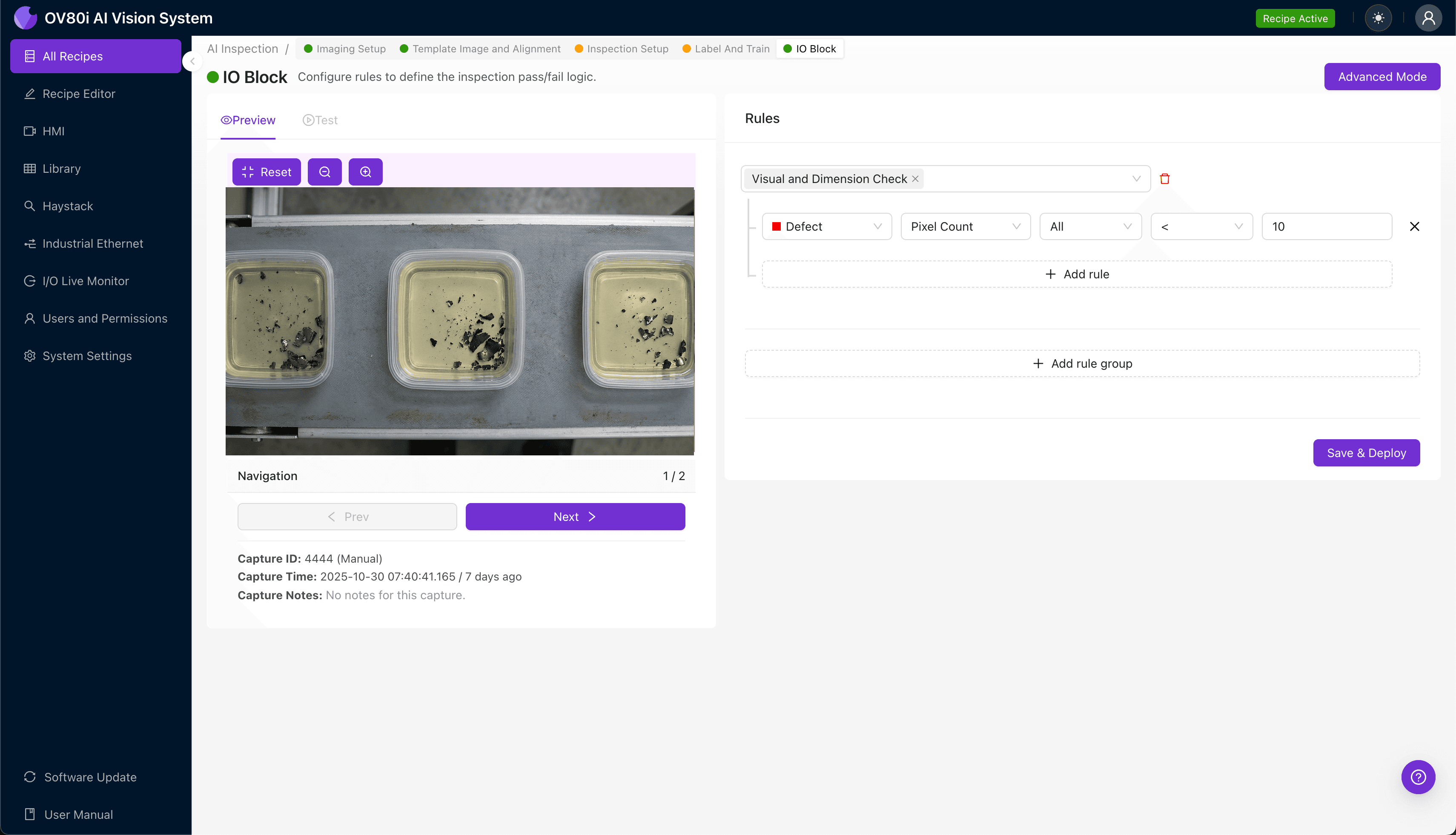
Step 5: Creating Rules
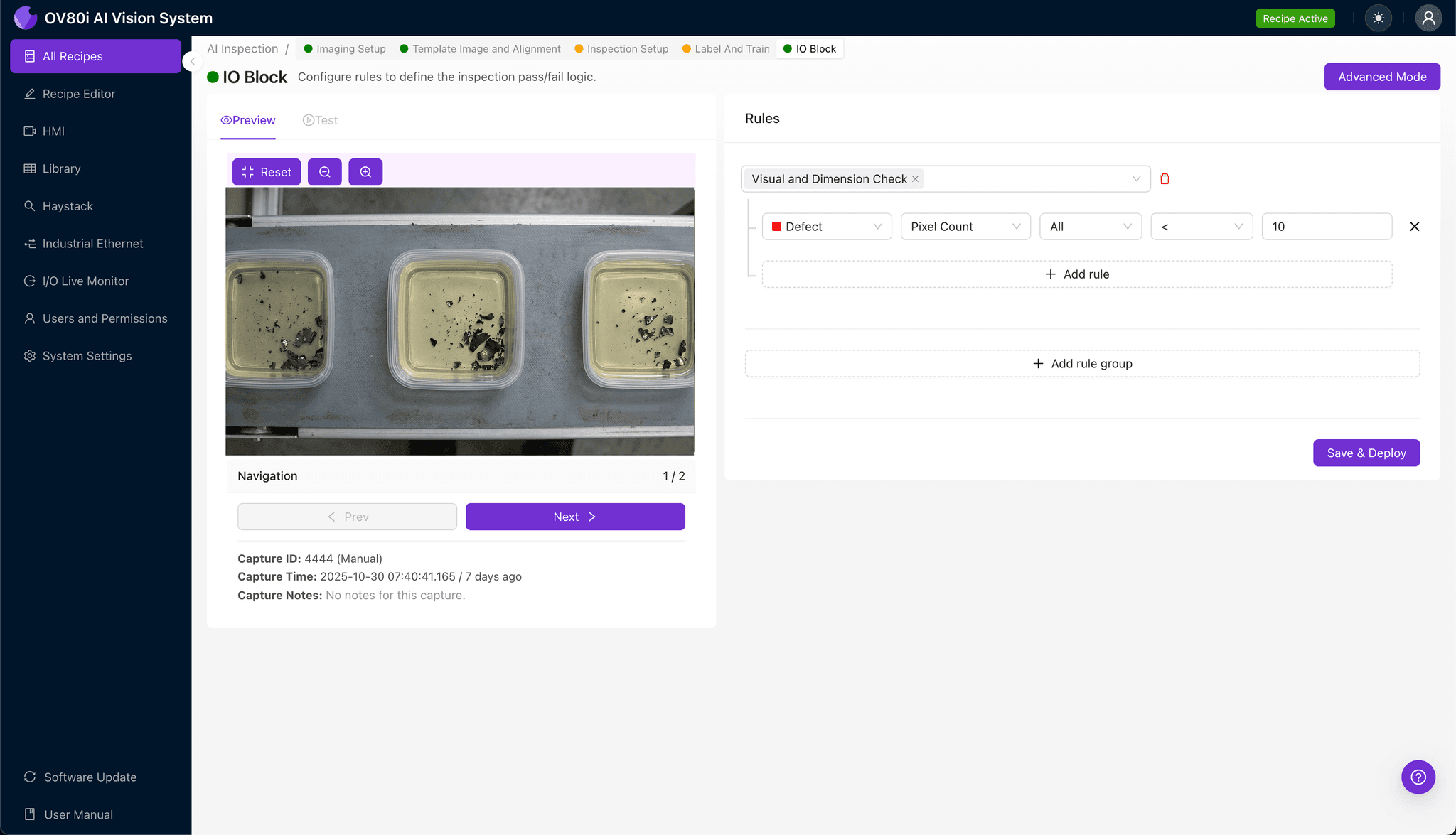
Configure your pass/fail logic based on the Inspection Types you've defined. Set threshold criteria that trigger rejection when brittleness indicators exceed acceptable limits.
Gate automated acceptance on the line so that only parts meeting all quality criteria proceed to the next process step. This ensures contamination-compromised deposits never reach final assembly.
Key Outcomes & ROI
Implementing AI-powered inspection for plating contamination defects delivers measurable business impact:
- Reduced Scrap Rates – Catch brittle deposits before downstream processing wastes additional labor and materials
- Higher Throughput – Eliminate inspection bottlenecks with 100% inline evaluation at production speed
- Compliance and Traceability – Maintain complete inspection records for automotive, aerospace, and electronics quality standards
- Process Improvement Insights – Trend data reveals contamination buildup patterns, enabling proactive bath maintenance before defects spike
Metallic contamination doesn't announce itself—it accumulates silently until brittle deposits cause field failures. With Overview.ai's visual inspection platform, manufacturers gain the continuous monitoring capability needed to detect quality drift before it becomes a crisis.
Take Control of Your Plating Quality
Stop relying on manual inspection. Deploy Overview.ai to catch contamination defects before they cause field failures.