SMPM Bullet Adapter with Internal Spring Fatigue: A Complete Visual Inspection Guide
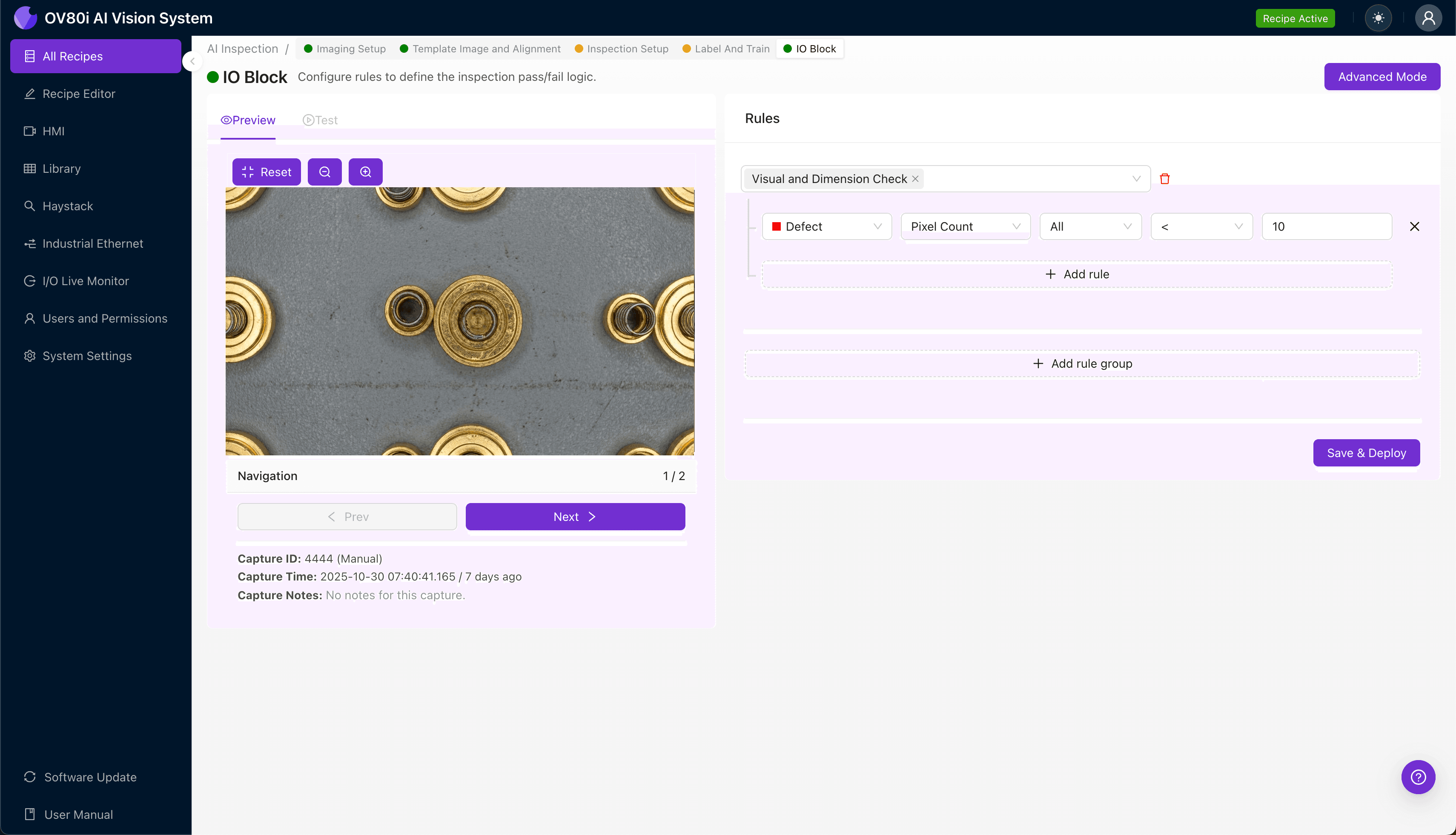
"Internal spring fatigue in SMPM bullet adapters causes catastrophic signal failures in mission-critical RF systems. AI-powered visual inspection detects subtle spring deformations, micro-cracks, and wear patterns that human inspectors consistently miss—delivering micron-level precision at full production speed."
The Problem: Why Internal Spring Fatigue Defects Go Undetected
SMPM (Sub-Miniature Push-on Micro) bullet adapters are critical RF interconnect components used in aerospace, defense, and high-frequency telecommunications applications. When the internal spring mechanism experiences fatigue, it compromises signal integrity and can cause catastrophic system failures in mission-critical environments.
Common Defects Associated with Internal Spring Fatigue:
- Spring compression set – permanent deformation reducing contact force below specification
- Coil fractures or micro-cracks – stress-induced breaks in spring wire material
- Irregular spring pitch spacing – uneven coil distribution affecting consistent contact pressure
- Contact surface wear patterns – erosion on bullet interface points from repeated mating cycles
- Spring misalignment or tilt – off-axis positioning causing intermittent electrical contact
- Corrosion or oxidation buildup – environmental degradation accelerating fatigue failure
Manual inspection of these miniature components is inherently unreliable. Inspectors experience visual fatigue within minutes when examining sub-millimeter spring features, and the subtle nature of early-stage fatigue indicators makes consistent detection nearly impossible at production speeds.
The Solution: AI-Powered Visual Inspection
Machine vision systems equipped with deep learning algorithms excel at detecting the nuanced indicators of internal spring fatigue that human inspectors routinely miss. These systems analyze high-resolution images against trained models, identifying subtle deformations, surface anomalies, and dimensional variations with micron-level precision.
Overview.ai's approach delivers consistent, objective inspection at full line speed—eliminating the variability inherent in manual quality control. By deploying systems like the OV80i for 100% inline inspection, manufacturers catch fatigue-related defects before they escape to customers or cause field failures.
Step 1: Imaging Setup
Position the SMPM bullet adapter under the camera system, ensuring the internal spring cavity is properly illuminated and visible. Coaxial or ring lighting typically works best for capturing spring geometry without shadowing.
Click "Configure Imaging" to access the Camera Settings panel. Adjust exposure to reveal spring coil detail without washout, and fine-tune gain to optimize signal-to-noise ratio for your specific lighting environment.
Click "Save" to lock in your imaging configuration.
Step 2: Image Alignment
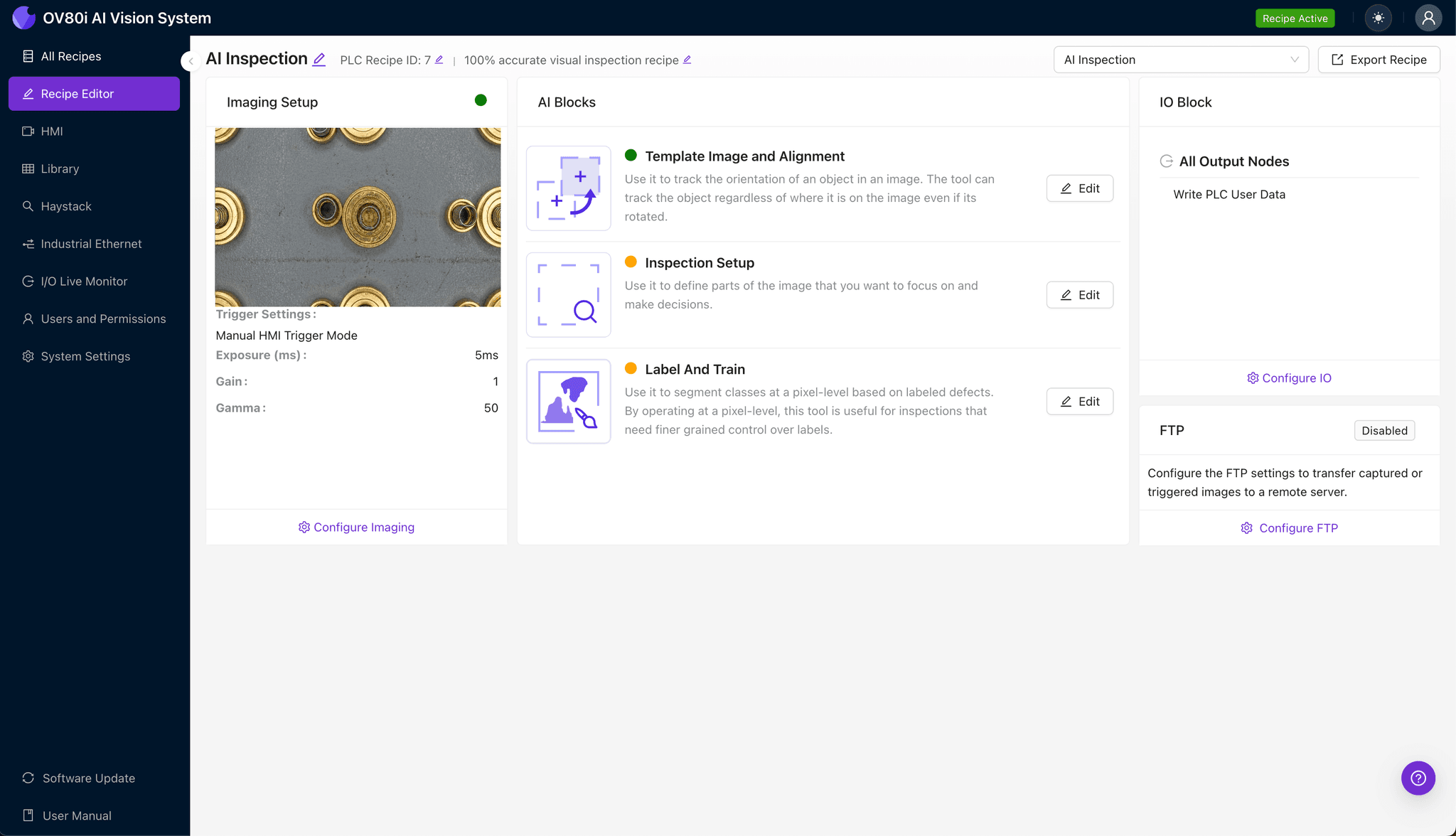
Navigate to the "Template Image" section and capture a reference image of a known-good adapter. This template serves as the alignment anchor for all subsequent inspections.
Click "+ Rectangle" to add a region around the adapter's main body, encompassing the outer housing geometry. Set the "Rotation Range" to 20 degrees to accommodate normal part presentation variation on your production line.
Step 3: Inspection Region Selection
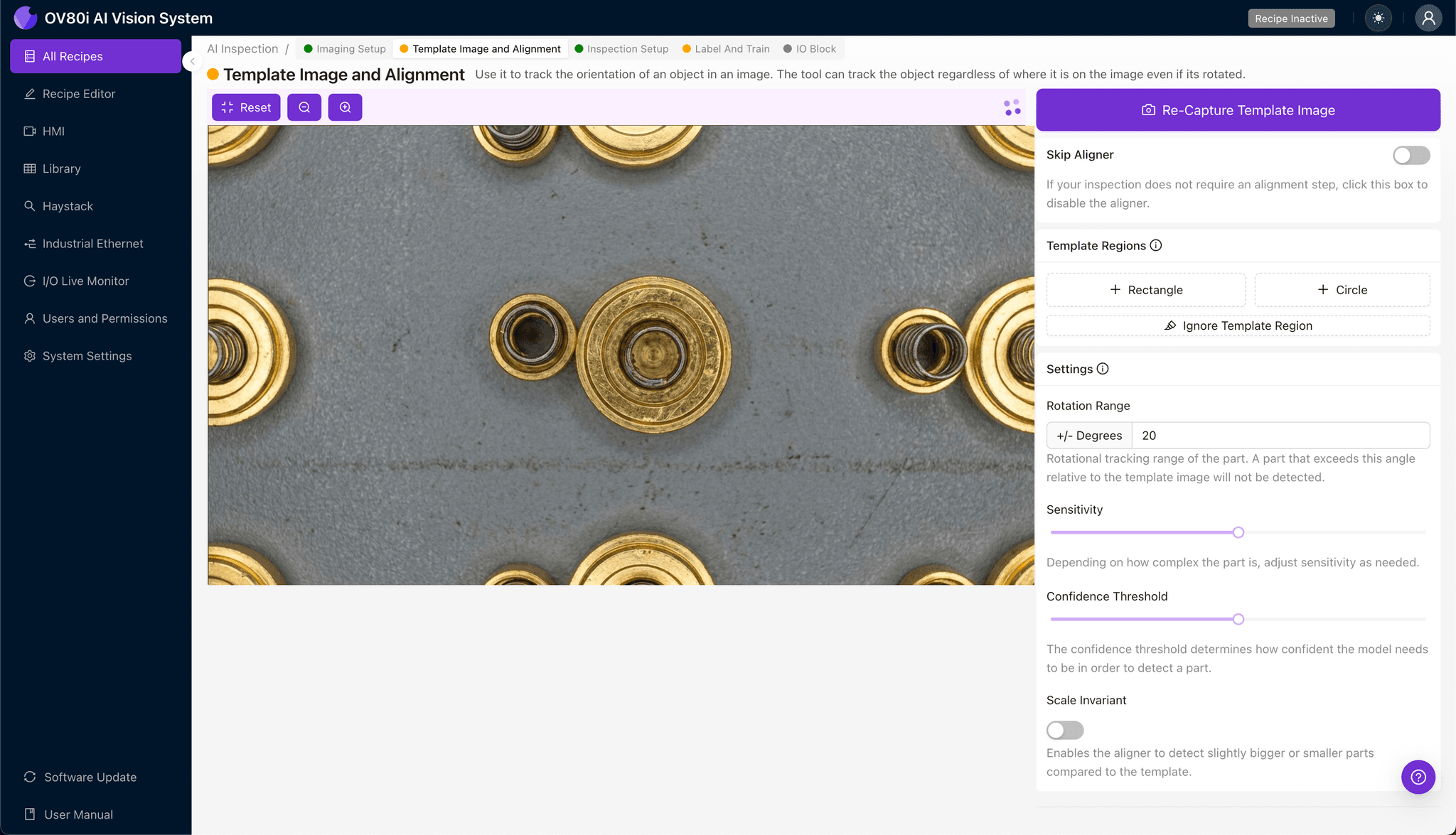
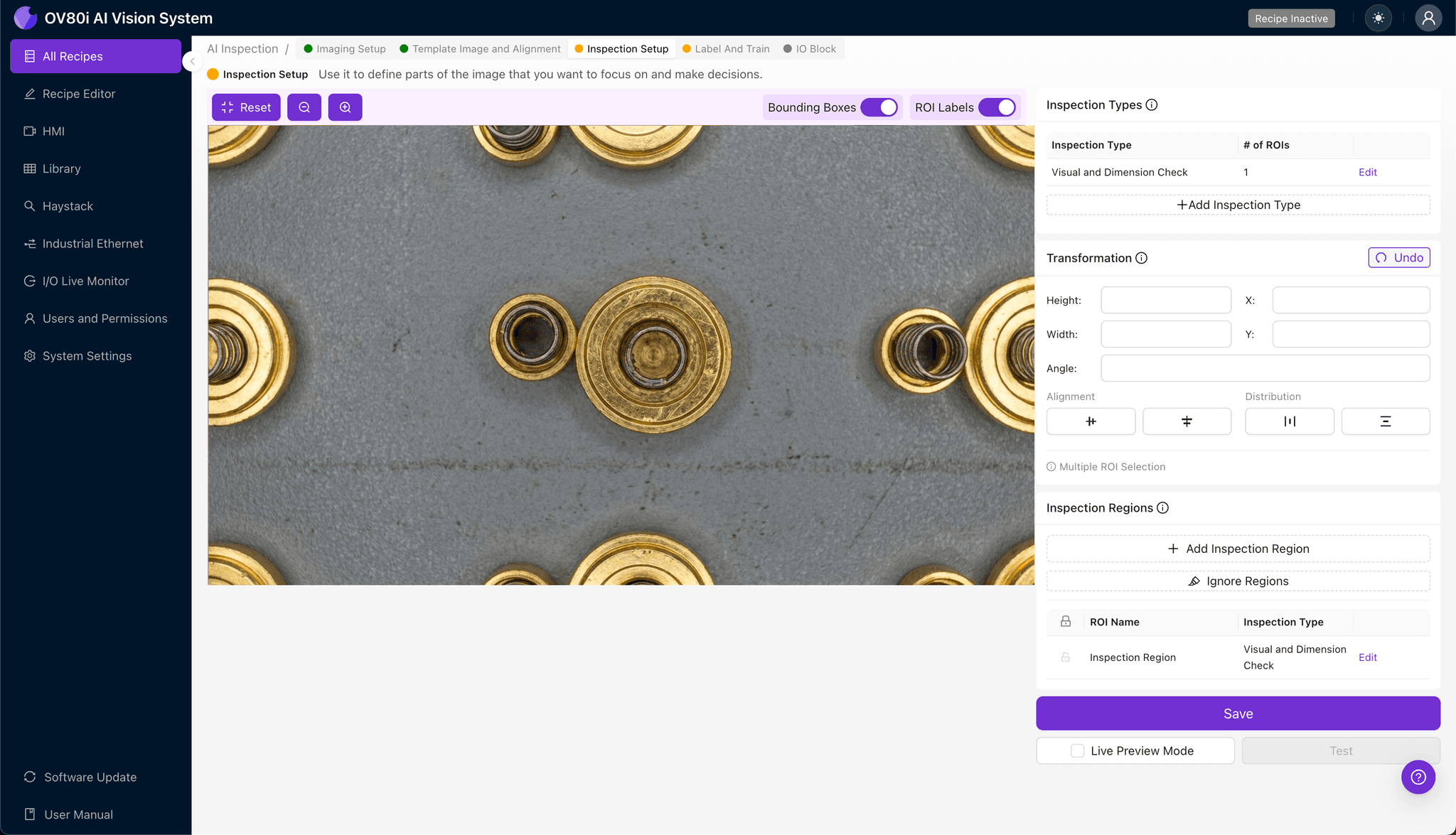
Navigate to "Inspection Setup" to define your critical inspection zones. Rename your "Inspection Types" to reflect the specific defect categories—such as "Spring_Fatigue," "Coil_Fracture," or "Contact_Wear."
Click "+ Add Inspection Region" for each defect type you need to monitor. Resize the yellow bounding box to cover the internal spring cavity, contact surfaces, and any areas prone to fatigue-related failures.
Click "Save" to confirm your inspection regions.
Step 4: Labeling Data
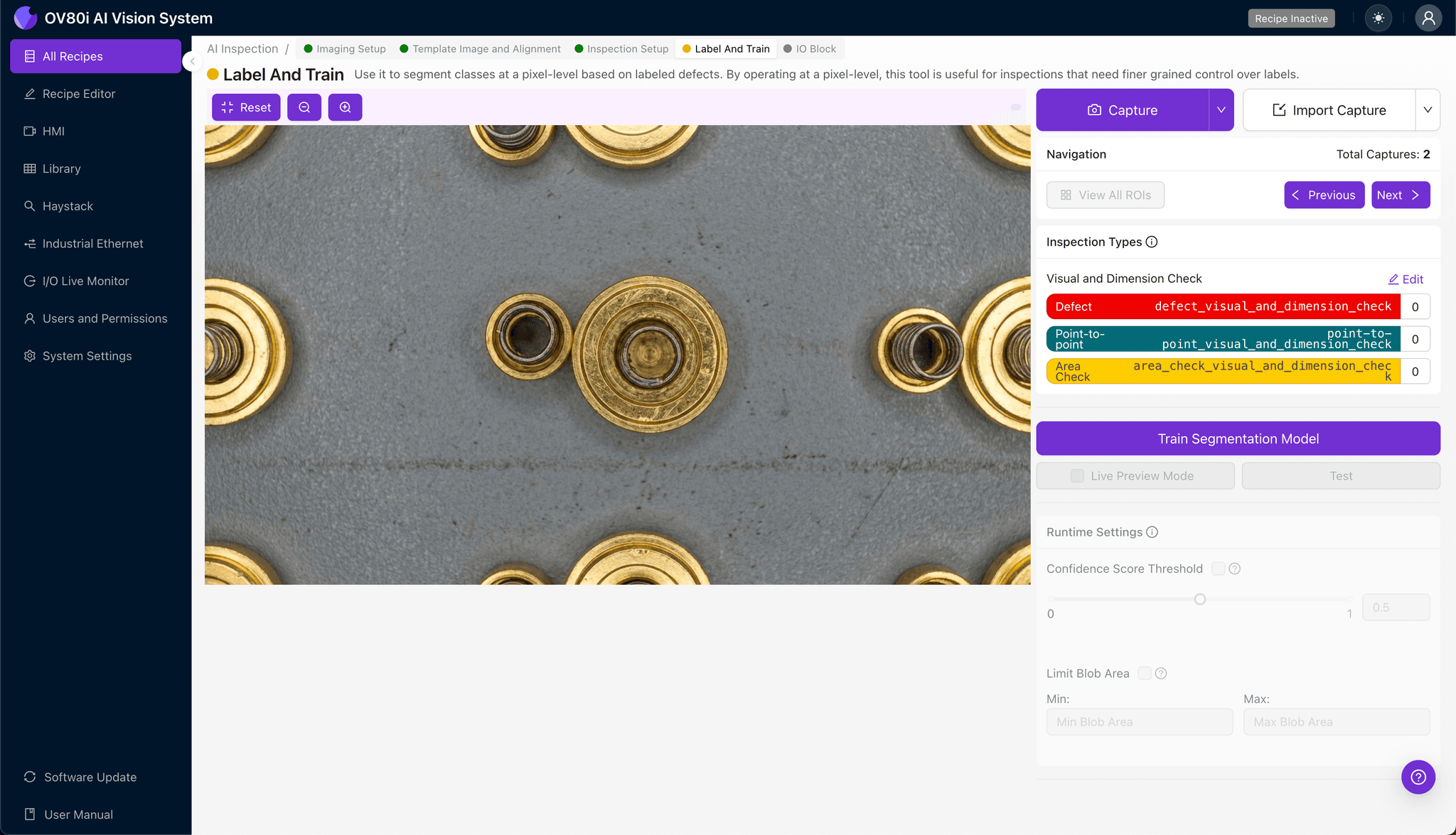
The human-in-the-loop labeling process trains your deep learning model to recognize defects specific to your production environment. Review captured images and categorize each as Good or Bad based on your quality specifications.
Include representative samples across the full spectrum of acceptable variation. Ensure your training set contains known failure modes—springs with confirmed fatigue, documented fractures, and out-of-spec compression characteristics.
Step 5: Creating Rules
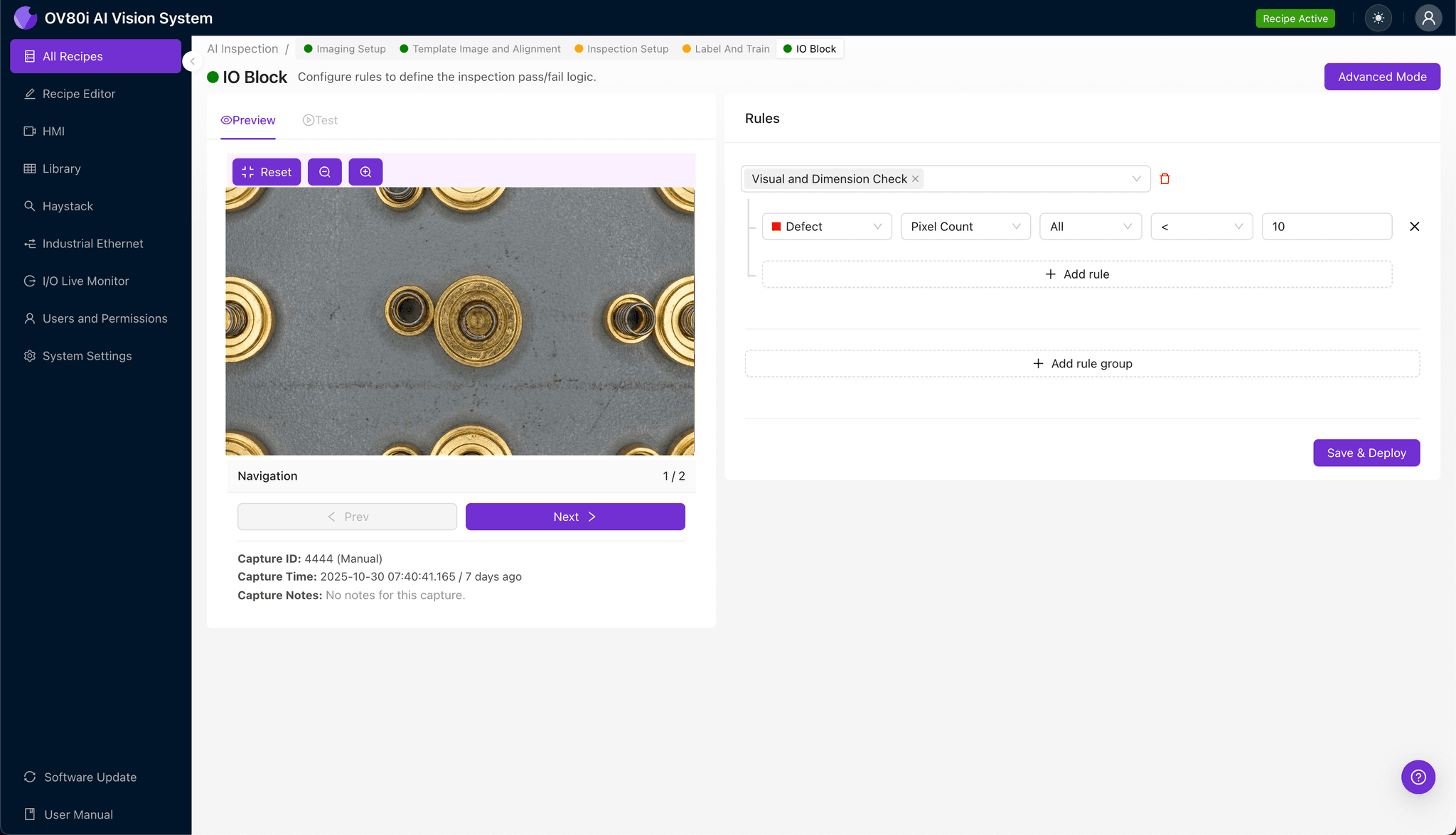
Configure your pass/fail logic based on the Inspection Types you defined earlier. Set threshold criteria that trigger rejection when spring fatigue indicators exceed acceptable limits.
Gate automated acceptance decisions directly on the production line, enabling real-time sorting of conforming versus non-conforming adapters without manual intervention.
Key Outcomes & ROI
Implementing AI-powered inspection for SMPM bullet adapter spring fatigue delivers measurable business impact:
- Reduced scrap rates – catch fatigue defects early before additional value-add processing
- Higher throughput – eliminate inspection bottlenecks with automated 100% inline screening
- Enhanced compliance and traceability – maintain complete inspection records for aerospace/defense quality requirements (AS9100, MIL-STD)
- Process improvement insights – analyze defect trends to identify upstream manufacturing issues causing premature spring fatigue
Conclusion
Detecting internal spring fatigue in SMPM bullet adapters demands inspection capabilities that exceed human visual limits. Overview.ai's deep learning-powered systems deliver the consistency, speed, and precision required to protect product quality in high-reliability RF applications.
Ready to eliminate spring fatigue escapes from your connector production line? Contact Overview.ai to schedule a demonstration with your actual components.
Eliminate Spring Fatigue Escapes Today
Stop relying on manual inspection for mission-critical RF components. Deploy Overview.ai to catch internal spring fatigue defects instantly.