SMT Connector Tail with Excessive Solder Paste Wicking: A Complete Visual Inspection Guide
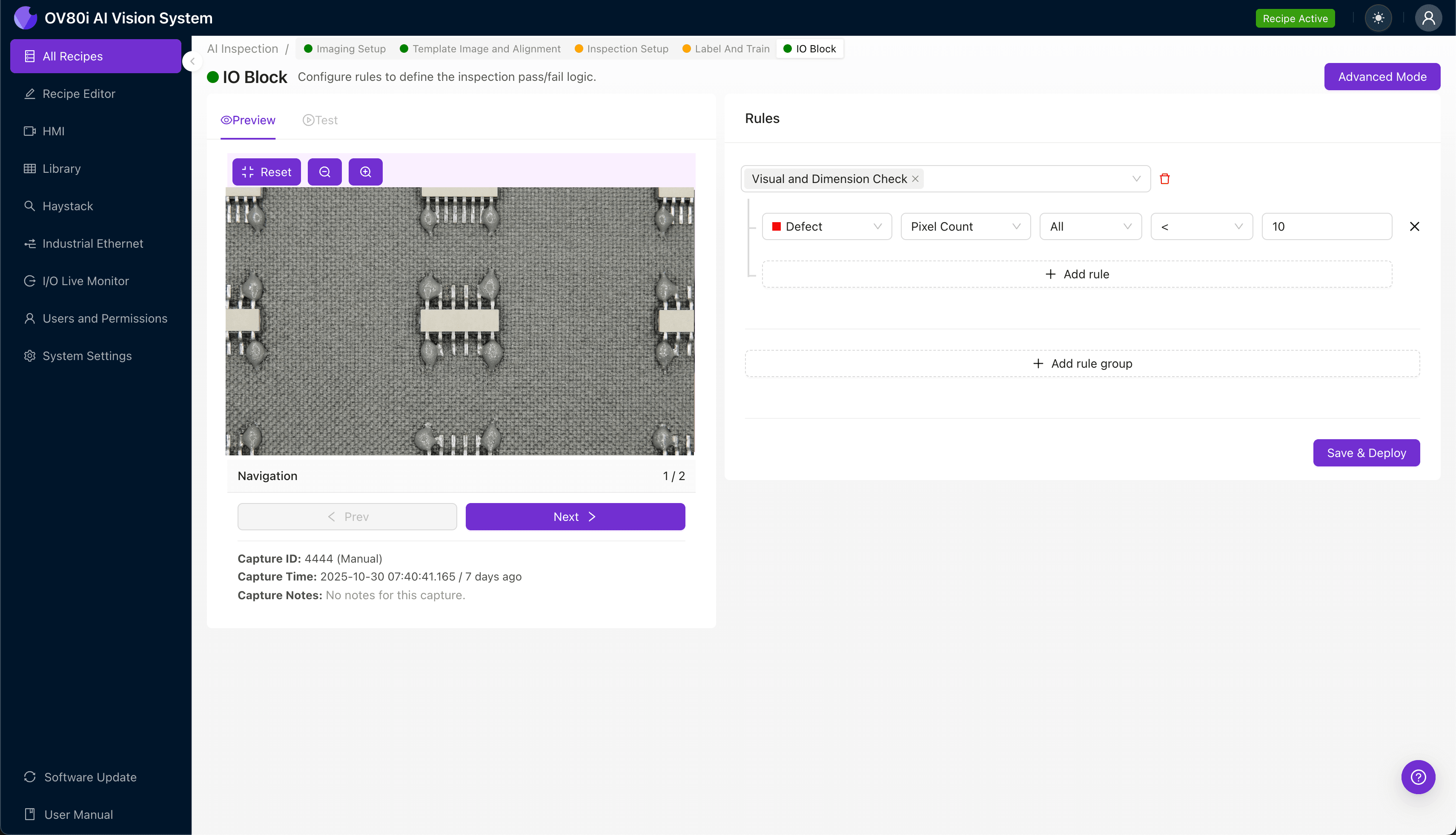
"Excessive solder paste wicking on SMT connector tails creates unreliable joints that pass initial testing but fail in the field. Overview.ai's deep learning-powered inspection catches these subtle defects at production speed with consistent accuracy that human inspectors cannot match."
The Problem: When Solder Migrates Where It Shouldn't
Excessive solder paste wicking on SMT connector tails occurs when molten solder migrates up the connector pins during reflow, drawing paste away from the intended joint area. This capillary action creates unreliable connections that can pass initial electrical testing but fail catastrophically in the field.
Common Defects Associated with Excessive Solder Paste Wicking:
- Insufficient solder at the joint — Paste wicked up the tail leaves inadequate solder volume at the pad-to-pin interface
- Cold or fractured joints — Reduced solder volume creates weak metallurgical bonds prone to cracking
- Solder bridging between adjacent tails — Wicked solder can spread laterally, shorting neighboring pins
- Inconsistent standoff height — Uneven solder distribution causes connector body tilt and mechanical stress
- Hidden voids beneath the joint — Wicking disrupts paste consolidation, trapping flux gases
- Degraded signal integrity — Compromised joints introduce impedance variations in high-frequency applications
Manual inspection of connector tail wicking is notoriously unreliable. Inspectors experience eye fatigue when examining hundreds of fine-pitch connectors per shift, and the defect's subtle visual signatures vary significantly under different lighting conditions.
Consistency drops dramatically after just 20-30 minutes of continuous inspection, while production lines demand throughput that human vision simply cannot maintain.
The Solution: AI-Powered Visual Inspection
Machine vision systems equipped with deep learning overcome the fundamental limitations of human inspection. These systems capture high-resolution images under controlled, repeatable lighting conditions—eliminating the variability that causes missed defects.
Deep learning models learn to recognize the subtle patterns of solder wicking that even experienced inspectors struggle to consistently identify.
Overview.ai's approach delivers consistent, objective inspection at full line speed. The OV80i system inspects every single unit without fatigue, flagging wicking defects in real-time while maintaining complete traceability for quality records and root cause analysis.
Step 1: Imaging Setup
Position the SMT connector assembly under the OV80i camera, ensuring the connector tails are clearly visible and properly oriented. Consistent part placement is critical for reliable wicking detection.
Click "Configure Imaging" to access the Camera Settings panel. Adjust exposure to clearly reveal solder surface texture without blown-out highlights, and fine-tune gain to capture the subtle color variations between properly wetted joints and wicked areas.
Click "Save" to lock in your optimized imaging parameters.
Step 2: Image Alignment
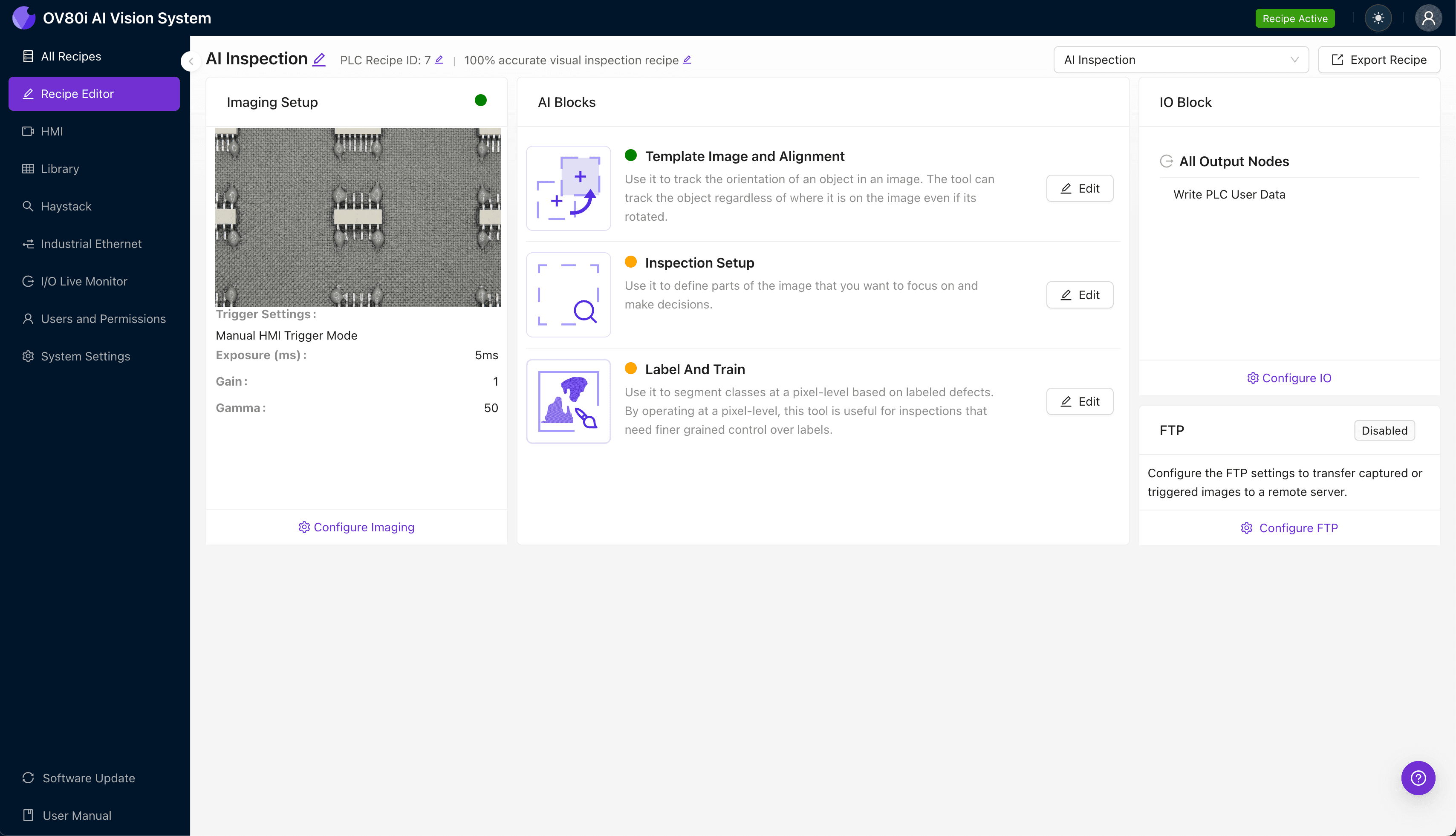
Navigate to "Template Image" in the configuration menu. Capture a Template using a known-good connector assembly with ideal solder joint formation.
Click "+ Rectangle" to add an alignment region around the connector's main body—this provides stable reference geometry that won't be affected by solder variations.
Set "Rotation Range" to 20 degrees to accommodate minor orientation differences in part presentation while maintaining accurate inspection positioning.
Step 3: Inspection Region Selection
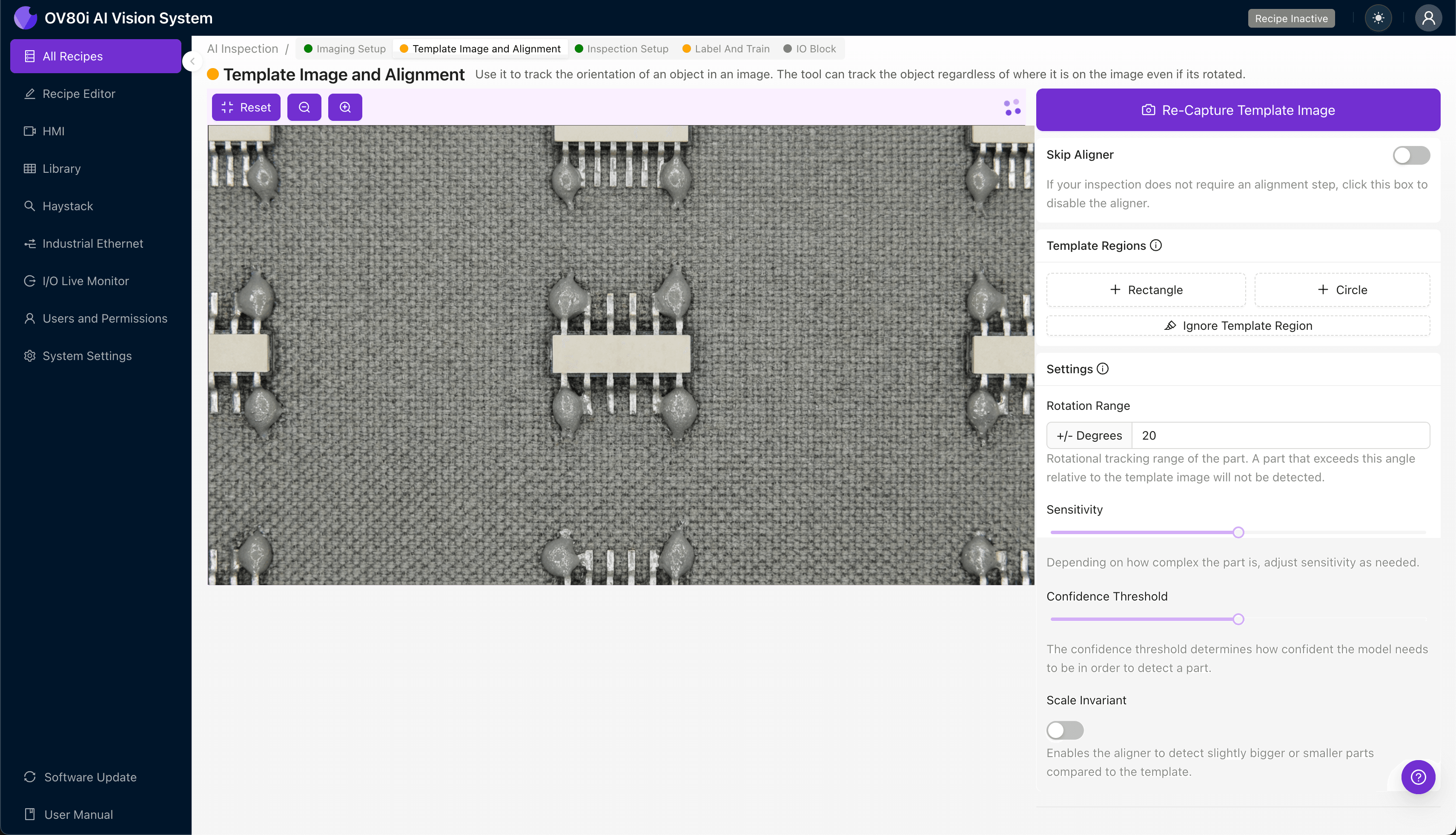
Navigate to "Inspection Setup" to define your detection zones. Rename your "Inspection Types" to reflect the specific defect categories—for example, "Tail_Wicking_Excessive" and "Joint_Insufficient_Solder."
Click "+ Add Inspection Region" to create a new detection zone. Resize the yellow bounding box to cover the critical connector tail and solder joint areas where wicking manifests.
Click "Save" to confirm your inspection regions.
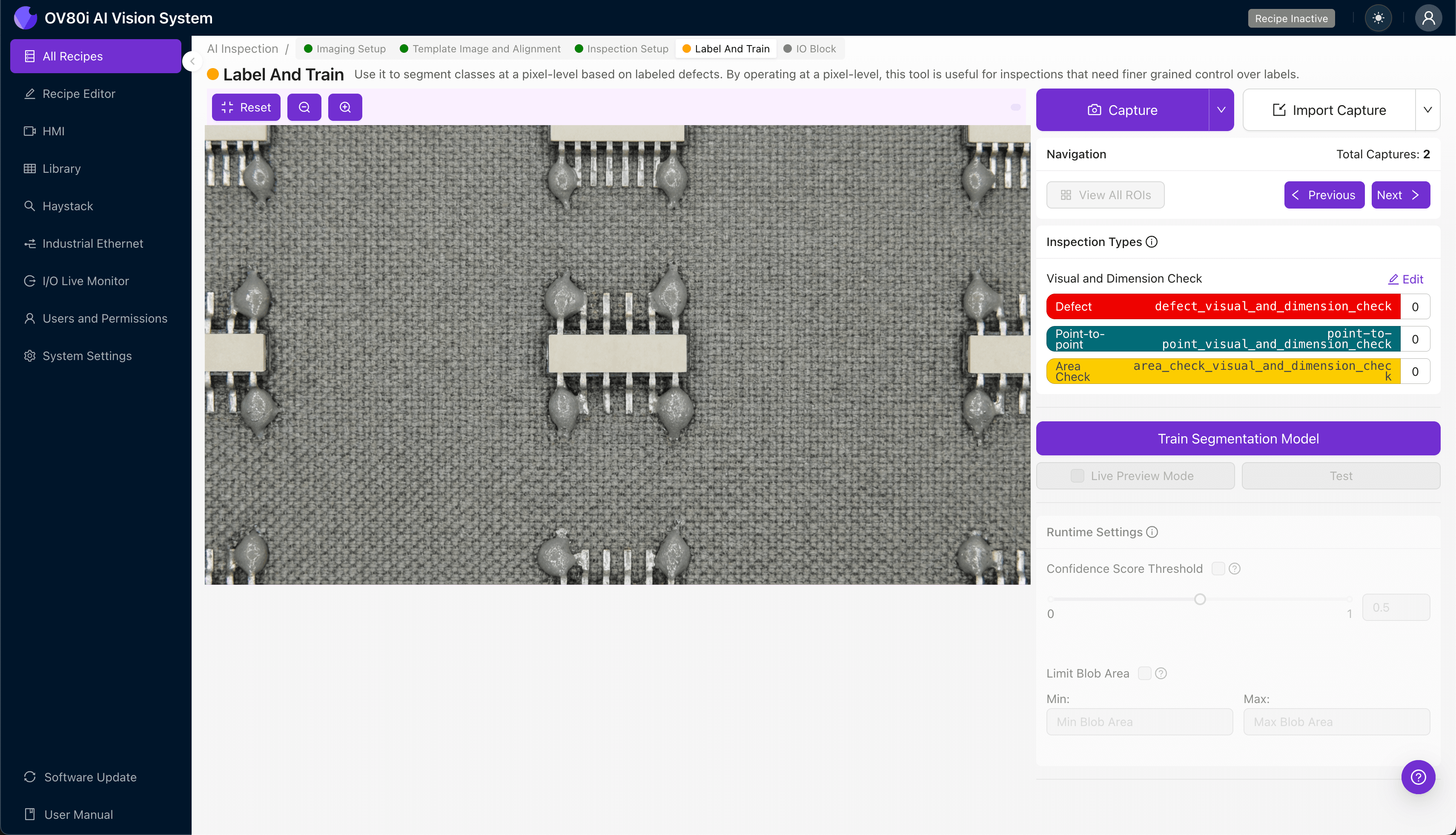
Step 4: Labeling Data
The human-in-the-loop labeling process trains your deep learning model to recognize wicking defects specific to your connector and process. Quality engineers review captured images and categorize them as Good vs. Bad based on your acceptance criteria.
Include representative samples across the full spectrum of acceptable variation, as well as known failure modes from historical quality data. The more diverse your labeled dataset—including borderline cases and different wicking severities—the more robust your trained model will perform.
Step 5: Creating Rules
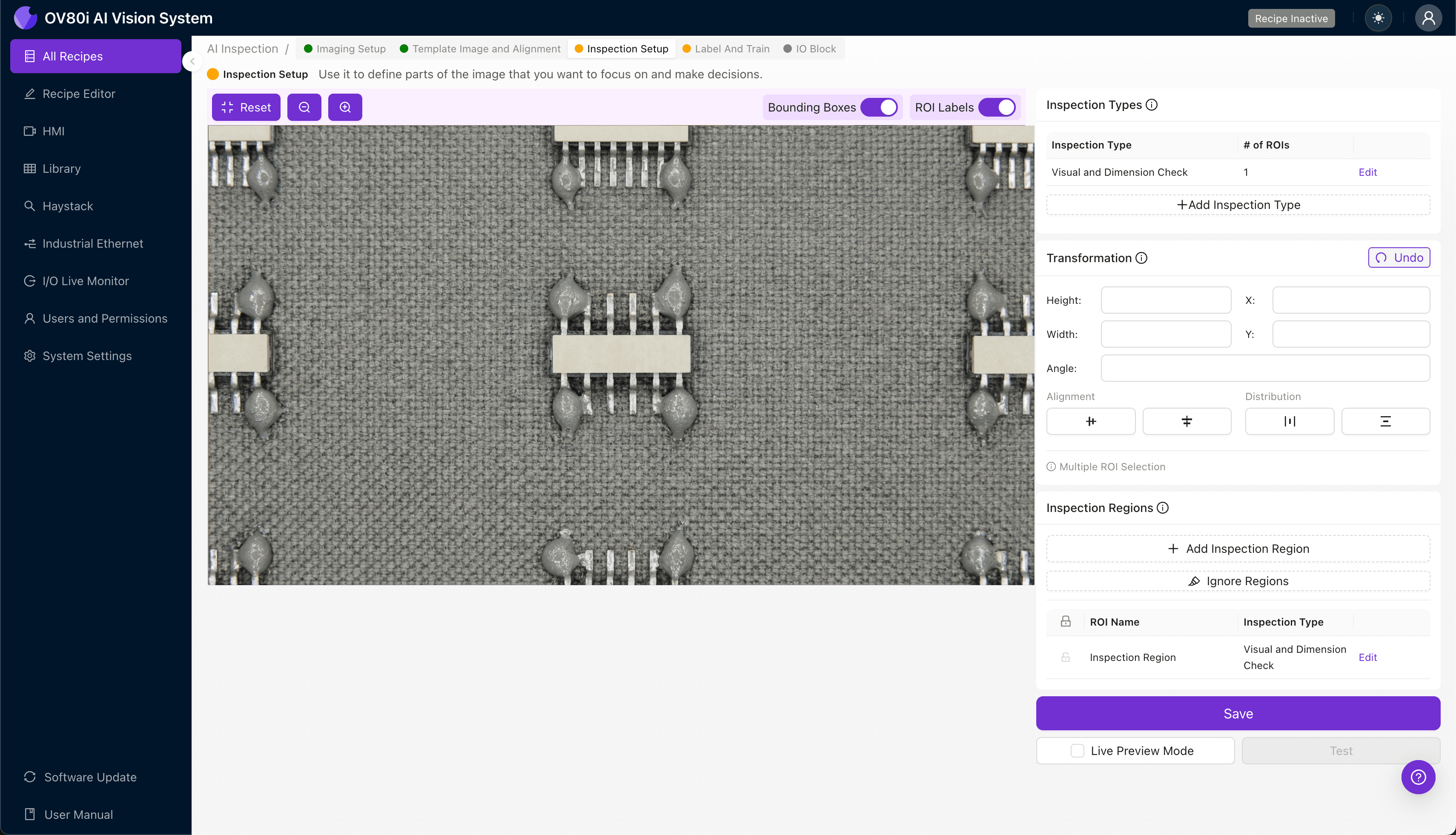
Configure your pass/fail logic based on the Inspection Types you defined. Set threshold parameters that align with your quality specifications and customer requirements.
Gate automated acceptance on the line by linking inspection results to your reject mechanism or line stop protocols. This ensures no connector with excessive wicking proceeds to downstream assembly or shipment.
Key Outcomes & ROI
Implementing AI-powered inspection for SMT connector tail wicking delivers measurable business impact:
- Reduced scrap and rework costs — Catch wicking defects before connectors are assembled into finished products, avoiding costly teardowns
- Higher throughput with 100% inspection — Eliminate the inspection bottleneck while actually increasing defect capture rates
- Compliance and traceability — Maintain complete image records and inspection data for customer audits, warranty claims, and regulatory requirements
- Process improvement insights — Identify upstream causes of wicking (paste volume, reflow profile, component coplanarity) through defect trend analysis
Eliminate Solder Wicking Escapes Today
Stop relying on manual inspection for critical SMT connector joints. Deploy Overview.ai to catch wicking defects instantly at full production speed.