Detecting Defects in Vacuum Grippers with Deformed Suction Cups: A Machine Vision Walkthrough
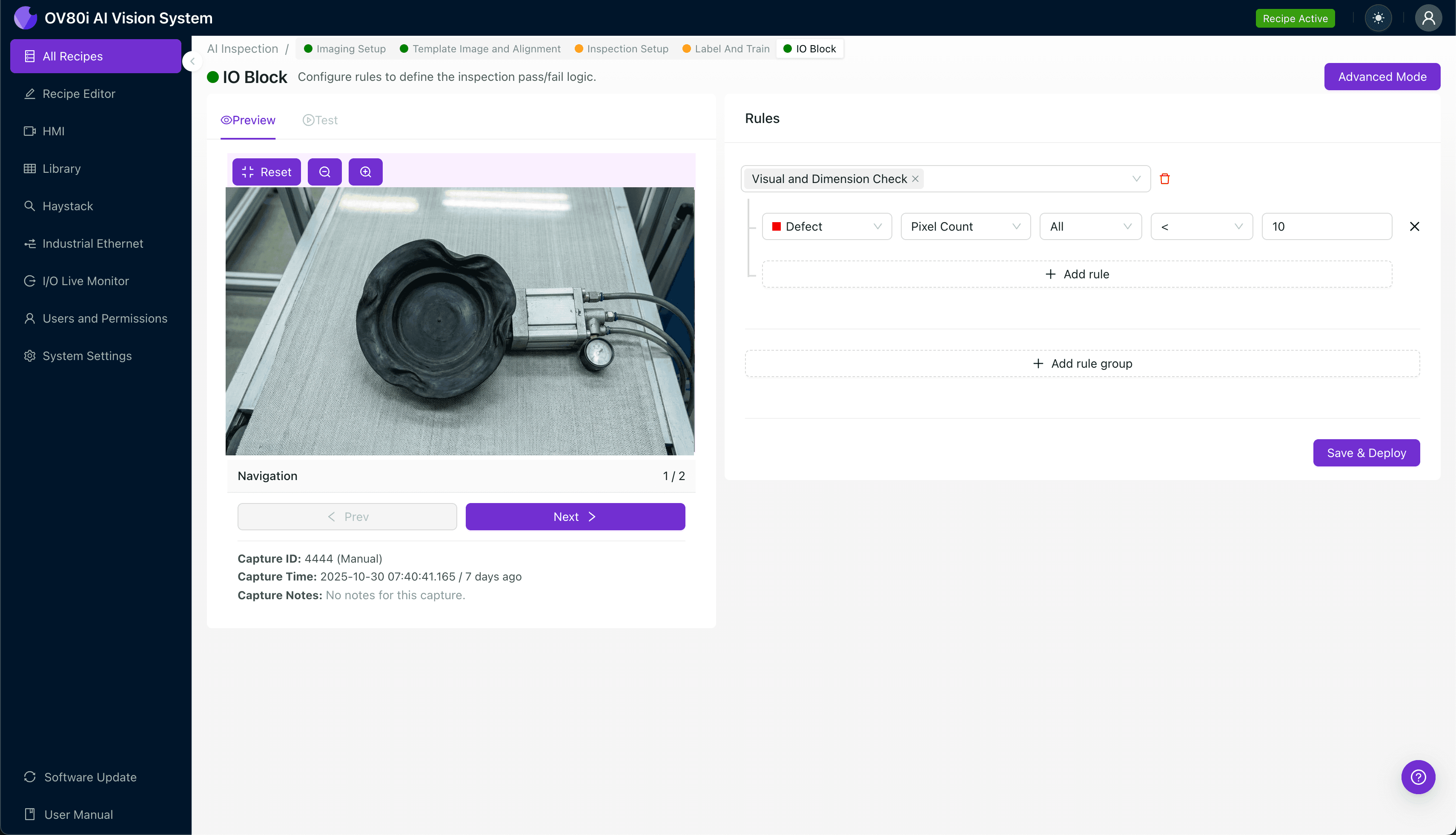
"Deformed suction cups on vacuum grippers cause dropped parts, damaged products, and costly line stoppages. Overview.ai's deep learning-powered inspection detects subtle geometric variations with superhuman consistency, catching defects that slip past manual inspection."
The Problem: Why Deformed Suction Cups Slip Past Manual Inspection
Vacuum grippers are the workhorses of automated material handling, and their suction cups must maintain precise geometry to create reliable seals. When suction cups become deformed, the consequences cascade through production—dropped parts, damaged products, and costly line stoppages.
Common Defects Found in Deformed Suction Cups:
- Lip warping — uneven or wavy edges that prevent proper seal formation
- Compression set damage — permanent deformation from prolonged use causing flattened contact surfaces
- Radial cracking — stress fractures emanating from the cup center toward the outer edge
- Bellows collapse — structural failure in accordion-style cups causing irregular folding patterns
- Material degradation — surface pitting, hardening, or tackiness loss from chemical exposure
- Concentricity deviation — off-center deformation affecting vacuum distribution
Human inspectors struggle with these defects for several critical reasons. Subtle geometric variations are nearly impossible to detect consistently across thousands of units per shift, and inspector fatigue compounds the problem—studies show visual acuity drops significantly after just 20 minutes of repetitive inspection tasks.
The Solution: Machine Vision and Deep Learning
Traditional rule-based vision systems often fail with suction cup inspection because deformations present in countless variations. Deep learning changes the game by training neural networks to recognize the concept of deformation rather than programming explicit geometric rules.
Overview.ai's approach leverages this technology to deliver consistent, objective inspection at full line speed. The system learns what "good" looks like from your actual production samples, then flags anomalies with superhuman consistency—24/7, without breaks or performance degradation.
Step 1: Imaging Setup
Position your vacuum gripper assembly under the OV80i camera, ensuring the suction cup faces the lens with adequate lighting to reveal surface details and edge geometry. Angled lighting often works best to cast shadows that highlight subtle lip deformations.
Click "Configure Imaging" in the Overview interface to access the Camera Settings panel. Adjust exposure to capture crisp edge definition without washout, and fine-tune gain to balance noise reduction with detail visibility.
Click "Save" to lock in your optimized imaging parameters.

Step 2: Image Alignment
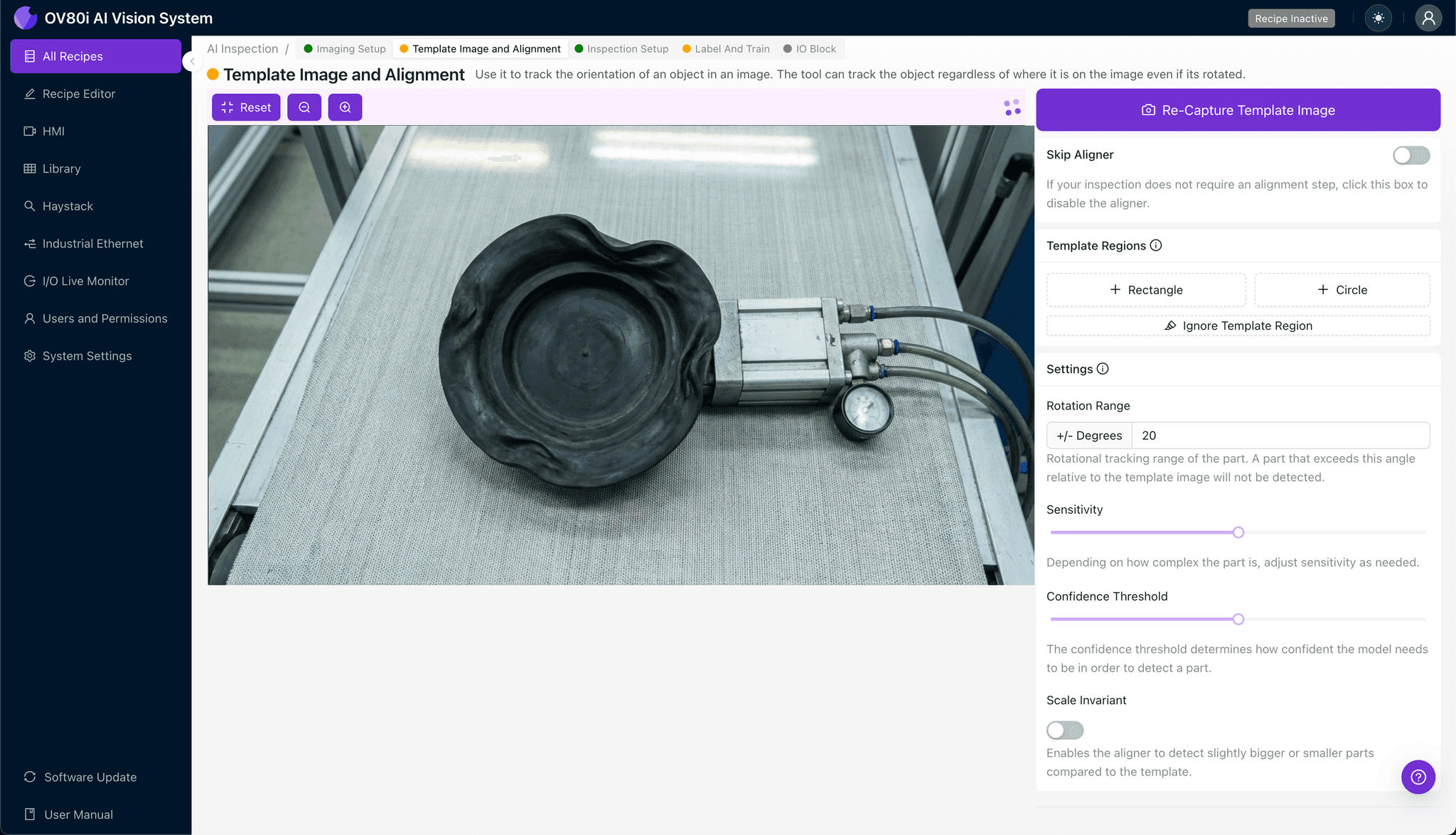
Navigate to the "Template Image" section and capture a reference image of a known-good suction cup in its standard orientation. This template anchors all future inspections to a consistent baseline.
Click "+ Rectangle" to add an alignment region around the main body of the suction cup, encompassing the full circumference and any mounting hardware. Set the "Rotation Range" to 20 degrees to accommodate minor positional variations as grippers enter the inspection zone.
Step 3: Inspection Region Selection
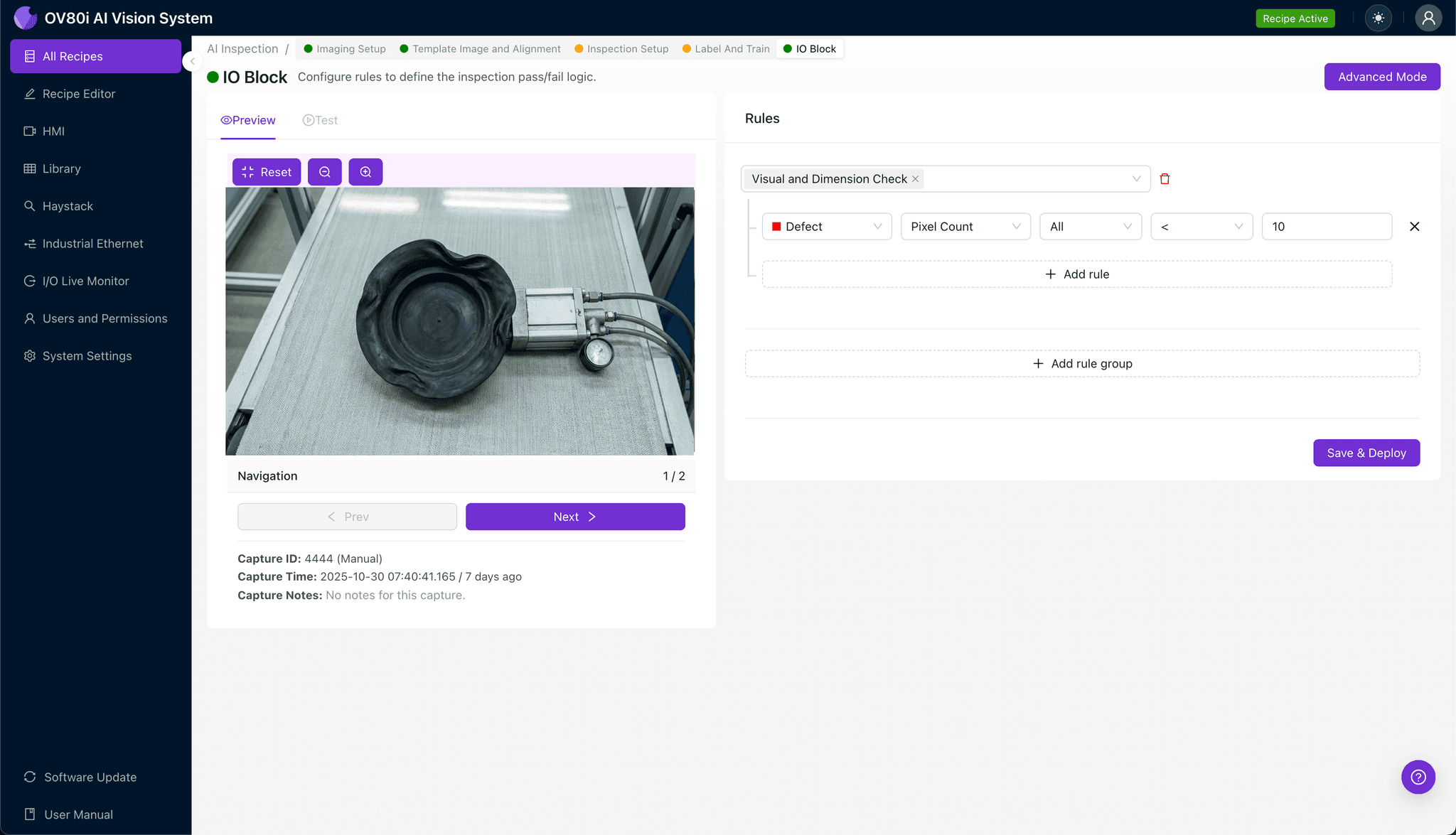
Navigate to "Inspection Setup" to define where the system should focus its analysis. Rename your "Inspection Types" to match your specific defect categories—for example, "Lip_Integrity," "Surface_Condition," and "Bellows_Structure."
Click "+ Add Inspection Region" for each critical area requiring evaluation. Resize the yellow bounding box to cover the suction cup lip edge where warping typically manifests, then add additional regions for the bellows folds and contact surface.
Click "Save" to confirm your inspection zone configuration.
Step 4: Labeling Data
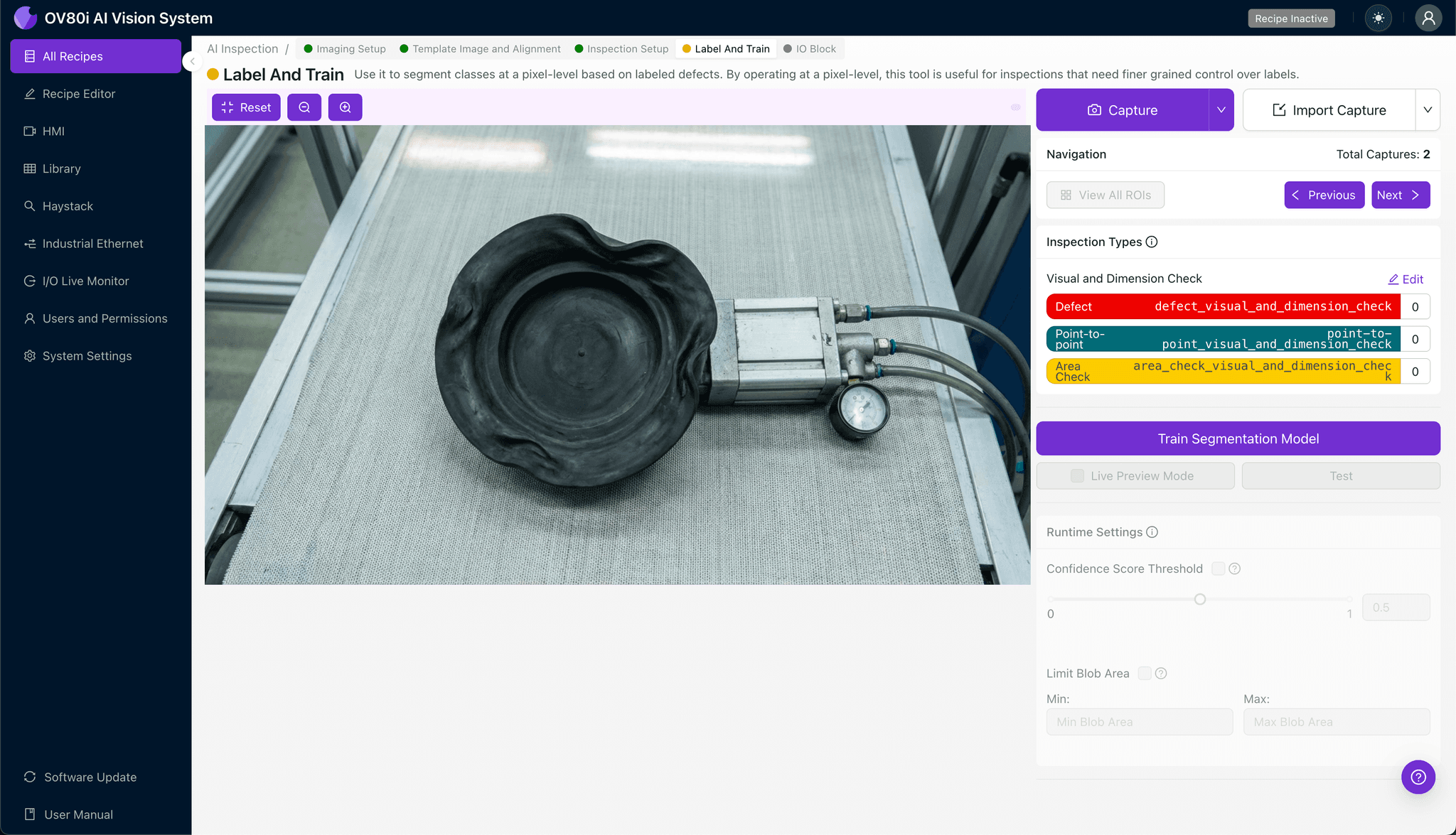
The human-in-the-loop labeling process is where your domain expertise trains the AI. Review captured images and categorize each as Good or Bad based on your quality standards.
Include representative samples across your full range of acceptable variation—different lighting conditions, minor positional shifts, and normal wear patterns. Critically, incorporate known failure modes from your reject history to ensure the model learns from real-world defect examples.
Aim for balanced datasets with sufficient examples of each defect type you need to catch.
Step 5: Creating Rules
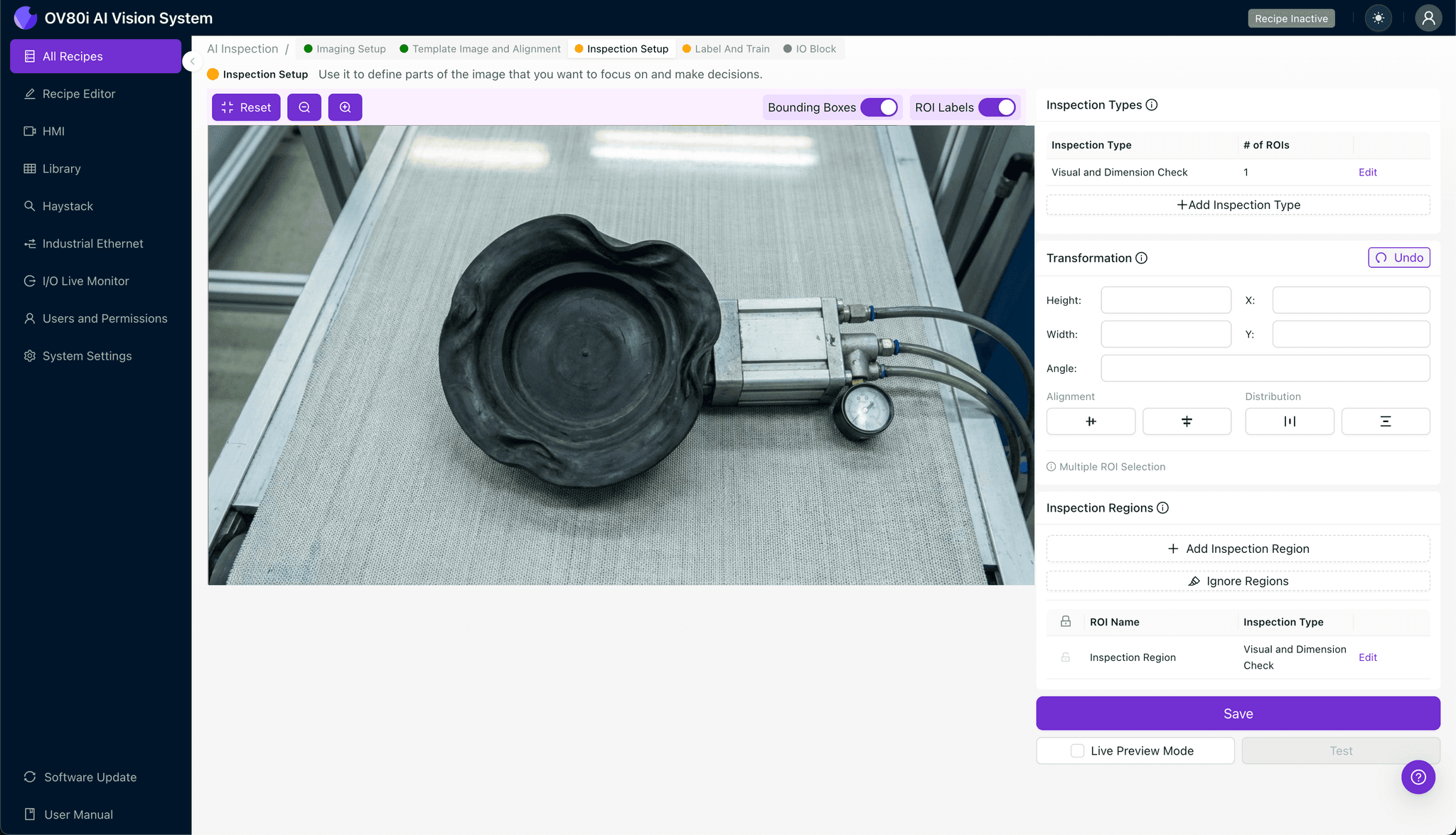
Configure your pass/fail logic based on the Inspection Types you defined earlier. Set threshold confidence levels that align with your quality requirements—higher thresholds reduce false accepts but may increase false rejects.
Gate automated acceptance decisions directly on the line, triggering reject mechanisms or divert conveyors when the system detects deformation. This creates a closed-loop system where no defective gripper reaches downstream assembly without human review.
Key Outcomes & ROI
Implementing automated visual inspection for vacuum gripper suction cups delivers measurable returns across multiple dimensions:
- Reduced scrap rates — catch deformed cups before they cause dropped parts and secondary damage downstream
- Higher throughput — eliminate inspection bottlenecks with sub-second evaluation speeds that match or exceed line rates
- Enhanced compliance and traceability — automatically log every inspection result with timestamped images for audit trails and customer documentation
- Process improvement insights — analyze defect trend data to identify root causes, supplier quality issues, or maintenance intervals requiring adjustment
Conclusion
Deformed suction cups represent a silent threat to production efficiency—difficult to detect manually but devastating when they fail. Overview.ai's deep learning-powered inspection transforms this challenge into a competitive advantage, delivering the consistency and speed that modern manufacturing demands.
Eliminate Vacuum Gripper Failures Today
Stop relying on manual inspection. Deploy Overview.ai to catch deformed suction cups instantly before they cause costly line stoppages.