How to Detect Cracked Organizers on VITA 46 (VPX) Wafers Using AI-Powered Visual Inspection
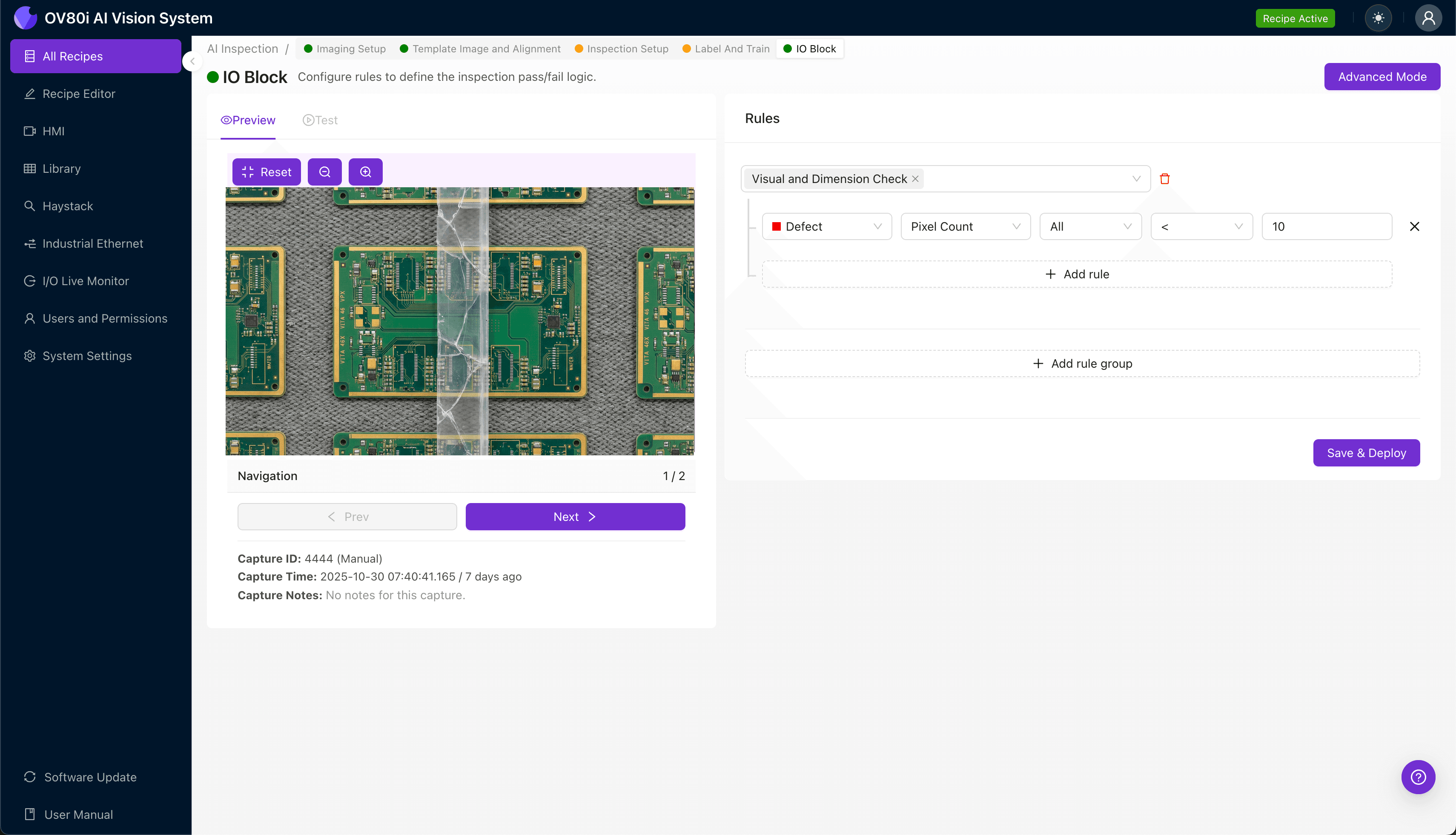
"Cracked organizers on VITA 46 (VPX) wafers compromise pin alignment and connector reliability in mission-critical defense and aerospace systems. AI-powered visual inspection eliminates human fatigue and catches hairline fractures that manual inspection consistently misses, delivering 100% inspection at production line speeds."
The Problem: Why Cracked Organizers Are a Critical Defect
VITA 46 (VPX) wafers serve as the backbone of rugged embedded computing systems used in defense, aerospace, and telecommunications applications. The organizer component—the precision-molded plastic or composite structure that aligns and protects delicate connector pins—is particularly vulnerable to cracking during handling, thermal cycling, and assembly processes.
Common Defects Found in VITA 46 (VPX) Wafers with Cracked Organizers:
- Hairline fractures along organizer stress points that compromise pin alignment integrity
- Corner cracks caused by improper insertion force during mating cycles
- Thermal stress fractures resulting from coefficient of thermal expansion mismatches
- Impact damage from automated handling equipment or drop events
- Delamination between organizer layers in multi-piece assemblies
- Pin displacement secondary to organizer structural failure
Manual inspection of these high-density connectors is notoriously unreliable. Human inspectors experience visual fatigue within 20-30 minutes of examining fine-pitch organizer structures, and the subtle nature of hairline cracks makes consistent detection nearly impossible at production speeds.
The Solution: Machine Vision Meets Deep Learning
Traditional rule-based machine vision systems struggle with the variable presentation of organizer cracks—fractures can appear at any angle, depth, or location across the component surface. Deep learning models, however, excel at recognizing these subtle anomalies by learning from thousands of labeled examples rather than rigid programmed parameters.
Overview.ai's approach combines high-resolution imaging with AI-powered defect detection to deliver consistent, objective inspection at line speed. The system never fatigues, never second-guesses itself, and documents every inspection decision for complete traceability.
Step 1: Imaging Setup
Begin by placing the VITA 46 (VPX) wafer with the suspected cracked organizer under the inspection camera. Position the component so the organizer surface faces the lens with even illumination across all critical areas.
Click "Configure Imaging" in the Overview.ai interface to access the Camera Settings panel. Adjust exposure to capture fine surface detail without overexposing reflective pin surfaces, and tune gain to optimize signal-to-noise ratio for crack visibility.
Click "Save" to lock in your imaging configuration.

Step 2: Image Alignment
Navigate to the "Template Image" section and capture a reference Template of a properly positioned wafer. This template ensures consistent part orientation across all subsequent inspections.
Click "+ Rectangle" to add an alignment region around the main body of the organizer structure. Set the "Rotation Range" to 20 degrees to accommodate minor variations in part placement on the inspection fixture.
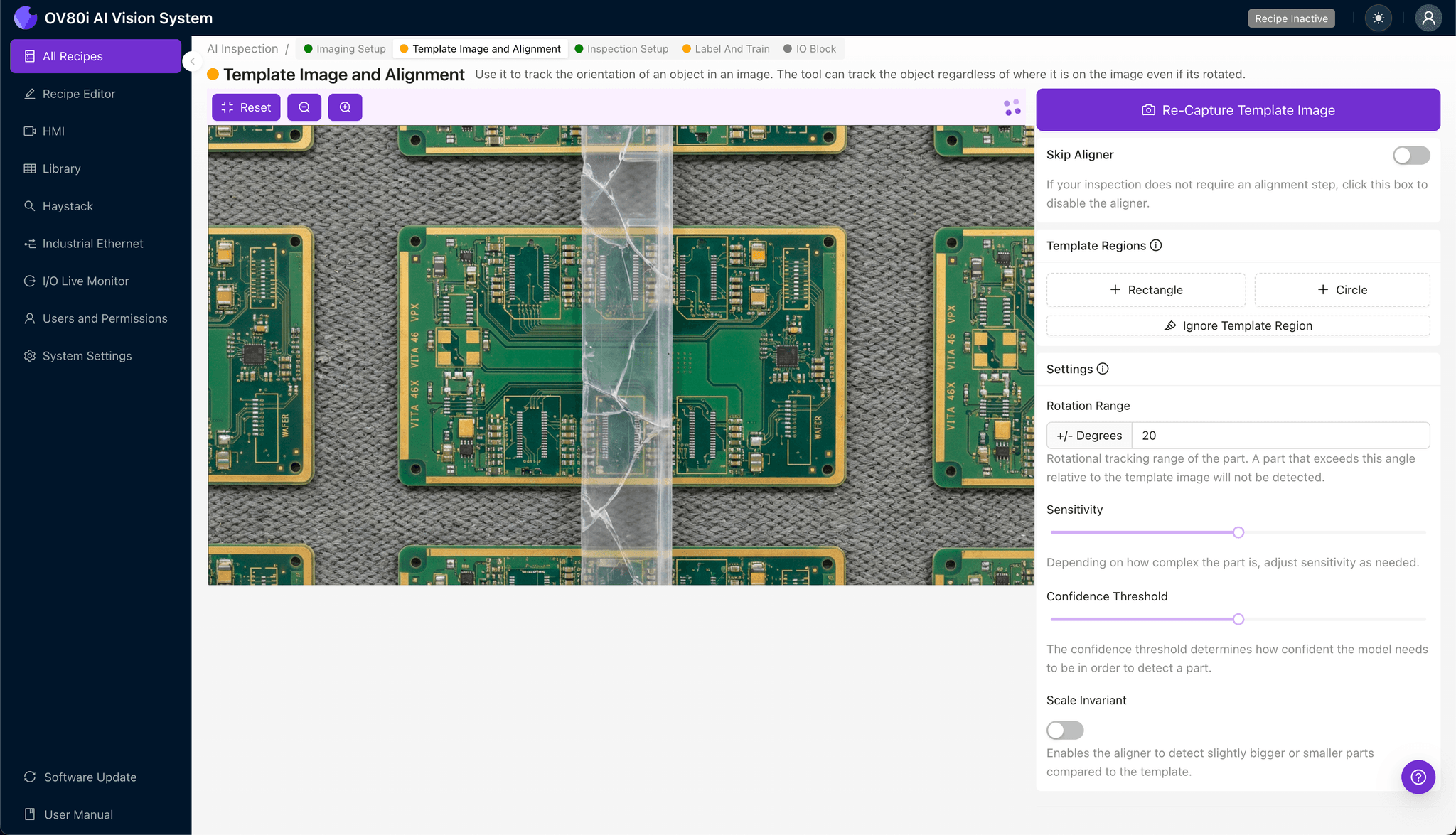
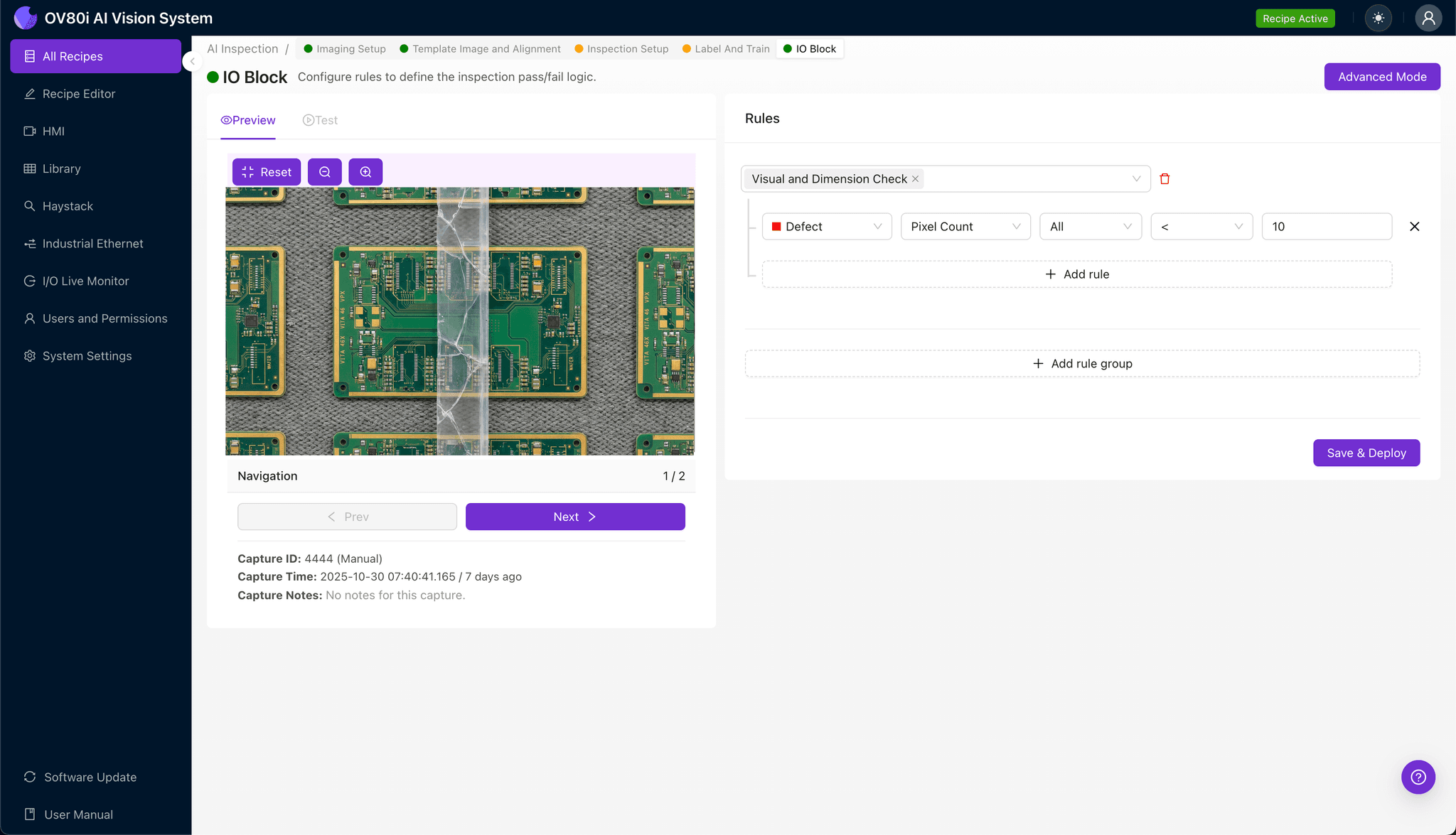
Step 3: Inspection Region Selection
Navigate to "Inspection Setup" to define where the AI should focus its analysis. Rename your "Inspection Types" to reflect the specific defect categories—for example, "Organizer_Crack" and "Pin_Displacement."
Click "+ Add Inspection Region" to create a new detection zone. Resize the yellow bounding box to cover the critical defect areas, particularly organizer corners, pin interfaces, and high-stress mounting points.
Click "Save" to confirm your inspection region configuration.
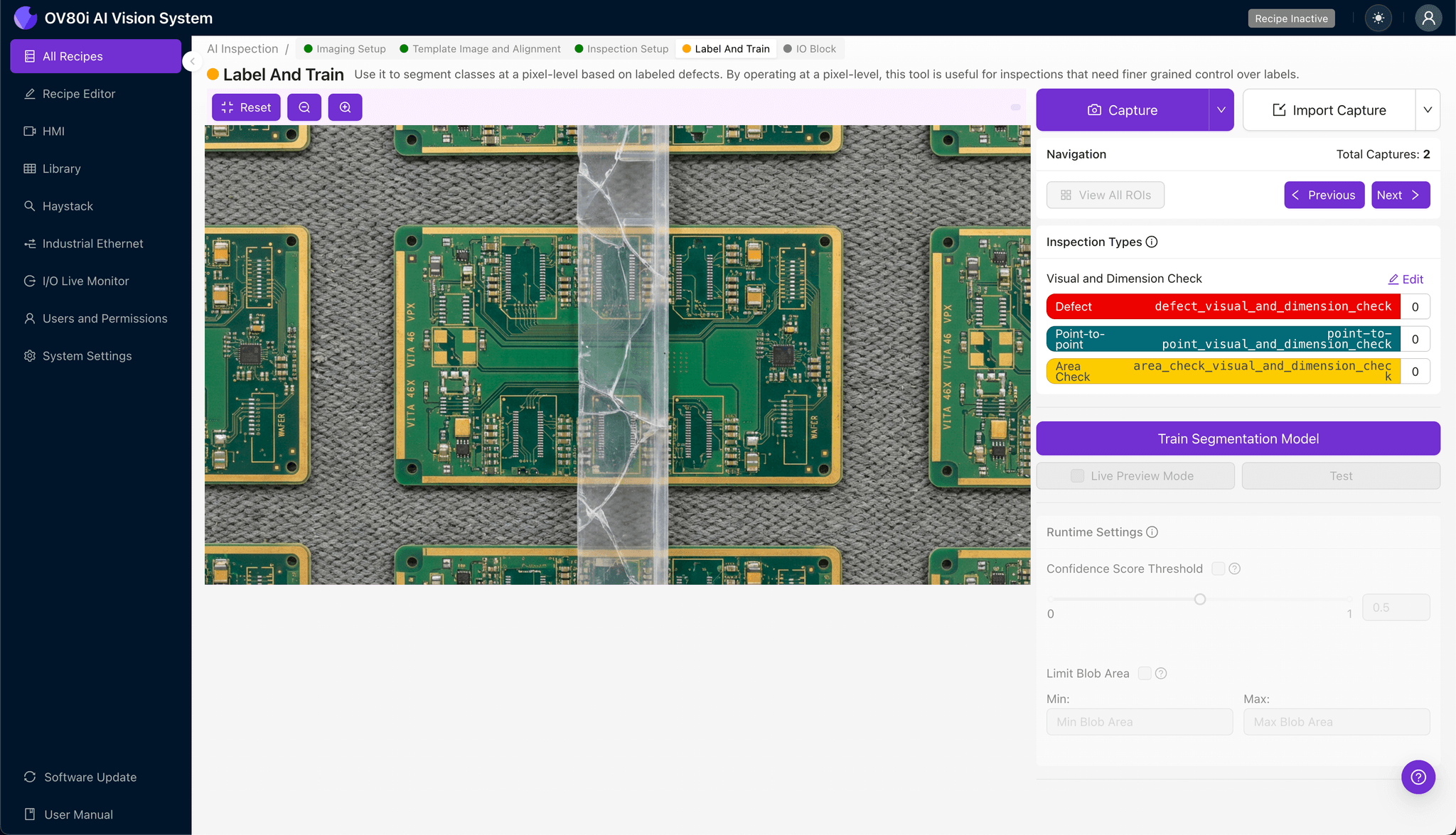
Step 4: Labeling Data
The human-in-the-loop labeling process is where your inspection expertise trains the AI model. Review captured images and categorize each as Good (acceptable organizer condition) or Bad (crack present).
Include representative samples across the full spectrum of acceptable variation and known failure modes. The more diverse your training dataset—including different crack types, lighting conditions, and part orientations—the more robust your deployed model will perform.
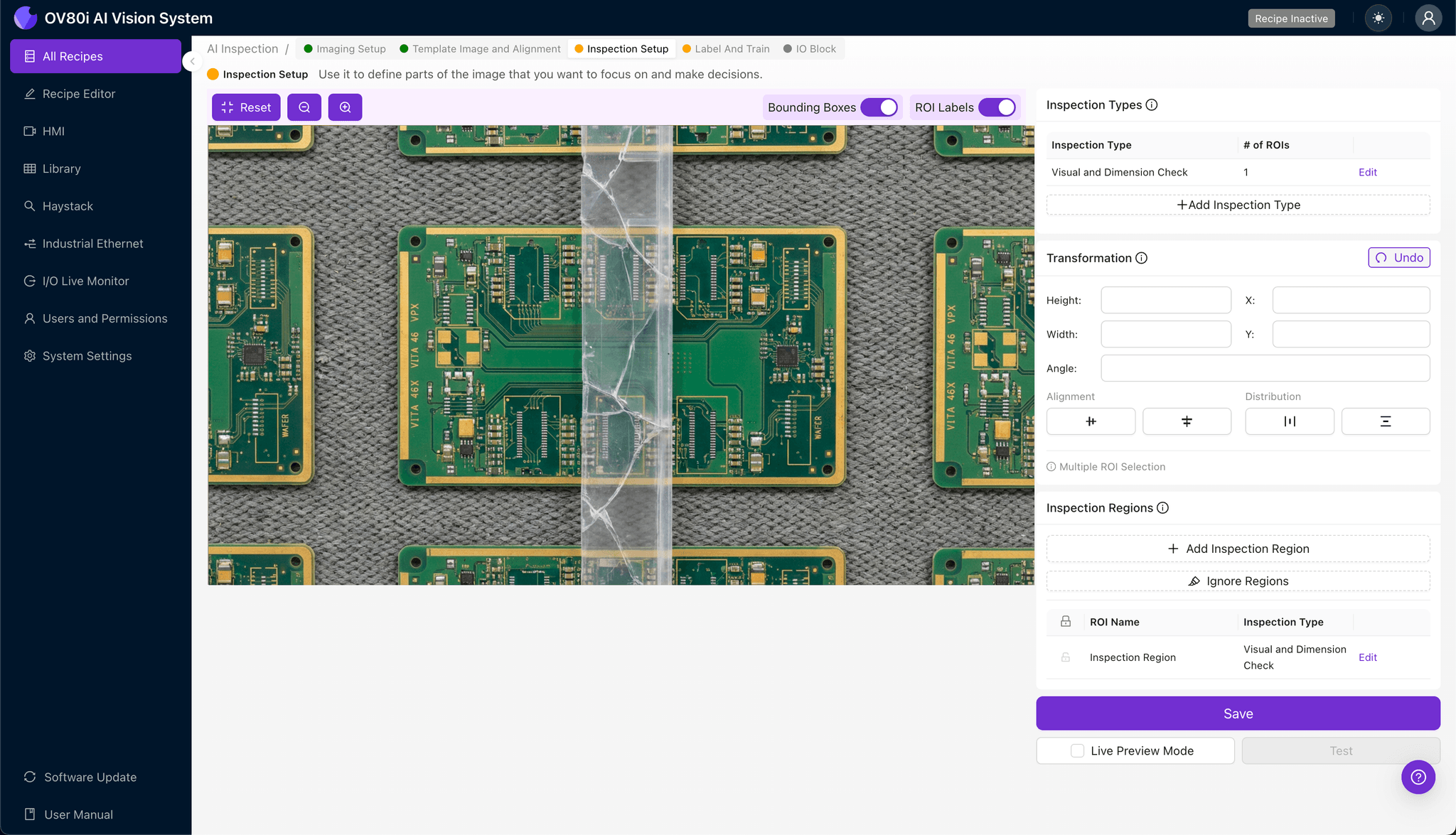
Step 5: Creating Rules
With your trained model ready, set pass/fail logic based on your defined Inspection Types. Configure threshold confidence levels that balance escape rate against false rejection targets.
Gate automated acceptance on the line by integrating inspection decisions with your production control system. Parts flagged as "Bad" are automatically diverted for secondary review or rejection, while "Good" parts proceed downstream without interruption.
Key Outcomes & ROI
Implementing AI-powered inspection for VITA 46 (VPX) wafer organizer cracks delivers measurable business impact:
- Reduced Scrap: Catch cracked organizers before downstream assembly adds value to defective components
- Higher Throughput: Inspect 100% of production at line speed without bottlenecking operations
- Compliance & Traceability: Maintain complete inspection records for AS9100, MIL-STD, and customer audit requirements
- Process Improvement Insights: Analyze defect trend data to identify root causes and optimize upstream processes
Ready to Eliminate Organizer Crack Escapes?
Overview.ai's visual inspection platform transforms how manufacturers approach quality control for mission-critical VPX components. Contact our team to schedule a demonstration with your actual VITA 46 wafer samples.