The Ultimate Guide to Computer Vision Applications in Manufacturing (2026)
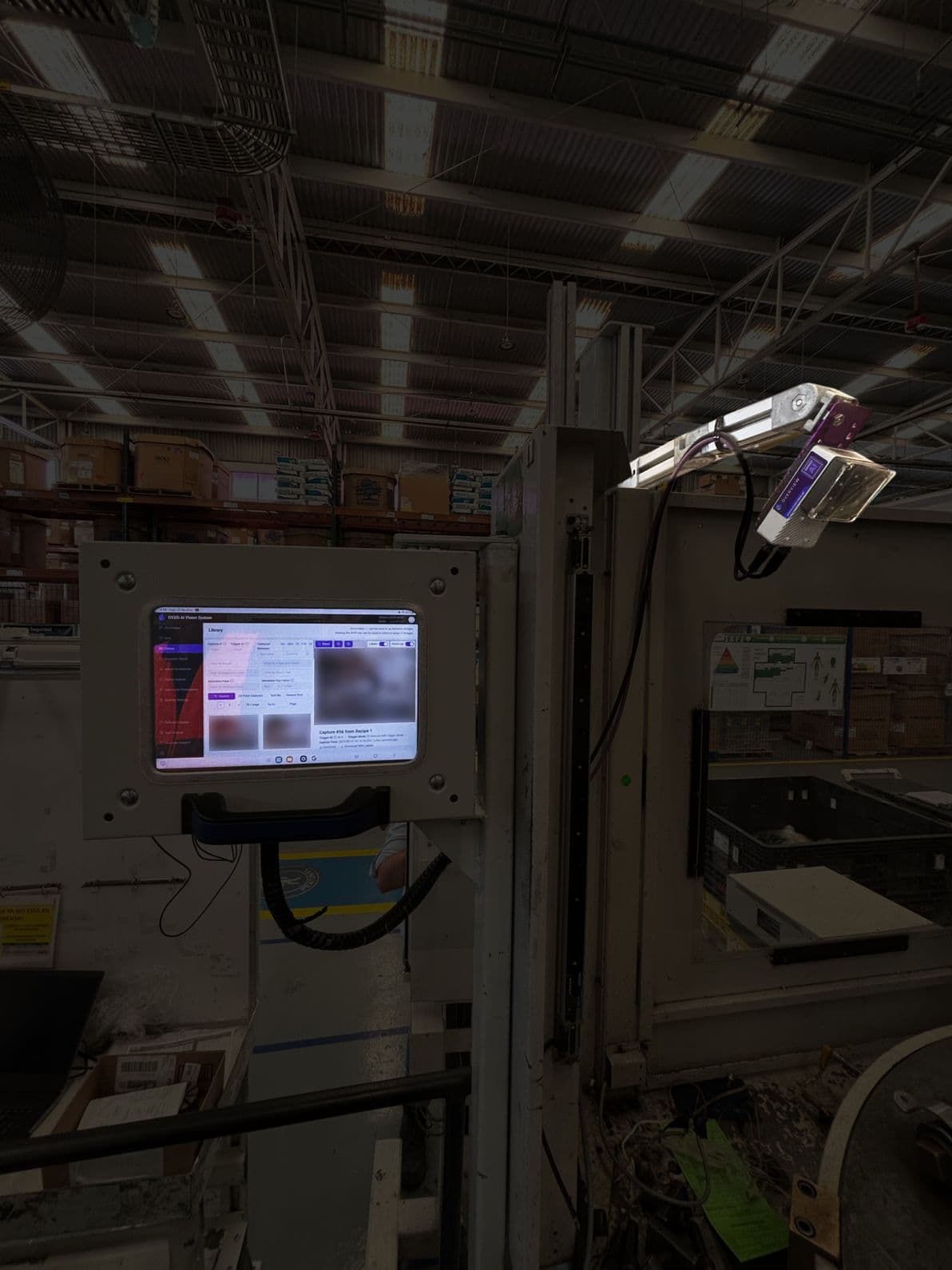
Computer vision has evolved from a laboratory curiosity to an essential manufacturing technology. Today, cameras and AI analyze everything from microelectronics to heavy equipment, enabling automation that was impossible just a few years ago. This comprehensive guide explores the full landscape of computer vision applications in modern manufacturing.
In This Guide:
Quality Inspection & Defect Detection
Quality inspection is the most widespread application of computer vision in manufacturing. Vision systems examine products to identify defects, verify conformance to specifications, and ensure only quality products reach customers.
Surface Defect Detection
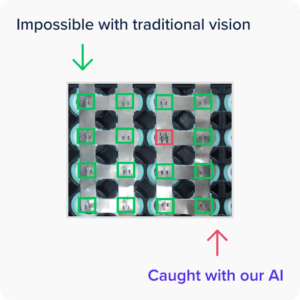
Surface inspection detects scratches, dents, stains, contamination, corrosion, and other visual defects on product surfaces. This application spans industries from automotive (paint defects, surface finish) to electronics (PCB contamination) to metals (scale, scratches, inclusions).
Modern AI-powered surface inspection handles the natural variation that makes traditional machine vision difficult. It distinguishes true defects from acceptable texture variation, adapts to different lighting conditions, and can detect subtle anomalies that human inspectors miss.
Weld Inspection
Computer vision analyzes welds for defects including porosity, cracks, undercut, incomplete fusion, spatter, and incorrect bead geometry. Both visual inspection of weld surfaces and analysis of cross-sectional images are common. AI systems learn what good welds look like and flag deviations.
Electronics Inspection
The electronics industry was an early adopter of computer vision for inspecting solder joints, component placement, PCB defects, wire bonds, and more. AI has expanded capabilities to include defects like insufficient solder, bridging, tombstoning, and contamination that are difficult to program with rules.
Solder Joint Inspection
Analyzing solder joint quality for bridging, insufficient solder, cold joints
Component Verification
Confirming correct components, orientation, and placement accuracy
Connector Inspection
Detecting bent pins, contamination, damage in connectors
Assembly Verification
Assembly verification ensures products are built correctly—all components present, properly positioned, correctly oriented, and fully seated. This prevents shipping incomplete or incorrectly assembled products.
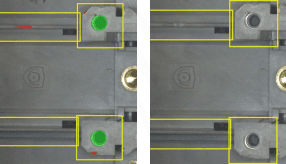
Component Presence/Absence
Vision systems verify that all required components are present in assembled products. This ranges from simple presence checks (is the label applied?) to complex multi-component verification (are all 47 components in the assembly?). AI makes this more robust by handling component variation and partial occlusion.
Position & Orientation Verification
Beyond presence, vision confirms components are in correct positions and orientations. Cables routed correctly? Connector fully seated? Fastener oriented properly? This catches assembly errors that could cause field failures.
Robot Guidance & Automation
Computer vision enables robots and automation systems to see and adapt to their environment. This flexibility is essential for modern manufacturing where perfect part positioning isn't always possible.
Bin Picking
Bin picking uses 3D vision to guide robots picking parts from bins or containers. The vision system identifies parts, determines their position and orientation, and calculates pick paths. AI enables picking of varied, jumbled parts that would be impossible with traditional vision.
Visual Servoing
Visual servoing uses camera feedback to guide robot movements in real-time. The robot adjusts its trajectory based on what the camera sees, enabling precise operations even when part positions vary. Applications include assembly, welding, and dispensing.
Collaborative Robot Safety
Vision systems monitor the workspace around collaborative robots, detecting human presence and triggering safety responses. This enables humans and robots to work in closer proximity while maintaining safety.
Measurement & Metrology
Computer vision performs non-contact dimensional measurement at speeds impossible with traditional gauging. Vision measures dimensions, positions, angles, and geometric features without physically touching products.
Dimensional Measurement
Vision systems measure lengths, widths, heights, diameters, and other dimensions. 2D measurement uses calibrated cameras to convert pixel measurements to real-world units. 3D measurement adds depth information for complete dimensional characterization.
Geometric Analysis
Beyond simple dimensions, vision analyzes geometric features including angles, radii, flatness, circularity, and positional relationships. This enables comprehensive geometric inspection without multiple specialized gauges.
Identification & Traceability
Vision systems read codes, text, and other identifiers to track products through manufacturing and supply chains. This enables traceability, process control, and inventory management.
Code Reading
Decoding 1D barcodes, 2D codes (QR, Data Matrix), and direct part marks
OCR/OCV
Reading and verifying printed, stamped, or engraved text
Label Verification
Confirming label presence, content, and placement accuracy
Product Identification
Identifying product types for routing, sorting, or process control
Packaging Inspection
Packaging inspection ensures products are properly packaged for shipping and sale. Applications span from primary packaging (product containers) to secondary packaging (cases, cartons) to palletizing.
Fill Level Inspection
Vision verifies that containers are filled to correct levels. This applies to bottles, jars, pouches, and other containers across food, beverage, pharmaceutical, and consumer goods industries.
Seal & Closure Inspection
Inspecting seals, caps, and closures ensures package integrity. Vision detects missing caps, cross-threaded closures, incomplete seals, and other packaging failures that could compromise product quality or safety.
Package Integrity
Vision identifies damaged packaging—dents, tears, creases, contamination—that could affect product protection or retail presentation.
Safety & Monitoring
Beyond product inspection, computer vision monitors manufacturing environments for safety and process control.
PPE Compliance
AI vision systems verify workers are wearing required personal protective equipment—hard hats, safety glasses, high-visibility vests, gloves. This automates safety compliance monitoring that was previously manual.
Restricted Zone Monitoring
Vision monitors restricted areas and triggers alerts or safety actions when unauthorized entry is detected. This protects workers from hazardous equipment and processes.
Emerging Applications
Computer vision applications continue to expand as AI capabilities advance and hardware costs decline.
Emerging Applications to Watch:
- Digital Twin Validation: Comparing physical products against digital models
- Wear Monitoring: Tracking tool and equipment wear for predictive maintenance
- Energy Optimization: Monitoring processes to optimize energy consumption
- Augmented Reality Work Instructions: Vision-guided worker assistance
- Autonomous Mobile Robots: Vision navigation in warehouses and factories
Choosing the Right Application
With so many potential applications, prioritization is essential. The best starting points typically share these characteristics:
- Clear Business Impact: Applications where quality problems have significant cost or customer impact
- Current Pain Points: Tasks where existing methods are struggling—high false reject rates, escapes, or labor intensity
- Good Imaging Conditions: Products that can be well-imaged with appropriate lighting and cameras
- Available Training Data: Applications where example images of good products and defects can be collected
- Integration Path: Clear connectivity to existing systems for maximum value
Modern AI vision platforms make it easier than ever to implement these applications. Integrated solutions from providers like Overview.ai bundle cameras, processing hardware, and AI software into systems that can be deployed and trained in hours. Support for multiple camera configurations addresses applications from simple presence/absence to complex multi-view inspection.
Conclusion
Computer vision applications in manufacturing span from basic code reading to sophisticated AI-powered defect detection. As technology advances and costs decline, vision is moving from specialized applications to ubiquitous deployment throughout manufacturing operations.
The manufacturers who thrive will be those who identify high-value applications, implement thoughtfully, and build organizational capability to expand vision deployment over time.
Explore Computer Vision for Your Application
See how modern computer vision technology can address your specific manufacturing challenges with a customized demonstration.
Request a Demo