
How to Detect Post-Plate Rinse Dried Water Spots with AI-Powered Visual Inspection
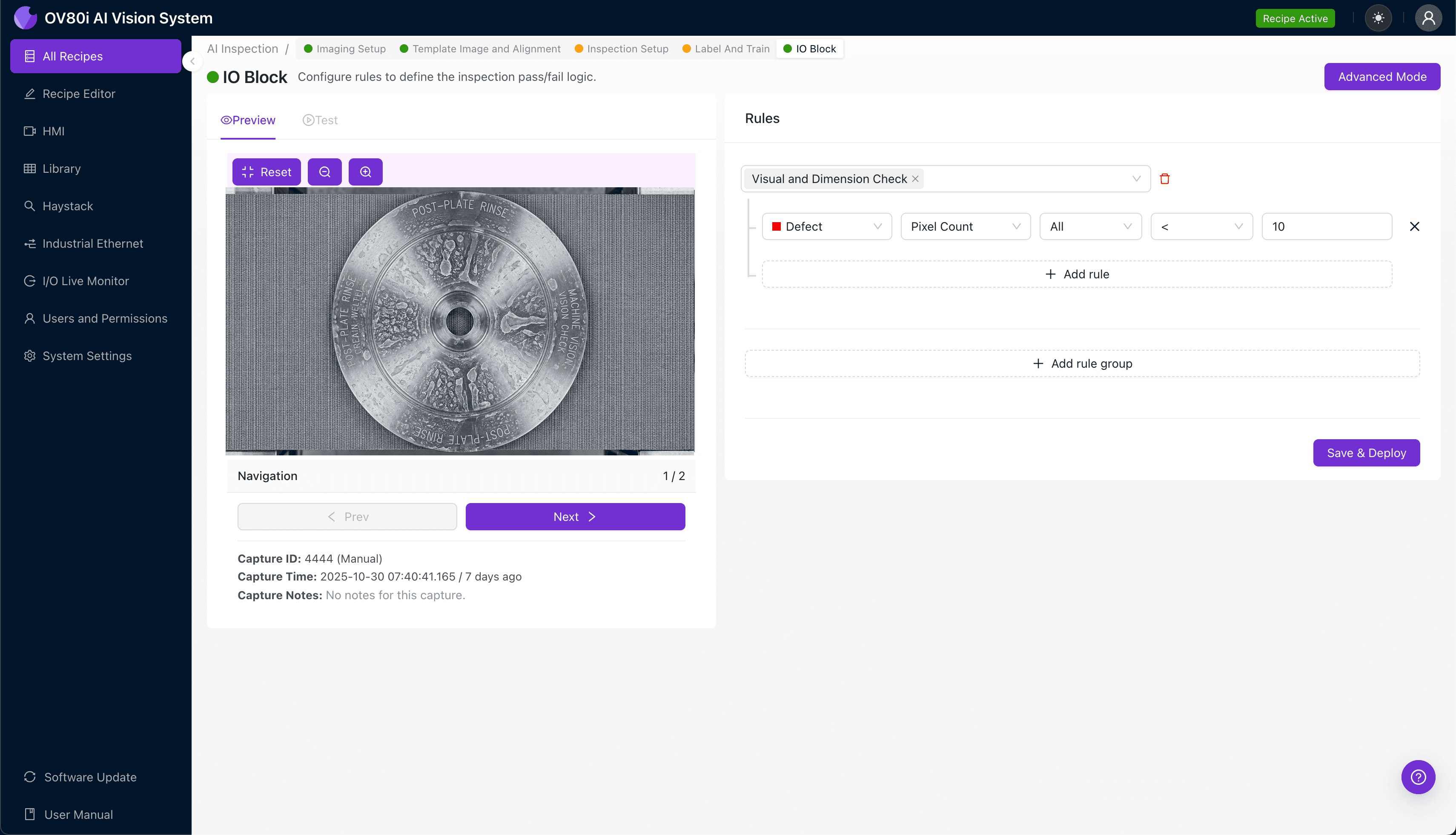
"Dried water spots from post-plate rinse operations leave subtle mineral deposits that compromise surface quality. AI-powered visual inspection detects these low-contrast defects at full line speed, eliminating the fatigue and inconsistency of manual inspection while providing 100% coverage."
The Problem: Why Dried Water Spots Slip Through Traditional Quality Control
Post-plate rinse processes are critical for achieving pristine surface finishes on plated components. When rinse water doesn't drain or dry properly, mineral deposits and dried water spots compromise both aesthetics and functional performance.
Common Defects Found in Post-Plate Rinse Operations:
- Mineral deposit rings – Circular residue patterns from evaporated tap water containing calcium or magnesium
- Streak marks – Linear water trails that dry mid-flow, leaving visible contamination paths
- Haze films – Thin, cloudy layers caused by hard water minerals coating the plated surface
- Spot clustering – Multiple dried droplets in concentrated areas creating localized surface defects
- Edge pooling residue – Dried mineral buildup along part edges where water collects before evaporating
- Chemical staining – Discoloration from rinse water contaminated with drag-out chemicals from previous bath stages
Human inspectors struggle to catch these defects consistently. The subtle, low-contrast nature of dried water spots causes visual fatigue within minutes, and line speeds often exceed what the human eye can reliably process.
The Solution: Machine Vision and Deep Learning
Machine vision systems eliminate the variability inherent in manual inspection. High-resolution cameras capture every surface detail, while consistent lighting reveals even the faintest mineral deposits that human eyes miss under production conditions.
Deep learning takes detection further by learning the nuanced visual signatures of dried water spots across different plating finishes and part geometries. Unlike rule-based systems that require explicit programming for each defect type, AI models generalize from labeled examples-adapting to new spot patterns without manual reconfiguration.
Overview.ai's approach delivers consistent, objective inspection at full line speed. The OV80i system integrates directly into your rinse station exit point, providing 100% inline coverage without slowing throughput or requiring additional labor.
Step 1: Imaging Setup
Position your post-rinse plated component directly under the OV80i camera at the inspection station. Ensure the part sits flat and stable, with the plated surface fully visible to the lens.
Click "Configure Imaging" in the Overview interface to access Camera Settings. Adjust exposure to reveal subtle spot boundaries without overexposing reflective plated surfaces, and fine-tune gain to balance image brightness with noise reduction.
Click "Save" to lock in your optimized imaging parameters.
Step 2: Image Alignment
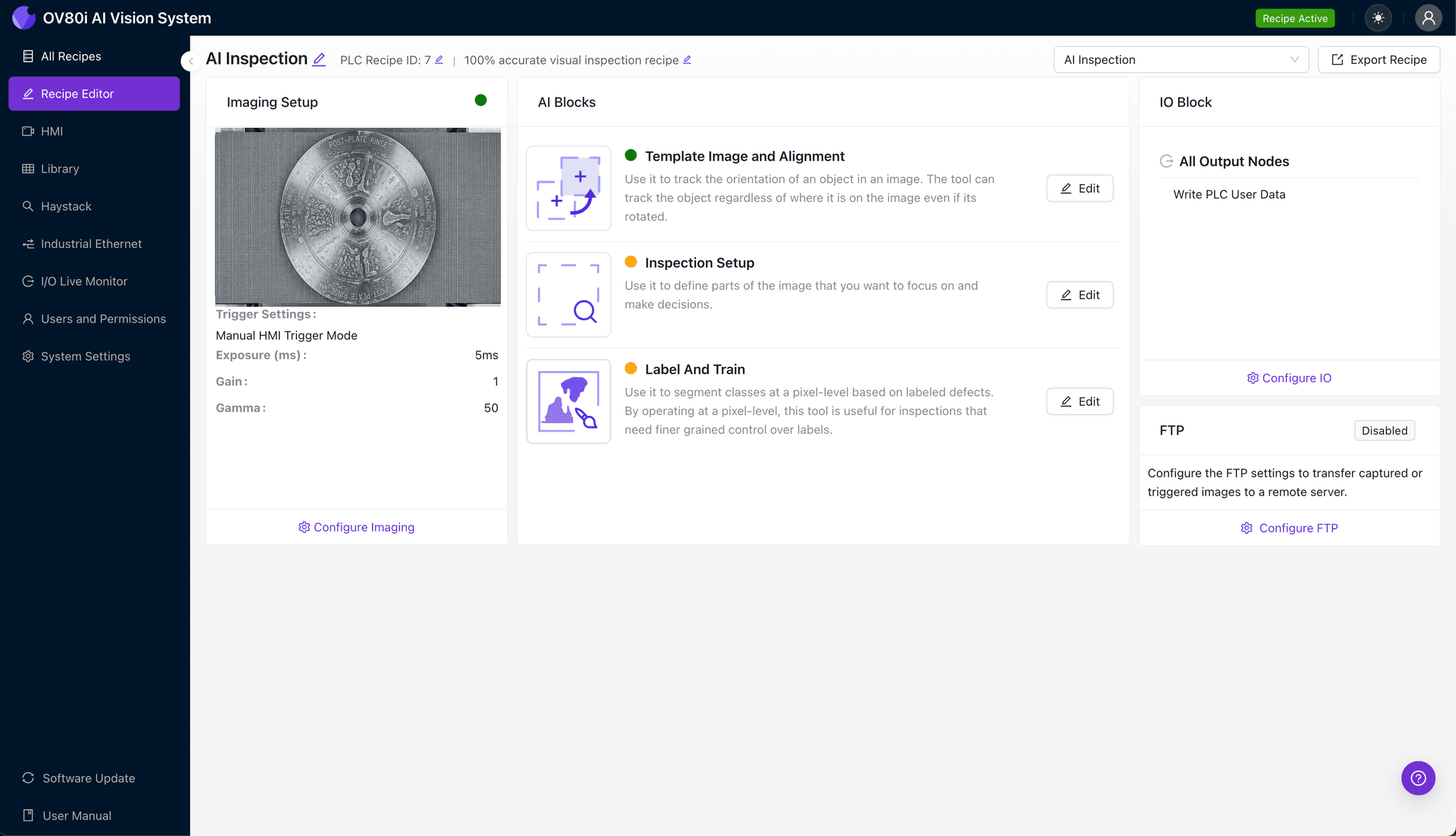
Navigate to the "Template Image" tab in the configuration menu. Capture a Template image of a properly positioned, defect-free part that represents your standard production orientation.
Click "+ Rectangle" to add an alignment region around the main body of the component. This anchor helps the system track part position even with minor placement variations.
Set the "Rotation Range" to 20 degrees to accommodate acceptable part orientation tolerances on the line.
Step 3: Inspection Region Selection
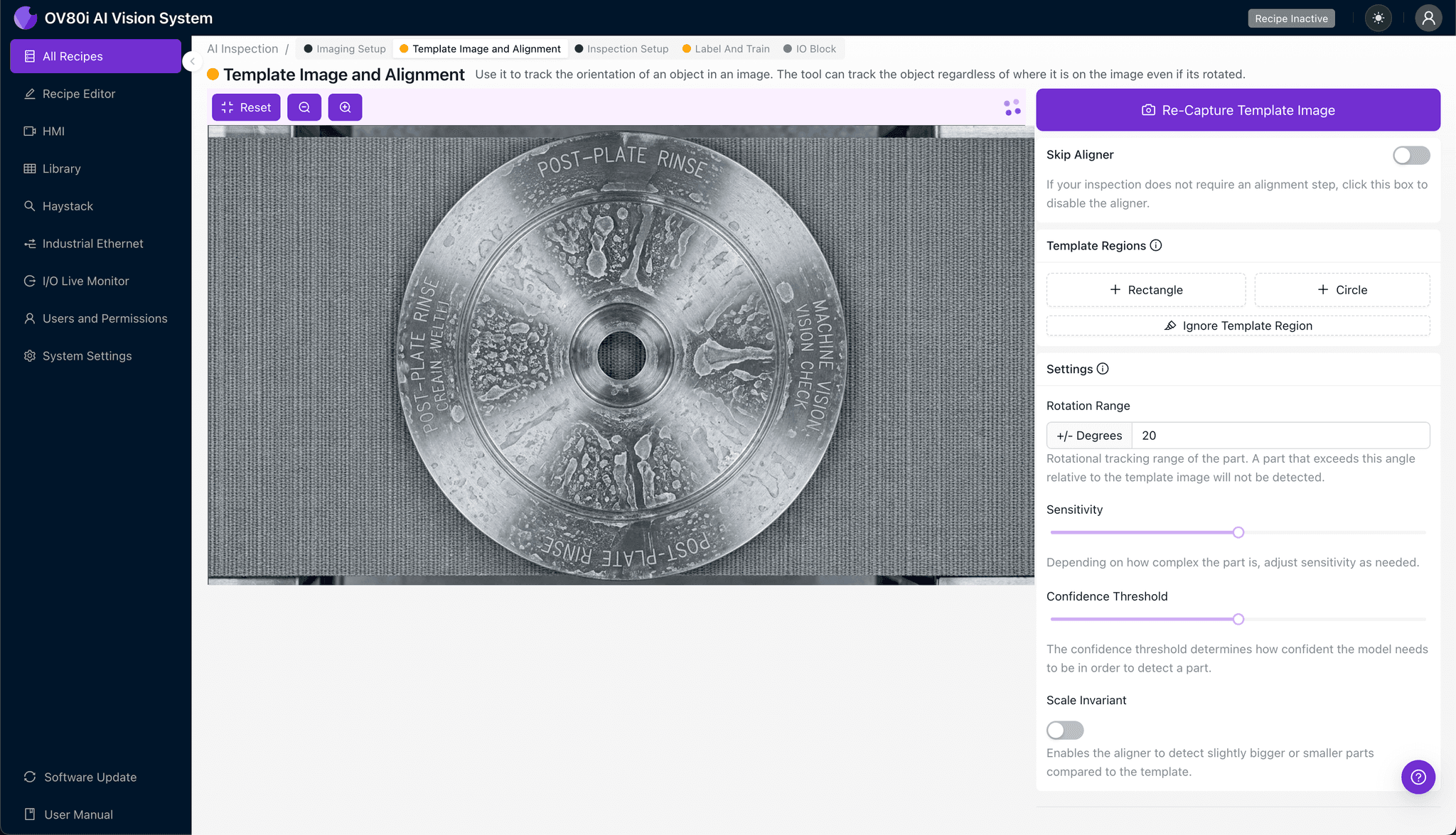
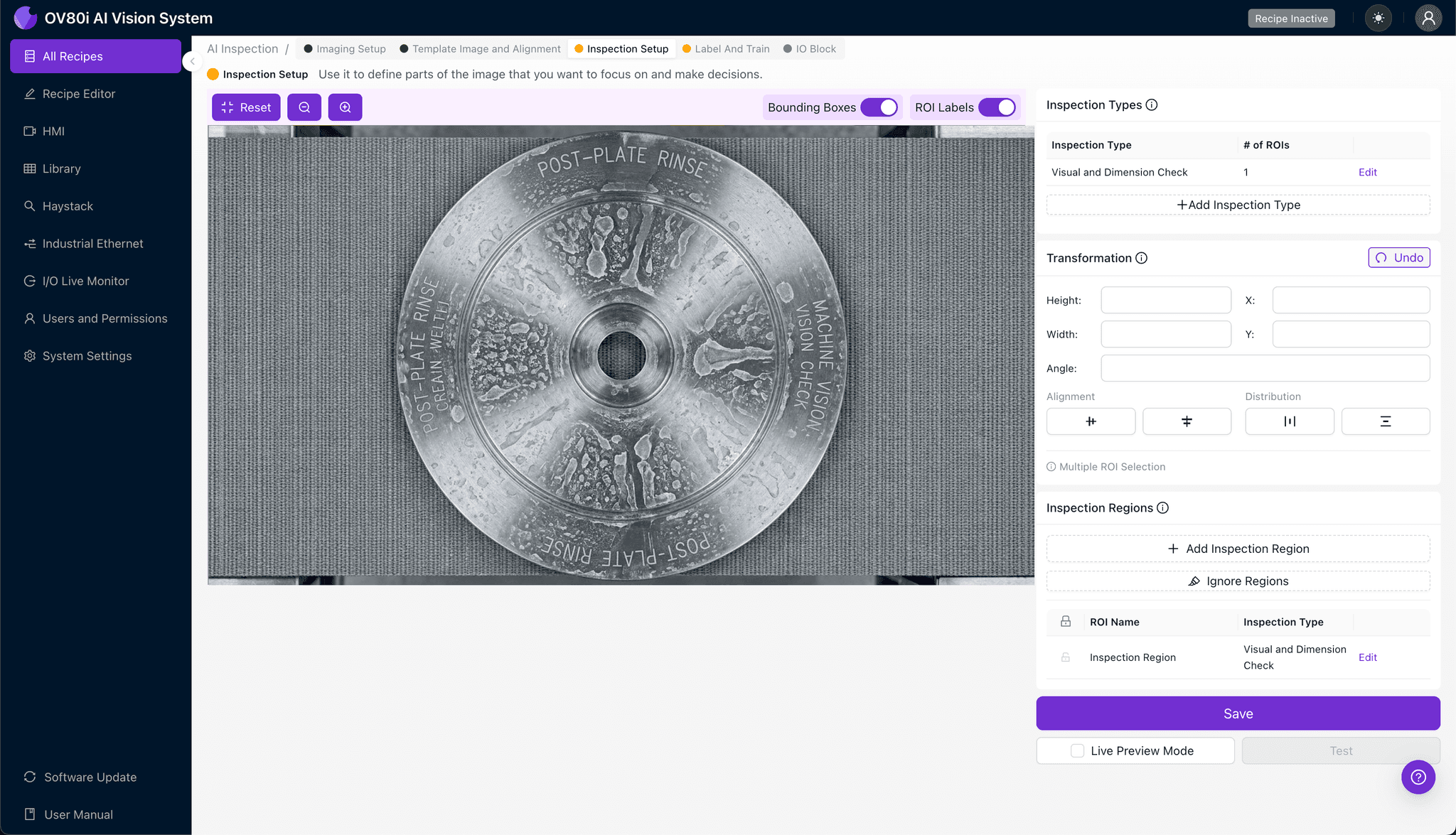
Navigate to "Inspection Setup" to define where the system should look for defects. Rename your "Inspection Types" to match your quality specifications-for example, "Water Spot Detection" or "Surface Residue Check."
Click "+ Add Inspection Region" to create a new detection zone. Resize the yellow bounding box to cover critical defect areas-typically the flat plated surfaces where water pooling occurs most frequently.
Click "Save" to confirm your inspection regions.
Step 4: Labeling Data
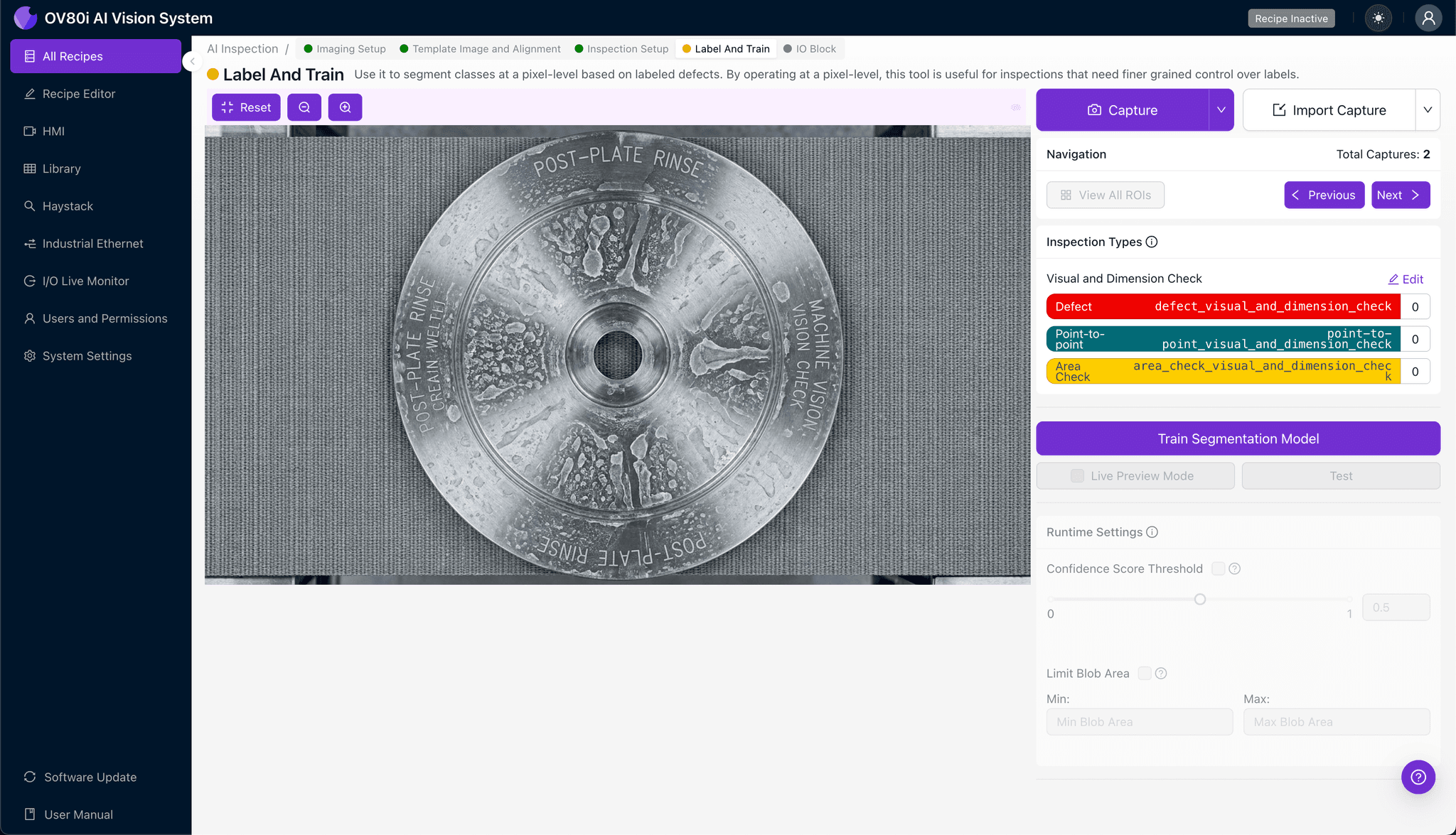
Overview.ai uses a human-in-the-loop process to train accurate detection models. Production images flow into the labeling queue, where your quality team reviews and categorizes each sample.
Label images as Good (acceptable surface finish) or Bad (water spots present). Include representative samples across your full range of part variations, lighting conditions, and plating batches.
Incorporate known failure modes from your historical reject data. This teaches the model to recognize the specific spot patterns, severities, and locations that matter for your quality standards.
Step 5: Creating Rules
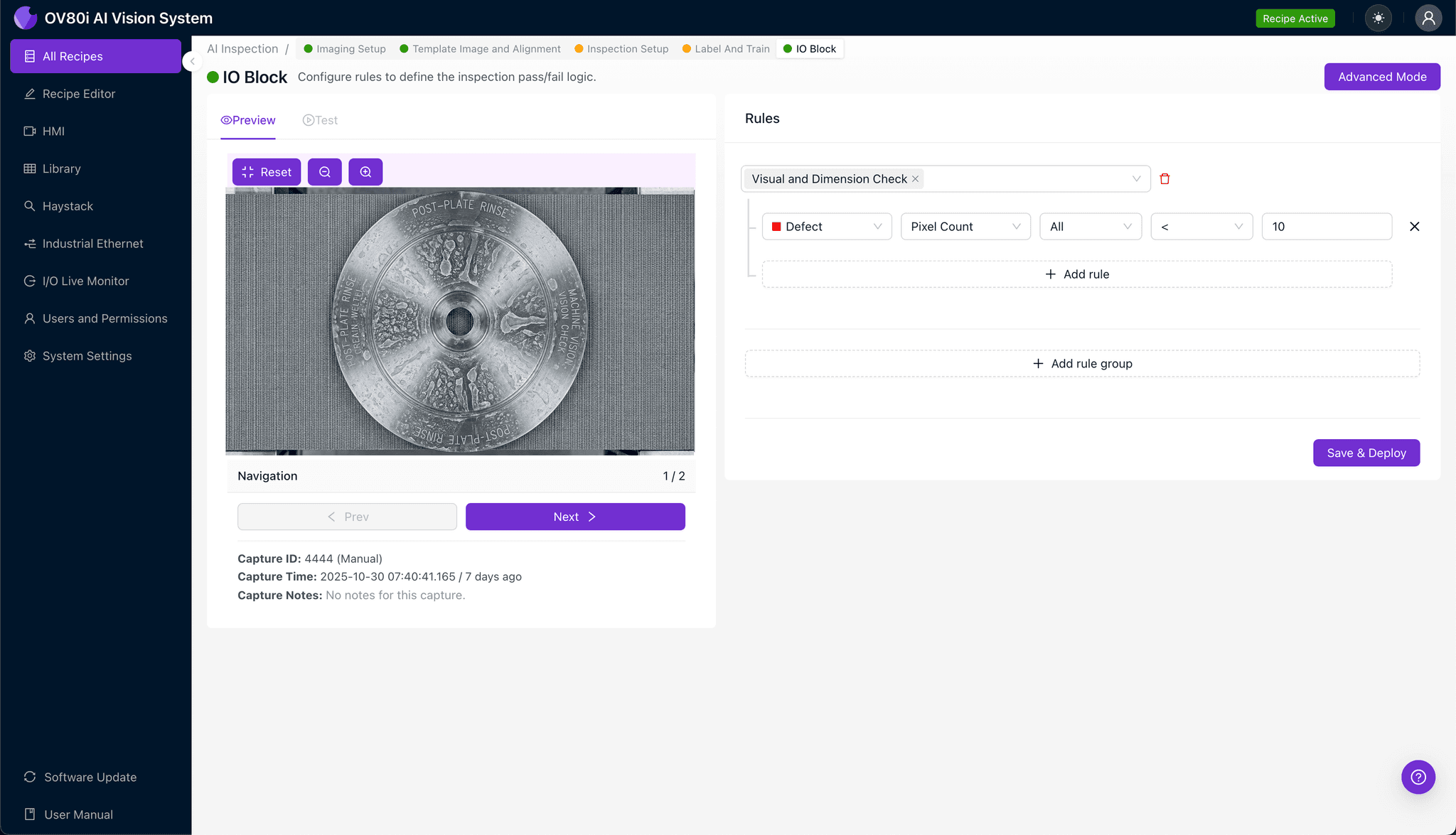
Configure pass/fail logic based on your defined Inspection Types. Set thresholds that align with customer specifications-for example, rejecting parts with any detected water spots in critical cosmetic zones while allowing minor spots in non-visible areas.
Gate automated acceptance decisions directly on the line. Parts passing inspection proceed to packaging, while flagged components route automatically to rework or secondary inspection stations.
Key Outcomes & ROI
Implementing AI-powered inspection for post-plate rinse defects delivers measurable business impact:
- Reduced scrap rates – Catch water spot defects before parts reach downstream processes or customer shipment, eliminating costly returns and rework
- Higher throughput – Inspect 100% of production at line speed without creating bottlenecks or adding inspection labor
- Compliance and traceability – Automatically log every inspection result with timestamped images, supporting audit requirements and customer quality documentation
- Process improvement insights – Identify rinse station trends, correlate spot frequency with water quality or drainage issues, and drive upstream fixes that prevent defects at the source
Ready to Eliminate Dried Water Spot Escapes?
Overview.ai's visual inspection platform transforms post-plate rinse quality control from a subjective, fatigue-prone process into a consistent, data-driven operation.