
Reel-to-Reel Strip with Unplated Shadow Areas: A Complete Visual Inspection Guide
"Unplated shadow areas on reel-to-reel strip are notoriously difficult to inspect manually due to subtle contrast differences and high production speeds. AI-powered machine vision delivers consistent, objective detection of plating defects at full line speed-ensuring every inch of strip receives thorough scrutiny."
The Problem: Why Shadow Area Defects Slip Through Traditional Inspection
Unplated "shadow" areas on reel-to-reel strip represent one of the most challenging defect categories in continuous plating operations. These defects occur when masking, fixturing, or geometric features prevent proper electrodeposition, leaving critical surfaces without adequate coverage.
Common Defects Found in Reel-to-Reel Strip with Shadow Areas:
- Incomplete plating coverage - Areas where electrodeposition failed to reach due to shadowing from adjacent features or tooling
- Edge bleed and feathering - Irregular plating boundaries where the transition zone extends beyond acceptable limits
- Skip plating - Intermittent bare spots caused by contact point interference or inconsistent electrical continuity
- Thickness variation in transition zones - Gradual thinning near shadow boundaries that compromises functional performance
- Contamination in unplated regions - Residual plating solution or oxidation in areas intentionally left bare
- Masking misalignment - Systematic drift causing shadow areas to appear in incorrect locations along the strip
Human inspectors struggle with these defects due to the subtle contrast between properly plated and shadow areas. At production speeds of 20+ feet per minute, visual fatigue sets in quickly, and the repetitive nature of continuous strip inspection leads to inconsistent pass/fail decisions.
The Solution: Machine Vision and Deep Learning for Shadow Area Detection
Machine vision systems excel at detecting the subtle reflectivity and color differences that distinguish plated from unplated surfaces. Unlike human inspectors, cameras capture consistent data frame after frame, regardless of shift length or production volume.
Deep learning takes this capability further by learning the acceptable boundaries of shadow areas from labeled examples. Overview.ai's approach delivers objective, repeatable inspection at full line speed-ensuring every inch of strip receives the same scrutiny as the first piece of the day.
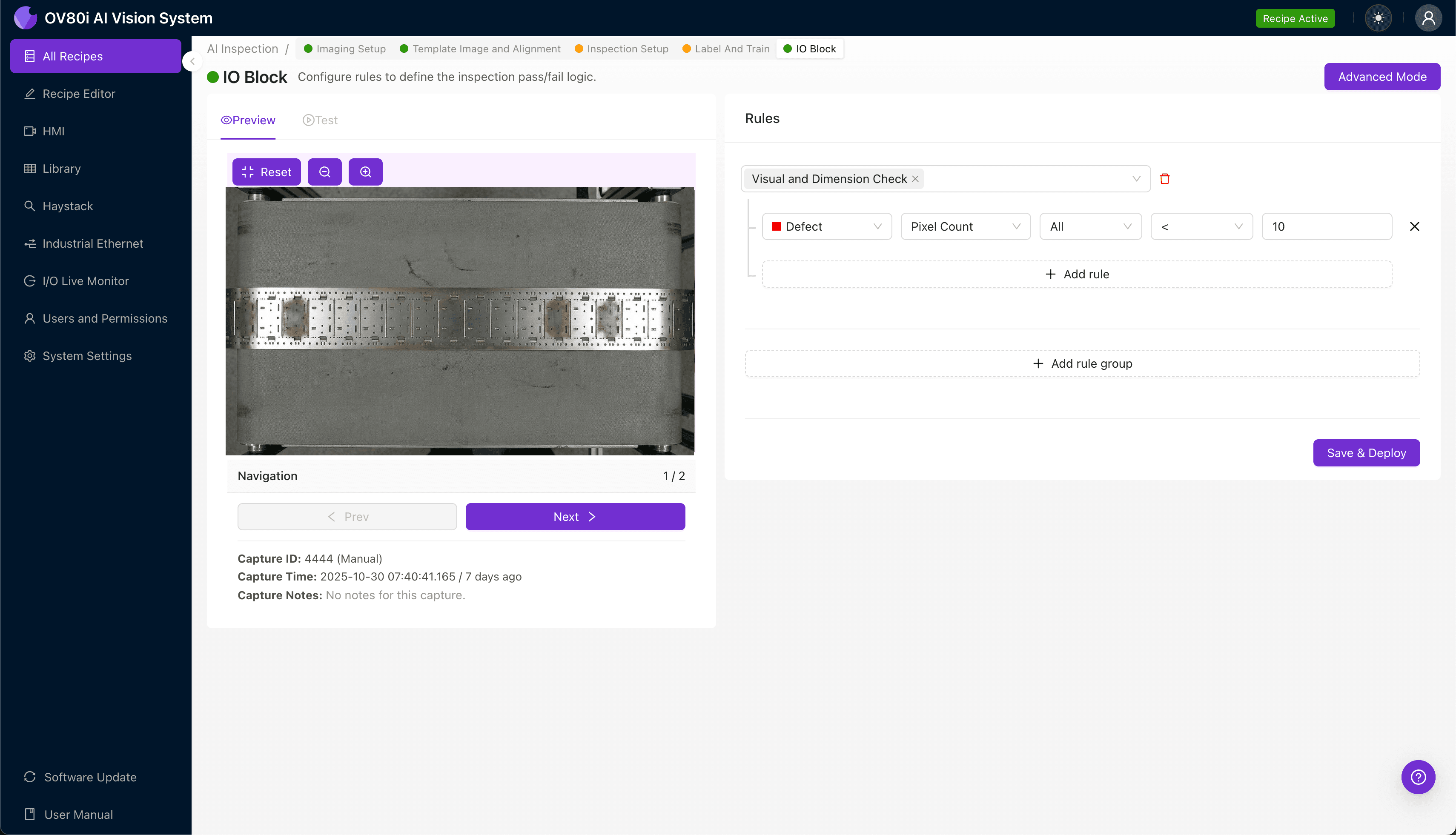
Step 1: Imaging Setup
Position your reel-to-reel strip sample beneath the OV80i camera, ensuring the shadow area transitions are clearly visible in the field of view. Proper lighting is critical-consider angled illumination to maximize contrast between plated and unplated surfaces.
Click "Configure Imaging" to access the camera settings panel. Adjust exposure to capture detail in both the reflective plated regions and matte unplated areas, then fine-tune gain to optimize signal-to-noise ratio.
Click "Save" to lock in your imaging configuration.
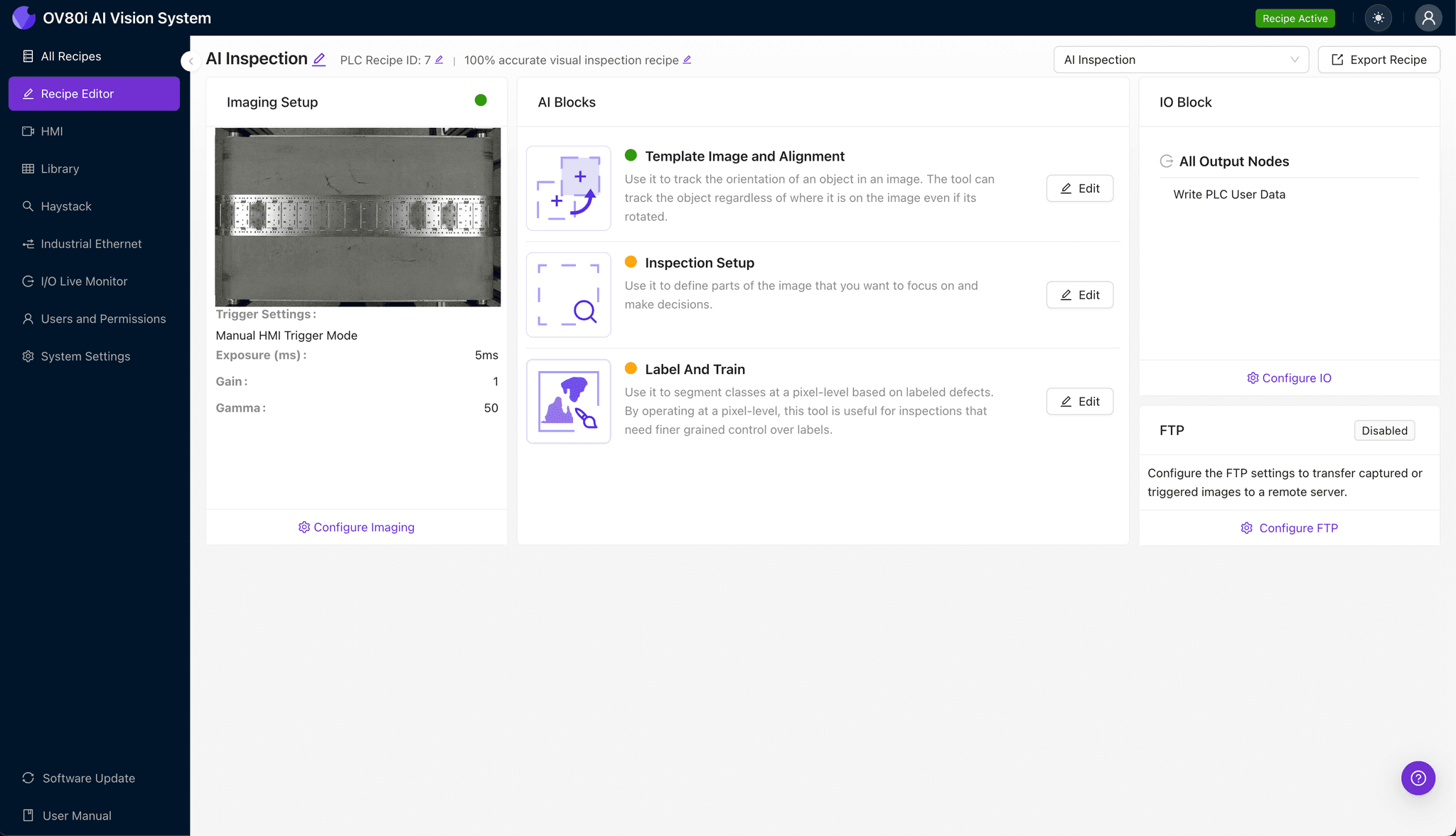
Step 2: Image Alignment
Navigate to "Template Image" in the configuration menu. Capture a Template that represents a typical strip section with clearly defined shadow area boundaries.
Click "+ Rectangle" to add an alignment region around the main body of the strip. This anchor point ensures consistent positioning as the material feeds through inspection.
Set the "Rotation Range" to 20 degrees to accommodate minor tracking variations in the reel-to-reel transport system.
Step 3: Inspection Region Selection
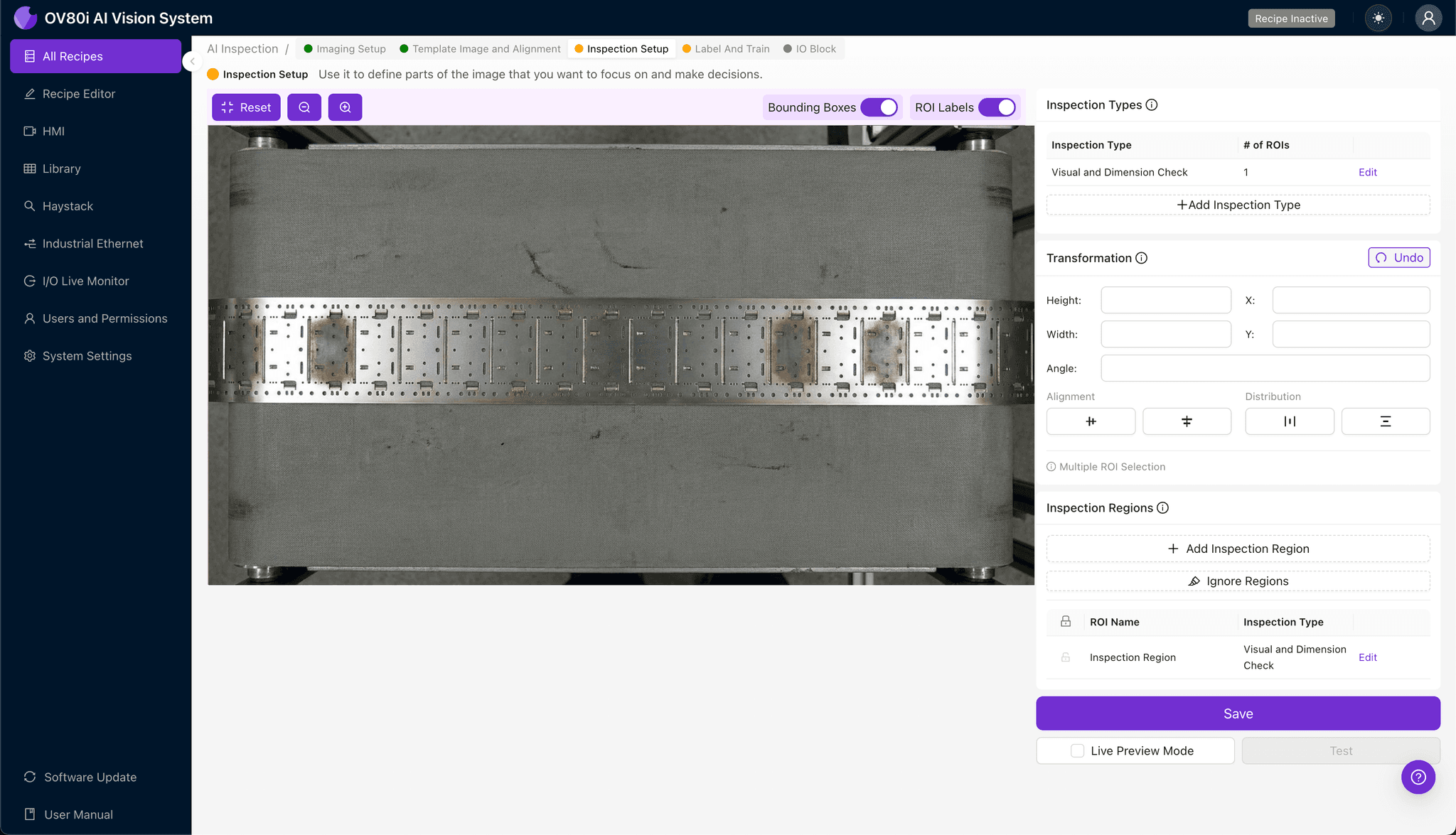
Navigate to "Inspection Setup" to define your detection zones. Rename your "Inspection Types" to reflect the specific defect categories-for example, "Shadow Boundary" and "Plating Coverage."
Click "+ Add Inspection Region" to create your first detection zone. Resize the yellow bounding box to cover the critical shadow area transitions where defects most commonly appear.
Repeat for additional regions as needed, then click "Save" to confirm your inspection layout.
Step 4: Labeling Data
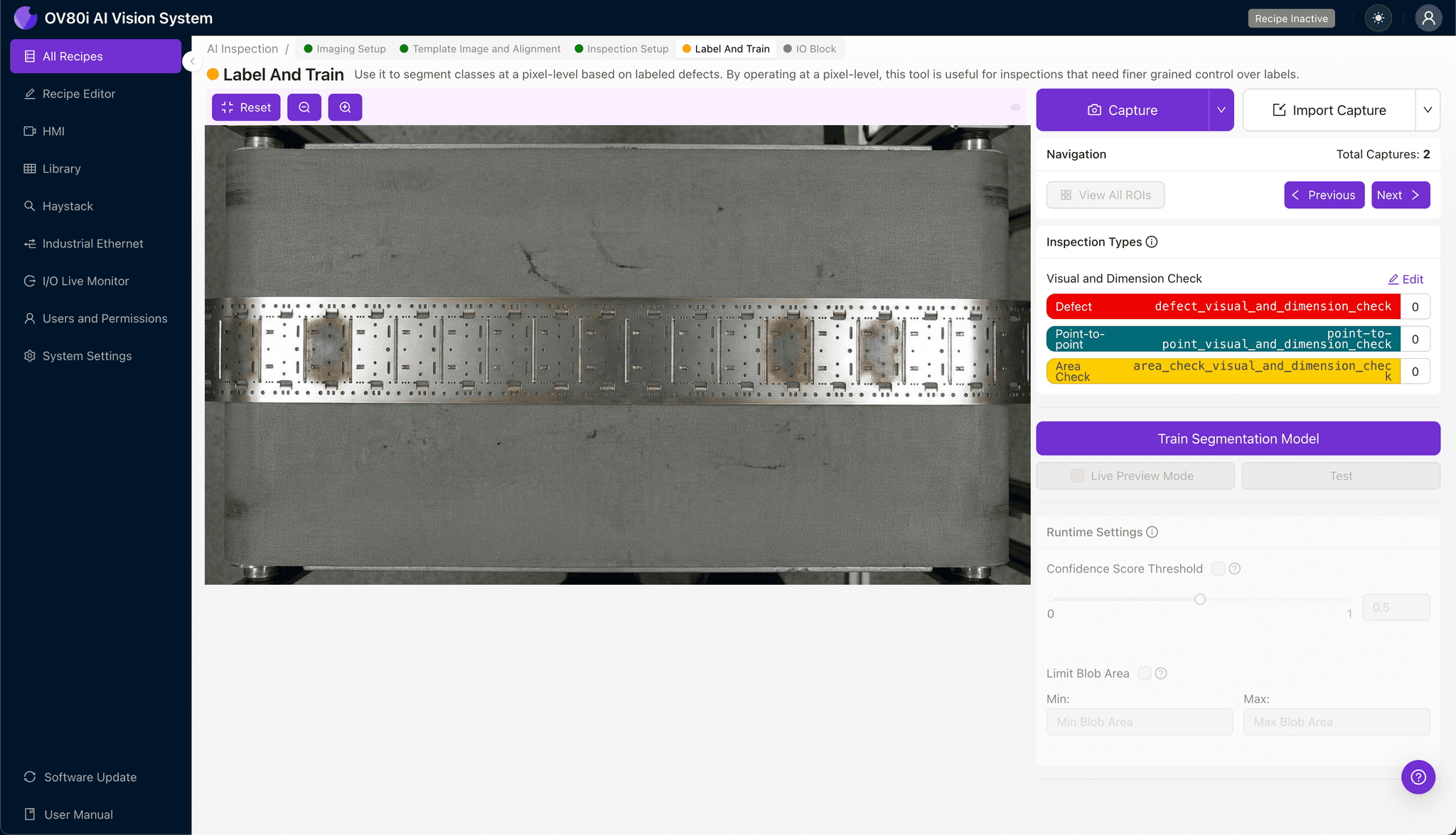
The human-in-the-loop labeling process teaches the AI what acceptable and defective shadow areas look like. Review captured images and categorize each as Good (shadow areas within specification) or Bad (defects present).
Include representative samples across your full range of acceptable variation. Don't forget to add known failure modes-edge bleed, skip plating, and contamination examples strengthen model accuracy.
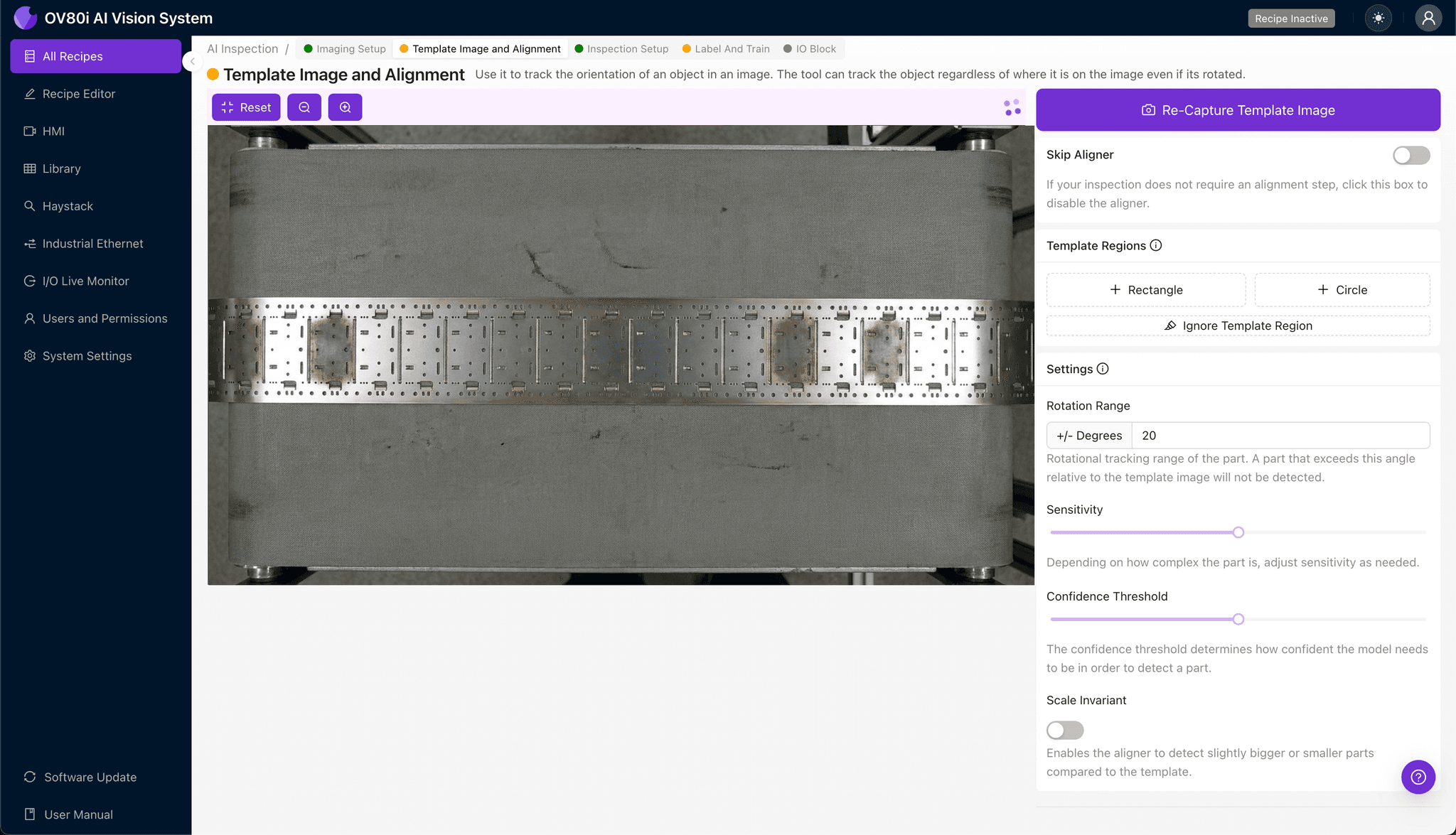
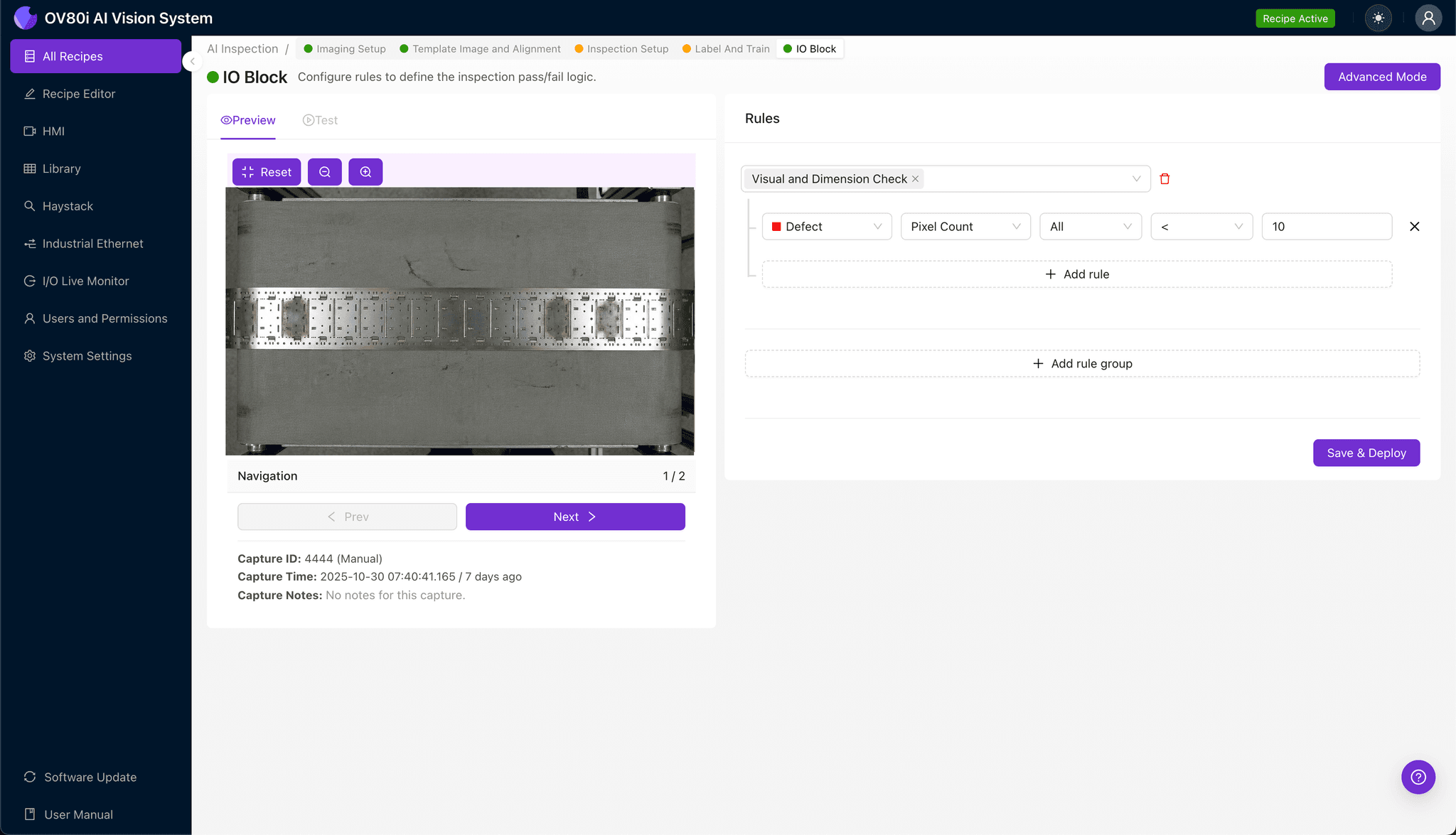
Step 5: Creating Rules
Set your pass/fail logic based on the Inspection Types you've defined. Configure thresholds that trigger rejection when shadow area defects exceed acceptable limits.
Gate automated acceptance on the line to ensure only conforming strip advances to downstream processes. This creates a closed-loop system that prevents defective material from reaching your customers.
Key Outcomes & ROI
Implementing AI-powered inspection for reel-to-reel shadow area defects delivers measurable business impact:
- Reduced scrap rates - Catch plating defects early before additional processing adds cost to non-conforming material
- Higher throughput - Eliminate inspection bottlenecks with 100% inline coverage at full production speed
- Compliance and traceability - Maintain complete inspection records with timestamped images for every detected anomaly
- Process improvement insights - Identify trending defect patterns that indicate upstream plating issues before they escalate
Ready to Eliminate Shadow Area Escapes?
Overview.ai's visual inspection platform brings consistency, speed, and deep learning intelligence to your reel-to-reel plating operation. Contact our team to discuss your specific application requirements.