
Detecting Tin-Plated Tail Defects with Dull Finish: A Complete Machine Vision Walkthrough
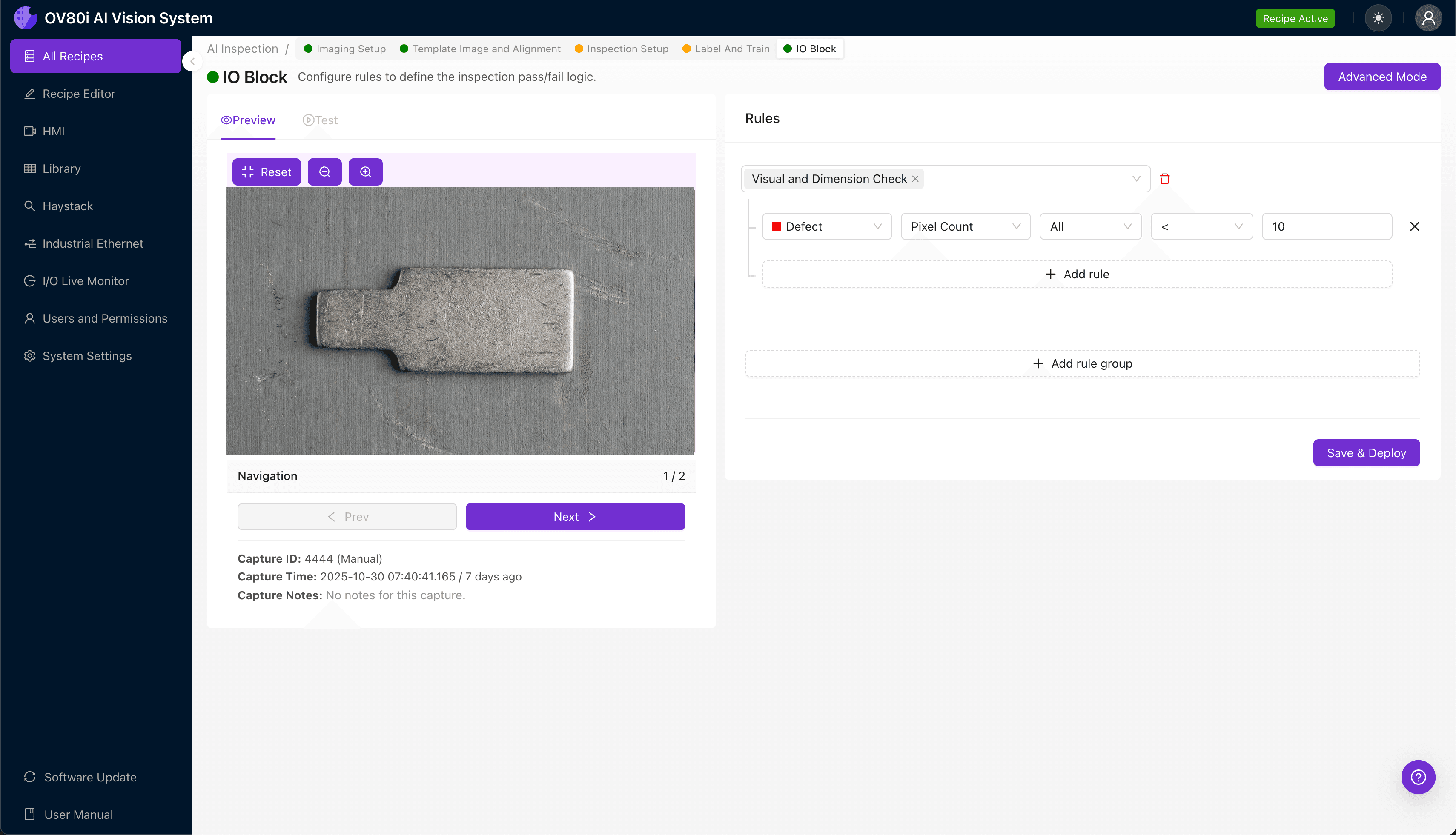
"Bath imbalance in tin electroplating creates dull, matte finishes that signal quality issues affecting solderability and corrosion resistance. AI-powered visual inspection catches these subtle surface anomalies consistently at full line speed, eliminating the subjectivity and fatigue of manual inspection."
The Problem: Bath Imbalance Creates Costly Quality Escapes
Tin-plated tails are critical components in electrical connectors, terminals, and semiconductor packaging where consistent surface finish directly impacts solderability and corrosion resistance. When electroplating bath chemistry falls out of balance, the result is a dull, matte finish that signals deeper quality issues threatening downstream assembly and product reliability.
Common Defects Associated with Bath Imbalance in Tin-Plated Tails:
- Dull or matte surface finish - indicates depleted brightener additives or contaminated bath solution
- Uneven coating thickness - caused by improper current density distribution across the plating bath
- Grain coarsening - rough crystalline structure from excessive metal ion concentration
- Organic co-deposition - hazy appearance from breakdown products contaminating the deposit
- Whisker formation precursors - stress patterns that lead to tin whisker growth over time
- Poor adhesion zones - areas where the tin layer separates from the base metal substrate
Human inspectors struggle to maintain consistent detection of these subtle surface anomalies across thousands of parts per hour. Inspector fatigue sets in quickly when evaluating reflective metallic surfaces under production lighting, and the subjective nature of "dull vs. acceptable" leads to inconsistent pass/fail decisions between shifts.
The Solution: AI-Powered Visual Inspection for Plating Defects
Machine vision systems equipped with deep learning models excel at detecting subtle surface finish variations that challenge human perception. Unlike rule-based vision systems that require explicit programming for each defect type, neural networks learn the complex visual signatures of bath imbalance from labeled examples.
Overview.ai's approach delivers consistent, objective inspection at full line speed-evaluating every single part rather than relying on statistical sampling. The OV80i system captures high-resolution images and processes them through trained models that flag non-conforming parts in milliseconds, eliminating the subjectivity and fatigue that plague manual inspection.
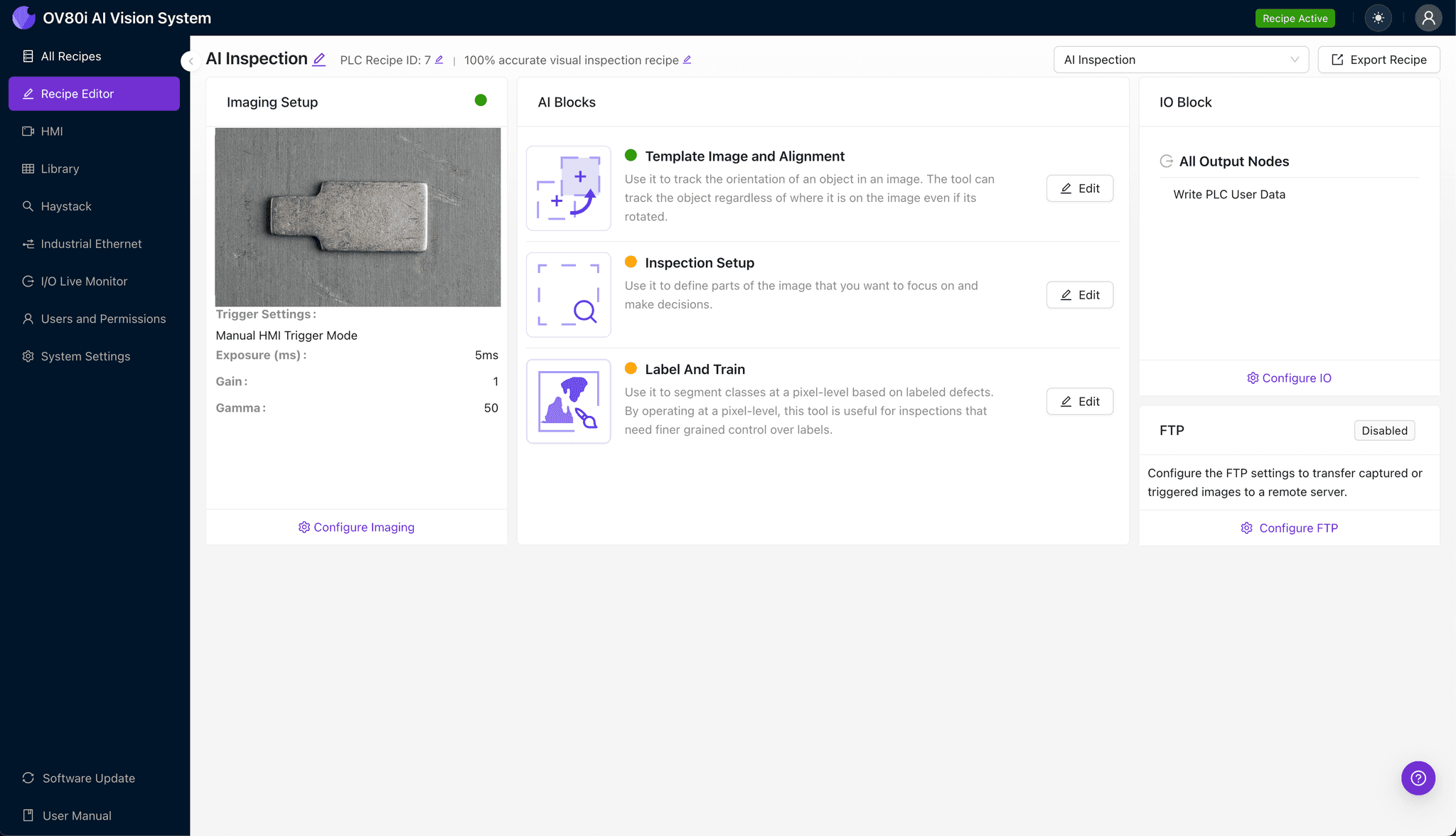
Step 1: Imaging Setup
Position the tin-plated tail under the OV80i camera, ensuring the inspection surface faces upward with consistent orientation. Proper lighting angle is critical for plating inspection-diffuse illumination minimizes specular reflections while revealing surface texture differences between bright and dull finishes.
Click "Configure Imaging" in the Overview software interface. Adjust Camera Settings including exposure time and gain to achieve clear differentiation between acceptable bright tin and defective dull surfaces.
Click "Save" to lock in your optimized imaging parameters.
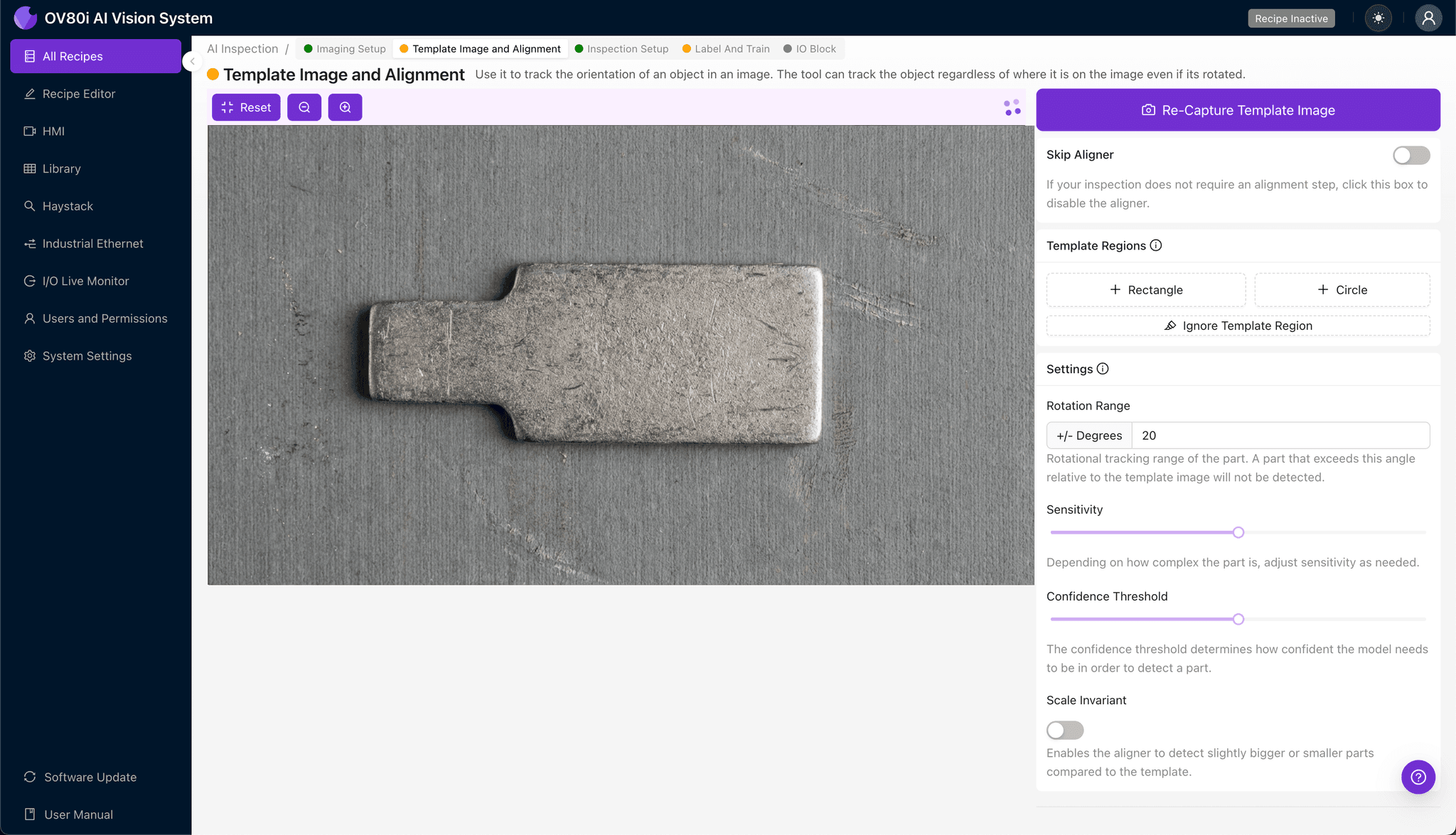
Step 2: Image Alignment
Navigate to the "Template Image" tab in the configuration menu. Capture a Template image using a known-good reference part with proper bright tin finish.
Click "+ Rectangle" to add an alignment region around the main body of the tin-plated tail. This teaches the system to locate the part consistently regardless of minor positional variation on the conveyor.
Set "Rotation Range" to 20 degrees to accommodate normal part orientation variability during production.
Step 3: Inspection Region Selection
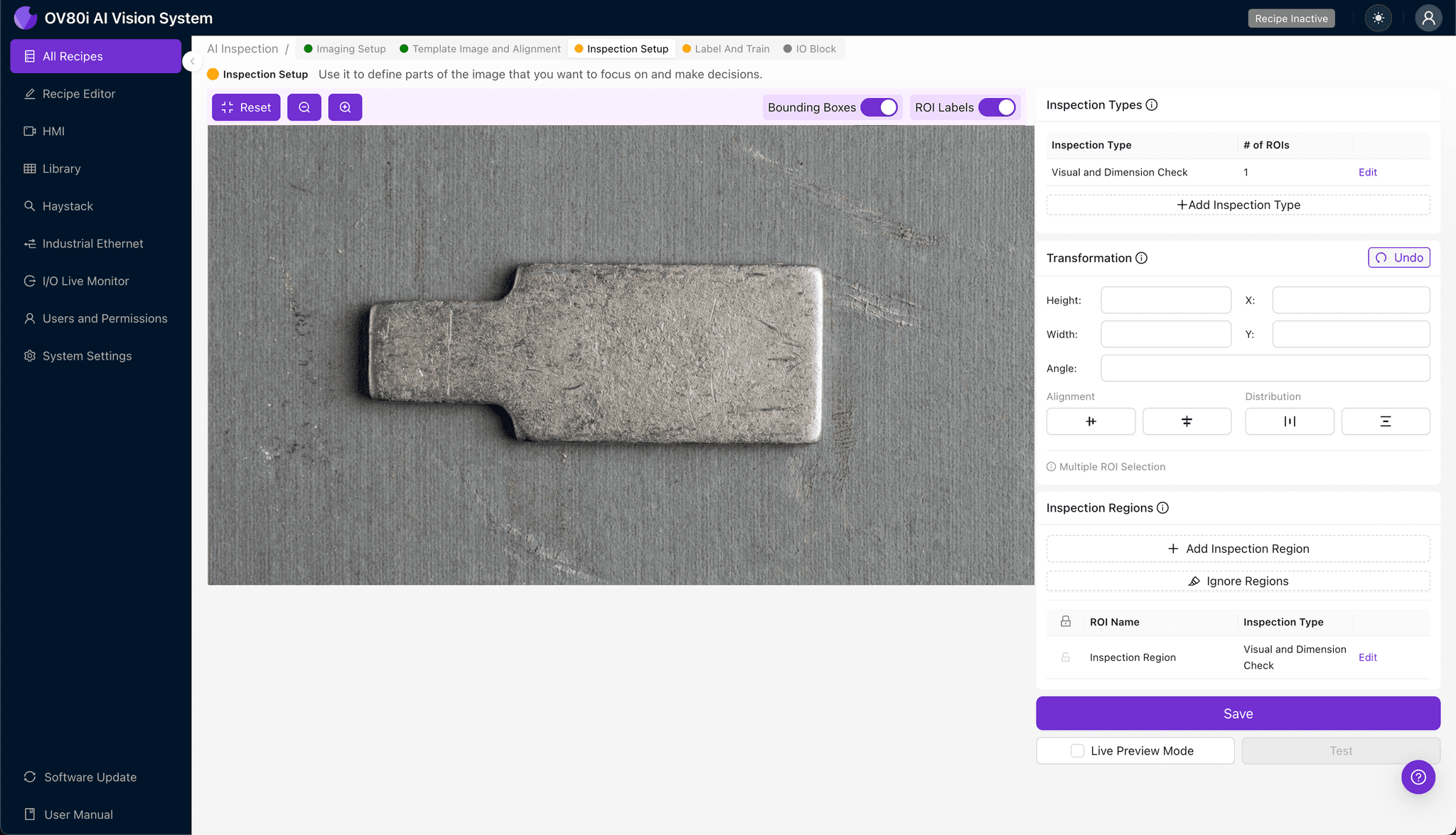
Navigate to "Inspection Setup" from the main configuration screen. Rename your "Inspection Types" to reflect the specific defects you're targeting-for example, "Dull_Finish_Bath_Imbalance" and "Surface_Roughness."
Click "+ Add Inspection Region" to define the critical areas requiring evaluation. Resize the yellow bounding box to cover the plated surface zones most susceptible to bath chemistry variations-typically the highest current density areas at edges and corners.
Click "Save" to confirm your inspection region configuration.
Step 4: Labeling Data
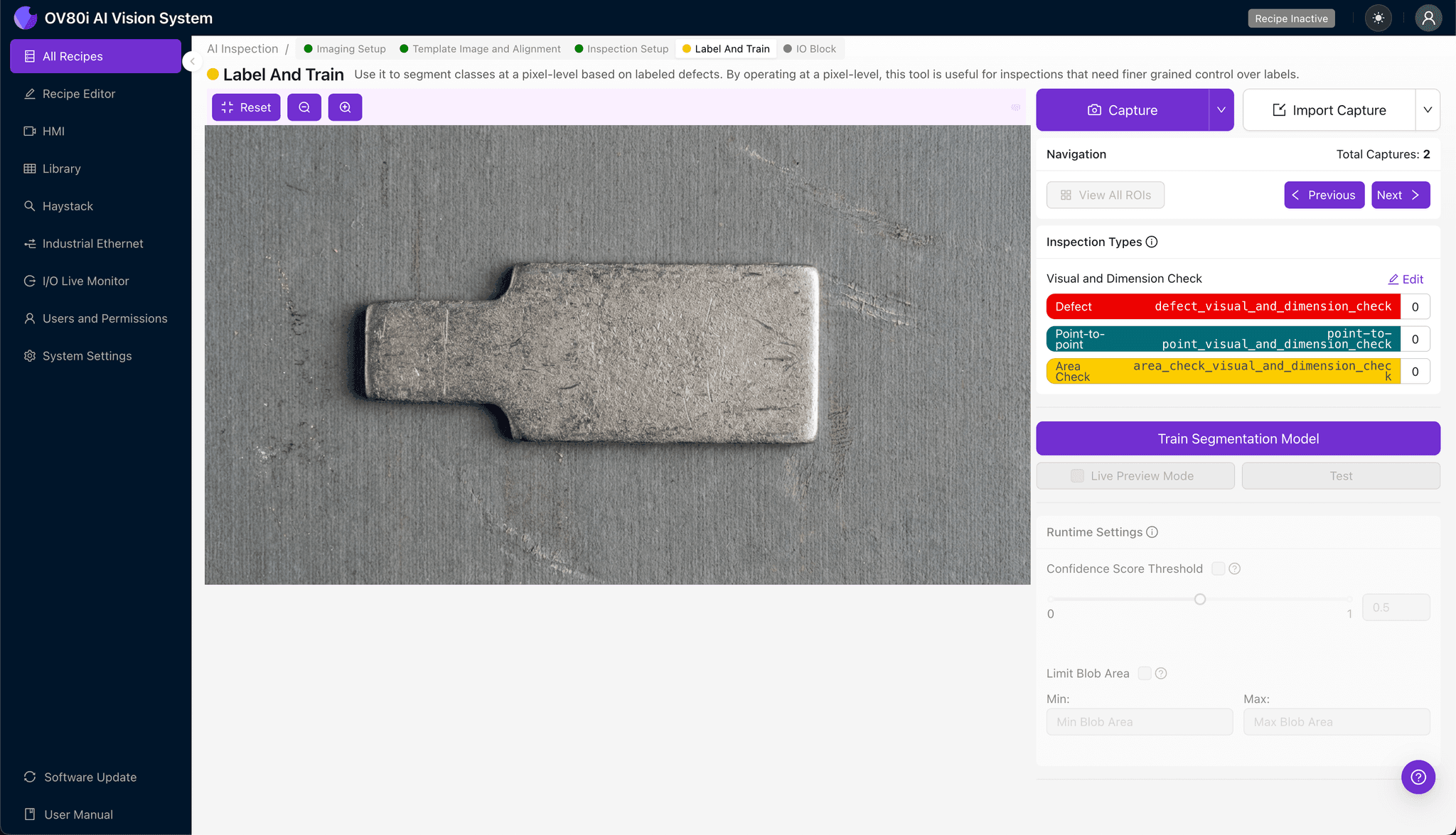
The human-in-the-loop labeling process is where your domain expertise trains the AI model. Production operators and quality engineers review captured images, marking each as Good (acceptable bright finish) or Bad (dull finish indicating bath imbalance).
Include representative samples across the full range of defect severity-from borderline dull finishes to severely compromised surfaces. Incorporate known failure modes from your historical reject data, ensuring the model learns to catch the same defects that have escaped to customers in the past.
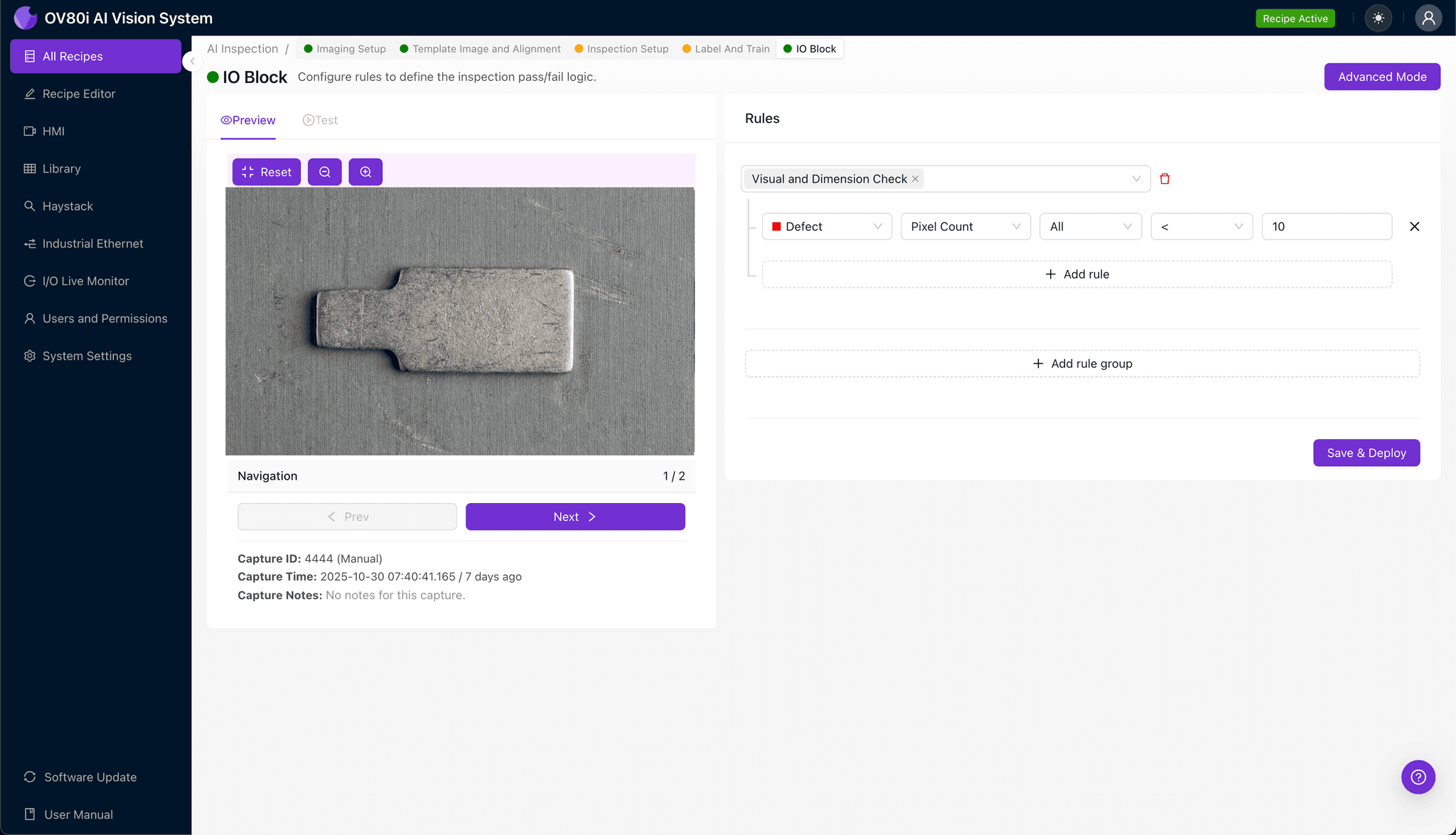
Step 5: Creating Rules
Configure pass/fail logic based on your defined Inspection Types to match your quality specifications. Set confidence thresholds that balance escape risk against false reject rates appropriate for your cost structure.
Gate automated acceptance on the line by integrating rejection signals with your material handling equipment. Parts flagged for bath imbalance defects can be automatically diverted for rework, scrap, or held for quality review before shipment.
Key Outcomes & ROI
Deploying AI-powered inspection for tin-plated tail quality delivers measurable business impact:
- Reduced scrap rates - Early detection of bath drift enables process correction before producing large batches of defective parts
- Higher throughput - 100% inline inspection eliminates manual sampling bottlenecks and accelerates production flow
- Enhanced compliance and traceability - Automated image logging creates complete inspection records for customer audits and root cause analysis
- Process improvement insights - Trend data on dull finish defects correlates with bath maintenance schedules, enabling predictive chemistry management
Take Control of Your Plating Quality
Bath imbalance defects don't have to be a hidden source of customer complaints. Deploy Overview.ai to catch subtle finish variations before they become field failures.