High Volume Medium Mix Manufacturing: How AI Inspection Adapts to Your Product Variants
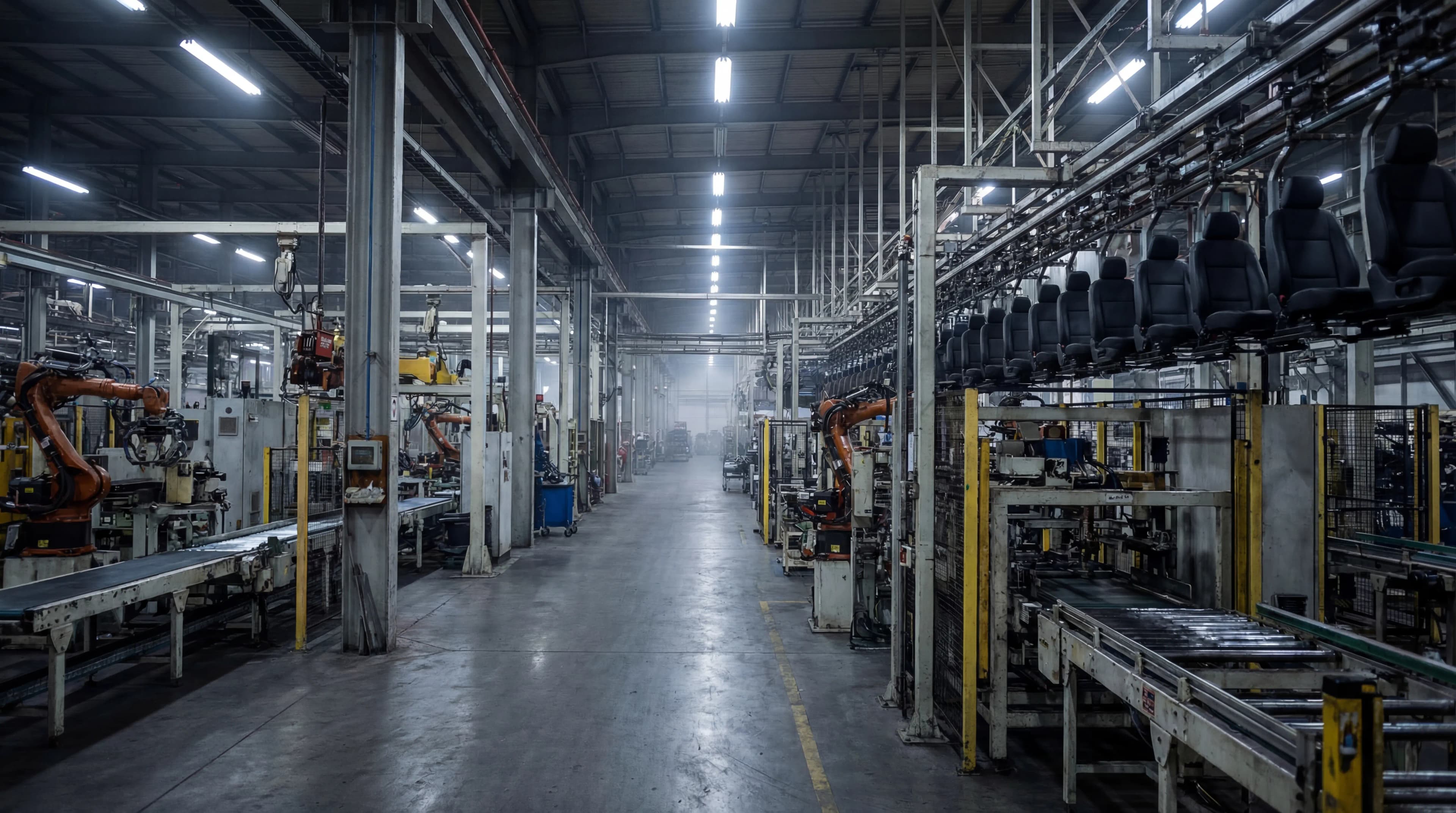
Most manufacturing operations do not fit neatly into the textbook categories of "high mix low volume" or "low mix high volume." The reality for a large number of factories sits right in the middle: they produce thousands or millions of units per year, but across 10 to 15 different configurations, variants, or SKUs running on the same line.
This is high volume medium mix manufacturing. It is one of the hardest environments to automate inspection in, and it is exactly where we see manufacturers struggling the most with quality control today.
What Makes Medium Mix So Difficult for Quality Inspection?
In a pure high volume line making one product, inspection is straightforward. You program your rules, set your thresholds, and let it run. In a low volume job shop, you accept that every job needs manual attention.
Medium mix is the worst of both worlds for traditional inspection methods. You need the speed and throughput of an automated system, but the product changes frequently enough that rigid, rule-based vision systems break down. Every changeover risks false rejects, missed defects, or time lost reconfiguring inspection parameters.
Consider what happens when you have 12 different product variants on the same line. Each variant might differ in color, material, geometry, or assembled components. A traditional rule-based vision system needs a unique program for each variant. Maintaining 12 separate programs, keeping them all updated, and switching between them without errors is a significant engineering burden.
Real Examples of High Volume Medium Mix
Automotive Seat Assembly
Automotive seating is a textbook case of high volume medium mix. A single assembly plant may produce thousands of seats per day, but across a dozen or more configurations. Different vehicle models, trim levels, and option packages mean each seat can vary in fabric color, stitching pattern, cushion shape, and the presence of features like heating elements, lumbar actuators, or occupant sensors.
These differences are subtle but critical. A mismatched fabric cover, a missing heating element, or a stitching defect on one trim level that would be acceptable on another creates real quality escapes. Manual inspectors struggle because the variations are numerous enough that memorizing every valid configuration is impractical. Rule-based vision struggles because the visual differences between a "correct" dark gray seat and an "incorrect" charcoal seat can be just a few shades.
This is exactly the kind of problem that AI-powered inspection systems are built to solve. An AI model trained on examples of each seat configuration learns the acceptable range of variation for each variant, detecting true defects while tolerating the normal differences between trim levels.
Connector and Cable Assemblies
Connector manufacturers face a similar challenge. A facility might produce millions of connectors annually, but across 10 to 15 housing types, pin configurations, and plating finishes. Each variant has its own set of acceptable dimensional tolerances and cosmetic standards. Defects like bent pins, plating inconsistencies, or housing cracks must be caught regardless of which variant is running.
We currently work with connector manufacturers running exactly this kind of production. One deployment handles multiple connector types on the same line, using a single camera that switches between trained models depending on which variant is being produced. The result is consistent defect detection across all variants with zero changeover downtime for the inspection system.
Electronics and PCB Assembly
PCB and electronics assembly lines frequently run multiple board designs through the same SMT and inspection process. Different board layouts mean different component placements, solder joint patterns, and potential defect locations. An inspection system that works perfectly on one board revision may fail on the next if it relies on fixed rules and coordinates.
Why AI Vision Systems Handle Medium Mix Better
The core advantage of AI-based inspection for medium mix production is that the system learns what "good" looks like across all your variants, rather than being programmed with explicit rules for each one. Here is what that translates to in practice:
- 1.Train once per variant, deploy everywhere. With Overview.ai, training a model for a new product variant takes as few as 5 to 20 images and under an hour. When you add a new SKU to your line, you capture a handful of good and defective samples, train, and deploy. No vendor visit required.
- 2.Multi-recipe support on a single camera. Our OV20i and OV80i cameras support multiple inspection recipes. You can set up a recipe for each of your product variants and switch between them via PLC trigger, barcode scan, or manual selection. The inspection system adapts to what is being produced without any physical changeover.
- 3.Handles visual ambiguity that rules cannot. When your variants differ only in subtle ways (color shade, fabric texture, component orientation), rule-based systems produce excessive false rejects. AI models learn the boundaries between "acceptable variation" and "actual defect" from your real production data.
- 4.Continuous improvement with Haystack. Production changes over time. New suppliers, material batches, and process drift introduce variation that was not present during initial training. Haystack monitors your inspection results and surfaces edge cases and anomalies so your team can review and retrain models without waiting for a quality escape to reveal the gap.
Scaling Across Facilities
High volume medium mix manufacturers often operate multiple facilities, sometimes across different countries. The challenge is not just inspecting 12 variants at one plant, but maintaining consistent quality standards for those same 12 variants across five or ten plants.
OV Fleet is designed for exactly this. Train a model at one facility, validate it, and roll it out across your entire fleet of cameras. Monitor yield, defect rates, and camera health from a single dashboard. When a model update is needed, push it to all cameras simultaneously or stage the rollout plant by plant.
We have seen this work in practice with customers who have deployed over 1,000 cameras across facilities in six countries. The same trained models run across all locations, and updates are coordinated centrally. This consistency is critical for automotive and electronics manufacturers who must deliver identical quality to their OEM customers regardless of which plant produced the part.
The Cost of Getting It Wrong
In high volume medium mix environments, quality escapes are especially damaging. A defect that slips through on a specific variant may not be caught until that variant reaches the end customer, and by then you have produced thousands of affected units. Recalls, rework, and sorting costs multiply quickly.
The other cost is less obvious but just as real: over-rejection. When an inspection system is not confident about a variant, the default behavior is to reject anything that looks slightly off. This drives up scrap rates and wastes material, labor, and machine time. Manufacturers we work with have seen measurable ROI improvements simply by reducing false reject rates from 5 to 8% down to under 1%.
What a Deployment Actually Looks Like
Here is a typical deployment path for a high volume medium mix manufacturer working with Overview.ai:
Week 1: Pilot on One Variant
Mount an OV20i or OV80i at the inspection point. Capture training images for your highest-volume variant. Train and deploy a model. Validate accuracy against known good and defective samples.
Week 2-3: Expand to All Variants
Add recipes for each additional product variant as they come through the line. Each new variant typically requires 5 to 20 images and under an hour of training time. No production downtime needed.
Week 4: Integrate and Automate
Connect to your PLC via EtherNet/IP, PROFINET, or Modbus. Automate recipe switching based on production schedule. Configure pass/fail outputs to your reject mechanism.
No External Compute, No Cloud Dependency
Every Overview.ai camera runs inference on its built-in NVIDIA GPU. There is no dependency on external servers, cloud connections, or additional compute hardware. This matters in high volume environments where network latency or connectivity issues are not acceptable risks for a production line running thousands of parts per shift.
All inspection data, images, and models stay on your network. For manufacturers in automotive, aerospace, and defense where data security is non-negotiable, this edge-first architecture eliminates an entire category of compliance concerns.
Built for Your Team, Not for Vision Specialists
The engineers and quality technicians who know your product best should be the ones managing your inspection system. Overview.ai provides a browser-based interface that your team can operate without specialized computer vision training. Adding a new variant, reviewing flagged images, or retraining a model are all tasks your existing quality team can handle on the production floor.
This is a fundamental difference from legacy vision systems that require vendor involvement or dedicated vision engineers for every configuration change. In a medium mix environment where changes happen regularly, self-sufficiency is not a nice-to-have. It is a requirement.
Getting Started
If you are running a high volume medium mix operation and your current inspection approach involves manual inspection, over-engineered rule-based systems, or inconsistent quality across variants, we should talk. We work with manufacturers in automotive, electronics, connectors, pharmaceuticals, and more who face exactly these challenges.
Our 30-day money-back guarantee means you can validate the system on your actual production parts with zero risk. Most manufacturers have all their variants covered within the first few weeks.
See How It Works on Your Parts
Send us your toughest variant and we will show you how Overview.ai handles it. No obligation, no lengthy sales process.
Request a Demo