
Laser WeldingInspection
Catch ghost welds, porosity, spatter, and penetration faults in real time. From battery tab welds and shielding cans to bus bars and hermetic seals, every weld inspected, every cycle, with pixel-level localization.
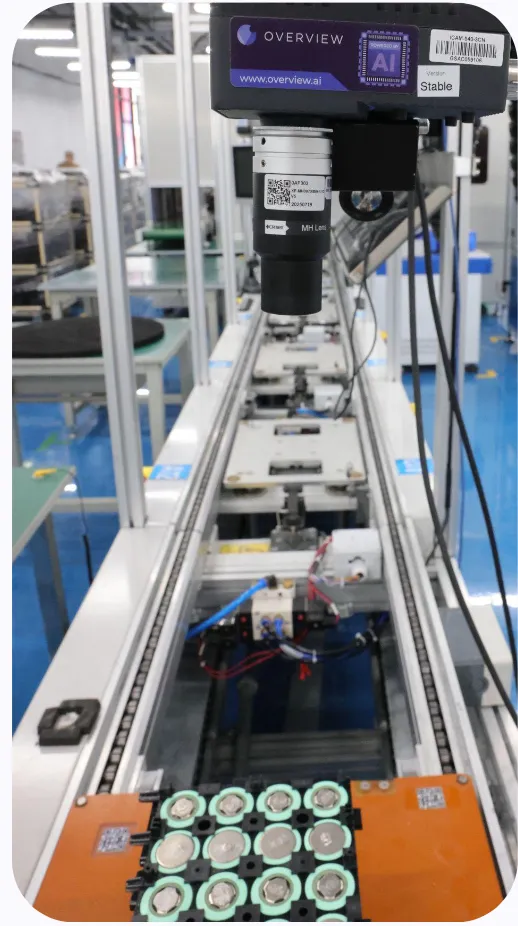
Battery laser welding case study, real production line
Where Our Cameras Run Laser Welds
From battery gigafactories to high-density connector assemblies.
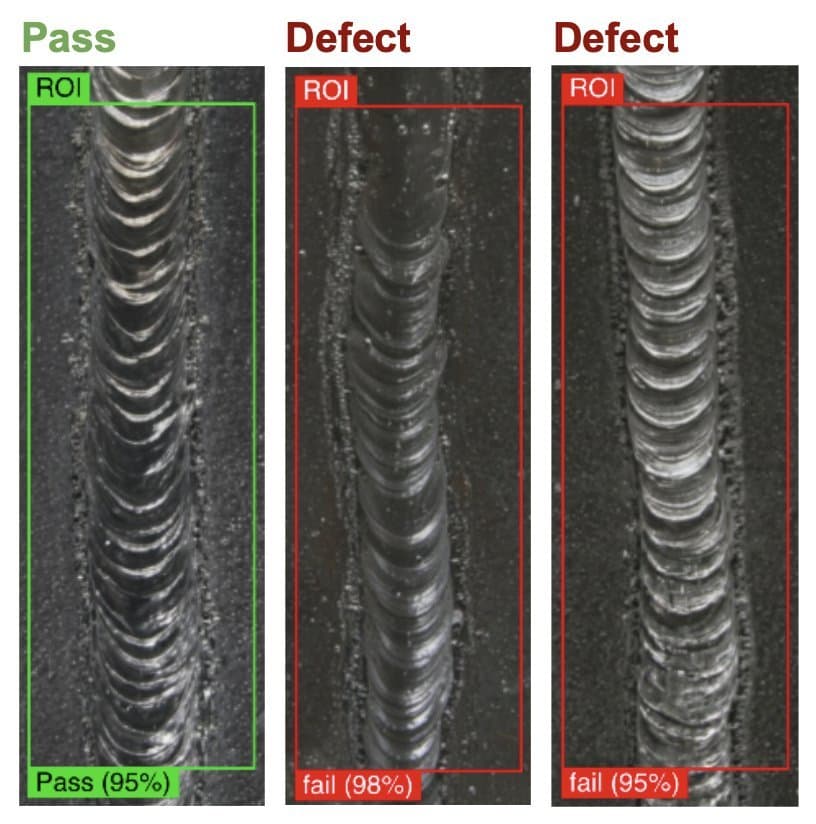
Real AI Pass and Defect calls on weld beads
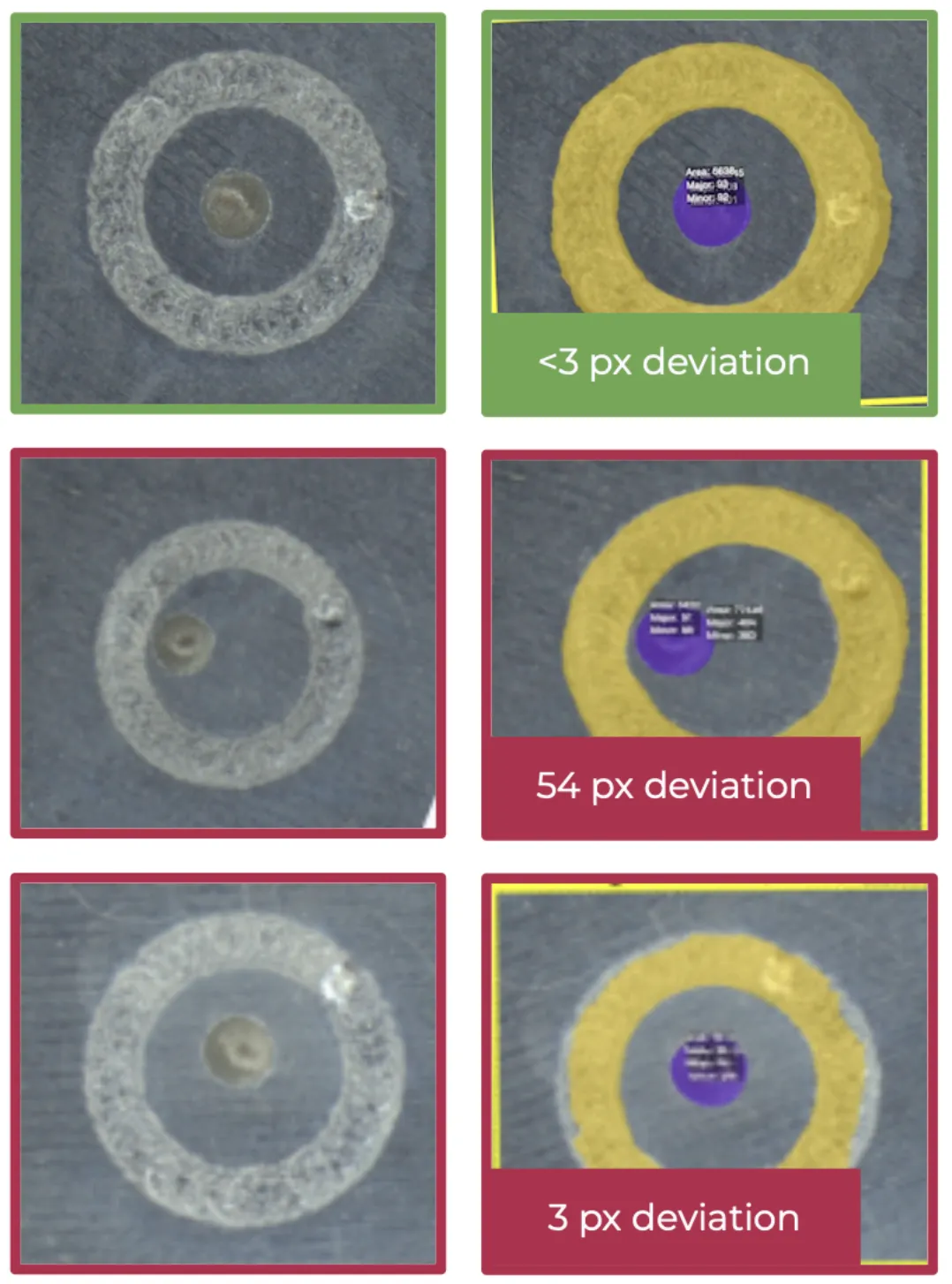
Pixel-level weld deviation measurement
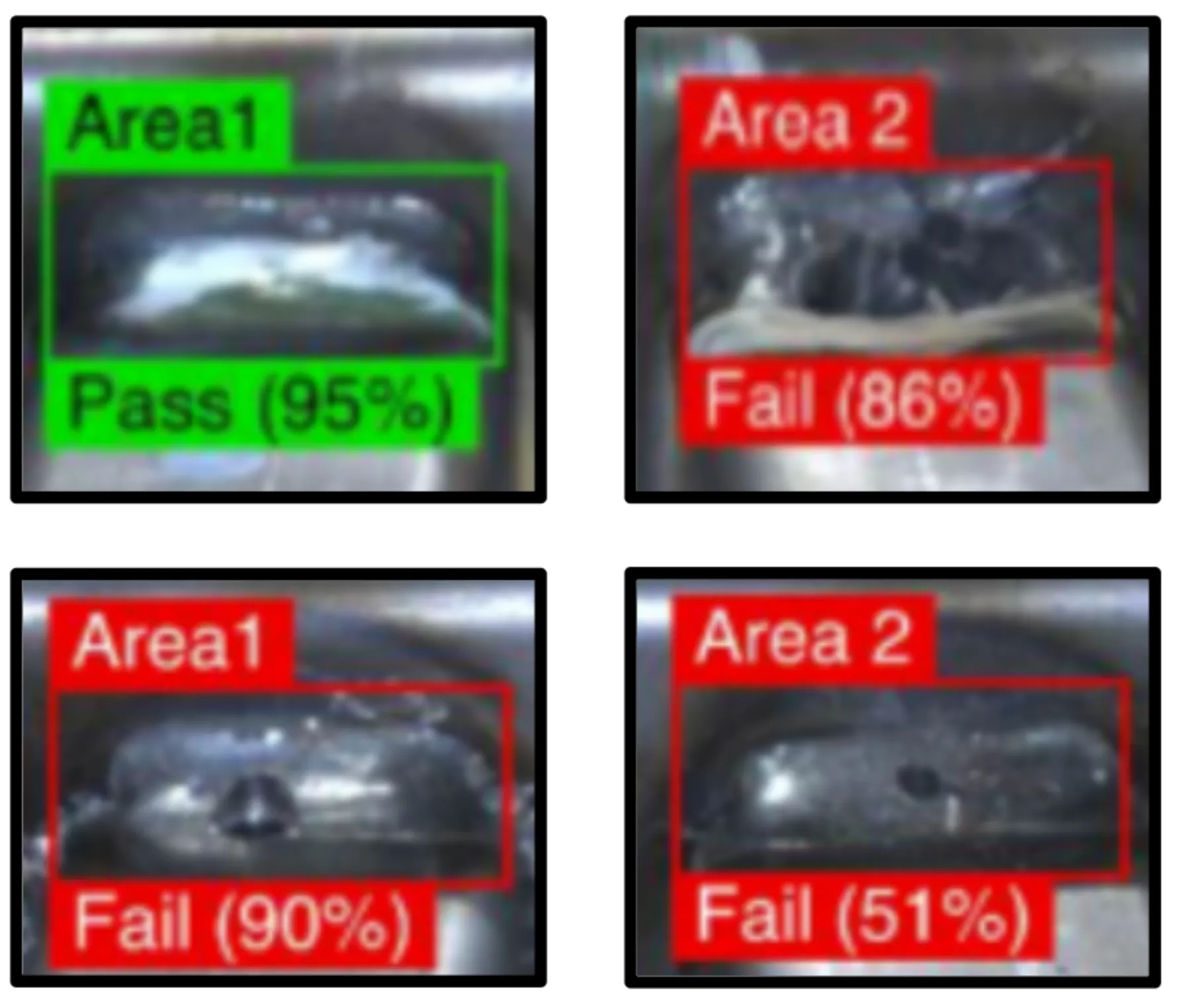
Real AI pass and fail calls on welds
Laser Weld Defects We Detect
Battery Cell Tab Welding
Gigafactory lines run battery tab laser welds at thousands of cells per hour, and a single ghost weld can produce a thermal runaway risk months later in the field. Overview AI inspects every weld for porosity, undercut, spatter, ghost welds, and pinholes. The OV80i resolves features down to 10 microns across the full tab, replacing destructive sampling and AOI systems that miss subsurface fusion issues.
Shielding Can & RF Module Welds
RF shielding cans on cellular and satellite modules require continuous laser seam welds for EMI integrity. Penetration variation, weld dropout, and edge melt-through compromise shielding and pressure seal. Our vision system grades each seam on continuity, width consistency, and surface oxidation, integrating directly with PLC reject mechanisms to remove failed parts before downstream encapsulation.
Bus Bar & Busplate Joints
EV battery packs and inverter assemblies use copper-to-aluminum laser welds for current-carrying interconnects. The reflectivity mismatch produces inconsistent weld geometry that breaks rule-based vision. Overview AI trains on a few dozen real production samples and reliably classifies good vs. cold weld vs. burn-through, with X-Y coordinates passed to the line controller for automatic part diversion.
Sensor Housing & Hermetic Seal Welds
Pressure sensors, MEMS packages, and medical electronics rely on hermetically sealed laser welds. Even microscopic porosity destroys seal integrity. Our vision system finds the defects that destructive helium-leak sampling can only catch after the fact, providing 100% inline coverage and flagging trend drift before it becomes a containment event.
Built for the Reality of Laser Welding
Reflective surfaces, sub-pixel features, and continuously evolving defect modes. We handle all three without a vision engineer on-site.
Subsurface Defect Sensitivity
AI models trained on real production data catch ghost welds and microporosity that AOI and rule-based vision systematically miss.
Line-Speed Inference
On-device inference at up to 70 TOPS keeps cycle times intact, even at gigafactory cadence. No cloud round-trips.
Retrain Without Engineers
When the line introduces a new alloy, fixture, or weld geometry, your QC team retrains the model in under an hour. No vendor tickets.
FAQ
Frequently asked questions
What does laser weld inspection look for?
Mostly evidence that a well-controlled process stopped being well controlled. A laser weld is consistent when everything is right, so the useful checks are seam continuity, whether the width is inside its band, whether the seam is still on the joint line rather than wandering off it, and whether spatter has landed somewhere it will cause a problem later. On battery assemblies that last one matters more than it sounds, because conductive spatter in the wrong place is a fault that shows up long after the weld passed.
Reflective metal is hard to image. How is that solved?
By not relying on a single flat image. A bright-field capture of a polished or plated surface tends to blow out exactly where the weld is, so the seam is the part of the frame you cannot see. Controlled or photometric illumination, which captures the same part under several lighting directions and combines them, separates the true surface texture from the specular return. That distinction is what makes the seam measurable rather than merely visible, and a single exposure cannot make it.
Can it inspect during the weld or only after?
After is the normal and more reliable case. During the weld the process itself emits intense light, which swamps any ordinary camera and makes the interesting features unmeasurable without specialised filtering. Inspecting the finished seam immediately afterwards, at the same station, gives a clean image and still catches the problem in time to stop the line and before the assembly moves on to anything expensive.
Ready to Catch Every Laser Weld Defect?
Bring your defect images. We will build a working pilot model in a single session.