How AI Vision Inspection Helps Manufacturers Beat the Labor Shortage
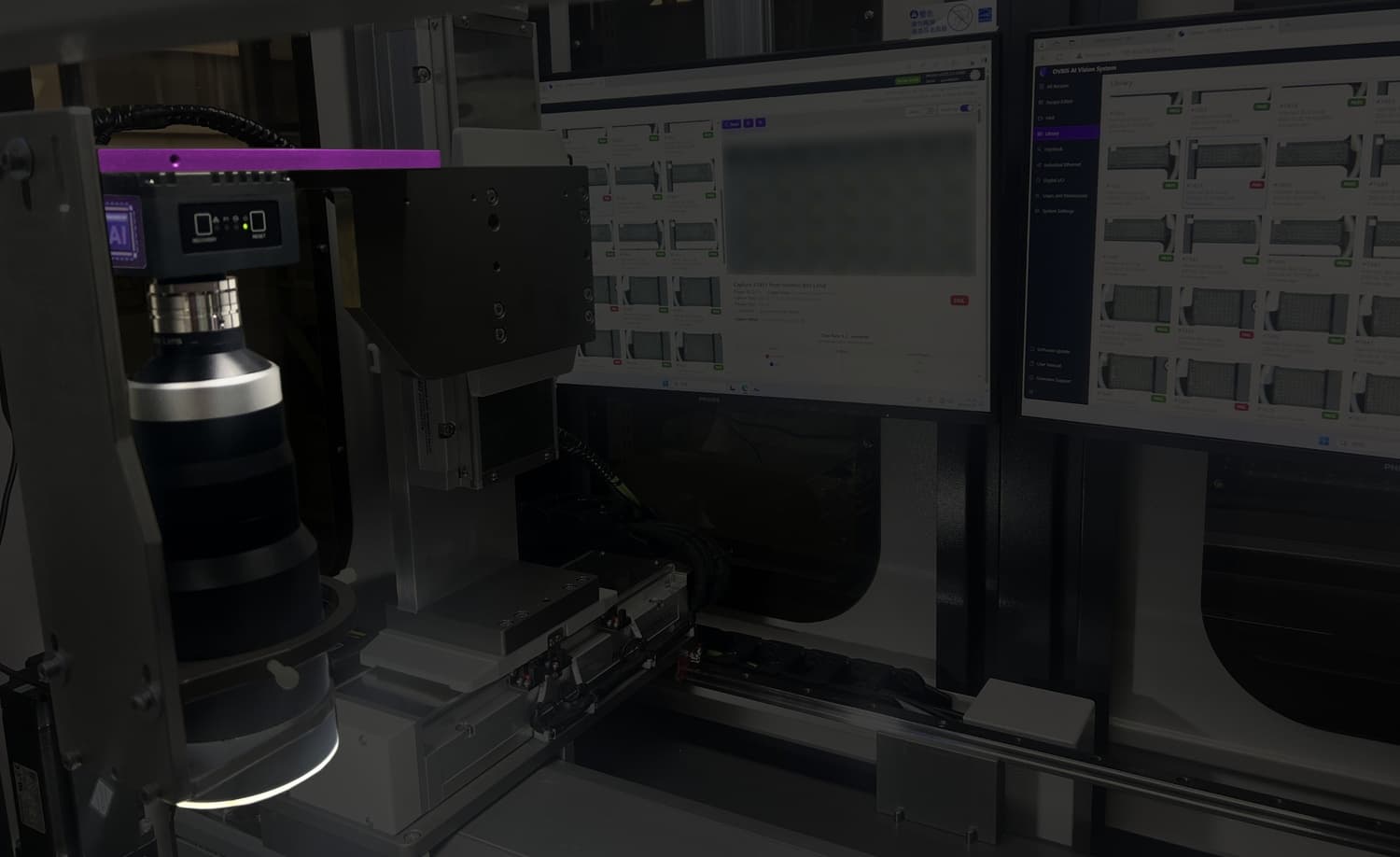
The hardest constraint on US manufacturing right now is not demand or capital. It is people. Plants have orders to fill and machines to run, but they cannot find enough workers to staff every role, and quality inspection is one of the toughest seats to fill. The shortage is structural, it is getting wider, and adding production through reshoring only makes it more acute.
The way out is not to hire your way back to full staffing, because the workers are not there to hire. It is to scale output without scaling headcount, and to put the skilled people you do have on the work that actually needs a human. AI vision inspection is one of the clearest places to do exactly that.
The Numbers Behind the Shortage
According to Deloitte and The Manufacturing Institute, US manufacturing could face up to 2 million unfilled jobs by 2033. The drivers are demographic and structural at the same time. About 2.8 million manufacturing workers are expected to retire by 2030, taking decades of hands-on knowledge with them.
The gap is not just about bodies, it is about skills. Roughly 500,000 manufacturing jobs sit unfilled right now, in large part because plants increasingly need digital, robotics, and AI skills that are hard to recruit for. So the shortage hits twice: not enough workers overall, and not enough of the right skills among the ones who are available.
Why Manual Inspection Feels It First
Of all the roles a plant has to staff, manual visual inspection is one of the hardest to fill and the most inconsistent once it is filled. Looking at the same part thousands of times a shift is fatiguing work, and accuracy drifts as the day goes on. Turnover is high, and every departure means weeks of training before a new inspector is reliable.
The result is a role that is expensive to keep staffed and uneven in output even when it is fully staffed. Two inspectors can disagree on the same defect, and the same inspector can grade differently at hour one versus hour eight. When you are already short on people, that variability is exactly where quality escapes start.
This is why inspection is usually the first place a plant feels the labor shortage bite. It is hard to hire for, hard to retain, and the cost of getting it wrong shows up downstream as scrap, rework, and returns.
How AI Vision Closes the Gap
AI vision inspection takes the repetitive looking-at-every-part job off your headcount and runs it at full speed, every shift, without fatigue. The line keeps inspecting at the same standard at hour eight as it did at hour one, which is something a manual team cannot promise. You scale quality output without scaling the workforce you cannot grow.
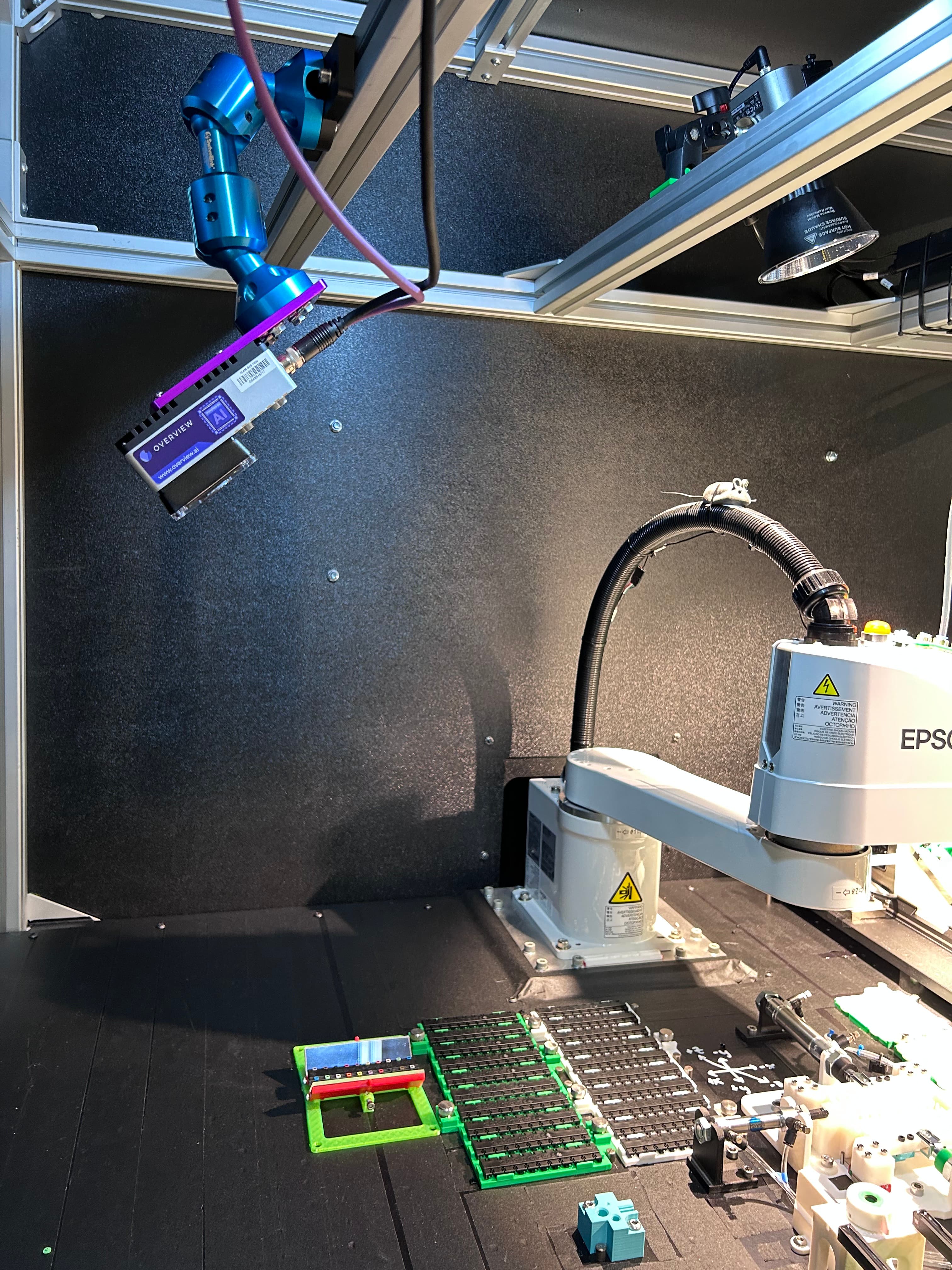
Just as important, the system has to be something your current team can actually run. Overview.ai is built for that. Every camera has a built-in NVIDIA GPU and runs at the edge, models train on as few as 5 images in under an hour, and most lines deploy in 1 to 3 days. The interface is browser-based and no-code, so the people you already have run it without any AI expertise.
Why Overview.ai fits a short-staffed plant:
- ✓ Every camera runs AI at the edge on a built-in NVIDIA GPU, no cloud or extra server staff needed
- ✓ Models train on as few as 5 images in under an hour
- ✓ Deploys in 1 to 3 days, not weeks of integration work
- ✓ Browser-based and no-code, so your existing team runs it without AI expertise
- ✓ Native support for EtherNet/IP, PROFINET, Modbus TCP, and OPC-UA to fit your existing line
Redeploying People, Not Replacing Them
The fear that automation eliminates jobs misreads the moment. When you cannot fill the roles you already have, the question is not whether to cut people, it is how to free the skilled ones you have for the work that needs them. AI vision handles the repetitive grading so your experienced staff can move to root-cause analysis, process improvement, and running the inspection system itself.
That reframing matters for reshoring too. Bringing production back to the US adds demand for output at the exact moment the workforce is tight. A line that holds quality without a large inspection crew makes a reshored plant viable, because it no longer depends on hiring people who are not available. You get more production and steadier quality from the headcount you already have.
For a closer look at how the math works out on a single line, see our breakdown of the ROI of computer vision in manufacturing, and if you are comparing options, our guide to evaluating an AI visual inspection system walks through what to check before you commit.
Short on inspectors, not on orders?
Talk with an Overview.ai engineer about scaling quality output on your line without adding headcount you cannot hire.
Book a fit callFrequently Asked Questions
Will AI vision replace my inspectors?
No. AI vision takes over the repetitive, fatiguing task of looking at every part, which is the hardest role to staff consistently. Your inspectors move to higher-value work like root-cause analysis, process improvement, and managing the inspection system itself. The goal is to redeploy skilled people, not eliminate them, especially when you cannot hire enough of them in the first place.
How fast can AI vision be deployed?
Overview.ai typically deploys in one to three days. Models train on as few as five images in under an hour, so you can stand up a working inspection on a line in a single shift rather than waiting weeks for a custom integration. That speed matters when you are short on people and cannot afford a long project.
Do we need AI experts to run it?
No. Overview.ai is browser-based and no-code. Your existing quality and engineering team trains models, adjusts inspections, and reviews results without any AI or data-science background. That is the point: the labor shortage already makes specialized talent hard to find, so the system is built to be run by the people you already have.
How does this help with reshoring?
Reshoring is pushing more production back into US plants at the same time those plants struggle to hire. AI vision lets a reshored line hold tight quality standards without depending on a large inspection workforce that is not available. You scale output and protect quality with the headcount you have, which makes bringing production home more practical.
See Overview AI on your parts
Send us a photo of your part or defect and a vision engineer will tell you whether Overview can catch it, with most systems deployed on the line in days.
Related Articles
How to Evaluate an AI Visual Inspection System
A practical buyer checklist for AI visual inspection in 2026: accuracy, data efficiency, cycle time, integration, and deployment speed.
Read More →The ROI of Computer Vision in Manufacturing
How to model payback and ROI for AI vision inspection on your production line.
Read More →Top 10 Industrial AI Vision Systems in 2026
A buyer guide to the best industrial AI vision systems, compared on accuracy, integration, and ROI.
Read More →