
World Models Explained: How Synthetic Data Trains the Factories of the Future
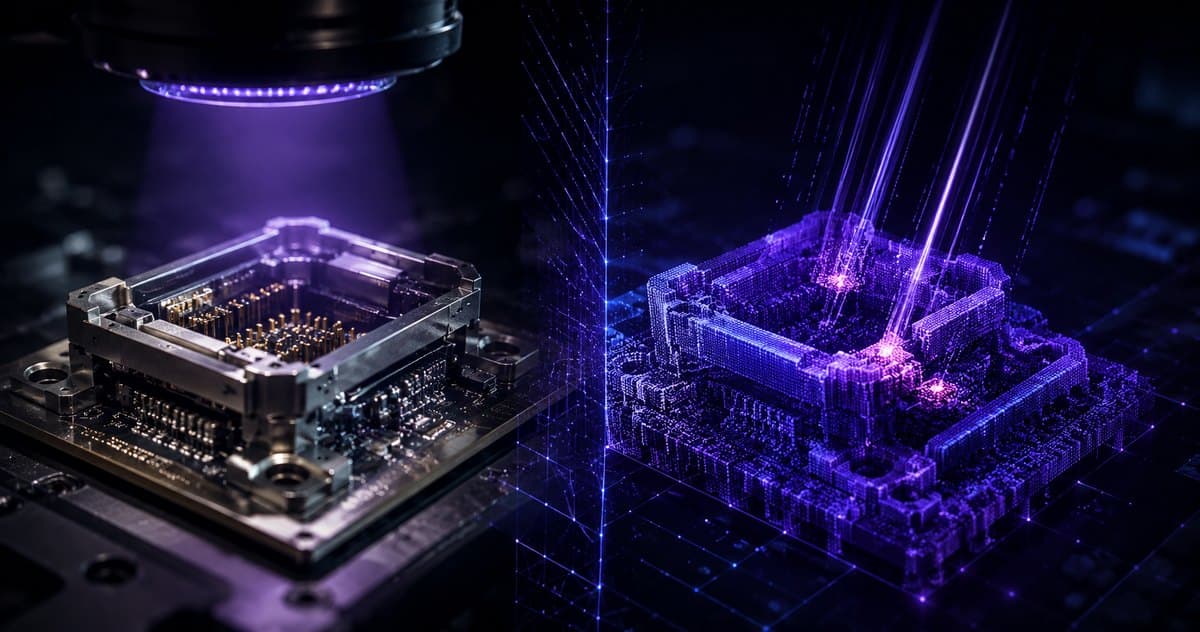
The hardest problem in factory AI is not the model. It is the training data. World models and synthetic data solve it by generating the manufacturing defects a high-quality line almost never produces, so AI vision inspection can ship in days instead of months. This is how synthetic defect generation trains physical AI for defect detection on the modern production line.
The defect data paradox in AI vision inspection
To train an AI inspection model, you need examples of what good and bad look like. Good parts are easy: a healthy line makes thousands an hour. Defects are the problem. The better a factory gets at quality, the fewer defects it produces, which leaves almost nothing to train the model that is supposed to catch them.
It gets worse with change. Every new product, SKU, or process tweak resets the clock, and the team is back to waiting for rare failures to slowly accumulate. This is the paradox: the factories with the highest standards have the least data to launch their next inspection. For more on why this is a physical AI problem specifically, see What Is Physical AI? World Models and the Next Wave of Industrial Intelligence.
How world models and synthetic data close the gap
A world model learns how a part and its defects actually look, then generates new, photorealistic examples on demand. Instead of waiting for a real scratch, weld void, or missing component to occur, you generate it, accurately and repeatedly, on a clean reference image of the part.
That synthetic dataset trains the inspection model the same way real images would, but it is available immediately and covers the rare cases real data rarely contains. The result is a working inspection model before real defect data exists at scale.
Start from clean reference images of a good part or new SKU.
A world model paints realistic defects onto the good part.
Train and push the inspection model to the line, then retrain on real defects as they appear.
Synthetic defect generation done right
Synthetic data only works if it is realistic enough to transfer to the real line. Cartoonish or low-fidelity defects teach the model the wrong thing. The generated defect has to respect the surface, texture, lighting, and geometry of the actual part, which is exactly what a well-trained world model provides.
The strongest workflow is a closed loop. Start with synthetic defects to launch fast, deploy to the line, then feed real defects back into the library as they occur and retrain. Over time the factory builds a reusable defect library that carries knowledge from one product generation to the next.
From months to minutes: deploying AI inspection faster
This is the workflow behind Overview AI's OV Auto-Defect Creator Studio. Quality engineers reuse known defect types across new but similar parts, generate synthetic training sets in minutes, and deploy inspection models to cameras running at the edge. On connector lines, this approach has helped cut time to a deployed inspection from weeks to under an hour per product.
The lesson generalizes well beyond connectors. As physical AI spreads across robotics and autonomy, the teams that win are the ones who solve the data problem with world models instead of waiting for the real world to hand them enough examples. For a look at who is leading the field, see our Top 10 Physical AI Companies to Watch in 2026.
Train inspection without breaking a real part
Bring your reference images. We will build a working pilot defect library in a single session with OV Auto-Defect Creator Studio.
Frequently Asked Questions
What is synthetic data in manufacturing AI?
Synthetic data is artificially generated training data, such as photorealistic images of defects created by an AI model rather than captured from real failures. It lets manufacturers train inspection models when real defect examples are rare or do not yet exist.
How do world models help train inspection AI?
World models learn how parts and defects look and can generate realistic synthetic defects on clean reference images. Inspection models train on that generated data, so a manufacturer can deploy a working model before enough real defects have occurred to train on.
Why is defect data so hard to collect?
The better a factory gets at quality, the fewer defects it produces, which means very little defect data to train on. Product changes and new SKUs reset the problem constantly. Synthetic data breaks this paradox by generating the rare examples on demand.
See how Overview AI inspects world models for manufacturing
Send us a photo of your part or defect and a vision engineer will tell you whether Overview can catch it, with most systems deployed on the line in days.
Related Articles
What Is Physical AI? World Models and the Next Wave of Industrial Intelligence
A clear explainer on physical AI and world models and why they are reshaping manufacturing, robotics, and autonomy.
Read More →Synthetic Defect Data for HVMM Manufacturing
How synthetic defect generation broke the per-variant data bottleneck that gated AI vision in high-volume medium-mix manufacturing.
Read More →OV Auto-Defect Creator Studio: Create Synthetic Training Data for Vision AI
Generate realistic synthetic defect images across five specialized modes when real defect samples are scarce.
Read More →