Edge vs. Cloud AI Vision Inspection: Why the Factory Floor Is Going Local
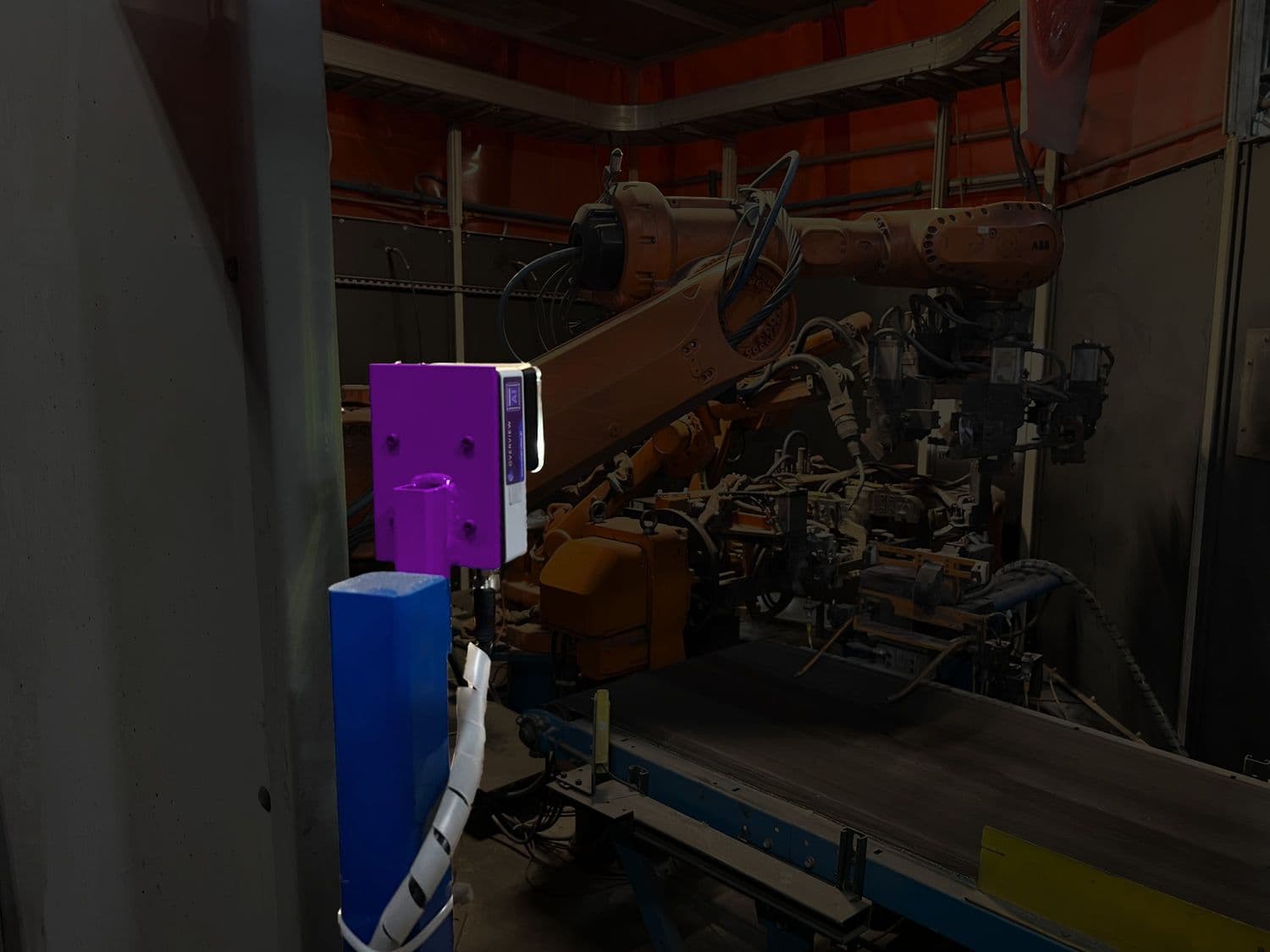
For a few years, the default answer to where AI should run was the cloud. That assumption is now reversing on the factory floor. Industry projections put roughly 80 percent of AI inference running locally at the edge by 2026, and inspection is one of the clearest reasons why. When a camera has to decide whether a part passes or fails before the next part arrives, sending an image to a remote data center and waiting for a reply is the wrong architecture.
This is not an abstract preference. The factory floor has hard constraints around latency, data control, cost, and uptime that the cloud struggles to meet for real-time inspection. Overview.ai is built for that reality: every camera runs AI on-device, so the inspection decision happens where the part is, not in a data center hundreds of miles away.
Latency: The Decision Has to Keep Up With the Line
Latency is the single most decisive factor. Cloud AI vision incurs roughly 1 to 2 seconds of round-trip delay, because the image has to leave the line, reach a remote server, get processed, and come back. Edge inference delivers a decision in single-digit milliseconds, since the AI runs on the camera itself with nothing to upload.
On a high-speed line, that gap is the difference between working and not working. A line inspecting 200 parts per minute has a decision budget of roughly 300 milliseconds per part. A cloud round trip adds anywhere from 200 milliseconds to 2 seconds of variable latency depending on bandwidth and distance, which blows straight through that budget and, worse, does so unpredictably. Predictable low latency is exactly what high-speed inspection needs, and it is exactly what a cloud round trip cannot guarantee.
Data Control: Some Data Cannot Leave the Floor

Beyond speed, many factory floors simply cannot send inspection data to the cloud. Operational technology networks are often isolated from the public internet by design, and data sovereignty rules can require that production data stay inside the facility or the country. For those environments, local processing is not a preference, it is non-negotiable.
Edge inspection resolves this cleanly. With Overview.ai, every camera runs inference on a built-in NVIDIA GPU, so images, models, and results stay inside your facility and on your network. The system is air-gap ready, and your data never has to traverse the public internet. For regulated and defense work, that architecture is the foundation of a defensible compliance story, as we cover in our guide to ITAR-compliant AI vision inspection.
Why the inspection decision belongs at the edge:
- ✓ Single-digit millisecond decisions, fast enough for high-speed lines
- ✓ Predictable latency, with no dependence on bandwidth or distance
- ✓ Data stays in the facility, meeting OT isolation and data sovereignty rules
- ✓ A one-time hardware investment instead of ongoing per-inference fees
- ✓ Keeps running even when the internet connection drops
Cost and Reliability: The Quiet Advantages
Cost structure tends to favor edge over the life of a deployment. Cloud AI vision carries ongoing per-inference and bandwidth fees that scale with every part you inspect, so the bill grows as your line speeds up. Edge inference is a one-time hardware investment, with no metered fee per decision and no bandwidth cost for shipping images offsite.
Reliability follows the same pattern. An edge camera keeps inspecting with no internet connection at all, so a network outage never stops the line. A cloud-dependent system breaks the moment the link does, which on a production line means inspection stops and parts either pile up or pass uninspected. For a process that runs continuously, that single point of failure is hard to justify.
Edge vs. Cloud at a Glance
| Consideration | Cloud AI vision | Overview.ai (edge) |
|---|---|---|
| Decision latency | 1 to 2 second round trip, variable | Single-digit milliseconds, predictable |
| Internet required | Usually yes | No, air-gap ready |
| Where data lives | Remote cloud infrastructure | On the camera, in your facility |
| Ongoing cost | Per-inference and bandwidth fees | One-time hardware investment |
| Reliability if connection drops | Inspection stops | Keeps running locally |
Where Hybrid Makes Sense
None of this means the cloud has no role. Hybrid architectures are common and often the right call: the edge handles real-time inference on the line, while the cloud aggregates results for analytics, fleet-wide reporting, and long-term trend analysis across multiple sites. The line stays fast and resilient, and the analytics layer gets the scale the cloud is good at.
The principle worth holding onto is simple: the inspection decision belongs at the edge. Use the cloud for what happens after the decision, not for the decision itself. Keeping inference local also tightens your security posture, a point we explore in our overview of edge AI and OT security in manufacturing.
How Overview.ai Delivers Edge Inspection
Overview.ai is edge-native by design. Every camera ships with an NVIDIA GPU built in, so all inference runs on-device with no cloud dependency. The system is air-gap ready, your data stays in the facility, and a typical deployment takes 1 to 3 days. It speaks the protocols your line already uses, with native support for EtherNet/IP, PROFINET, Modbus TCP, and OPC-UA, so the inspection decision lands directly in your PLC and control logic.
If you are weighing edge against cloud for a real production line, start by mapping your decision budget and your data constraints. In most factory environments, both point to the same answer: keep the inference local.
Deciding between edge and cloud?
Talk with an Overview.ai engineer about deploying edge AI inspection that keeps decisions fast and your data on the floor.
Book a fit callFrequently Asked Questions
How much faster is edge than cloud for AI vision inspection?
Edge inference returns decisions in single-digit milliseconds because the AI runs on the camera itself. A cloud round trip typically adds 1 to 2 seconds of variable latency, since the image has to travel to a remote data center, get processed, and travel back. On a high-speed line running 200 parts per minute, where the decision budget is around 300 milliseconds per part, that cloud delay is far too slow and too unpredictable.
Does Overview.ai need an internet connection?
No. Every Overview.ai camera has an NVIDIA GPU built in and runs all inference on-device, so it keeps inspecting even with no internet connection. The system is air-gap ready and runs on isolated production networks, which means a dropped link never stops the line.
Is cloud ever the better choice for inspection?
Hybrid architectures are common and sensible. The edge handles real-time inference on the line, while the cloud is useful for aggregate analytics, fleet-wide reporting, and long-term trend analysis across sites. The key distinction is that the inspection decision itself belongs at the edge, where latency, reliability, and data control matter most. Cloud is for the analytics layer, not the per-part pass or fail call.
Where does my inspection data live with edge AI vision?
With Overview.ai, inspection images, trained models, and results stay on the camera and inside your facility network. There is no cloud dependency and no requirement to stream data offsite, so your data stays under your control and meets data sovereignty and OT isolation constraints by default.
See Overview AI on your parts
Send us a photo of your part or defect and a vision engineer will tell you whether Overview can catch it, with most systems deployed on the line in days.
Related Articles
ITAR-Compliant AI Vision Inspection for Defense Manufacturing
How edge AI inspection keeps controlled technical data inside your facility, with no cloud dependency.
Read More →Edge AI and OT Security in Manufacturing
How running AI inference locally reduces the cybersecurity attack surface on the production line.
Read More →Physical AI for Quality Inspection
What physical AI means for inspection and how edge AI vision delivers it on the line today.
Read More →