Physical AI for Quality Inspection: From Hype to the Factory Floor
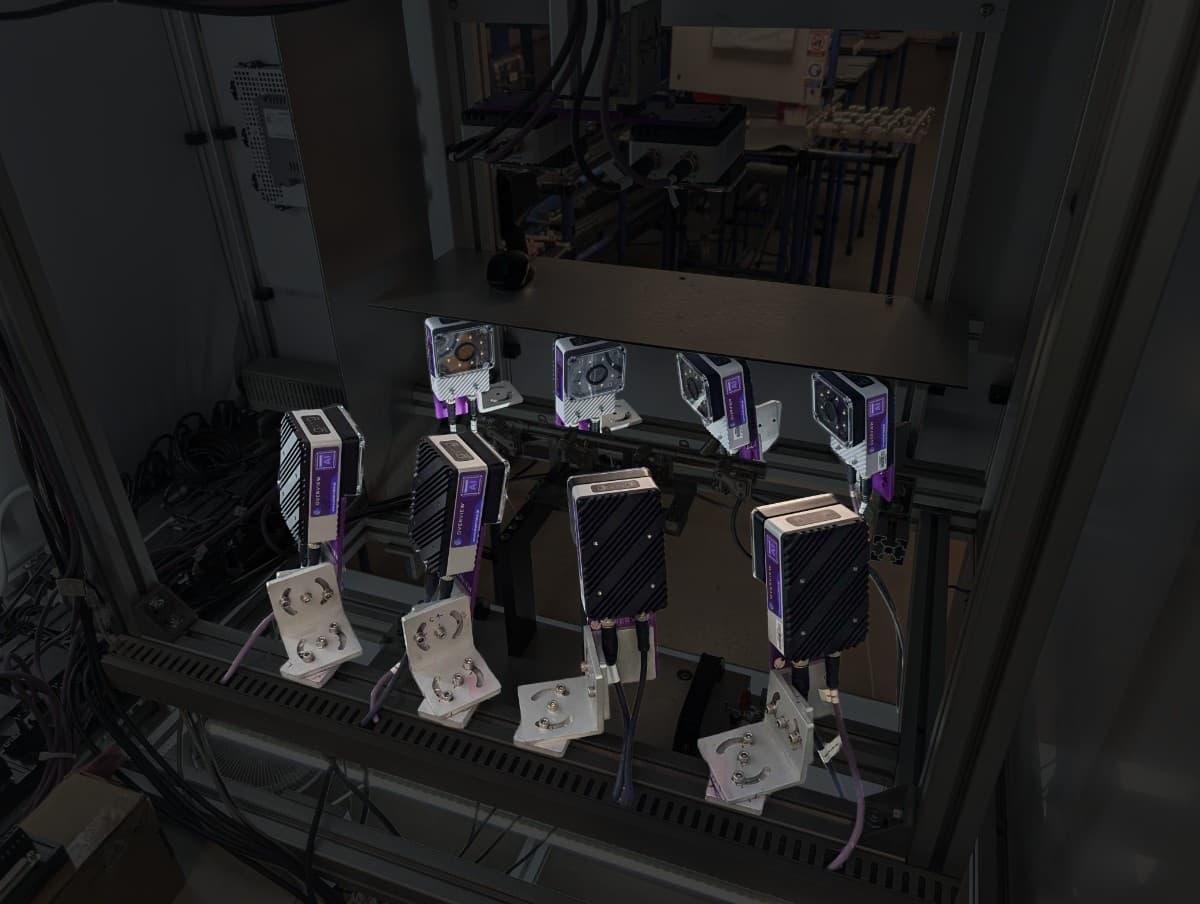
Physical AI is the dominant manufacturing story of 2026. At CES 2026, NVIDIA CEO Jensen Huang declared that the "ChatGPT moment for physical AI is here." The demos that drew the crowds were humanoid robots, including Hyundai's Atlas, and a new generation of collaborative robots stepping onto factory floors. The vision is striking, and the headlines have been relentless.
But there is a gap between the keynote stage and the production line. Humanoids are years from broad deployment in most factories. Meanwhile, a quieter form of physical AI is already running on lines today, making real decisions on real parts at machine speed. That form is AI vision quality inspection, and it is the most deployable physical AI a manufacturer can put to work right now.
The short version: Physical AI means AI that perceives the world and acts on it. Quality inspection does exactly that, today, on the line. You do not need a humanoid robot to start. You need a camera that can see, decide, and signal in milliseconds.
What Physical AI Actually Means
Most of the AI people have used so far is software-only. It reads text, summarizes documents, writes code, and answers questions. It lives entirely in the world of data. Physical AI is different. It perceives the real, physical world through sensors, reasons about what it sees, and then acts on it in a way that changes something tangible.
That definition covers a wide span of technology: autonomous vehicles, mobile robots, collaborative robots, humanoids, and machine vision. What unites them is the loop of sense, decide, act in the physical world. A humanoid that picks up a tool and an inspection camera that rejects a defective part are both running that loop. They sit at very different points on the deployment curve, but they belong to the same category.
Why Inspection Is Physical AI You Can Deploy Today
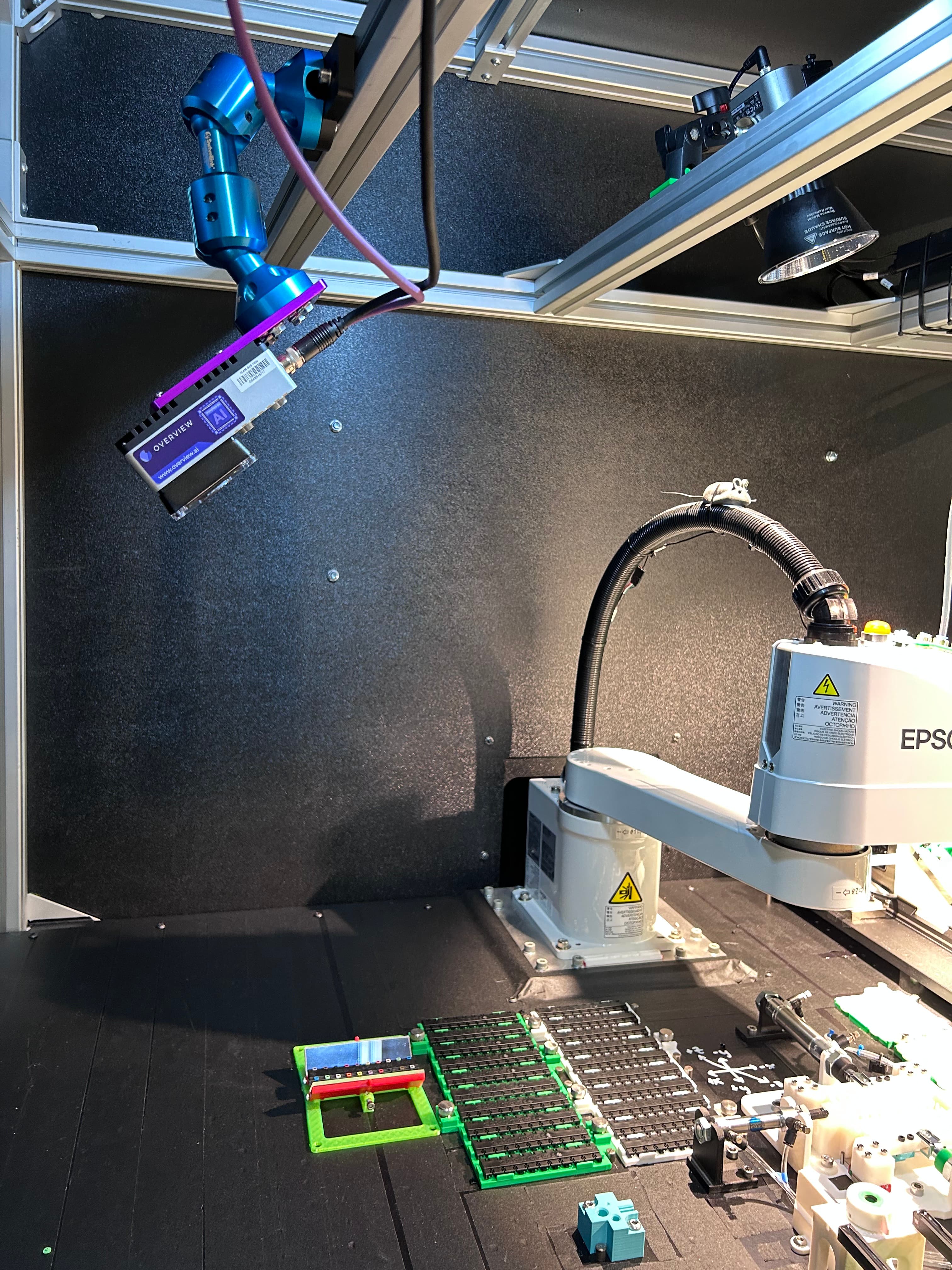
Quality inspection is physical AI stripped down to its most useful core. A camera perceives a part, an AI model decides whether it passes or fails, and the line acts on that decision in milliseconds. There is no humanoid to coordinate, no mobile platform to navigate, and no multi-year integration program. The perception-to-action loop is tight, contained, and proven.
That is why inspection is the form of physical AI in factories right now, not in pilots or research labs. Humanoid robots remain years from broad production use across most plants. AI vision inspection is already in production lines, catching defects that human inspectors miss and doing it consistently at full line speed. If you want physical AI returning value this quarter rather than this decade, inspection is where it lives.
The Edge Is Where Physical AI Lives
Physical AI has a hard requirement that software AI does not: it has to act fast enough to matter in the real world. A part moving down a line will not wait for a round trip to a cloud data center. That is why physical AI depends on edge compute, solid IT and OT integration, and infrastructure that is robust enough to run continuously in a plant.
This is exactly the infrastructure Overview.ai already delivers. Inference runs on the camera itself, so decisions happen on the line in milliseconds, not after a network hop. For a deeper comparison of why the decision belongs at the edge, see our breakdown of edge vs. cloud AI vision inspection.
Why Overview.ai is physical AI you can deploy on the line:
- ✓ NVIDIA GPU built into every camera, with all inference on-device at the edge
- ✓ Models trained on as few as 5 images, so perception is tuned to your part
- ✓ Deploys in 1 to 3 days, not a multi-year robotics program
- ✓ Native EtherNet/IP, PROFINET, Modbus TCP, and OPC-UA integration
- ✓ Feeds accept and reject signals straight to robots and PLCs
- ✓ Acts on the line in milliseconds, with no cloud round trip
From Perception to Action on the Line
Inspection is not a dead end on the road to broader automation. It is the perception layer that the rest of physical AI is built on. A system that already sees parts accurately and decides in real time can become the eyes for everything downstream. Overview.ai feeds accept and reject signals directly to robots and PLCs over standard industrial protocols, so the same decision that flags a defect can trigger a reject mechanism, divert a part, or hand off to a pick-and-place cell.
That makes inspection the practical first step into physical AI rather than a separate track. You start with reliable perception and a clear accept or reject decision, then let that decision drive more of the line over time. When humanoids and cobots do reach broad production, they will need exactly this kind of trustworthy perception layer to act on. For a wider view of where the technology is heading, our 2026 vision system guide for manufacturers is a useful next read.
Want physical AI on your line this quarter?
Talk with an Overview.ai engineer about deploying edge AI inspection that perceives parts and acts on the line in days, not years.
Book a fit callFrequently Asked Questions
What is physical AI?
Physical AI is artificial intelligence that perceives the real world and acts on it, as opposed to software-only AI that works with text and data. It spans robots, cobots, autonomous systems, and machine vision. In a factory, physical AI senses what is happening on the line and makes a decision that changes something in the physical world.
How does physical AI relate to quality inspection?
Quality inspection is one of the most deployable forms of physical AI available today. An AI vision system perceives a part with a camera and makes a real-world accept or reject decision at the edge, in milliseconds, on the line. It is physical AI working in production now, while humanoid robots are still years from broad use.
Do I need robots to use physical AI?
No. Robots and humanoids get the headlines, but they are not the entry point for most manufacturers. AI vision inspection is the most accessible form of physical AI: it deploys in days, needs no robot, and delivers value on an existing line. It can also feed accept and reject signals to robots and PLCs when you are ready to automate further.
How is Overview.ai physical AI?
Overview.ai is physical AI for inspection. Every camera has an NVIDIA GPU built in and runs all inference on-device at the edge. Models train on as few as 5 images and deploy in 1 to 3 days. The system integrates natively over EtherNet/IP, PROFINET, Modbus TCP, and OPC-UA, so it perceives parts and acts on the line by signaling robots and PLCs.
See Overview AI on your parts
Send us a photo of your part or defect and a vision engineer will tell you whether Overview can catch it, with most systems deployed on the line in days.
Related Articles
What Is Physical AI? World Models Explained
The definitive guide to physical AI, world models, and the perceive-predict-act loop.
Read More →Top 10 Physical AI Companies to Watch in 2026
The companies leading physical AI in manufacturing, ranked.
Read More →Edge vs. Cloud AI Vision Inspection
Why the inspection decision belongs at the edge, compared on latency, data control, and cost.
Read More →