Detecting Connector Housing with Hydrolysis Degradation: A Machine Vision Walkthrough
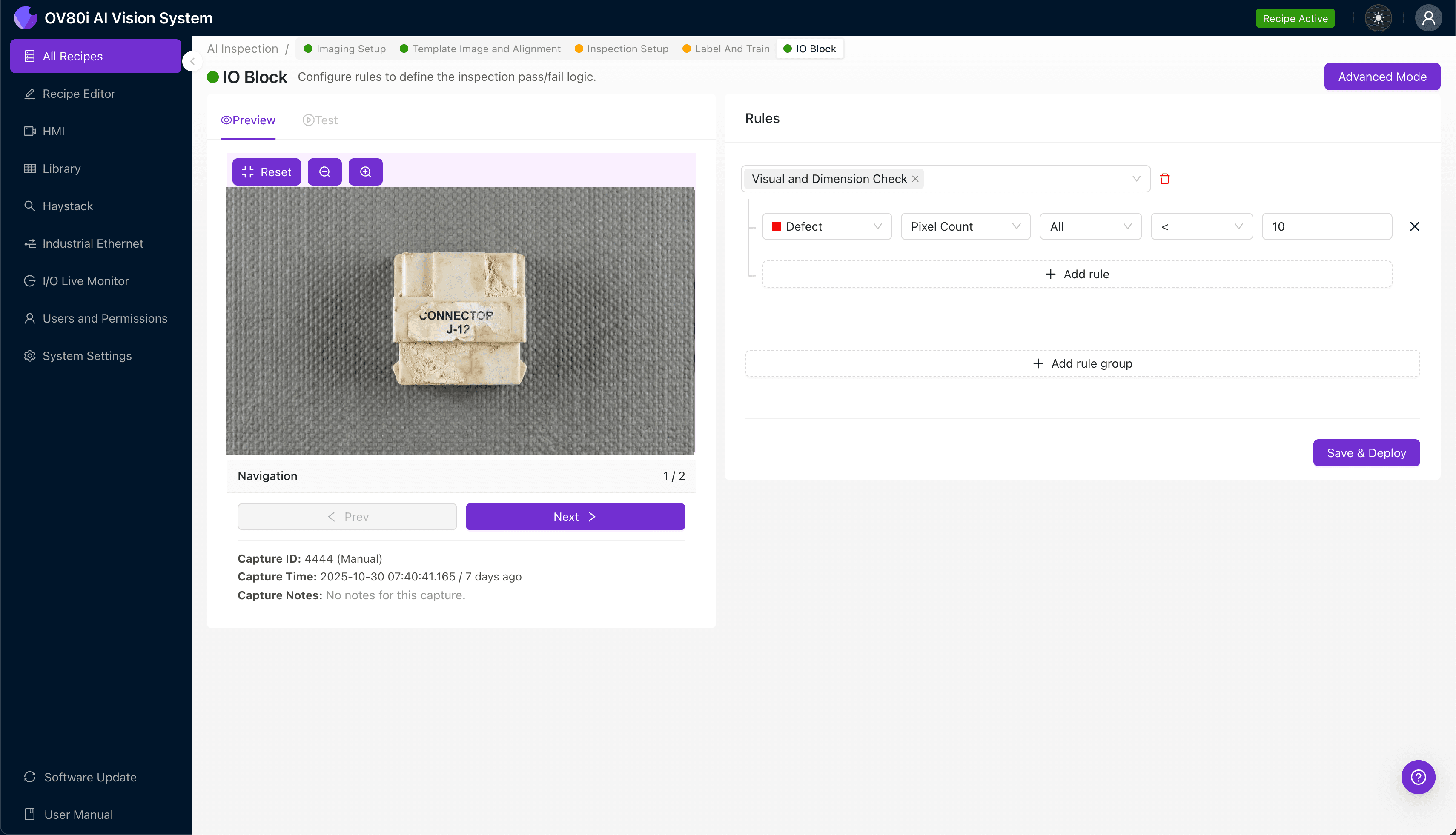
"Hydrolysis degradation in connector housings develops subtly—surface chalking, micro-cracking, and dimensional warping often escape human inspectors. AI-powered visual inspection catches these progressive defects at full line speed, eliminating field failures before they happen."
The Problem: Why Hydrolysis Degradation Escapes Traditional Inspection
Connector housings exposed to moisture and heat over time undergo hydrolysis—a chemical breakdown that compromises structural integrity and electrical performance. This degradation often develops subtly, making it one of the most challenging failure modes to catch before components reach the field.
Common Defects in Hydrolyzed Connector Housings:
- Surface chalking – whitish, powdery residue indicating polymer chain breakdown
- Micro-cracking – hairline fractures radiating from stress points or latch mechanisms
- Dimensional warping – subtle deformation of pin cavities and mating surfaces
- Discoloration patterns – yellowing or browning indicative of chemical degradation
- Surface pitting – small erosion craters where material has broken down
- Brittleness-induced chipping – edge fractures around terminal insertion points
Human inspectors struggle to maintain consistency when evaluating these defects across thousands of parts per shift. Fatigue sets in quickly when searching for subtle color shifts and micro-cracks, and the pressure of line speed forces compromises in inspection thoroughness.
The Solution: AI-Powered Visual Inspection
Machine vision systems equipped with deep learning algorithms excel at detecting the subtle, progressive signatures of hydrolysis degradation. Unlike rule-based systems that require explicit programming for each defect type, AI models learn to recognize degradation patterns across the full spectrum of severity.
Overview.ai's approach delivers consistent, objective inspection at full line speed—eliminating the variability inherent in manual QC. The system captures high-resolution images of every connector housing, analyzes them against trained models, and makes pass/fail decisions in milliseconds.
Step 1: Imaging Setup
Position the connector housing under the OV80i camera, ensuring the primary surfaces prone to hydrolysis are fully visible. Angled lighting often reveals surface chalking and micro-cracking more effectively than direct illumination.
Click "Configure Imaging" in the software interface. Adjust the Camera Settings—increase exposure slightly to capture subtle discoloration, and fine-tune gain to enhance surface texture visibility without introducing noise.
Click "Save" to lock in your optimized imaging parameters.
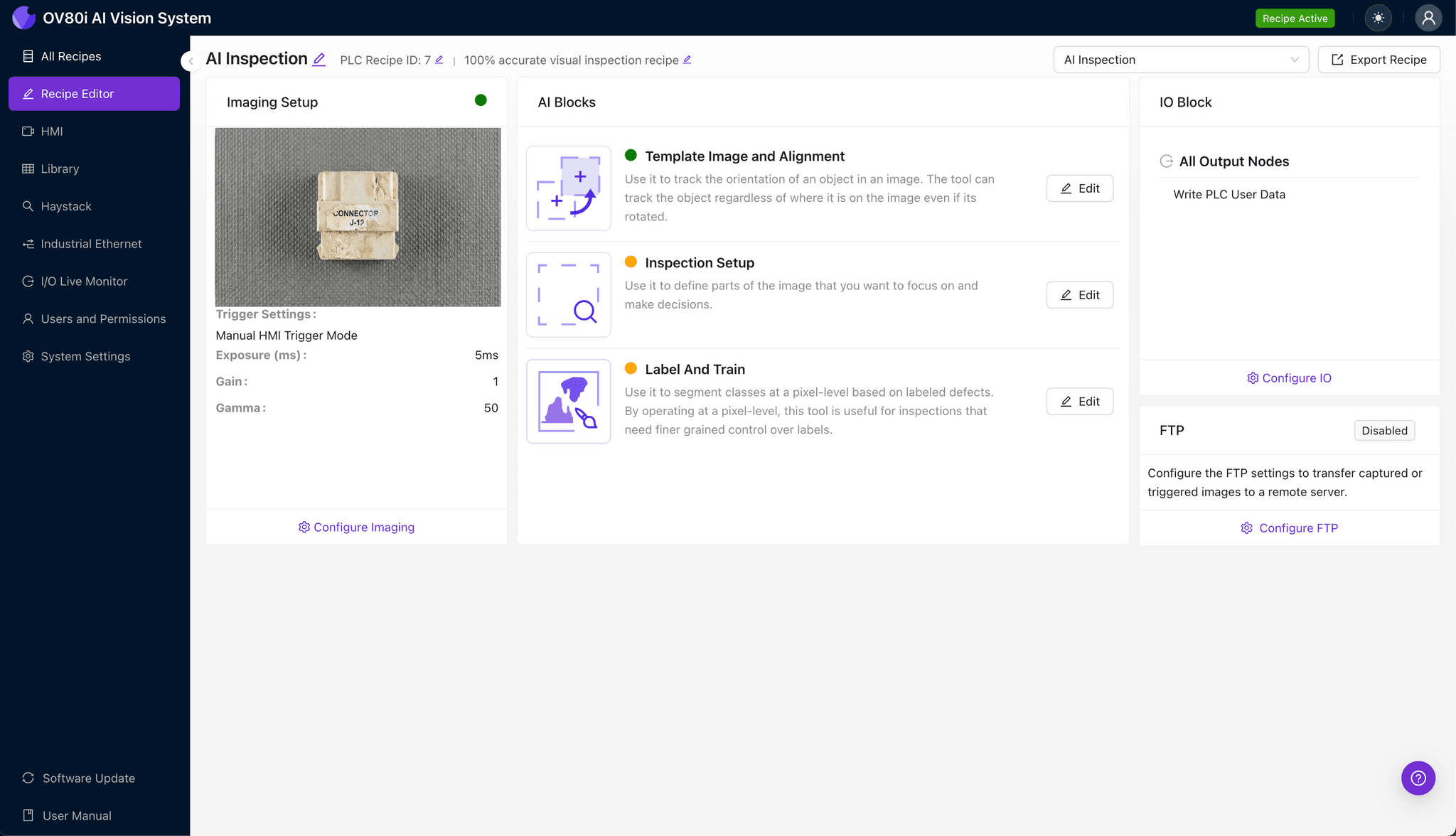
Step 2: Image Alignment
Navigate to the "Template Image" tab and capture a reference image of a known-good connector housing. This template ensures consistent positioning across all inspected parts.
Click "+ Rectangle" to add an alignment region around the main body of the housing. Set the "Rotation Range" to 20 degrees to accommodate minor orientation variations as parts move through the line.
Step 3: Inspection Region Selection
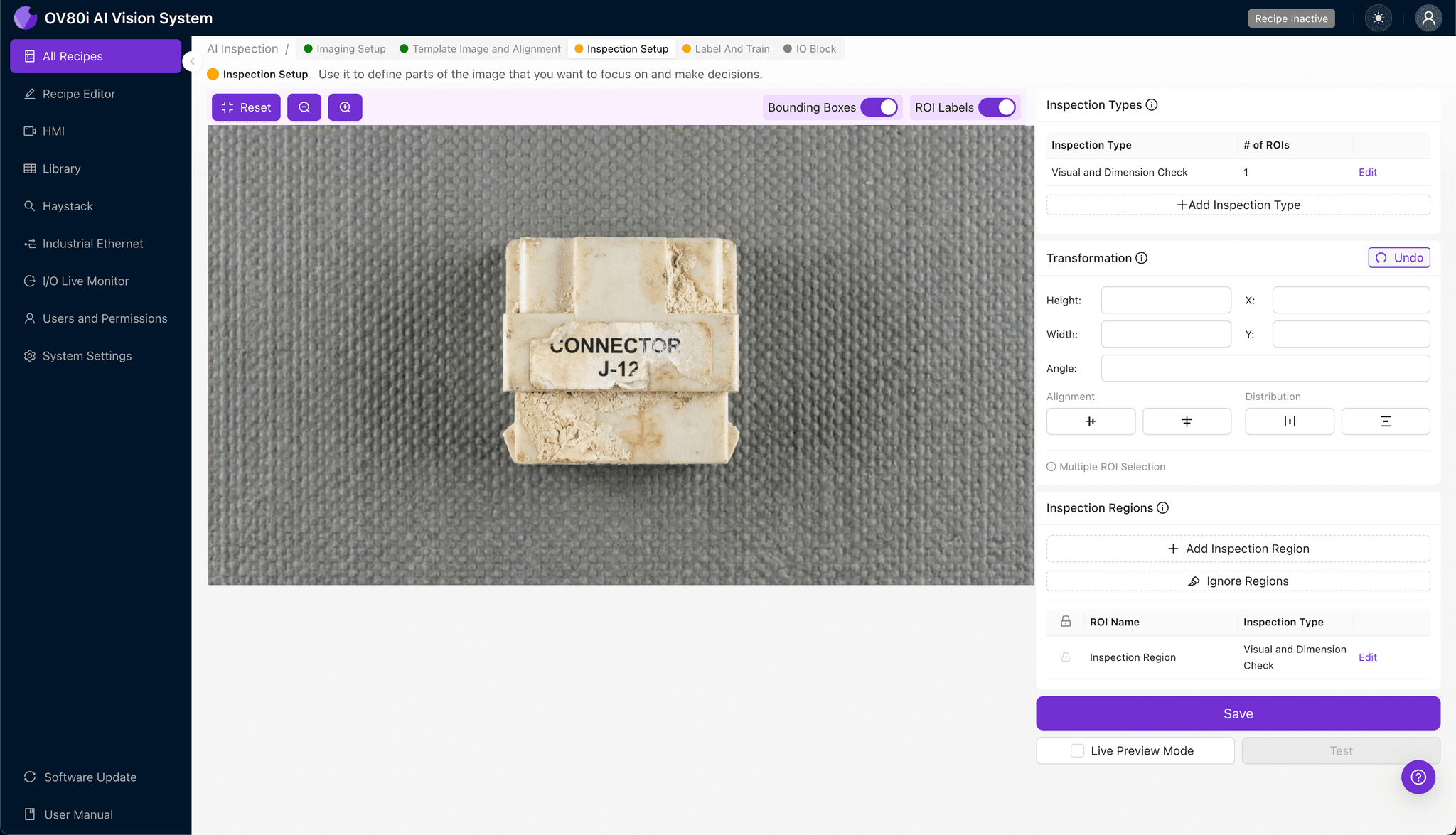
Navigate to "Inspection Setup" to define where the system should focus its analysis. Rename your "Inspection Types" to reflect specific failure modes—for example, "Surface_Chalking," "Micro_Cracking," and "Latch_Degradation."
Click "+ Add Inspection Region" for each critical area. Resize the yellow bounding box to cover high-risk zones: latch mechanisms, seal interfaces, and pin cavity walls where hydrolysis damage typically manifests first.
Click "Save" after defining all inspection regions.
Step 4: Labeling Data
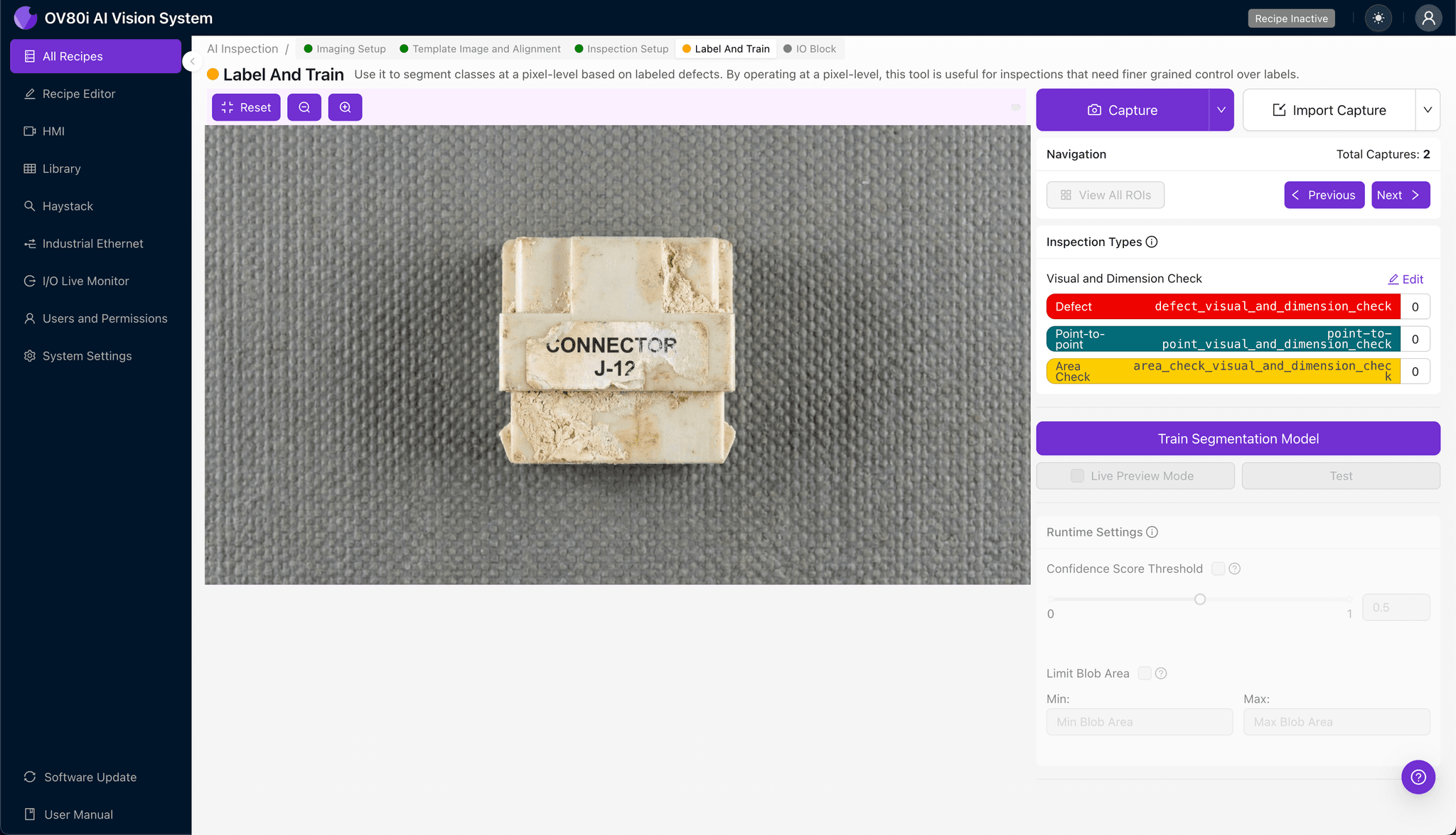
The human-in-the-loop labeling process trains the AI to distinguish acceptable parts from degraded ones. Review captured images and classify each as Good or Bad based on your quality standards.
Include representative samples across the full range of degradation severity—from barely perceptible early-stage chalking to obvious structural compromise. Incorporate known field failure examples to ensure the model catches the defect signatures that matter most.
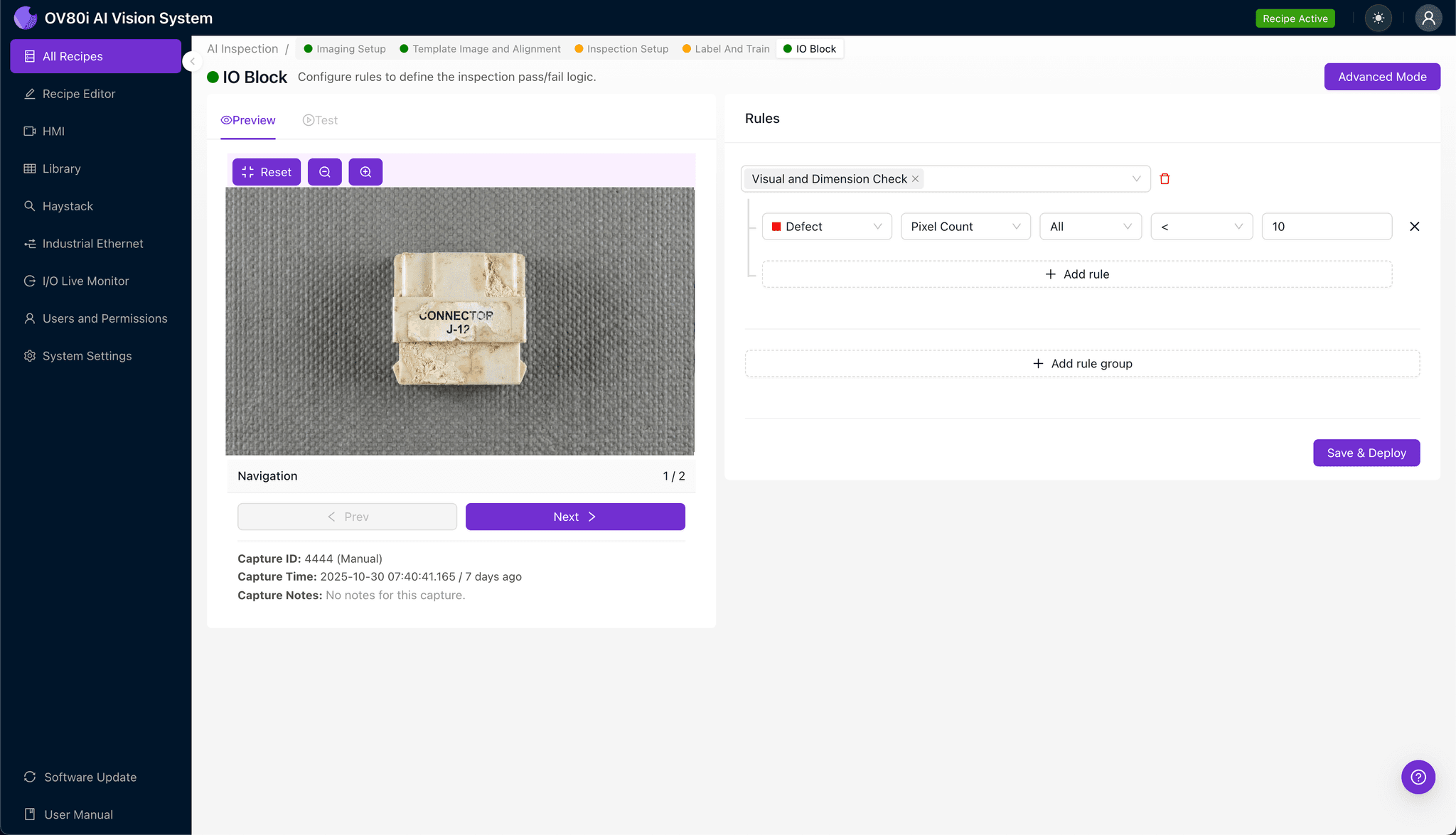
Step 5: Creating Rules
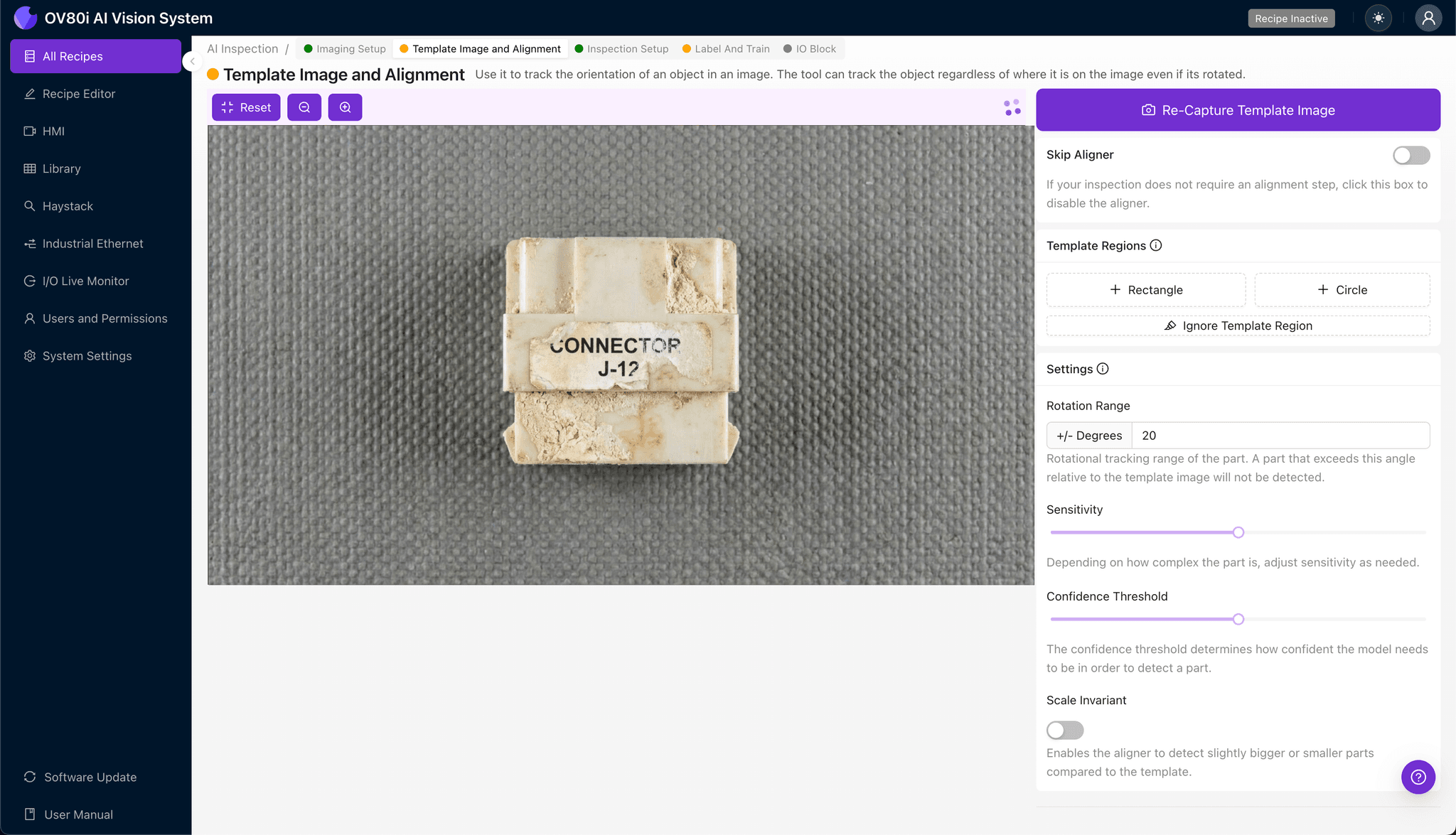
Define your pass/fail logic based on the Inspection Types you've configured. Set thresholds that align with your quality specifications—for instance, flagging any part with detected micro-cracking while allowing minor surface discoloration.
These rules gate automated acceptance on the line, ensuring only parts meeting your criteria proceed to assembly or shipment.
Key Outcomes & ROI
Implementing AI-powered inspection for hydrolysis degradation delivers measurable business impact:
- Reduced scrap and warranty costs – Catching degraded housings before assembly prevents costly rework and field failures
- Higher throughput – 100% inline inspection eliminates bottlenecks from manual sampling and batch holds
- Enhanced compliance and traceability – Every inspection decision is logged with timestamped images for audit readiness
- Process improvement insights – Trend data reveals upstream issues like material lot variations or storage condition problems
Conclusion
Hydrolysis degradation in connector housings represents exactly the type of subtle, progressive defect that AI-powered visual inspection was designed to catch. By combining high-resolution imaging with deep learning models trained on your specific failure modes, Overview.ai enables manufacturers to maintain quality standards without sacrificing speed.
Ready to eliminate hydrolysis-related escapes from your inspection process? Contact Overview.ai to schedule a demonstration with your actual connector housing samples.
Eliminate Hydrolysis Defects Today
Stop relying on manual inspection for subtle degradation. Deploy Overview.ai to catch hydrolysis damage instantly.