Sensor category guide
Vision sensors
A verdict in one housing, set up by the person who runs the line.
What a vision sensor does well, how it differs from a photoelectric sensor and a full vision system, and the honest point at which you need more than one.
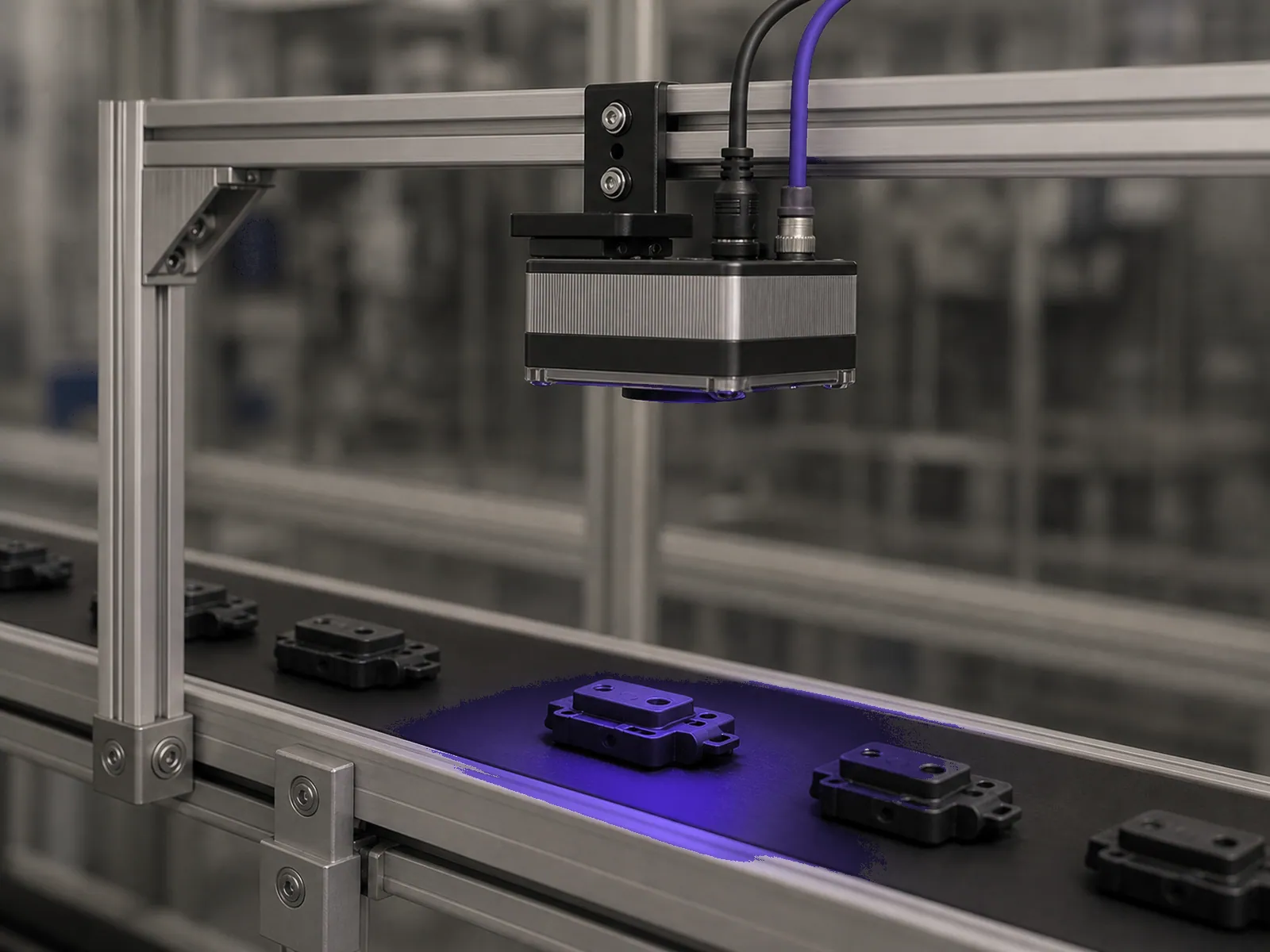
What is a vision sensor?
A vision sensor is a self-contained device that takes an image, judges it against a reference, and outputs a simple pass or fail. It sits between a photoelectric sensor, which only knows something broke a beam, and a machine vision system, which returns measurements and logged data. The defining trait is that the line owner can set it up.
The ladder
From a beam break to a measurement
Four rungs, and the useful question is which one answers your question rather than which is most capable. Buying up the ladder costs money; buying below it costs false rejects and escapes.
Photoelectric sensor
Knows something interrupted a beam. No idea what it was. Cheap, fast, and the right answer when presence is genuinely all you need.
“Something is there”
Vision sensor
Takes an image and judges it against a reference, outputting pass or fail. Set up by the line owner, not an integrator.
“The right thing is there, the right way round”
AI vision sensor
Same form factor, but learns the acceptable range from examples instead of matching a template, so natural part variation stops causing false rejects.
“It looks the way a good one should”
Vision system
Returns measurements, coordinates, classifications, and logged images. Several views and controlled lighting when the job needs them.
“The gap measures 2.03 mm, and here is the picture”
Good fit
What a vision sensor handles well
Presence and absence
Is the component, label, cap, or fastener there. The classic job and still the most common.
Correct variant
Telling two similar parts apart so the wrong one does not get built in. Needs enough resolution to see whatever differs.
Orientation
Right way up, right way round, correctly seated. Depends on there being a feature that actually differs between right and wrong.
Simple counting
How many features, pins, holes, or items are present, when they are well separated and consistently presented.
Label and print checks
Label present, placed within tolerance, and legible. Reading the code itself is a related but separate job.
Straightforward defects
Visible damage on a consistently presented part, where the defect is large relative to what the camera can resolve.
The honest part
Where a vision sensor stops being enough
Four situations. If you are in one of them, a sensor will disappoint you in production even if it looks fine during commissioning.
You need a number, not a verdict
A measurement in millimetres against a stated tolerance is a different output. Ask what the line has to consume, not what the device can see.
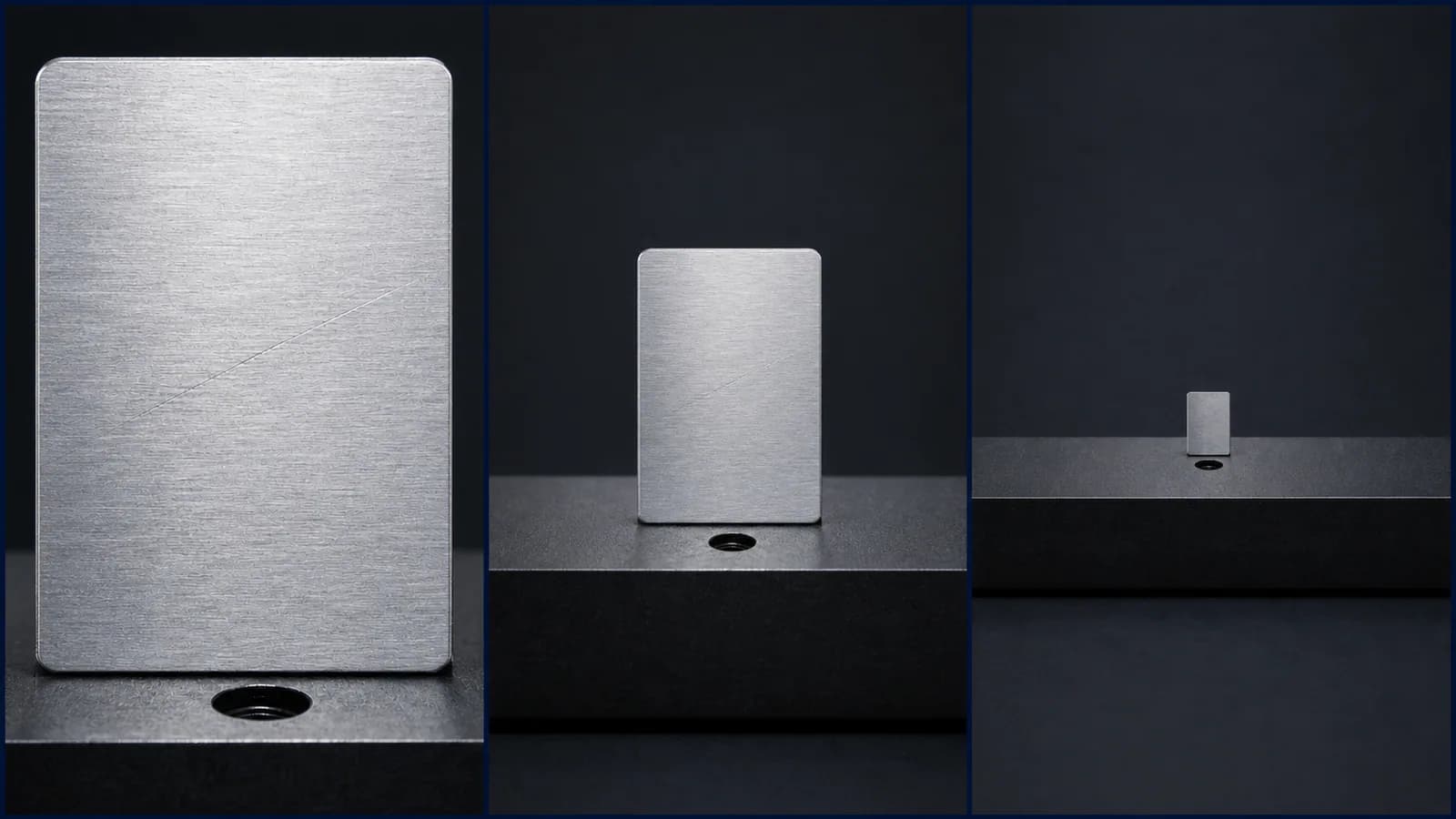
The defect is too small for one view
If the smallest defect cannot get three to five pixels across it in a field of view wide enough to see the part, no single device solves it. That is arithmetic, not a product limitation.
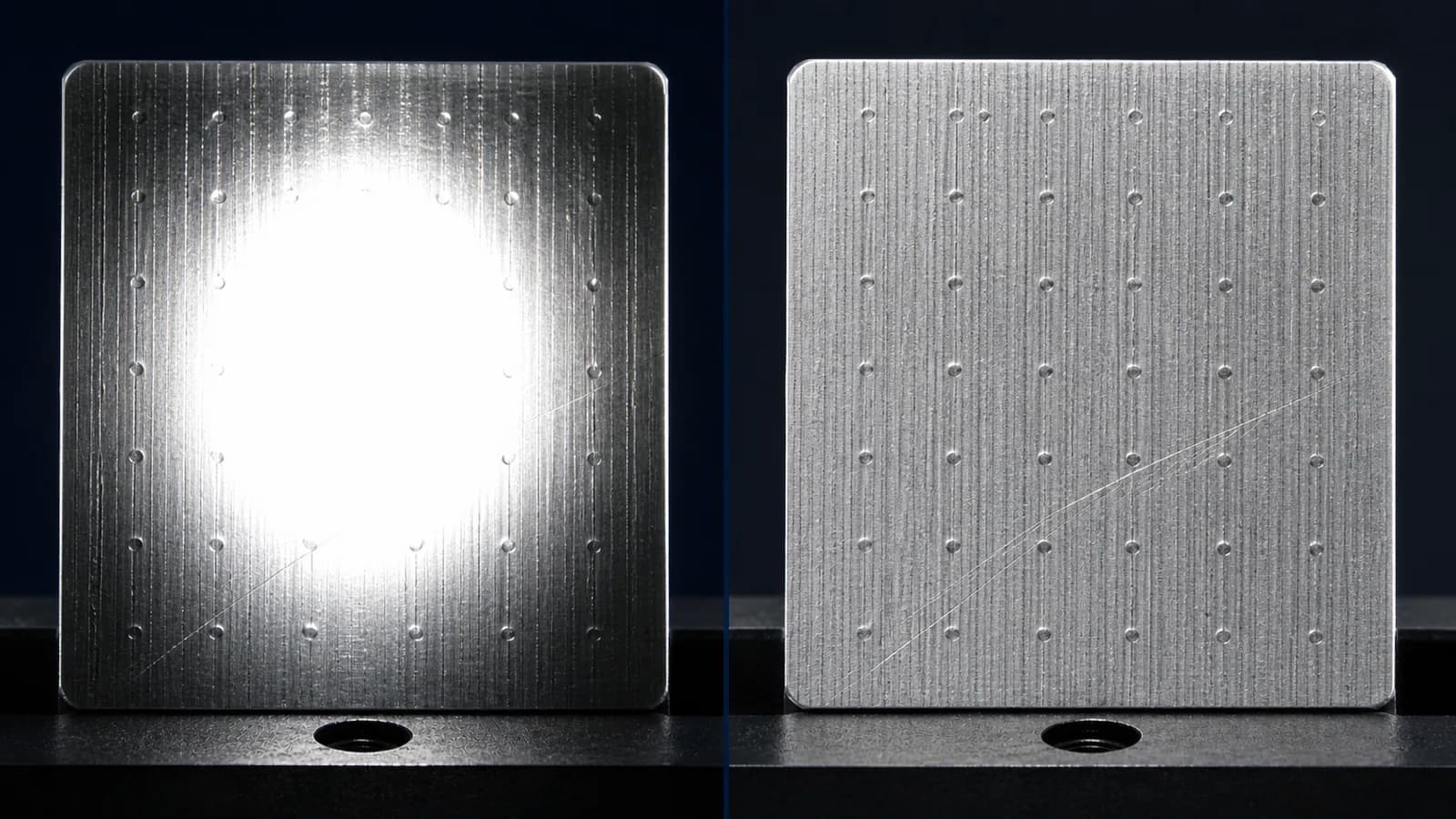
The surface fights you
Specular, curved, or highly variable surfaces often need controlled or multi-directional lighting to make the defect visible at all. A fixed integrated light may not be able to.
Features face different ways
Anything needing views from more than one direction needs more than one device, however capable each one is.
The feasibility check works the arithmetic for your part and tells you which of these you are in, before anyone quotes you hardware.














Manufacturers running Overview AI in production
Manufacturers running Overview AI in production
FAQ
Frequently asked questions
What is a vision sensor?
A vision sensor is a self-contained device that takes an image, judges it against a configured or trained reference, and outputs a simple result, typically pass or fail on a discrete output. It sits between a photoelectric sensor, which only knows whether something interrupted a beam, and a full vision system, which returns measurements and rich data. The defining trait is that everything is in one housing and the setup is meant to be done by the person who runs the line, not a vision engineer.
What is the difference between a vision sensor and a photoelectric sensor?
A photoelectric sensor detects that something is there. A vision sensor detects what is there. A photoelectric sensor works from a single beam, so it can confirm a part broke the beam but not whether the part is the right one, the right way round, or undamaged. A vision sensor looks at an image, so it can distinguish variants, check orientation, count features, and spot a defect. When a photoelectric sensor keeps passing the wrong part, that is the signal you have outgrown it.
What is the difference between a vision sensor and a vision system?
Mostly depth of output and how much you can shape it. A vision sensor gives a verdict from a configuration you set up in a guided interface. A vision system gives measurements, coordinates, classifications, and images you can log, and it lets you build a more involved sequence of steps. In practice the line between them has blurred, because modern AI vision sensors run trained models on board and handle work that used to need a PC-based system. The useful question is not which label applies but whether the device outputs what your line actually needs to consume.
What jobs is a vision sensor good at?
Presence and absence, correct variant, orientation, simple counting, label and cap checks, and straightforward surface defects on a consistently presented part. The common thread is a yes-or-no answer about one feature or a small set of them, on a part that arrives in roughly the same place each time. These are also the jobs where the payback is quickest, because the setup is short and the failure being prevented is usually obvious and expensive.
When do you need more than a vision sensor?
Four situations. When you need a real measurement in millimetres against a tolerance rather than a verdict. When the smallest defect is small enough relative to the part that one field of view cannot give it enough pixels. When the surface is specular or highly variable and needs controlled or multi-directional lighting to make the defect visible at all. And when you need to inspect features that face different directions, which needs more than one view no matter how capable the single device is.
Can a vision sensor handle parts that vary?
A traditional one struggles, because it compares against a fixed reference and natural variation in colour, texture, or position reads as a difference. This is the single most common reason a vision sensor gets installed, works during commissioning, and then produces false rejects in production. An AI vision sensor is a different proposition, because it learns the acceptable range from example images instead of matching a template, which is what makes variable surfaces and cosmetic judgments workable on a device this simple.
Related
Industrial Cameras
The camera types, interfaces, and specifications that decide whether an inspection works.
Read more →Machine Vision Systems
The full station, its parts, and how to choose one.
Read more →Machine Vision Applications
The inspection tasks these devices run in production, by part and by defect.
Read more →Is a sensor enough for your part?
Describe the part and the defect. You get an honest answer on whether one device covers it, and the optics it would need.