Pack integrity
Packaging inspection
The last chance to catch a defect before it becomes a customer complaint.
Seals, closures, fill, count, and damage, checked on every pack at line speed. Packaging inspection is the cheapest place to stop a fault and the most expensive place to miss one.
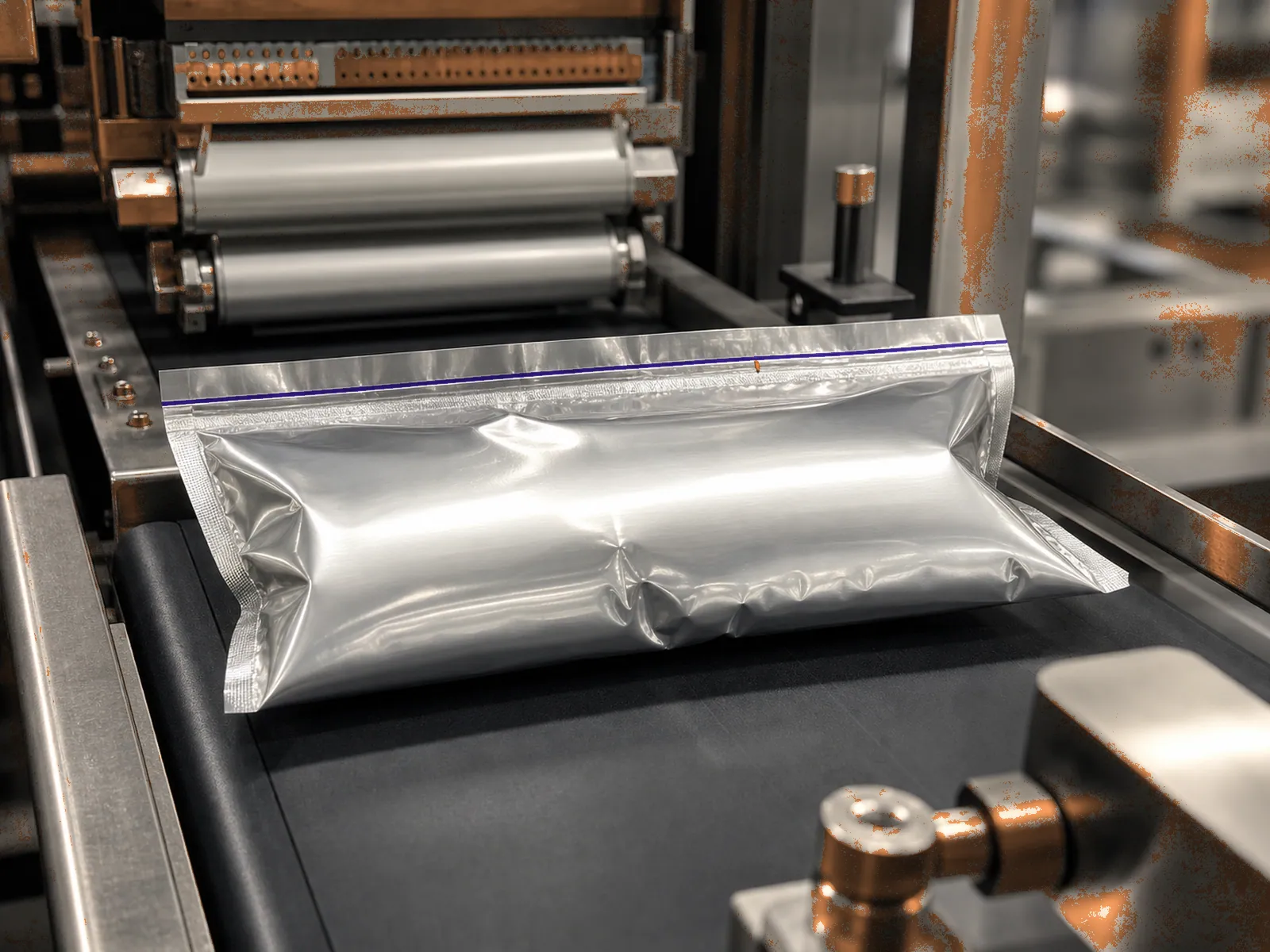
What is packaging inspection?
Packaging inspection is verifying that a pack is correctly sealed, closed, filled, counted, and undamaged before it ships. It is the last automated check between your process and your customer, which makes it the point where a missed defect stops being scrap and becomes a complaint.
What it checks
What gets checked
Seal integrity
Is the seal continuous, the right width, and free of contamination in the seal area. A product trapped in the seal is the classic cause of a leak that passes visual inspection by a person.
Closure and cap
Is the cap present, seated, at the right height, and not cross-threaded. Cap height is often the most reliable single indicator that a closure did not seat properly.
Fill level
Is the content within tolerance. Underfill is a compliance and complaint issue, overfill is money given away on every single unit.
Pack count
Are the right number of items in the pack or tray. Simple when items are well separated, harder when they overlap or nest.
Damage and deformation
Crushed corners, dents, torn film, and burst packs, which matter both for the product inside and for how the pack presents on a shelf.
Tamper evidence
Is the band, seal, or indicator present and intact, which is frequently a regulatory requirement, not a quality preference.
The hard parts
What makes packaging inspection awkward
The individual checks are mostly well understood. The difficulty is the environment they run in.
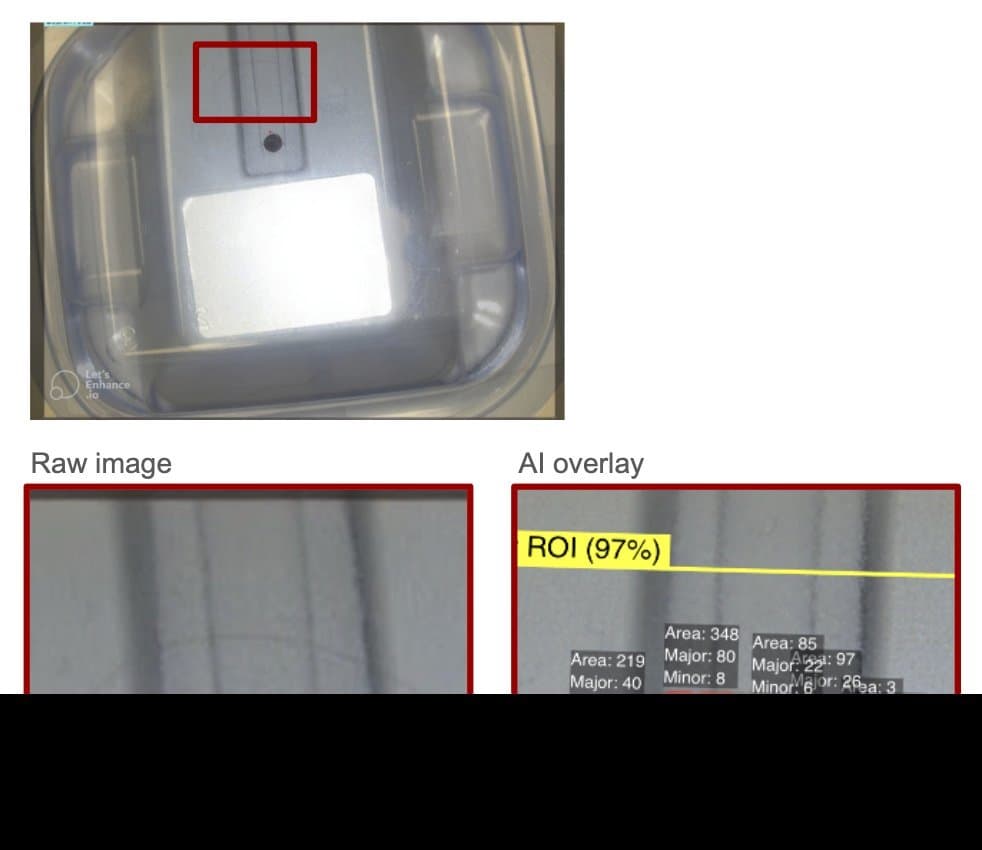
Speed leaves no margin
Packaging lines are among the fastest in a plant. Exposure has to be short enough that a moving pack does not smear, which means bright, well-placed light instead of a longer shutter, and the decision has to complete before the reject point passes.
Film reflects and moves
Clear and metallised film is specular and it flexes, so highlights move between packs even when nothing is wrong. This is where a fixed threshold produces false rejects and a trained model that has seen the normal range does not.
Natural product variation
Food and consumer products vary from unit to unit while being entirely acceptable. Any criterion tight enough to catch a real defect will also flag that variation unless the accepted range was learned rather than described.
Washdown and hygiene constrain the station
Where a camera can physically go is limited by cleaning regimes and hygiene requirements, which sometimes rules out the view you would have chosen. That is a mounting and ingress-rating problem, and it is better solved at design time.









Manufacturers running Overview AI in production
Manufacturers running Overview AI in production
FAQ
Frequently asked questions
What does packaging inspection cover?
Seal integrity, closure and cap condition, fill level, pack count, physical damage, and tamper evidence, plus label and code checks that usually run at the same station. The common thread is that these are the last automated checks before the pack leaves the plant, so anything missed here reaches a customer instead of a scrap bin. That is what makes the station worth its cost even when each individual check looks simple.
Can vision detect a leaking seal?
It detects the visual causes rather than the leak itself. Contamination trapped in the seal area, a seal that is too narrow or discontinuous, a wrinkle running through the seal, and misalignment all show up in an image and all predict a leak. That catches the process drift that produces leakers, usually before a leak actually occurs. It is not a substitute for leak testing where that is required, but it inspects every pack, not a sample.
How does it cope with clear and metallised film?
With diffuse lighting and a model that has seen the variation. Film is specular and flexible, so reflections shift between packs even when both are good, and a fixed threshold reads those shifts as defects. Diffuse illumination reduces the highlights, and training on examples that span the normal range of reflection teaches the system which variation is acceptable. This is the single most common source of false rejects on packaging lines.
Will it slow the line down?
No. Inspection happens in the time the pack takes to cross the field of view, and a decision at the edge completes in under 10 ms, well inside the window before the reject point. The real constraints are optical rather than computational: the exposure has to be short enough to freeze the motion, which means enough light, and the trigger has to be consistent so the pack is in the same part of the frame every time.
Can one station check the pack and the label together?
Often yes, and it is usually worth doing. If the features are on the same face and a single field of view still leaves enough pixels on the smallest thing you need to see, one camera covers both. When the label is on a different face from the seal, or the code needs more resolution than a whole-pack view allows, that becomes a second view. Working that out from the smallest feature is what decides it.
See it on your packs
Describe the part and what you need to catch. You get the optics and an honest answer on whether it is solvable, before anyone talks to you about hardware.