Detecting Fretting Corrosion on Contact Interfaces: A Machine Vision Walkthrough
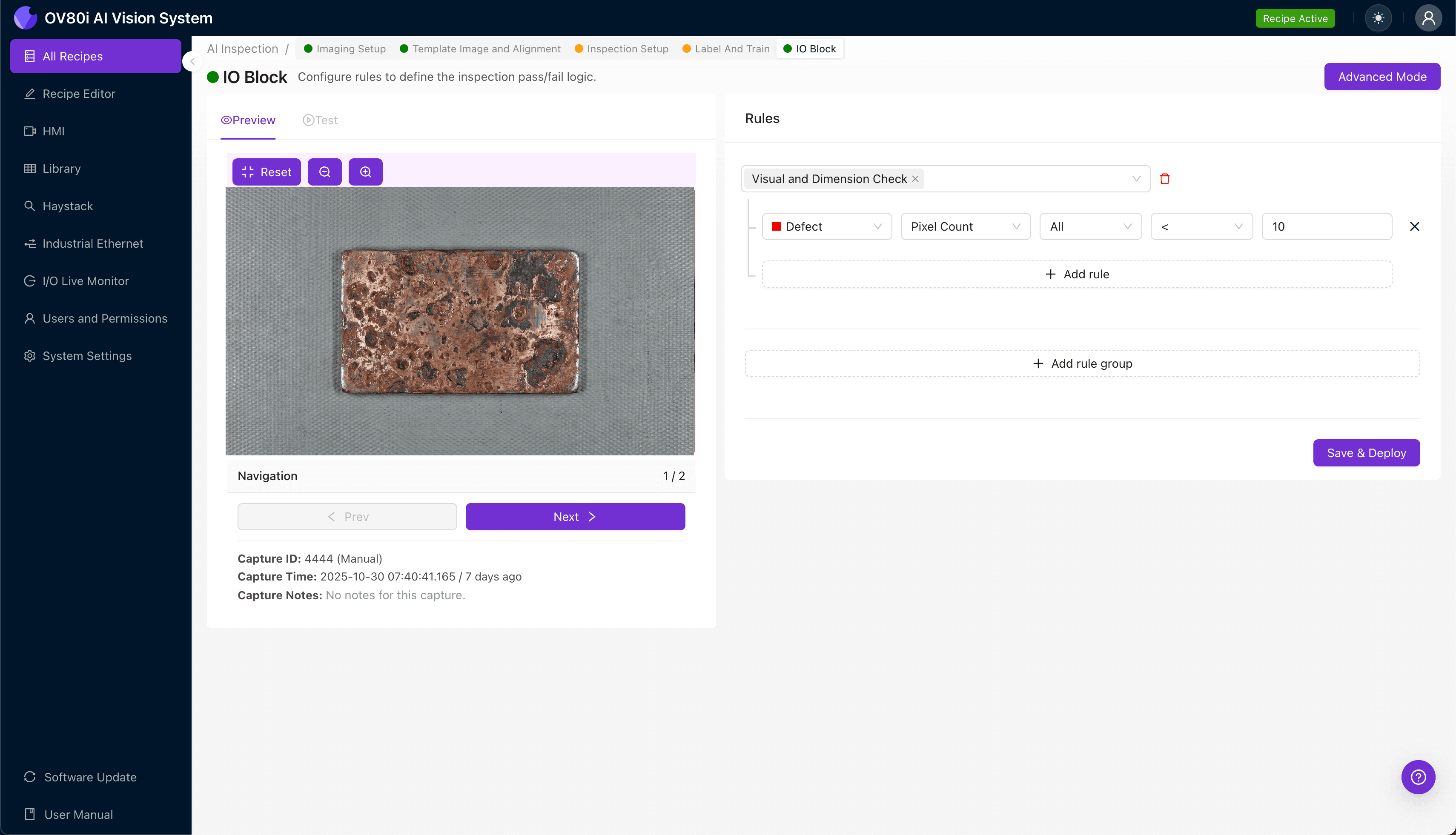
"Fretting corrosion on electrical contact interfaces causes insidious field failures that human inspectors often miss. Machine vision with deep learning detects micro-scale oxide buildup and plating wear consistently at production speed, catching degradation before it reaches functional failure thresholds."
The Problem: Why Fretting Corrosion Defects Slip Through Manual Inspection
Fretting corrosion on electrical contact interfaces represents one of the most insidious failure modes in connector manufacturing. This micro-scale oxidation occurs when mating surfaces experience tiny oscillating movements, generating debris that degrades electrical performance over time.
Common Defects Found on Contact Interfaces with Fretting Corrosion:
- Oxide debris accumulation – reddish-brown or black particulate buildup at contact mating zones
- Surface pitting – microscopic craters where base metal has been removed through adhesive wear
- Plating wear-through – exposed substrate material where gold, tin, or nickel plating has eroded
- Contact discoloration – color changes indicating oxidation or thermal degradation from increased resistance
- Micro-cracks at wear tracks – fatigue fractures radiating from repetitive motion zones
- Embedded particulate contamination – foreign debris trapped within the corroded interface
Human inspectors struggle to maintain detection consistency across shifts, especially when defects measure just 10-50 microns. Inspector fatigue compounds the problem—studies show visual acuity drops significantly after just 20-30 minutes of microscopic inspection work.
The Solution: Machine Vision and Deep Learning
Machine vision systems eliminate the variability inherent in human inspection by applying identical detection criteria to every single part. Deep learning models excel at identifying the subtle texture and color variations that characterize early-stage fretting corrosion—often catching degradation before it reaches functional failure thresholds.
Overview.ai's approach delivers consistent, objective inspection at full line speed without sampling compromises. The OV80i system learns your specific pass/fail criteria, then applies that judgment uniformly across 100% of production volume, day and night.
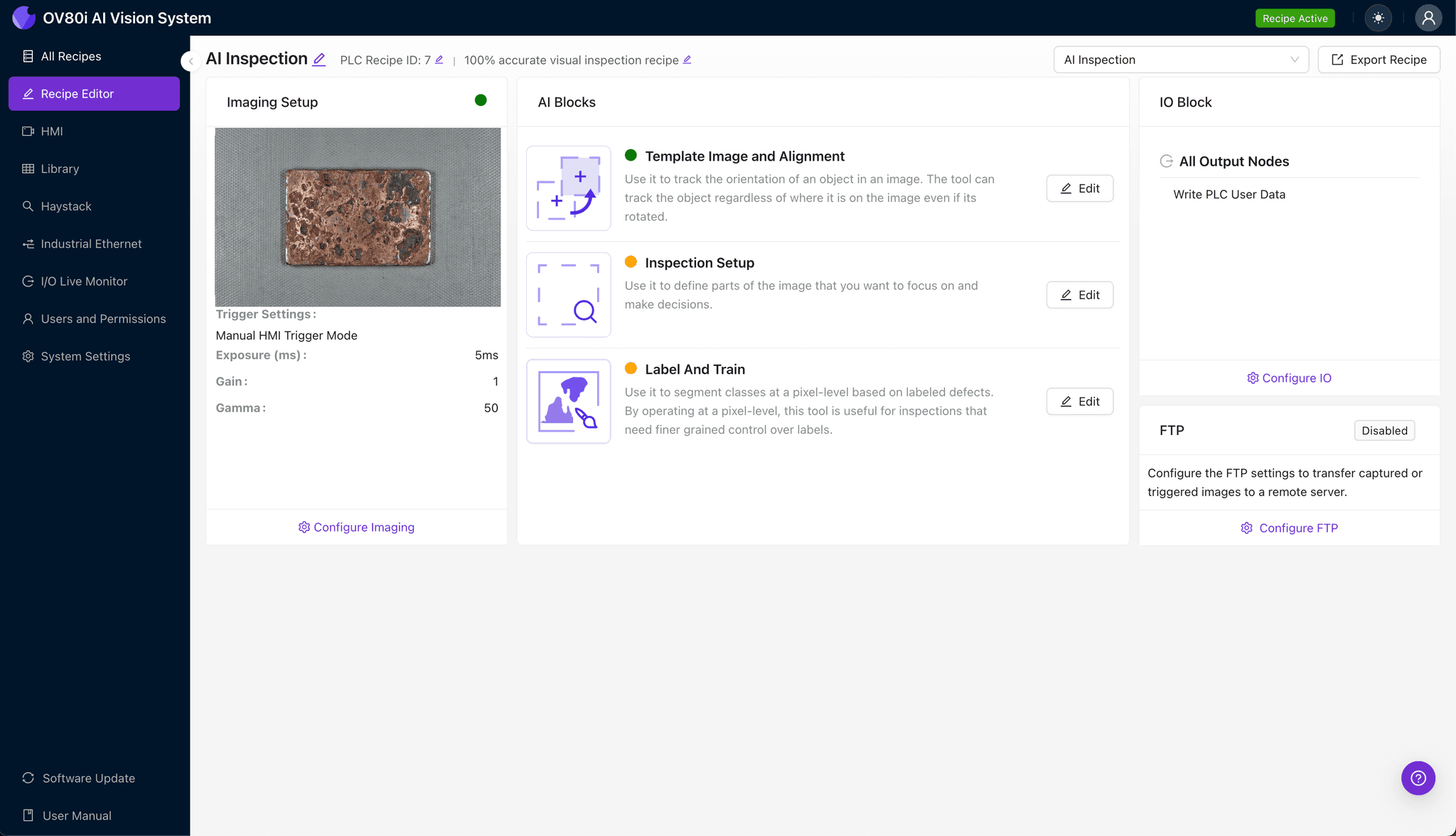
Step 1: Imaging Setup
Position the contact interface with fretting corrosion under the OV80i camera, ensuring the mating surfaces and wear zones face the lens directly. Proper lighting angle is critical—angled illumination often reveals surface texture defects that flat lighting misses.
Click "Configure Imaging" to access the camera settings panel. Adjust exposure to capture oxide color variations without washout, and fine-tune gain to maximize contrast on metallic surfaces.
Click "Save" once the contact pins and corrosion patterns appear crisp and well-defined in the preview window.
Step 2: Image Alignment
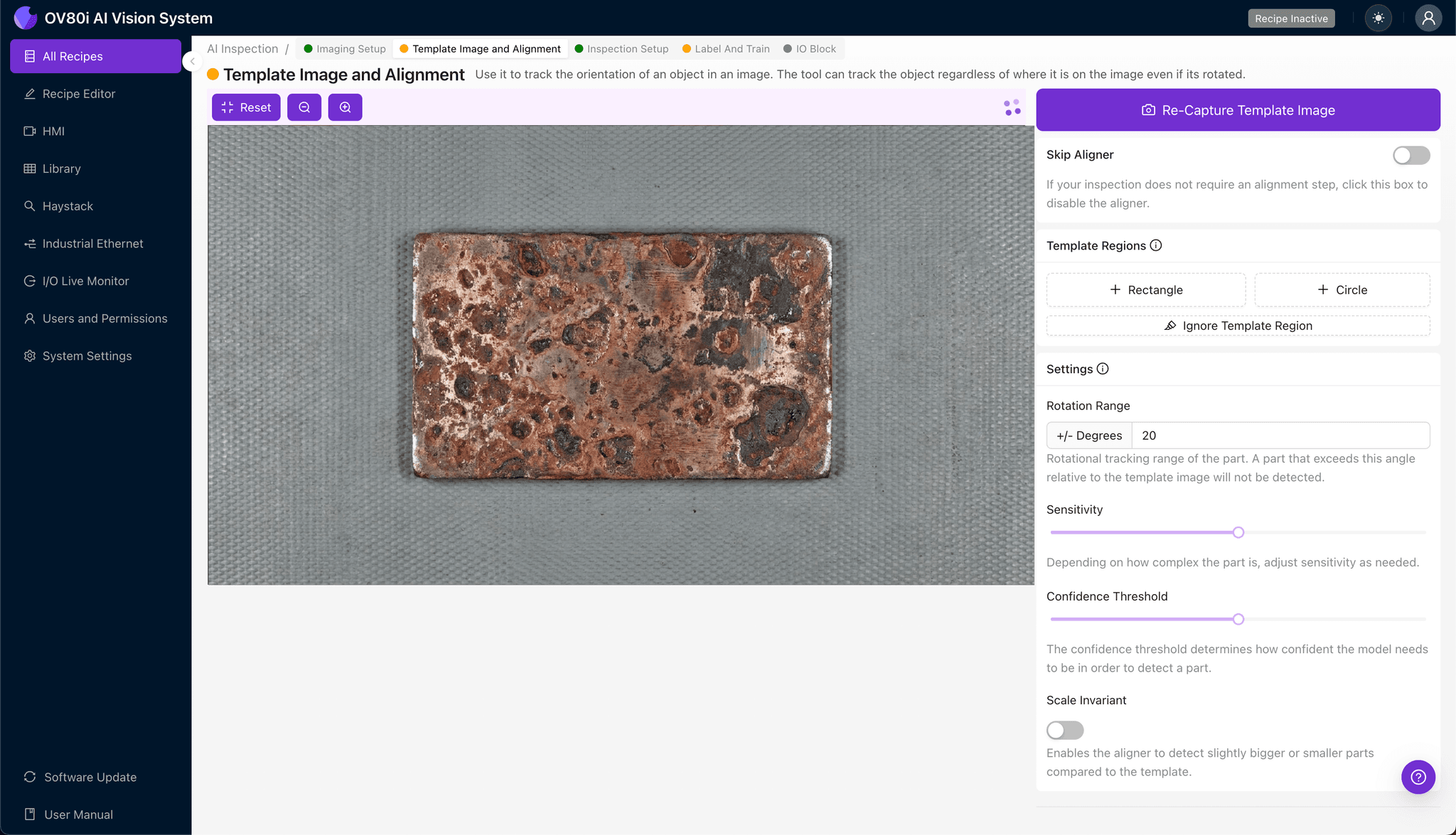
Navigate to the "Template Image" tab and capture a reference image of a properly positioned contact interface. This template ensures the system can locate and align each incoming part regardless of minor placement variations.
Click "+ Rectangle" to draw an alignment region around the connector's main body or housing outline. Set the "Rotation Range" to 20 degrees to accommodate typical fixture tolerance and part orientation variability on your line.
Step 3: Inspection Region Selection
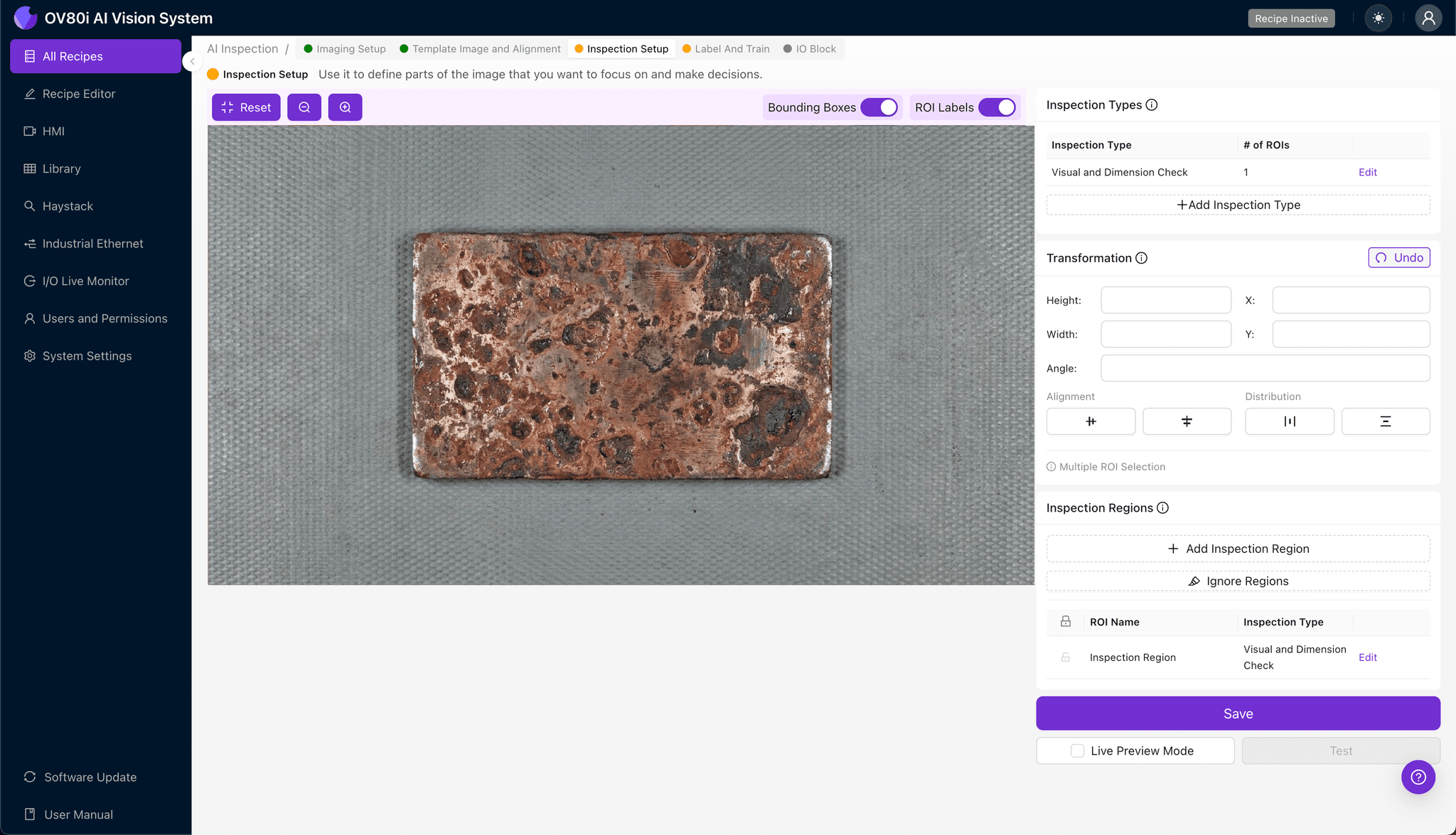
Navigate to "Inspection Setup" to define exactly where the system should look for defects. Rename your "Inspection Types" to match your quality documentation—for example, "Contact_Surface_Corrosion" or "Plating_Wear."
Click "+ Add Inspection Region" to create a new detection zone. Resize the yellow bounding box to cover the critical contact mating surfaces where fretting occurs—typically the pin tips and engagement zones.
Click "Save" after positioning regions over all high-risk areas identified in your FMEA or historical reject data.
Step 4: Labeling Data
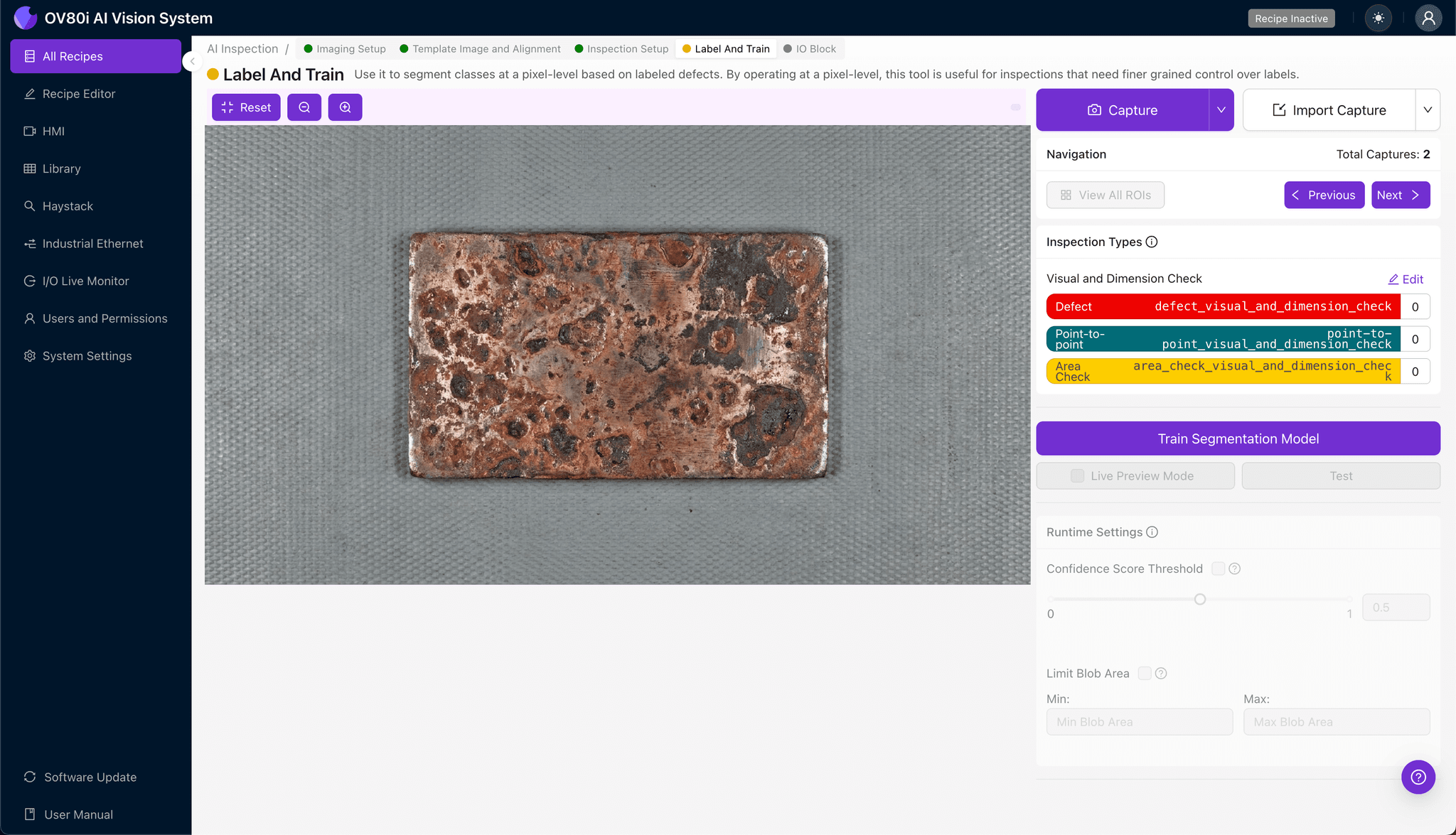
The human-in-the-loop labeling process teaches the deep learning model what your quality team considers acceptable versus rejectable. This step transfers decades of tribal knowledge into a scalable, consistent inspection algorithm.
Label images as Good (acceptable contact surfaces) versus Bad (corrosion present, plating compromised, or debris accumulation). Include representative samples across your full range of known failure modes—light corrosion, heavy oxide buildup, and partial wear-through conditions.
Aim for at least 50-100 labeled examples of each defect type to build robust detection accuracy.
Step 5: Creating Rules
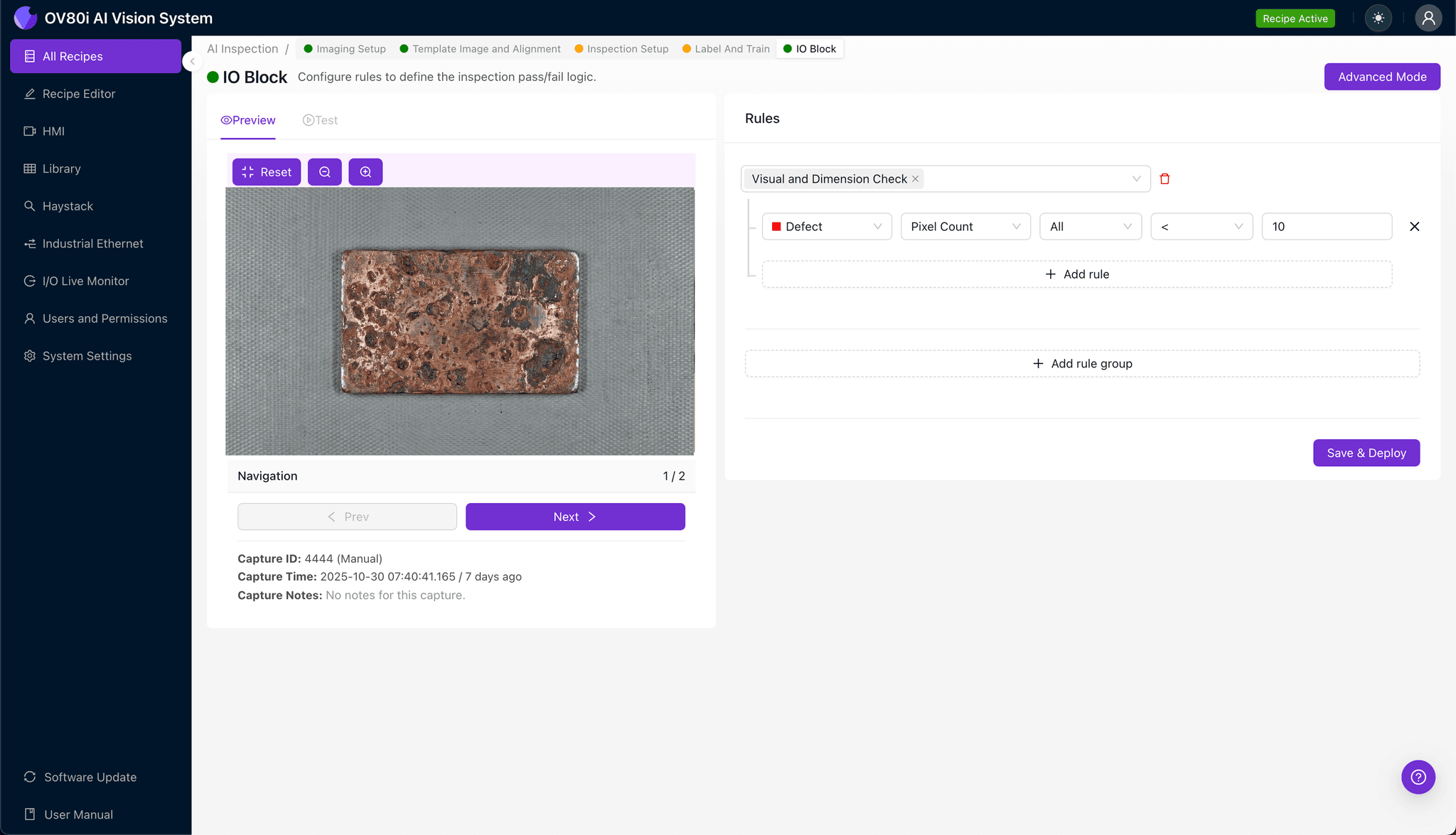
Configure your pass/fail logic based on the Inspection Types you defined earlier. For fretting corrosion, you might set rules like: "Reject if Contact_Surface_Corrosion confidence exceeds 85%" or "Fail any part with Plating_Wear detected."
These rules gate automated acceptance on the line, diverting suspect parts to quarantine bins for secondary review. Tightening or loosening thresholds lets you balance escape risk against false reject rates as your model improves.
Key Outcomes & ROI
Implementing automated fretting corrosion detection with Overview.ai delivers measurable business impact:
- Reduced scrap and rework costs – catch corrosion defects before connectors ship into assemblies, avoiding expensive teardowns and warranty claims
- Higher throughput – inspect 100% of parts at line speed without creating inspection bottlenecks or sampling gaps
- Compliance and traceability – automatically log timestamped images and pass/fail decisions for every inspected part, supporting ISO 9001 and automotive IATF 16949 requirements
- Process improvement insights – trend data reveals upstream causes of fretting, such as fixture wear, plating bath degradation, or packaging vibration issues
Conclusion
Fretting corrosion on contact interfaces causes field failures that damage customer relationships and brand reputation. With Overview.ai's machine vision platform, manufacturers can detect these subtle degradation patterns consistently, objectively, and at production speed—turning a historically difficult inspection challenge into a solved problem.
Eliminate Fretting Corrosion Escapes Today
Stop relying on manual inspection for micro-scale corrosion defects. Deploy Overview.ai to catch fretting damage instantly.