
How to Detect Fatigue Fractures in EMI Springs Using AI-Powered Visual Inspection
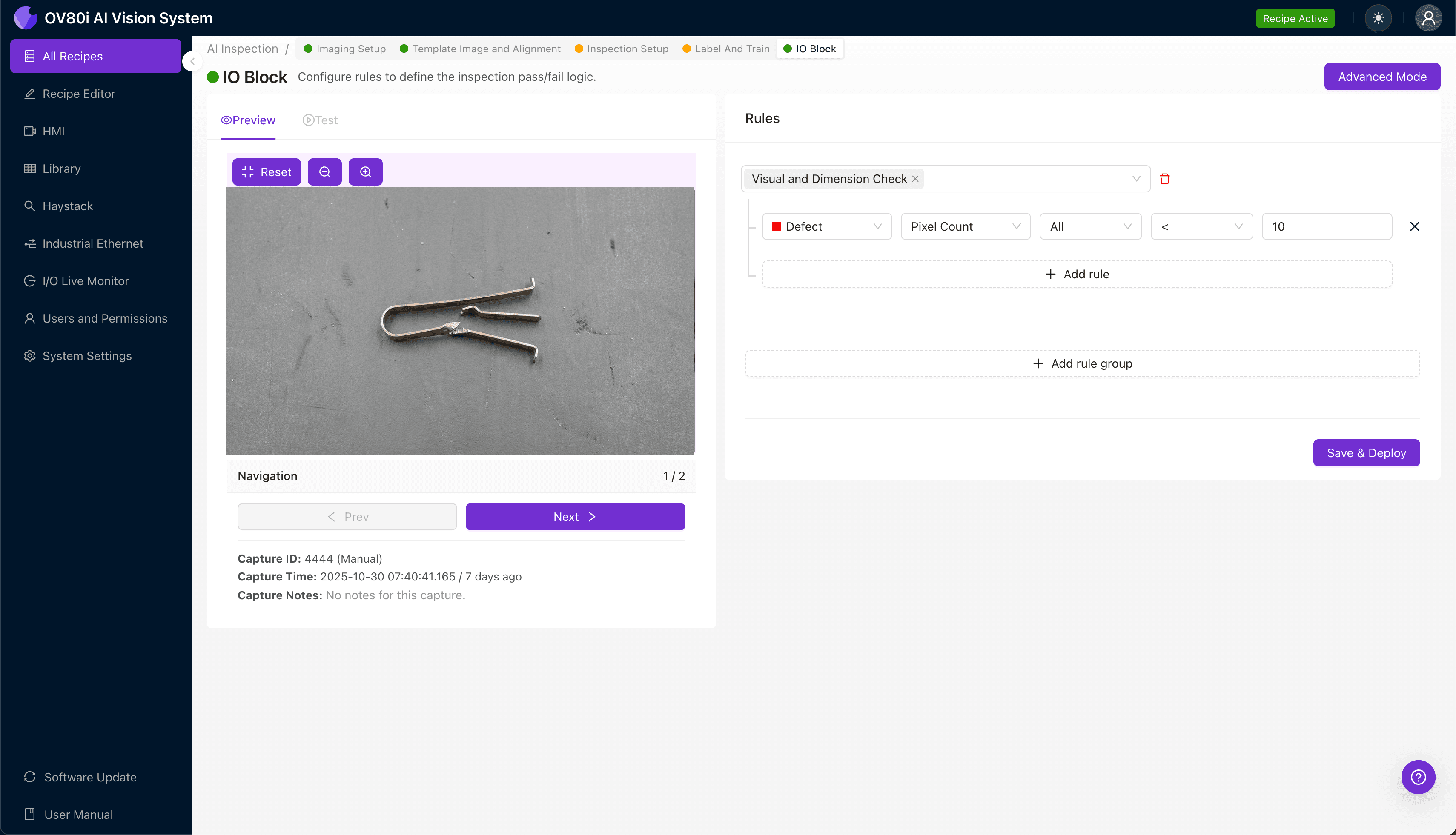
"EMI spring fatigue fractures cause intermittent signal interference and complete shielding failure, yet their microscopic nature makes them nearly impossible to detect consistently with manual inspection. Overview.ai's deep learning-powered vision system catches hairline cracks and fracture propagation at full line speed, eliminating quality escapes before they reach downstream assembly."
The Problem: Why EMI Spring Fatigue Fractures Slip Through Traditional QC
EMI (Electromagnetic Interference) shielding springs are critical components in electronics manufacturing, providing consistent ground contact and RF shielding in connectors, enclosures, and PCB assemblies. When these springs develop fatigue fractures, the consequences range from intermittent signal interference to complete shielding failure in the field.
Common Defects Found in Fractured EMI Springs:
- Hairline crack propagation — Microscopic fractures originating at stress concentration points along the spring finger base
- Work-hardened brittle zones — Material embrittlement from repeated compression cycles causing sudden fracture initiation
- Surface micro-pitting — Corrosion-assisted fatigue damage that accelerates crack growth at plating boundaries
- Deformed contact fingers — Permanent set or bent fingers indicating material yield preceding fracture
- Incomplete fracture separation — Partial breaks where fractured sections remain loosely connected
- Base attachment failures — Fractures at solder or weld joints where springs mount to carrier strips
Manual inspection of EMI springs presents significant challenges due to the components' small size (often under 5mm) and the subtle nature of early-stage fatigue cracks. Human inspectors experience rapid eye fatigue when examining hundreds of springs per hour, leading to inconsistent detection rates—especially during late shifts when fracture escape rates can increase by 40% or more.
The Solution: Machine Vision and Deep Learning for Consistent Detection
Machine vision systems equipped with deep learning models excel at detecting the subtle visual signatures of fatigue fractures that human inspectors routinely miss. Unlike rule-based vision systems that require explicit programming for every defect variation, AI-powered inspection learns to recognize the complex patterns of material failure across different lighting conditions and spring geometries.
Overview.ai's approach delivers consistent, objective inspection at full line speed—examining every single EMI spring without the sampling limitations of manual QC. The system maintains the same detection accuracy on part number 10,000 as it does on part number 1, eliminating the human factors that cause quality escapes.
Step 1: Imaging Setup
Position the EMI spring under the OV80i camera system, ensuring the spring fingers and base attachment points are clearly visible in the field of view. Proper lighting angle is critical—side lighting at 30-45 degrees typically reveals surface cracks and fracture lines most effectively.
Click "Configure Imaging" to access the Camera Settings panel. Adjust exposure time to capture crisp detail without motion blur, and fine-tune gain to maximize contrast along the spring edges where fractures typically originate.
Click "Save" to lock in your imaging parameters.
Step 2: Image Alignment
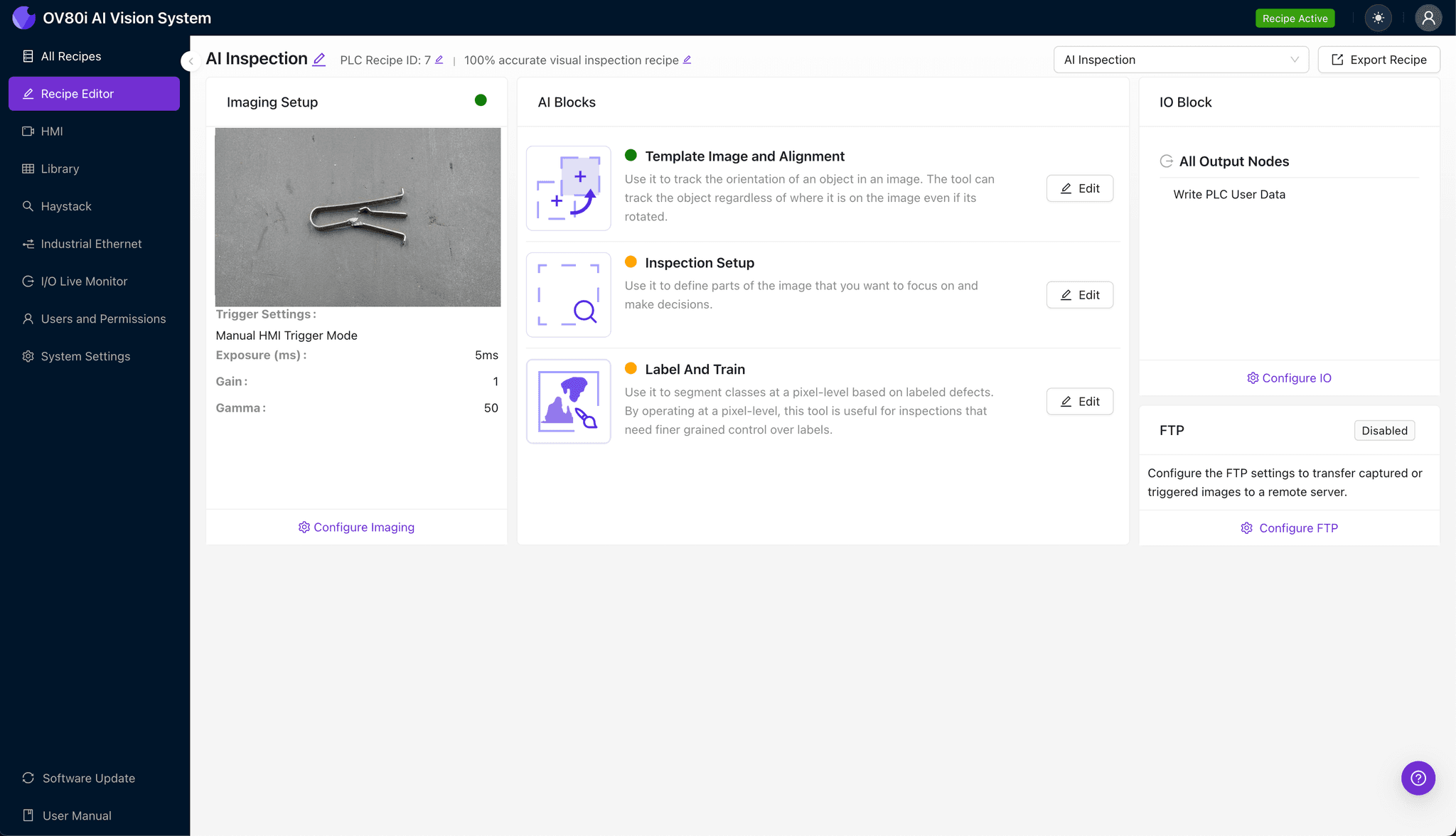
Navigate to the "Template Image" tab and capture a reference image of a known-good EMI spring in its standard orientation. This template enables the system to locate and align each incoming part regardless of minor positional variation on the conveyor.
Click "+ Rectangle" to draw a region around the main spring body, encompassing all finger elements and the base mounting area. Set the "Rotation Range" to 20 degrees to accommodate typical part presentation variance without triggering false alignment failures.
Step 3: Inspection Region Selection
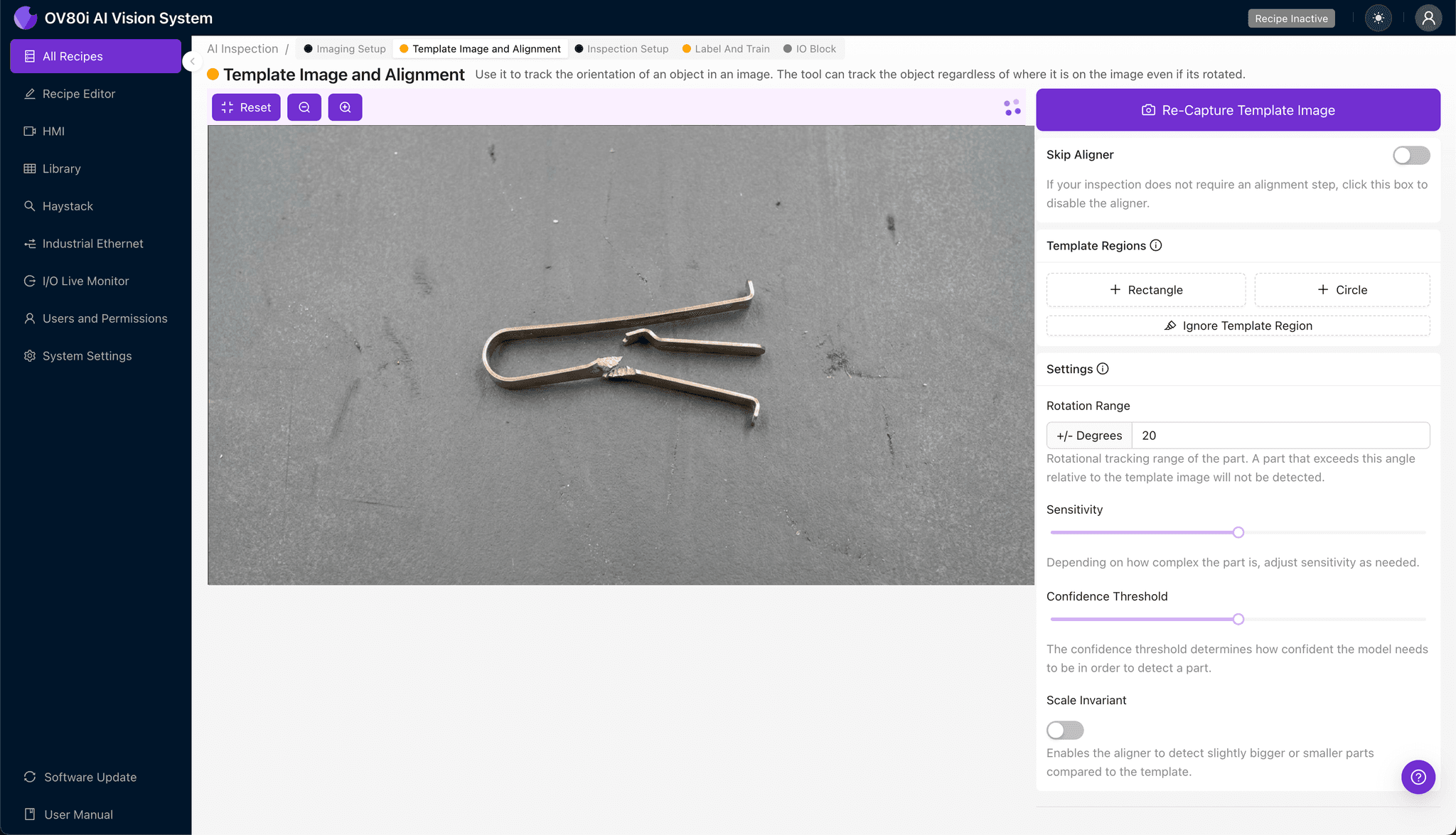
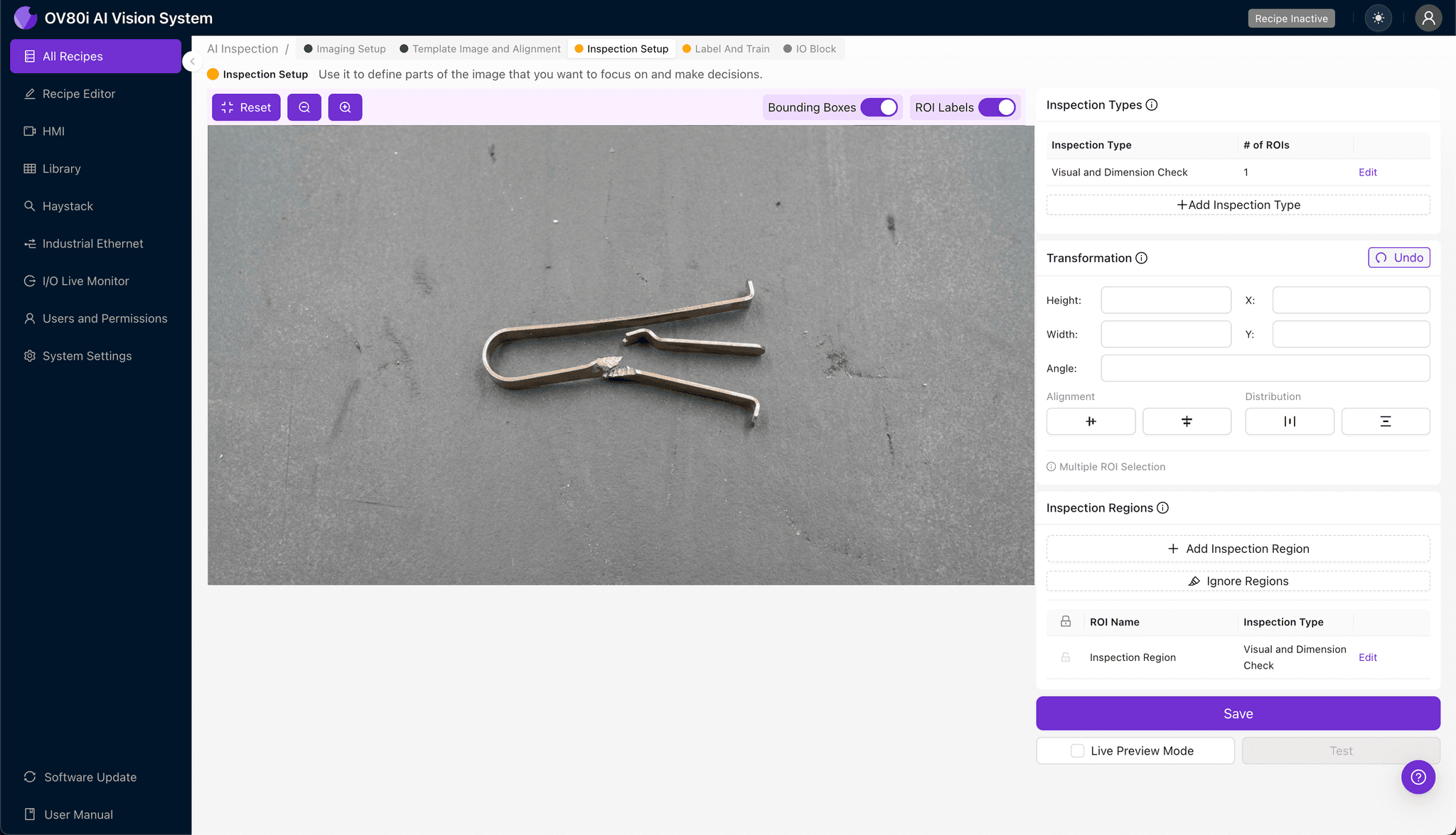
Navigate to "Inspection Setup" to define where the AI should focus its analysis. Rename your "Inspection Types" with descriptive labels such as "Finger_Fracture_Zone" and "Base_Attachment_Check" for clear traceability.
Click "+ Add Inspection Region" to create targeted analysis zones. Resize the yellow bounding box over critical defect areas—particularly the finger roots, bend radii, and attachment points where fatigue fractures most commonly initiate.
Click "Save" to confirm your inspection regions.
Step 4: Labeling Data
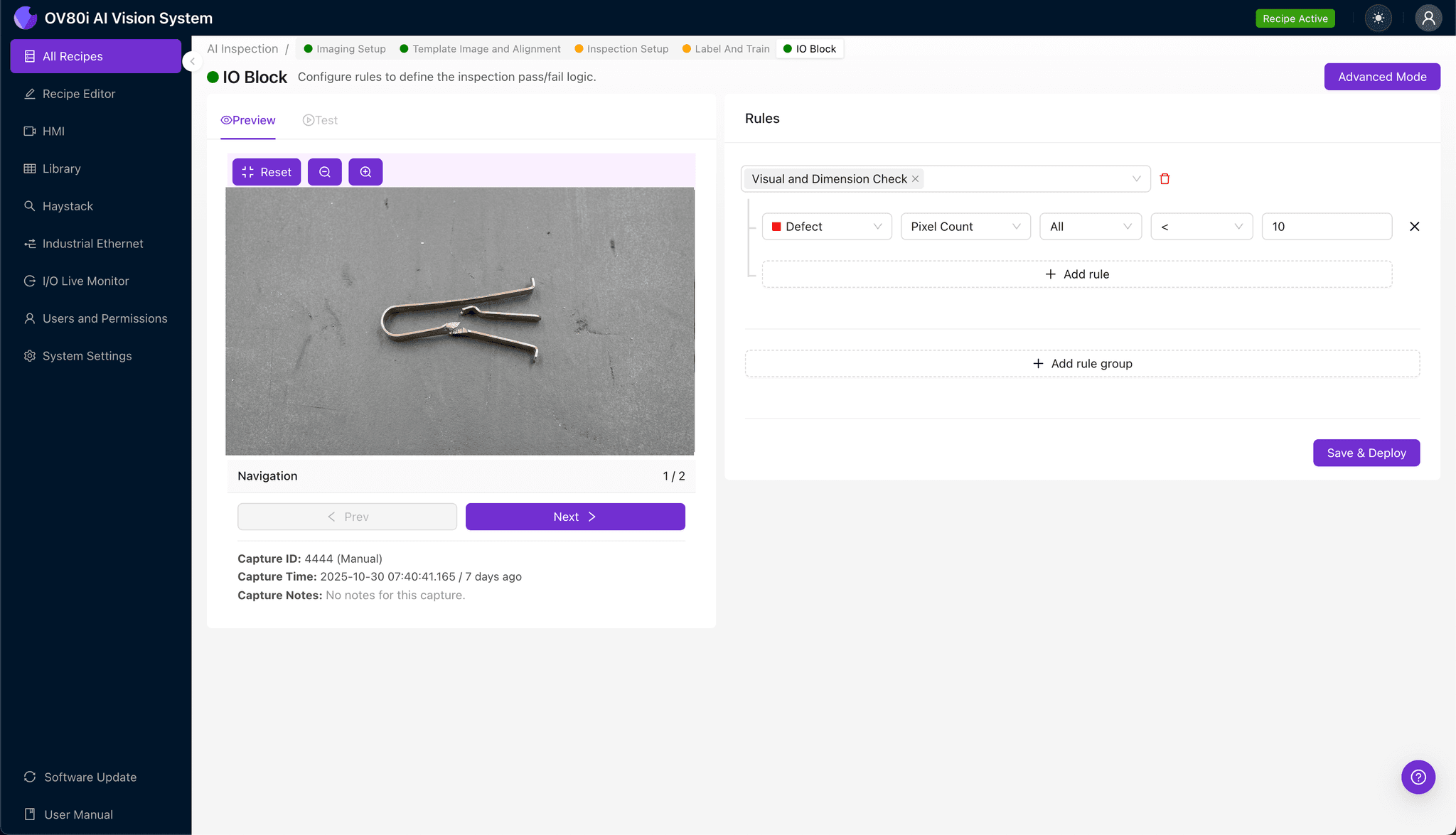
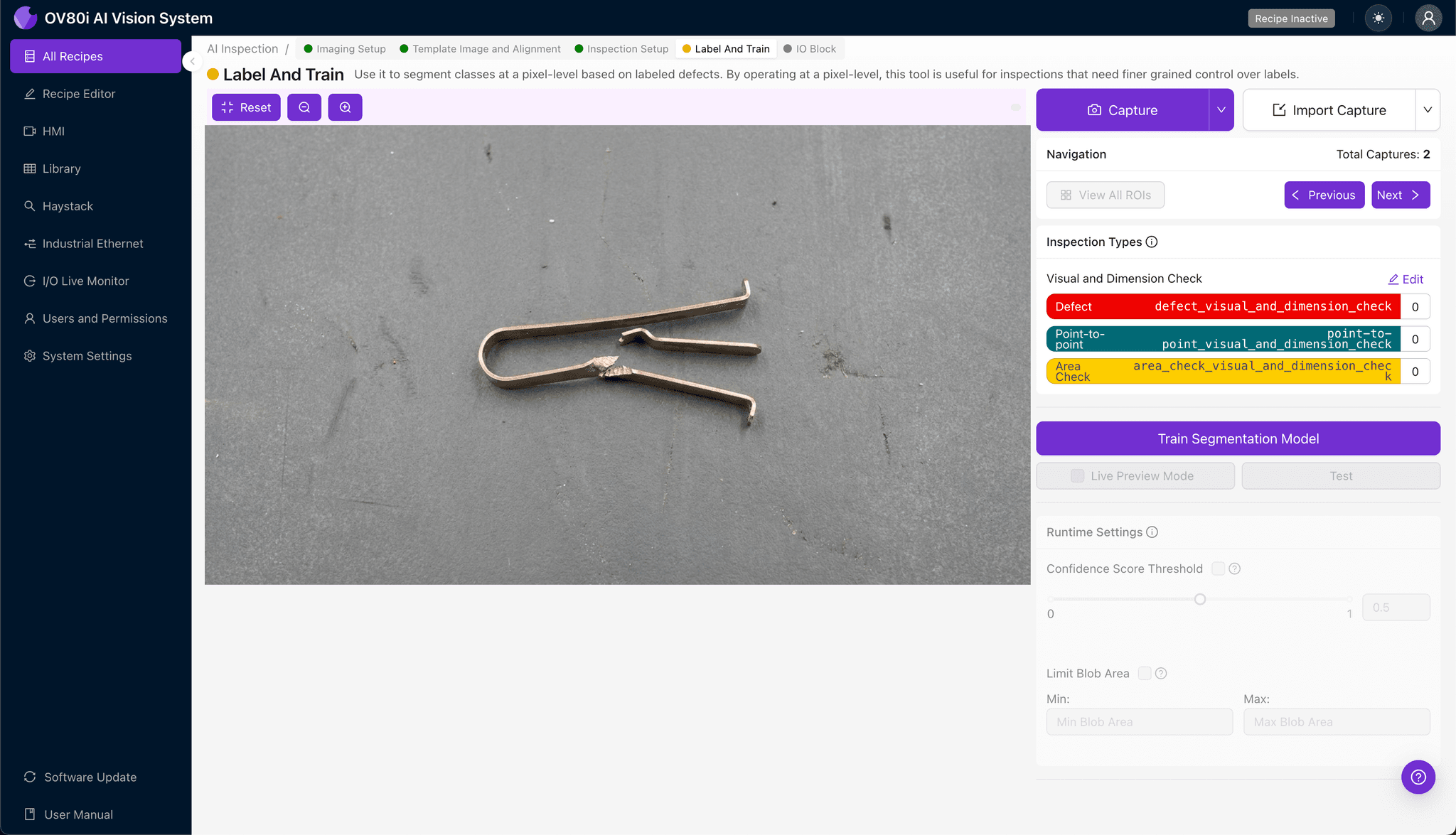
The human-in-the-loop labeling process trains the deep learning model to distinguish acceptable springs from those with fatigue damage. Production operators and quality engineers review captured images, marking each as "Good" or "Bad" based on established acceptance criteria.
Include representative samples across the full range of acceptable variation, as well as known failure modes: early-stage hairline cracks, advanced fracture propagation, and complete finger separation. The model's accuracy improves proportionally with the diversity and volume of labeled training data.
Step 5: Creating Rules
Configure pass/fail logic based on your defined Inspection Types to automate disposition decisions. Set confidence thresholds that balance detection sensitivity against false rejection rates appropriate for your quality requirements.
Gate automated acceptance on the line by linking inspection results to reject mechanisms or diverter stations. Springs flagged with potential fatigue fractures route automatically to quarantine bins for secondary review, ensuring zero suspect parts reach downstream assembly.
Key Outcomes & ROI
Implementing AI-powered inspection for EMI spring fatigue fractures delivers measurable operational improvements:
- Reduced scrap and rework — Catch fatigue-damaged springs before assembly, eliminating costly teardown of finished products
- Higher throughput — Inspect 100% of production at line speed without creating bottlenecks or requiring additional headcount
- Compliance and traceability — Maintain complete image records linking every inspected spring to timestamped pass/fail data for customer audits and warranty investigations
- Process improvement insights — Identify upstream tooling wear, material lot variations, or handling damage causing elevated fracture rates before they impact yield
Conclusion
Fatigue fractures in EMI springs represent a persistent quality challenge that traditional inspection methods struggle to address consistently. Overview.ai's deep learning-powered visual inspection provides the accuracy, speed, and reliability manufacturers need to protect product quality while reducing inspection costs.
Ready to eliminate EMI spring fracture escapes from your production line? Contact Overview.ai to schedule a demonstration with your actual components.
Eliminate EMI Spring Defects Today
Stop relying on manual inspection for microscopic fatigue fractures. Deploy Overview.ai to catch every defect instantly.