Hermaphroditic Connector with Worn Mating Beams: A Complete Visual Inspection Guide
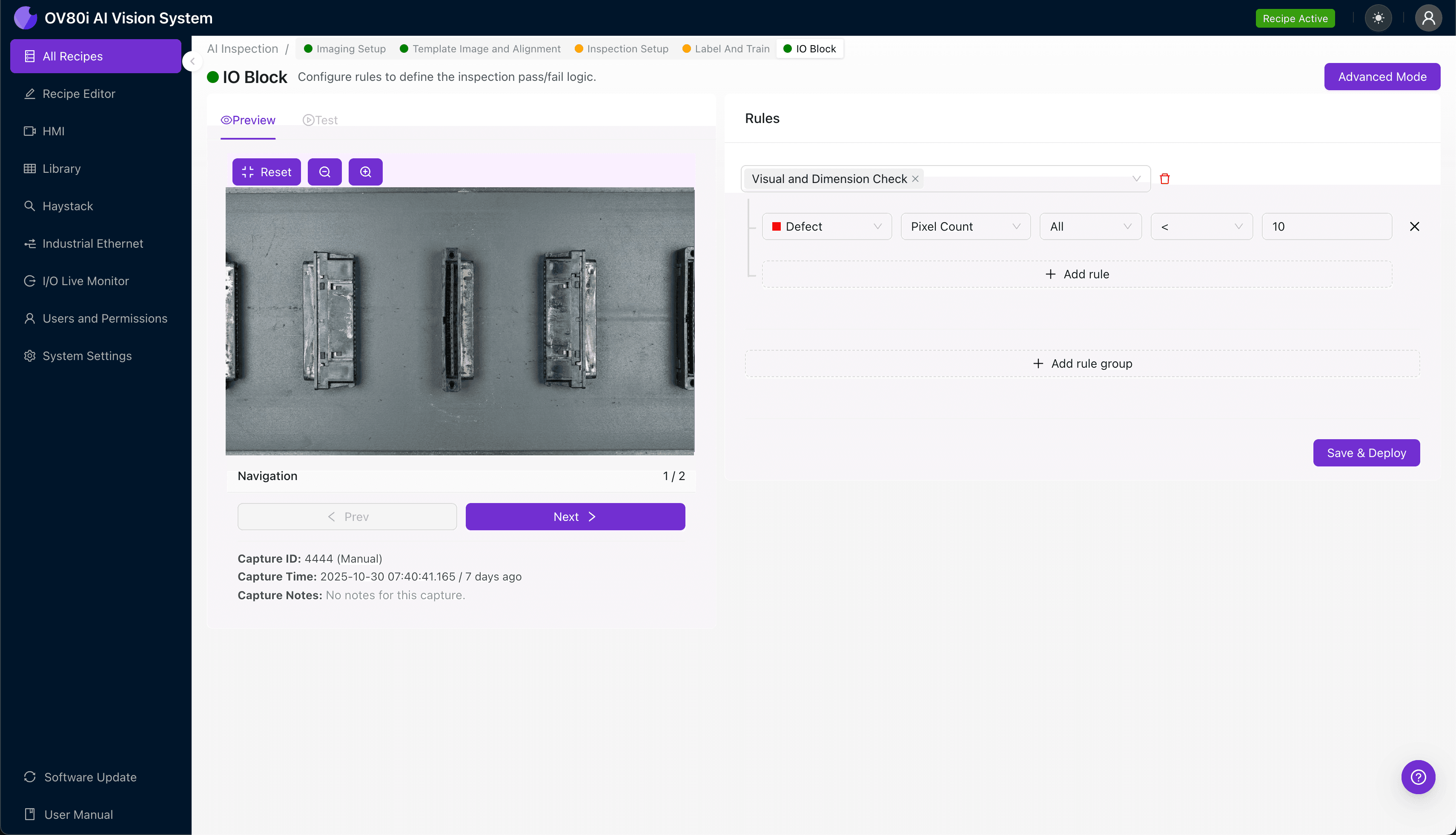
"Worn mating beams in hermaphroditic connectors cause intermittent signal loss and system failures. AI-powered visual inspection detects subtle beam deflection, contact erosion, and micro-cracking that human inspectors consistently miss—protecting product quality at production speeds."
The Problem: Why Worn Mating Beams Are Difficult to Catch
Hermaphroditic connectors are critical components in high-reliability applications, from aerospace systems to industrial automation equipment. These connectors rely on precisely engineered mating beams to create reliable electrical contact. The beam structures must maintain exact tolerances to ensure consistent performance across thousands of mating cycles.
When mating beams become worn, the consequences can range from intermittent signal loss to complete system failure—making early detection absolutely essential. Common defects found in worn mating beam connectors include:
- Beam deflection wear — gradual loss of spring tension from repeated mating cycles
- Contact surface erosion — degradation of plating material at beam contact points
- Micro-cracking at beam roots — stress fractures developing at high-flex zones
- Asymmetric beam alignment — uneven wear causing misaligned contact geometry
- Fretting corrosion deposits — oxidation buildup from micro-motion between surfaces
- Plastic deformation of beam tips — permanent bending beyond elastic limits
Human inspectors struggle to maintain accuracy when evaluating these subtle wear patterns hour after hour. Fatigue sets in quickly, consistency drops, and the microscopic nature of early-stage beam degradation makes manual inspection unreliable at production speeds.
The Solution: Machine Vision and Deep Learning
Machine vision systems equipped with deep learning algorithms excel at detecting the subtle, progressive wear patterns that define mating beam degradation. Unlike rule-based systems that require explicit programming for every defect type, AI models learn to recognize the full spectrum of wear signatures from labeled training data.
Overview.ai's approach delivers consistent, objective inspection at line speed—eliminating the variability inherent in human judgment. The system never fatigues, maintains identical inspection criteria across every shift, and captures data that enables continuous process improvement.
Step 1: Imaging Setup
Position the hermaphroditic connector under the camera system with the mating beam surfaces clearly visible. Proper orientation is critical—ensure the beam structures face the lens with adequate lighting to reveal surface texture and geometry.
Click "Configure Imaging" in the Overview.ai interface to access camera controls. Adjust exposure to capture beam surface details without washout, and fine-tune gain settings to balance signal-to-noise ratio.
Click "Save" to lock in your imaging configuration before proceeding.
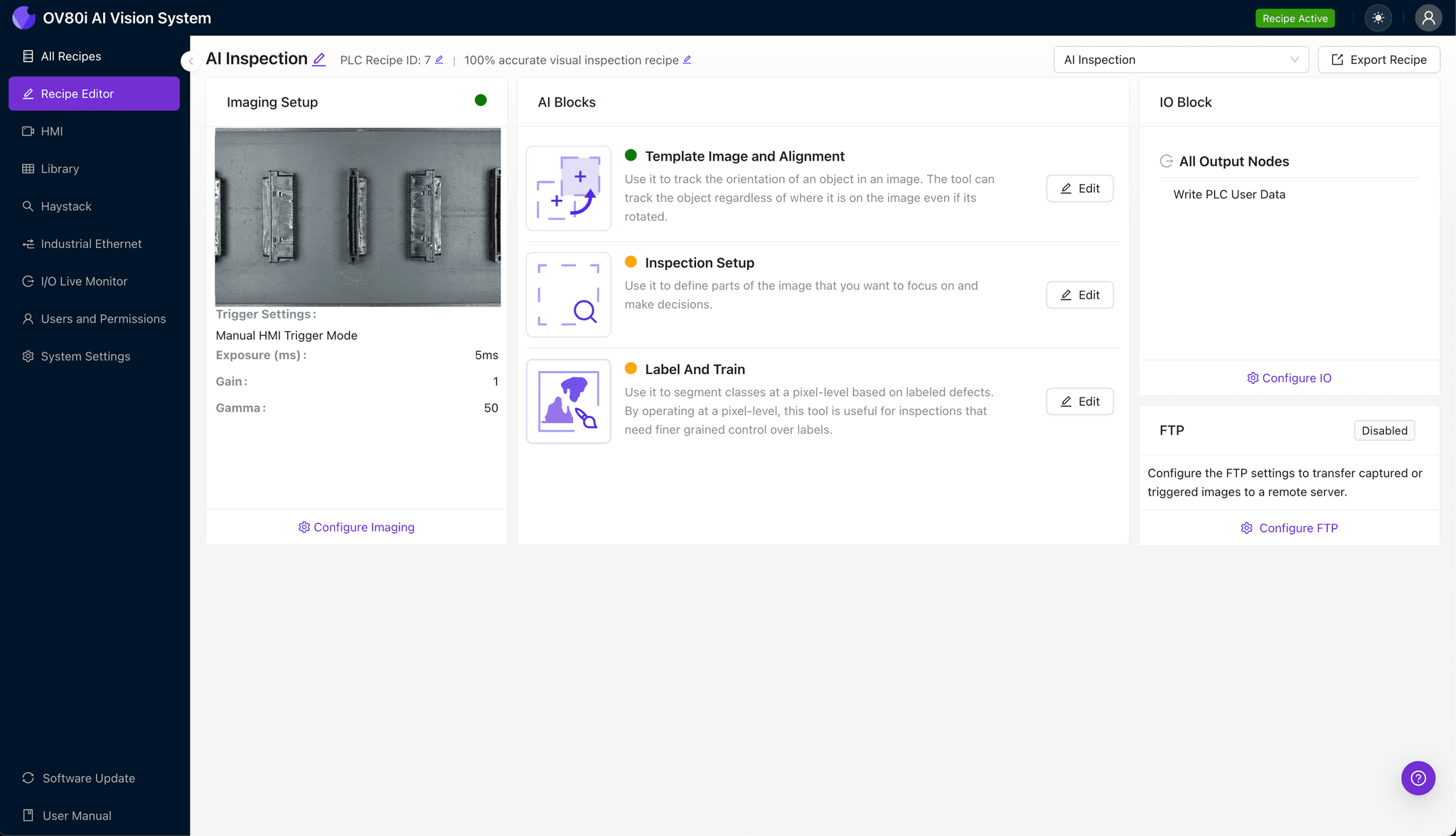
Step 2: Image Alignment
Navigate to the "Template Image" section within the software interface. Capture a Template using a known-good connector positioned in the standard inspection orientation.
Add a "+ Rectangle" region around the main connector body, encompassing all mating beam structures. Set the "Rotation Range" to 20 degrees to accommodate normal variation in part presentation on the line.
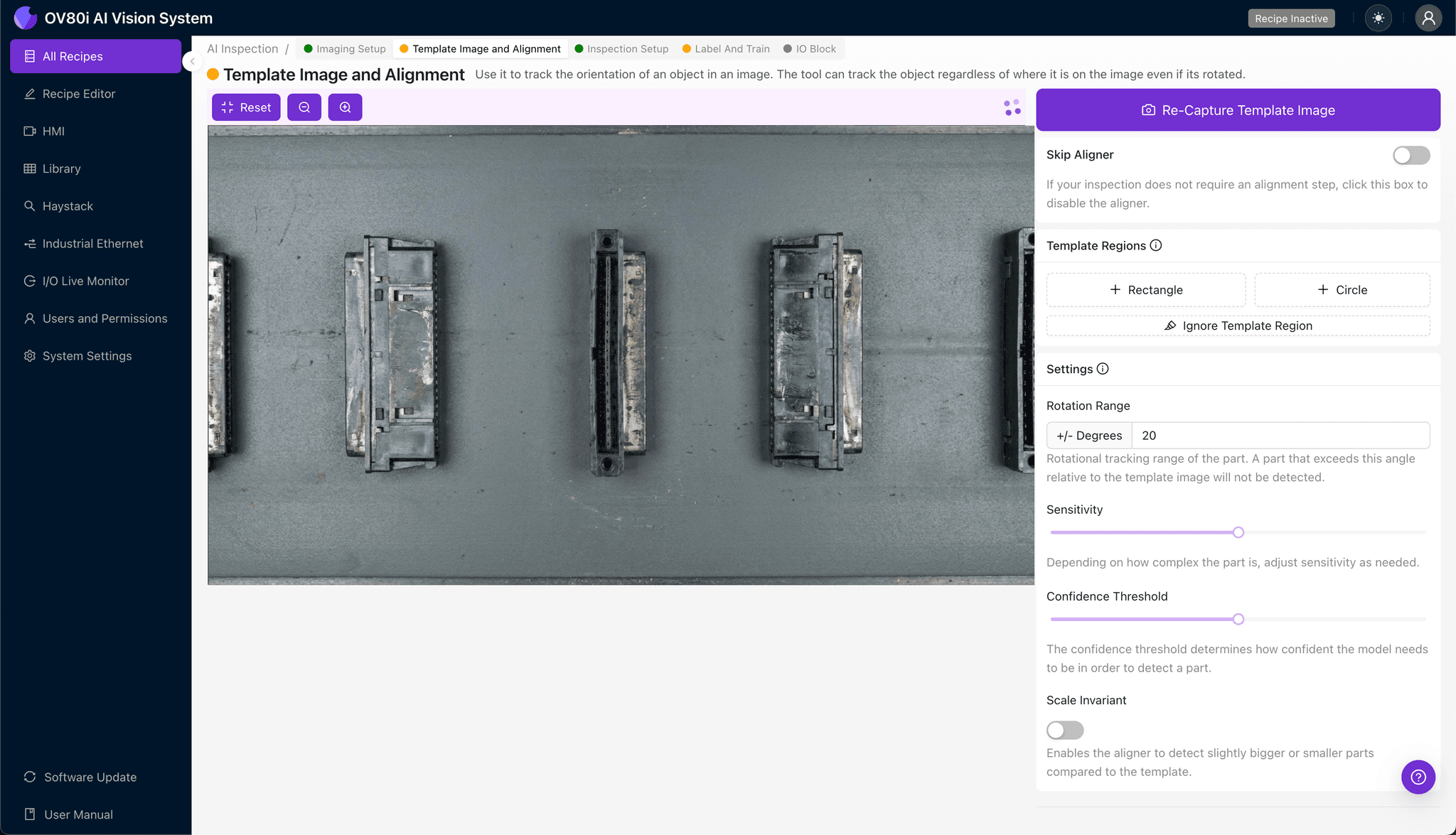
Step 3: Inspection Region Selection
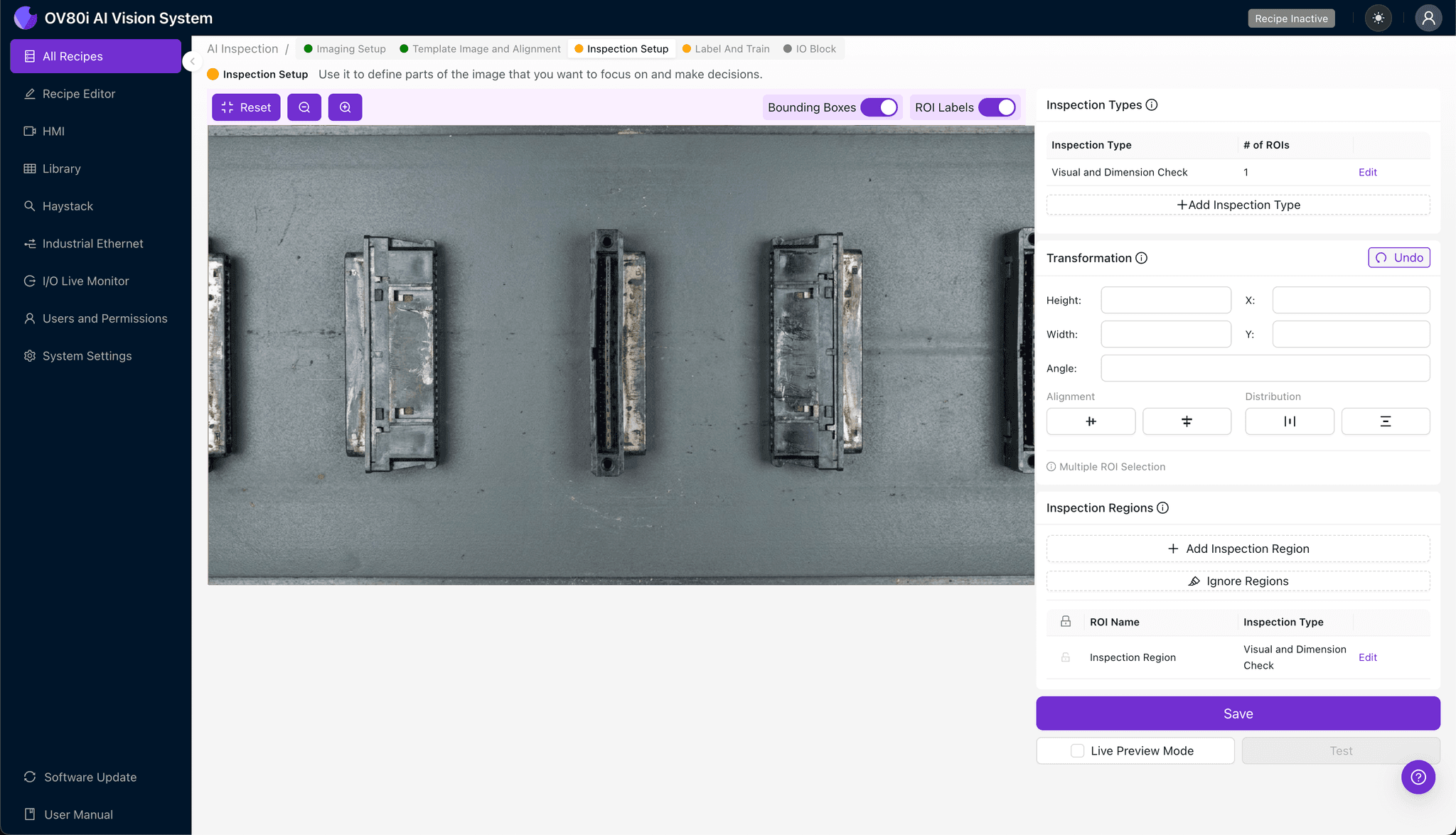
Navigate to "Inspection Setup" to define your critical inspection zones. Rename your "Inspection Types" to reflect specific defect categories—such as "Beam Wear" or "Contact Erosion."
Click "+ Add Inspection Region" to create targeted zones. Resize the yellow bounding box to cover the mating beam contact surfaces, beam root areas, and any other high-wear zones.
Click "Save" to confirm your inspection region configuration.
Step 4: Labeling Data
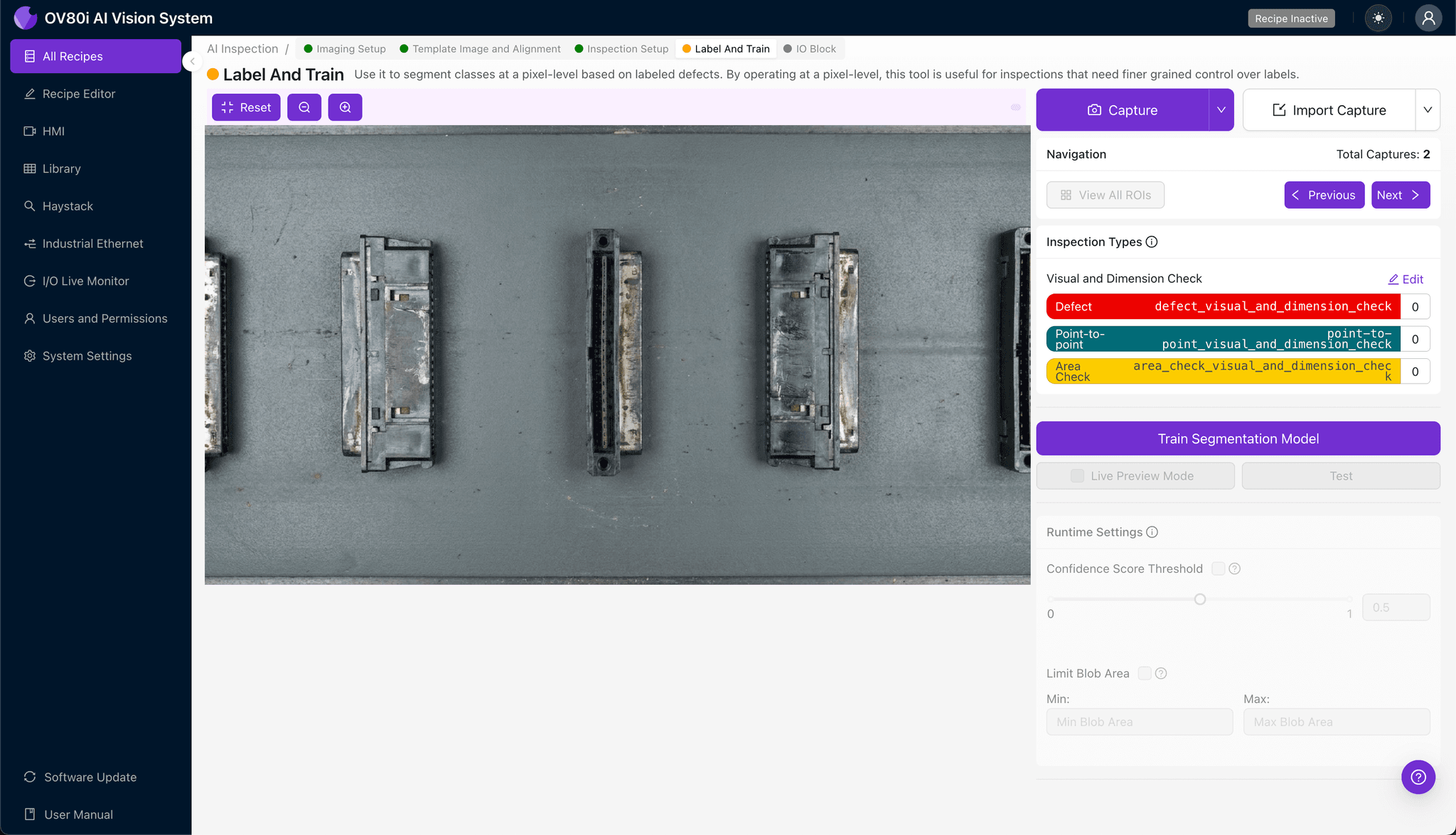
The human-in-the-loop labeling process trains the AI model to distinguish acceptable wear from reject-worthy degradation. Review captured images and classify each as Good or Bad based on your quality standards.
Include representative samples across the full range of acceptable variation. Incorporate known failure modes—connectors that caused field returns or failed electrical testing—to ensure the model learns critical rejection criteria.
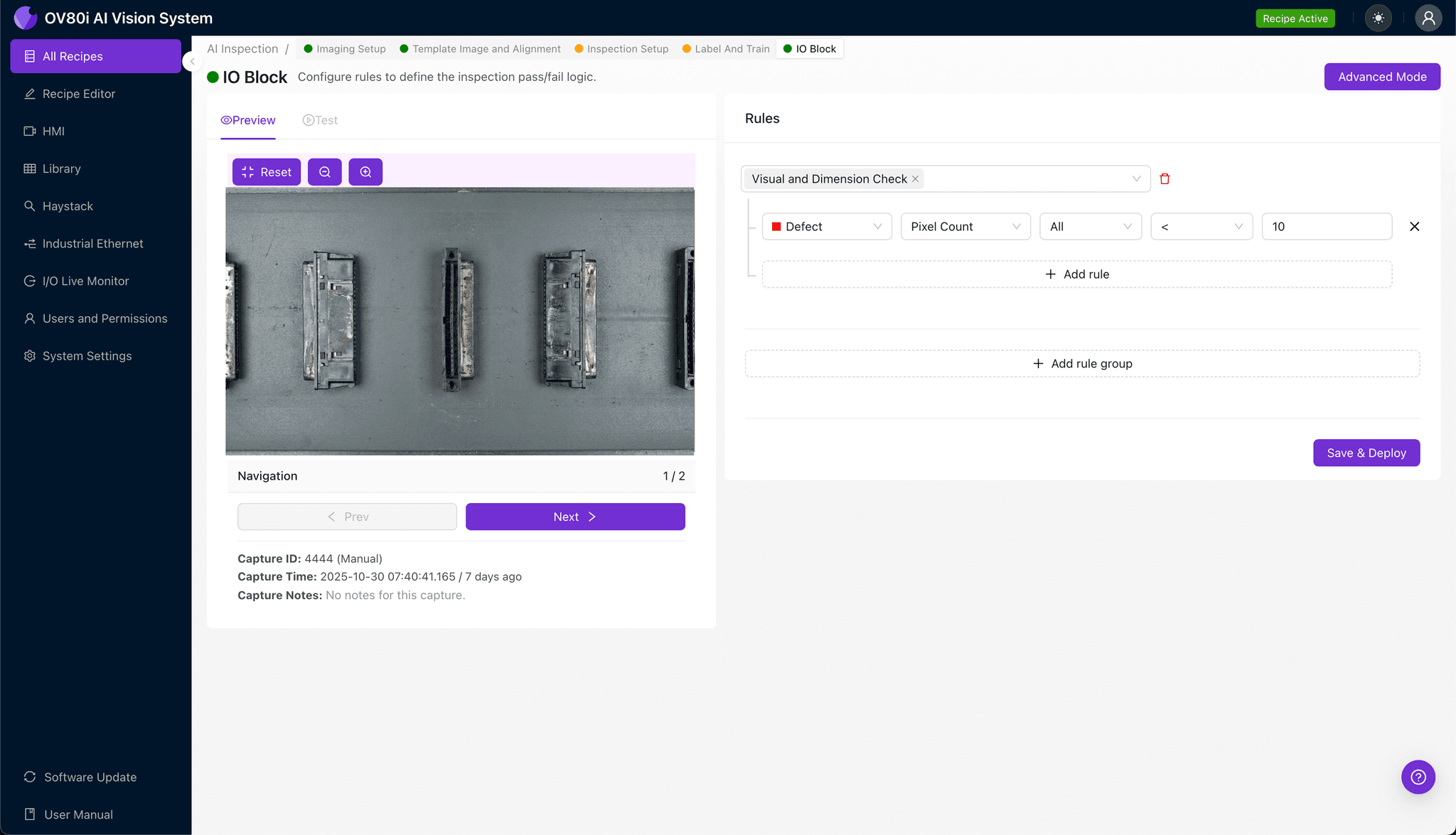
Step 5: Creating Rules
Set pass/fail logic based on your defined Inspection Types and quality thresholds. Configure the system to flag connectors where beam wear exceeds acceptable limits or where multiple minor defects combine to indicate degradation.
Gate automated acceptance on the production line based on these rules. Parts that fail inspection are automatically diverted for secondary review or rejection, ensuring only conforming connectors proceed downstream.
Key Outcomes & ROI
Implementing automated visual inspection for hermaphroditic connector mating beams delivers measurable business impact:
- Reduced scrap rates — catch wear patterns early before connectors fail final test or reach customers
- Higher throughput — inspect 100% of parts at line speed without bottlenecking production
- Compliance and traceability — maintain complete inspection records for quality audits and customer requirements
- Process improvement insights — identify wear trend data to optimize mating cycle specifications and supplier quality
Conclusion
Worn mating beams in hermaphroditic connectors represent a challenging inspection target—but one that AI-powered vision systems are uniquely equipped to handle. With Overview.ai's deep learning approach, manufacturers gain the consistency, speed, and accuracy needed to protect product quality while driving operational efficiency.
Eliminate Connector Defects Today
Stop relying on manual inspection for critical connector components. Deploy Overview.ai to catch worn mating beams instantly.