
How to Detect Latch Spring Permanent Set Defects with AI-Powered Visual Inspection
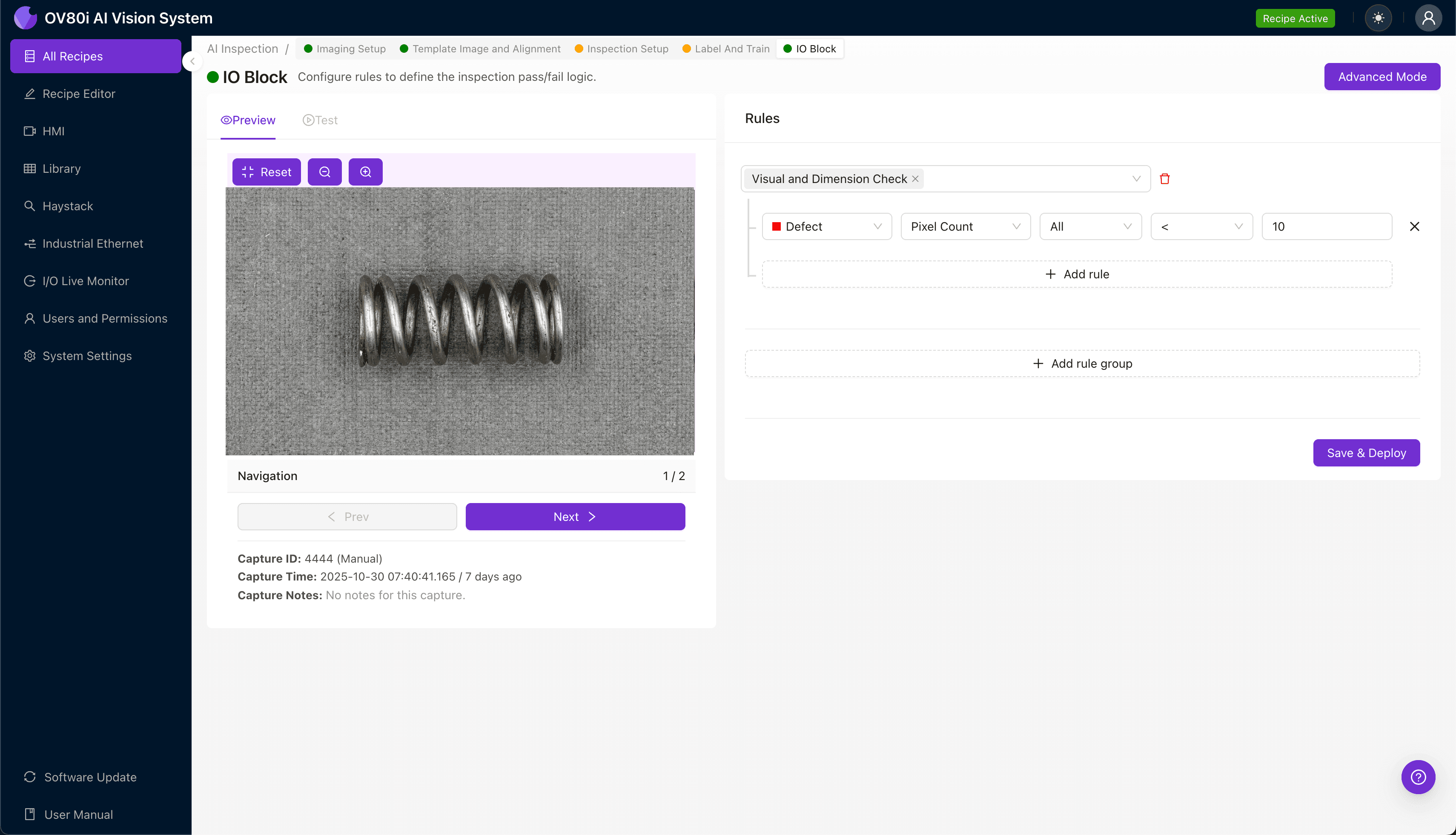
"Latch springs with permanent set lose their ability to rebound, causing catastrophic assembly failures. AI-powered visual inspection detects subtle dimensional changes and surface anomalies that human inspectors miss, catching deformation before it reaches your customers."
The Problem: When Springs Lose Their Bounce
Latch springs are critical mechanical components that rely on precise elastic properties to function correctly. When a spring experiences permanent set—the irreversible loss of rebound capability—it can no longer return to its original shape after compression, leading to catastrophic failures in assemblies ranging from automotive door latches to industrial safety mechanisms.
Common Defects in Latch Springs with Permanent Set
- Reduced free length – Spring sits shorter than specification when unloaded
- Coil pitch irregularity – Uneven spacing between coils indicating plastic deformation
- Material discoloration – Heat-related oxidation or stress marks on wire surface
- Bent or twisted end hooks – Deformed attachment points from overstress
- Micro-cracks at stress points – Fatigue fractures near coil transitions
- Out-of-spec load height – Spring compresses past acceptable tolerance under test load
Human inspectors struggle to detect these subtle dimensional changes consistently. Visual fatigue sets in within 20-30 minutes, and the speed of modern production lines makes it impossible to evaluate spring rebound characteristics manually without creating bottlenecks.
The Solution: Machine Vision + Deep Learning
Traditional go/no-go gauging catches gross failures but misses the early indicators of permanent set. AI-powered visual inspection systems analyze multiple dimensional and surface characteristics simultaneously, identifying springs that have begun to deform before they reach catastrophic failure thresholds.
Overview.ai's approach delivers consistent, objective inspection at full line speed—every spring, every time. Deep learning models trained on your specific spring geometries learn to recognize the subtle visual signatures of permanent set that even experienced quality technicians overlook.
Step 1: Imaging Setup
Position the latch spring under the OV80i camera system, ensuring the full length and both end hooks are visible in frame. Proper lighting angle is critical for detecting coil pitch variations and surface anomalies.
Click "Configure Imaging" in the Overview interface to access camera controls. Adjust Camera Settings including exposure time and gain to create clear contrast between coil windings without overexposing reflective wire surfaces.
Click "Save" to lock in your imaging configuration.
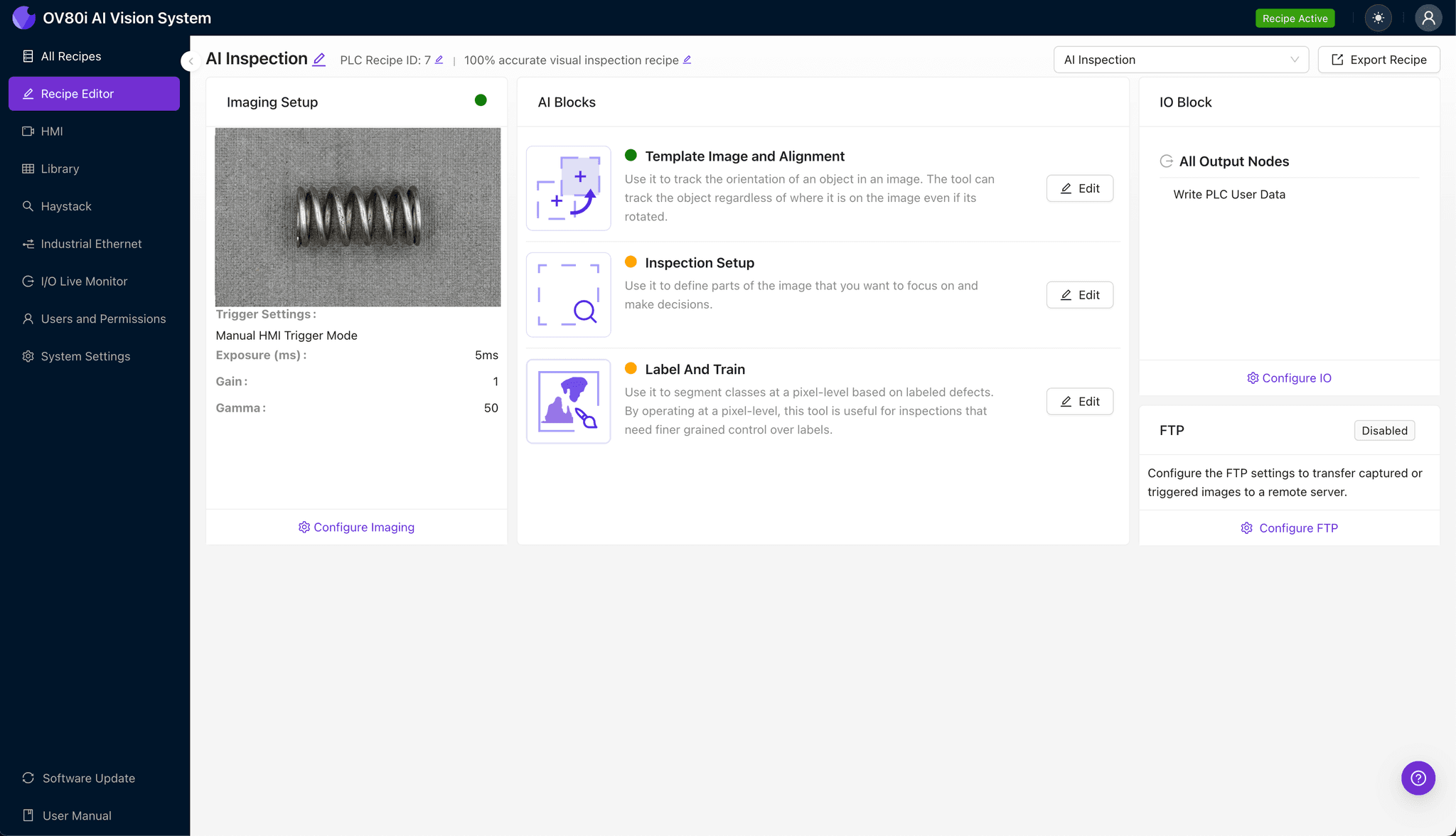
Step 2: Image Alignment
Navigate to "Template Image" in the setup menu. Capture a Template using a known-good spring positioned in the standard orientation.
Click "+ Rectangle" to add an alignment region around the main spring body, encompassing the full coil section. Set "Rotation Range" to 20 degrees to accommodate normal variation in how springs land on the inspection station.
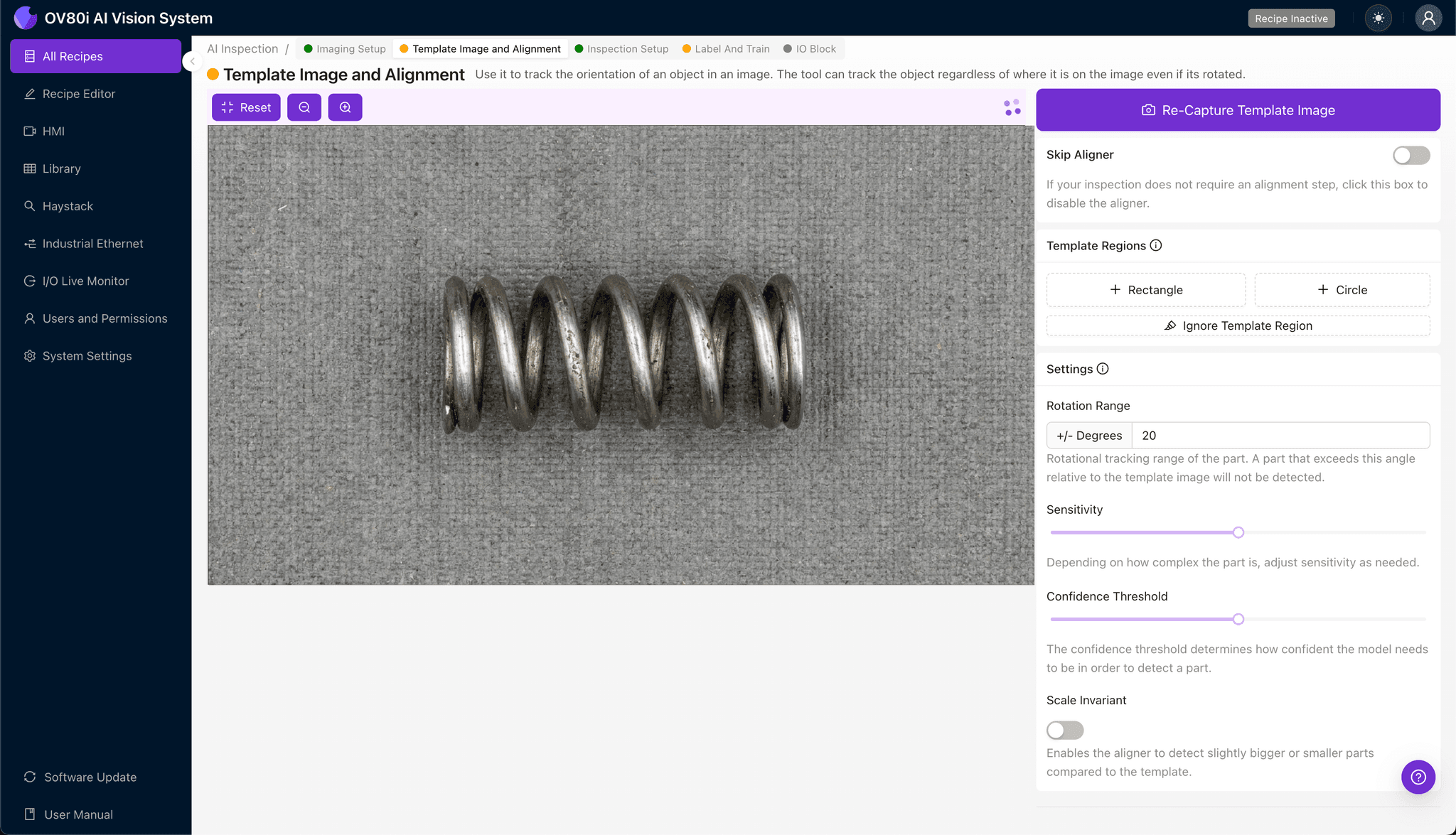
Step 3: Inspection Region Selection
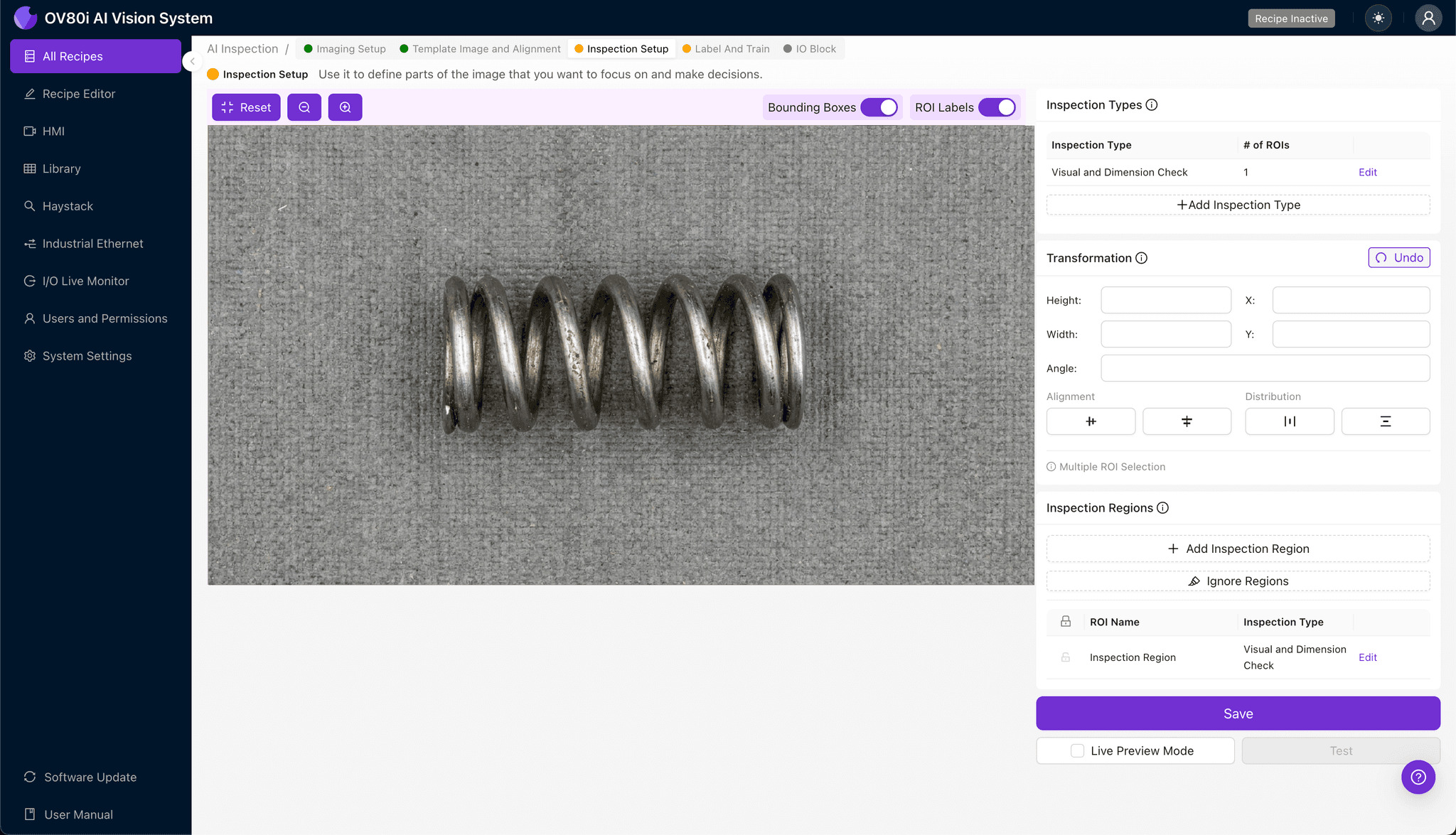
Navigate to "Inspection Setup" to define your detection zones. Rename "Inspection Types" with clear descriptors like "Coil_Pitch_Check," "Free_Length," and "Hook_Integrity."
Click "+ Add Inspection Region" for each critical area. Resize the yellow bounding box over high-stress zones including the first and last active coils, hook transitions, and the central body where set typically manifests.
Click "Save" to confirm your inspection regions.
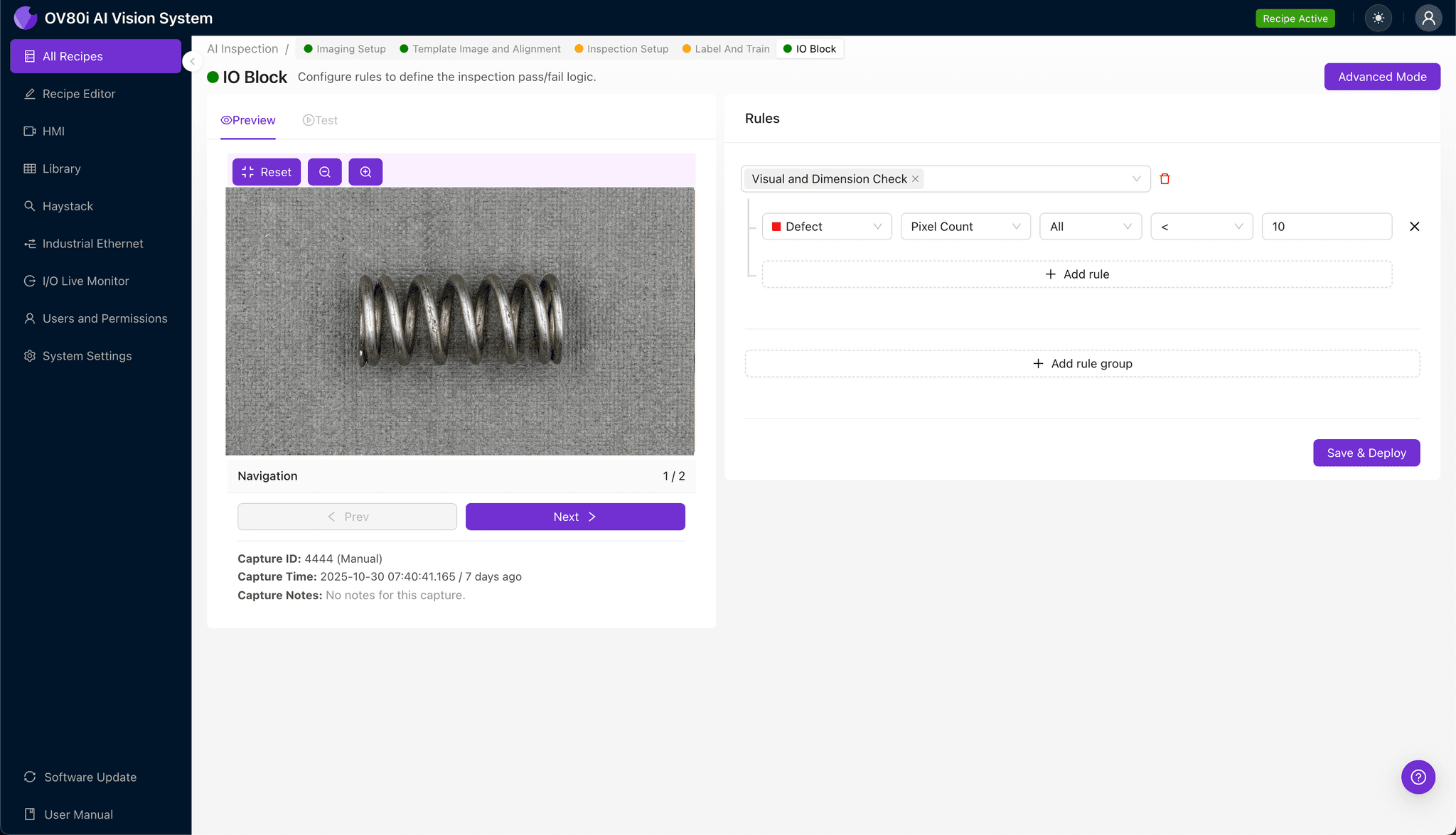
Step 4: Labeling Data
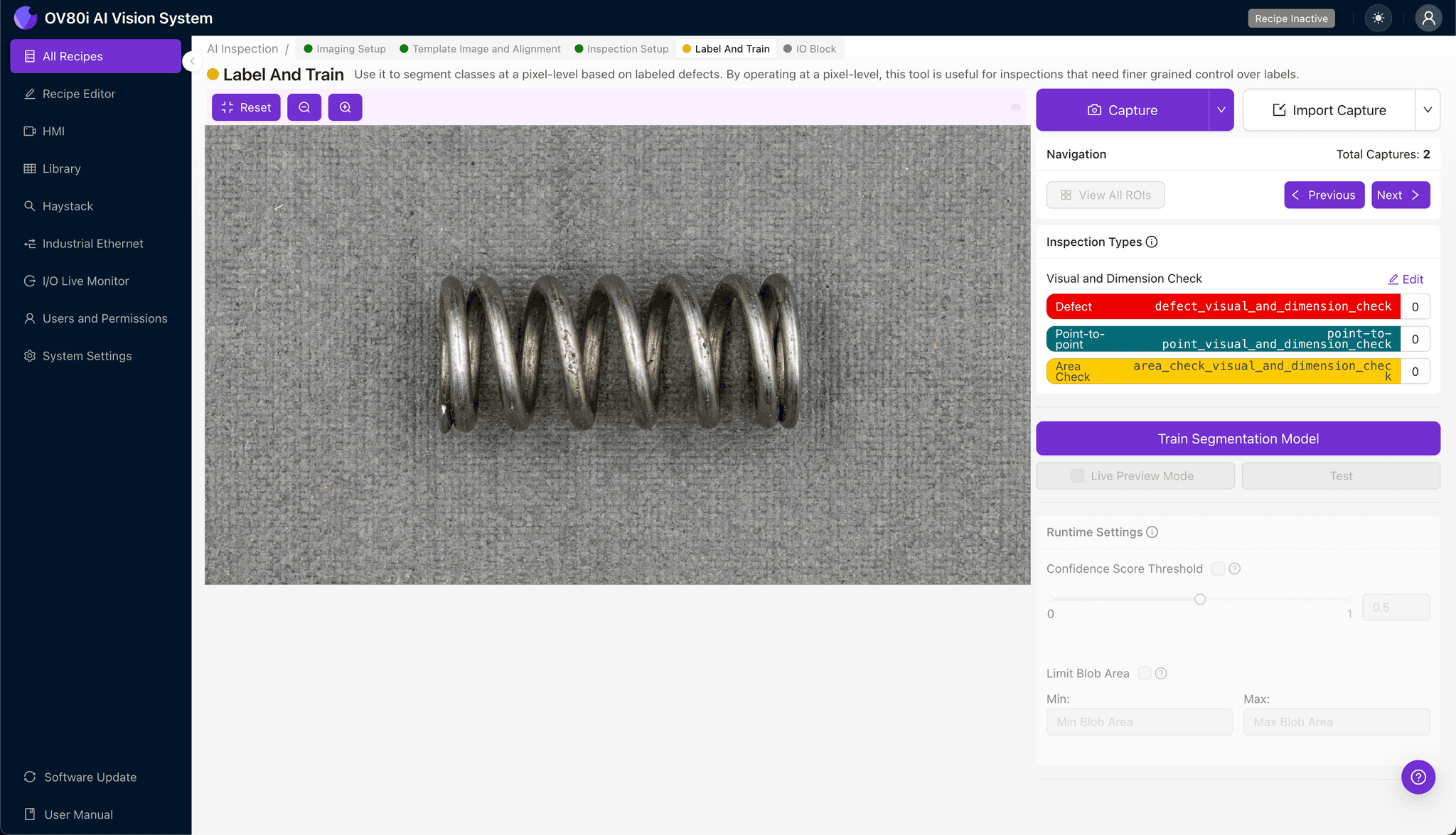
The human-in-the-loop labeling process trains your AI model to recognize your specific defect signatures. Begin by collecting images across production conditions—different material lots, machine variations, and environmental factors.
Label each spring image as Good or Bad based on your quality standards. Include representative samples of all known failure modes: springs with measured permanent set, heat-damaged units, and parts from historical reject bins to build robust detection capability.
Step 5: Creating Rules
Configure pass/fail logic based on your defined Inspection Types. Set threshold values that align with your engineering tolerances for acceptable spring performance.
Gate automated acceptance on the line by linking inspection results to your reject mechanism. Springs flagged for permanent set indicators are automatically diverted, while conforming parts continue downstream.
Key Outcomes & ROI
Implementing AI-powered inspection for latch spring permanent set detection delivers measurable business impact:
- Reduced scrap rates – Catch deformation trends early, preventing batch-wide failures
- Higher throughput – Eliminate manual inspection bottlenecks while achieving 100% coverage
- Compliance and traceability – Maintain complete inspection records for automotive PPAP, ISO audits, and customer quality requirements
- Process improvement insights – Identify upstream causes of permanent set through defect pattern analysis and SPC integration
Eliminate Spring Defects Today
Permanent set in latch springs isn't always obvious—until it causes a field failure. Deploy Overview.ai to catch what human eyes miss.