
How to Inspect a Plastic Latch with a Stress-Whitened Hinge Using AI-Powered Vision
"Stress whitening on plastic latch hinges signals molecular damage that leads to field failures—but the defect is nearly invisible to fatigued inspectors. AI-powered vision detects these subtle optical signatures consistently, at production speed, on every single part."
The Problem: Why Stress-Whitened Hinges Slip Past Human Inspectors
Plastic latches with living hinges are everywhere—from consumer electronics enclosures to automotive interior panels. When these hinges develop stress whitening, it signals molecular damage that compromises long-term durability and creates costly field failures.
Common Defects in Plastic Latches with Stress-Whitened Hinges
- Stress whitening at the hinge crease — microscopic crazing that appears as a white, opaque line along the bend radius
- Incomplete hinge formation — insufficient material flow during molding creating thin spots prone to premature failure
- Flash or parting line defects — excess material at mold seams that interferes with latch engagement
- Surface scratches or scuffs — cosmetic damage from ejection pins or handling that masks underlying stress damage
- Warpage or dimensional distortion — out-of-spec bending that indicates residual stress in the polymer
- Discoloration or contamination — material degradation or foreign particles embedded near the hinge zone
Human inspectors struggle with stress-whitening detection because the defect is often subtle, appearing only at specific viewing angles under particular lighting conditions. Inspector fatigue compounds the problem—after hours of repetitive visual checks, consistency drops dramatically, and marginal defects slip through.
The Solution: Machine Vision and Deep Learning for Consistent Detection
Traditional rule-based machine vision systems fail on stress whitening because the defect lacks hard edges or consistent geometry. Deep learning changes the equation by training neural networks on thousands of labeled examples, enabling the system to recognize the subtle textural and optical signatures that indicate molecular damage.
Overview.ai's approach delivers what human inspection cannot: objective, repeatable assessment at full production speed. The OV80i platform inspects every single part inline, eliminating sampling gaps and providing real-time quality data that drives continuous process improvement.
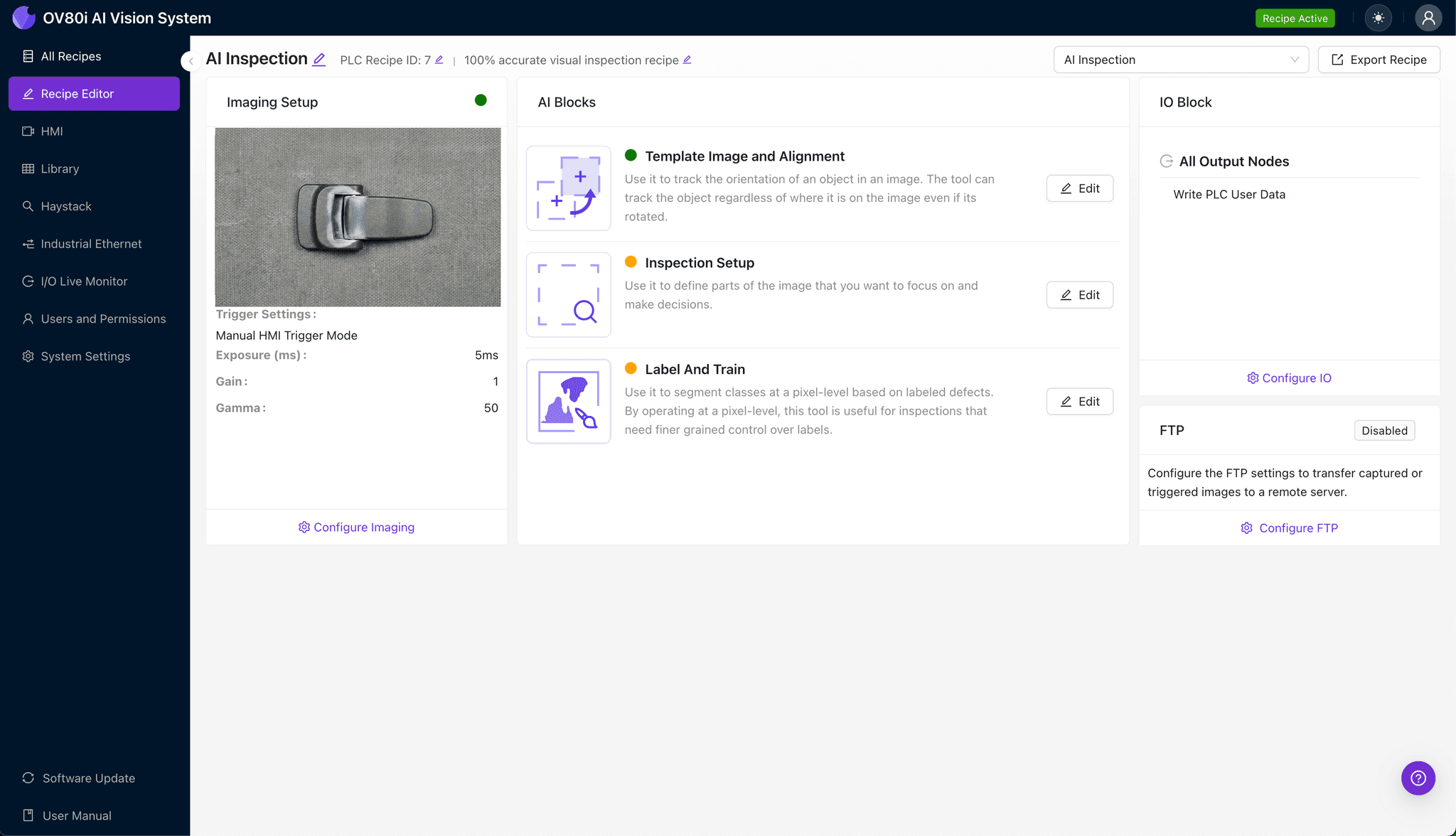
Step 1: Imaging Setup
Position the plastic latch flat under the OV80i camera, ensuring the living hinge is fully visible and unobstructed. Angled or diffuse lighting often works best for revealing stress whitening, as it enhances the contrast between healthy and damaged polymer regions.
Click "Configure Imaging" in the Overview software interface. Adjust Camera Settings—increase exposure slightly to capture subtle surface variations, and fine-tune gain to avoid washing out the whitened areas.
Click "Save" to lock in your imaging parameters.
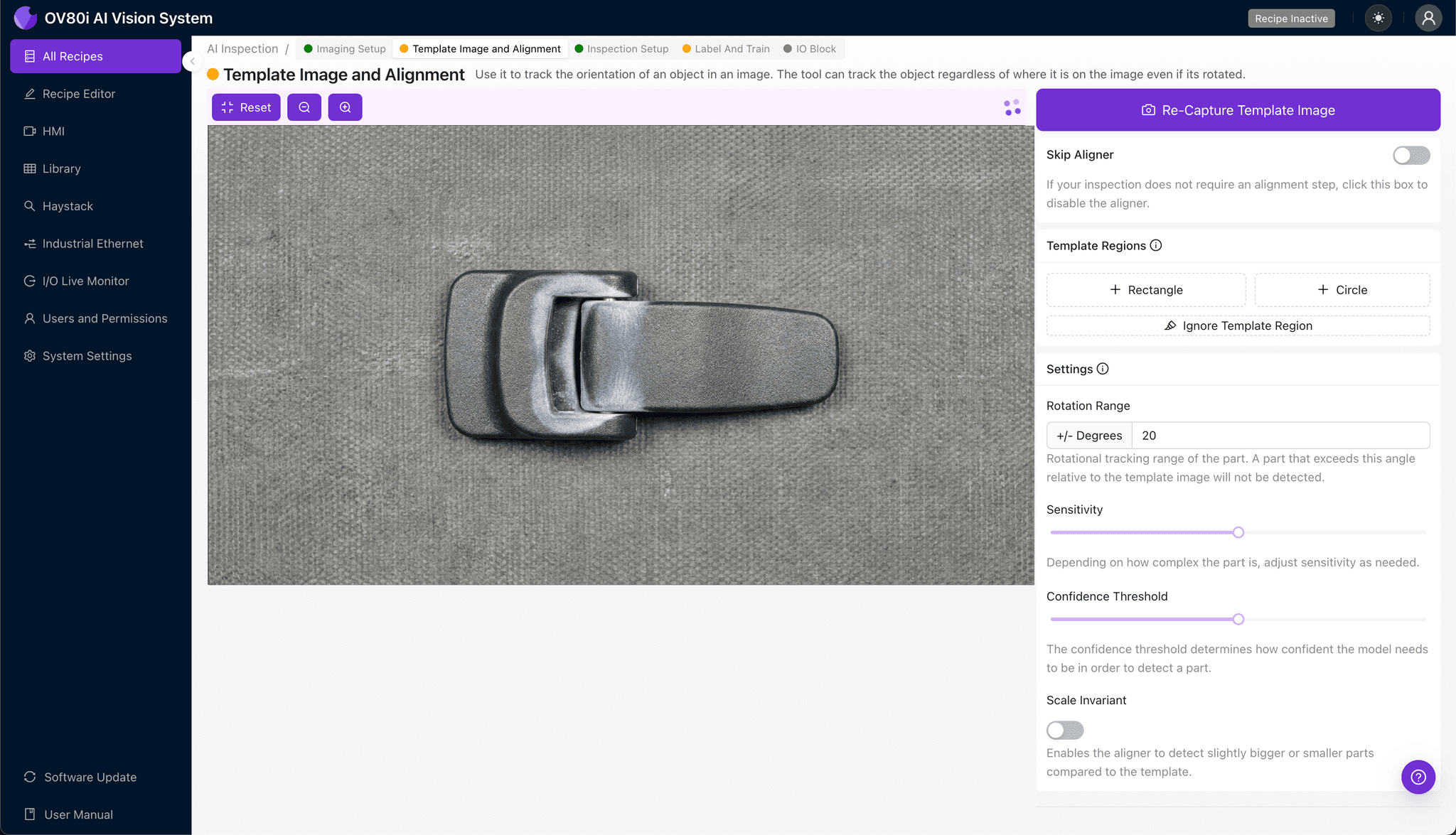
Step 2: Image Alignment
Navigate to the "Template Image" tab and capture a Template of a properly positioned latch. This reference image ensures consistent part alignment across all subsequent inspections.
Click "+ Rectangle" and draw a region around the main body of the latch, including the full hinge area. Set "Rotation Range" to 20 degrees to accommodate minor orientation variations as parts move down the line.
Step 3: Inspection Region Selection
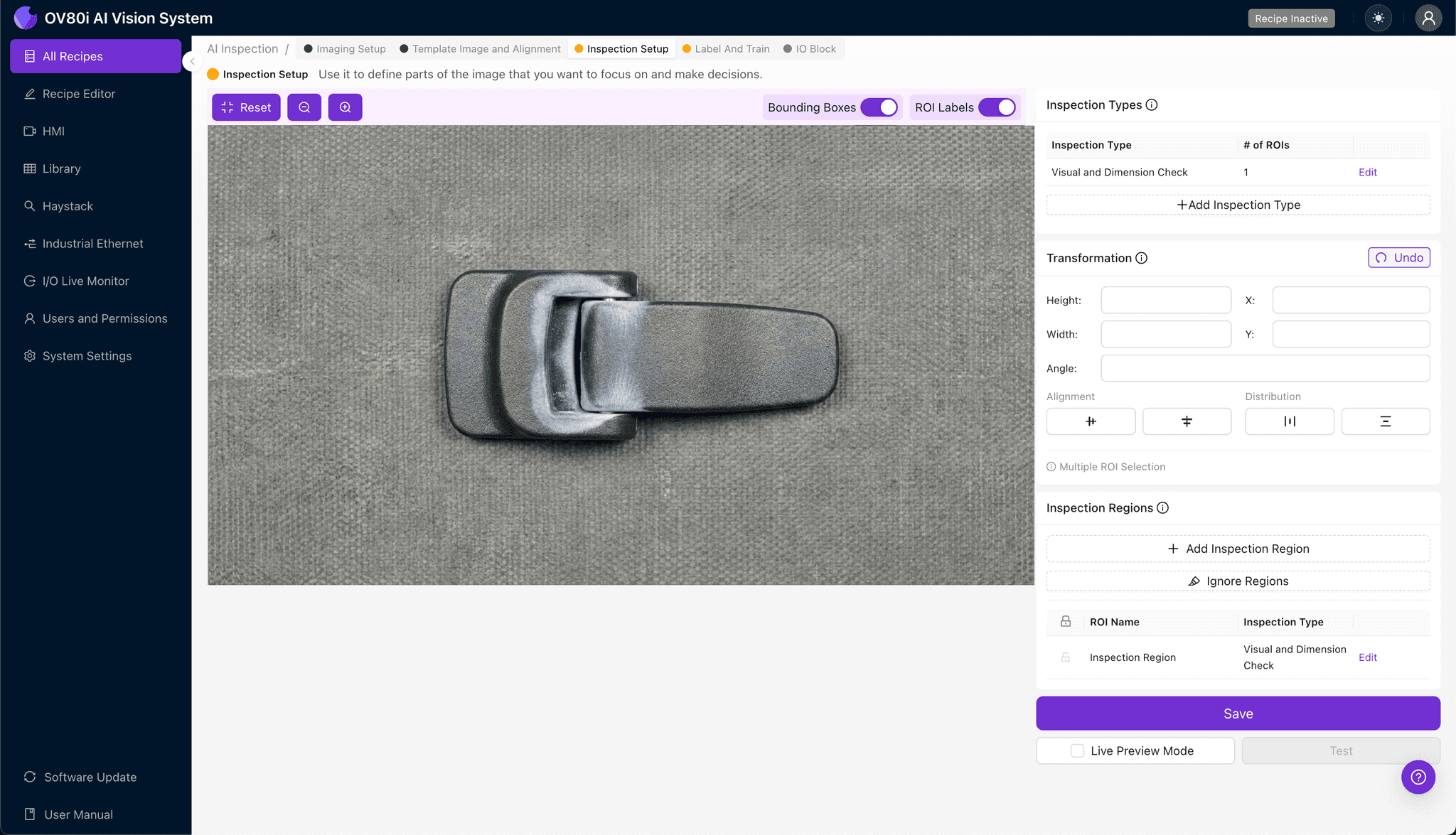
Navigate to "Inspection Setup" to define where the system should focus its analysis. Rename your "Inspection Types" to reflect the specific defects you're targeting—for example, "Hinge_Stress_Whitening" and "Surface_Defects."
Click "+ Add Inspection Region" to create a new zone. Resize the yellow bounding box to cover the critical hinge crease area where stress whitening typically manifests.
Click "Save" to confirm your inspection regions.
Step 4: Labeling Data
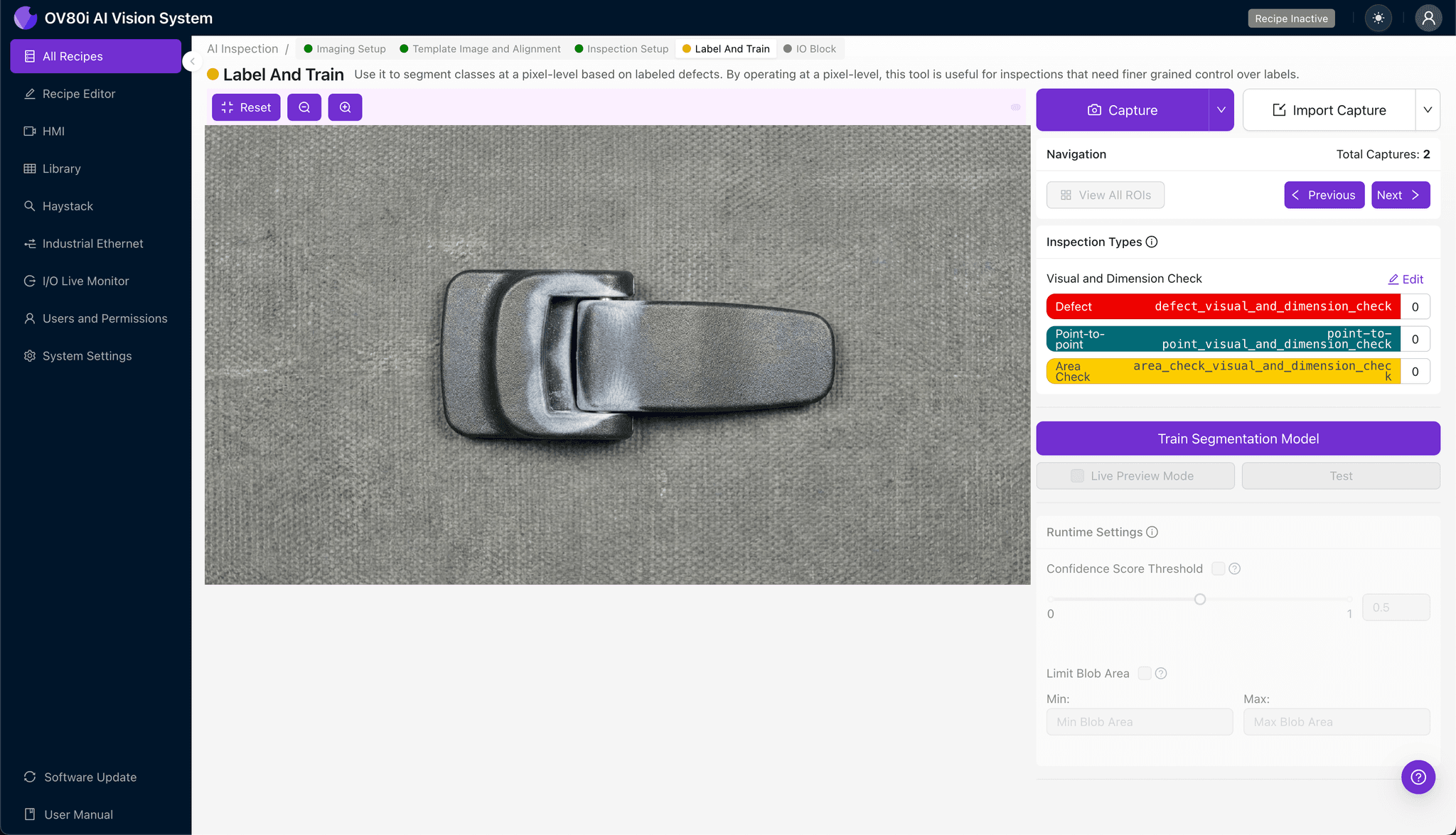
This is where human expertise trains the AI. The Overview platform uses a human-in-the-loop process—quality engineers review captured images and label them as Good or Bad based on your acceptance criteria.
Include representative samples across the full spectrum: perfect parts, marginal cases, and clear rejects. Don't forget known failure modes—parts that passed inspection but failed in the field are especially valuable training data.
The more diverse your labeled dataset, the more robust your model becomes.
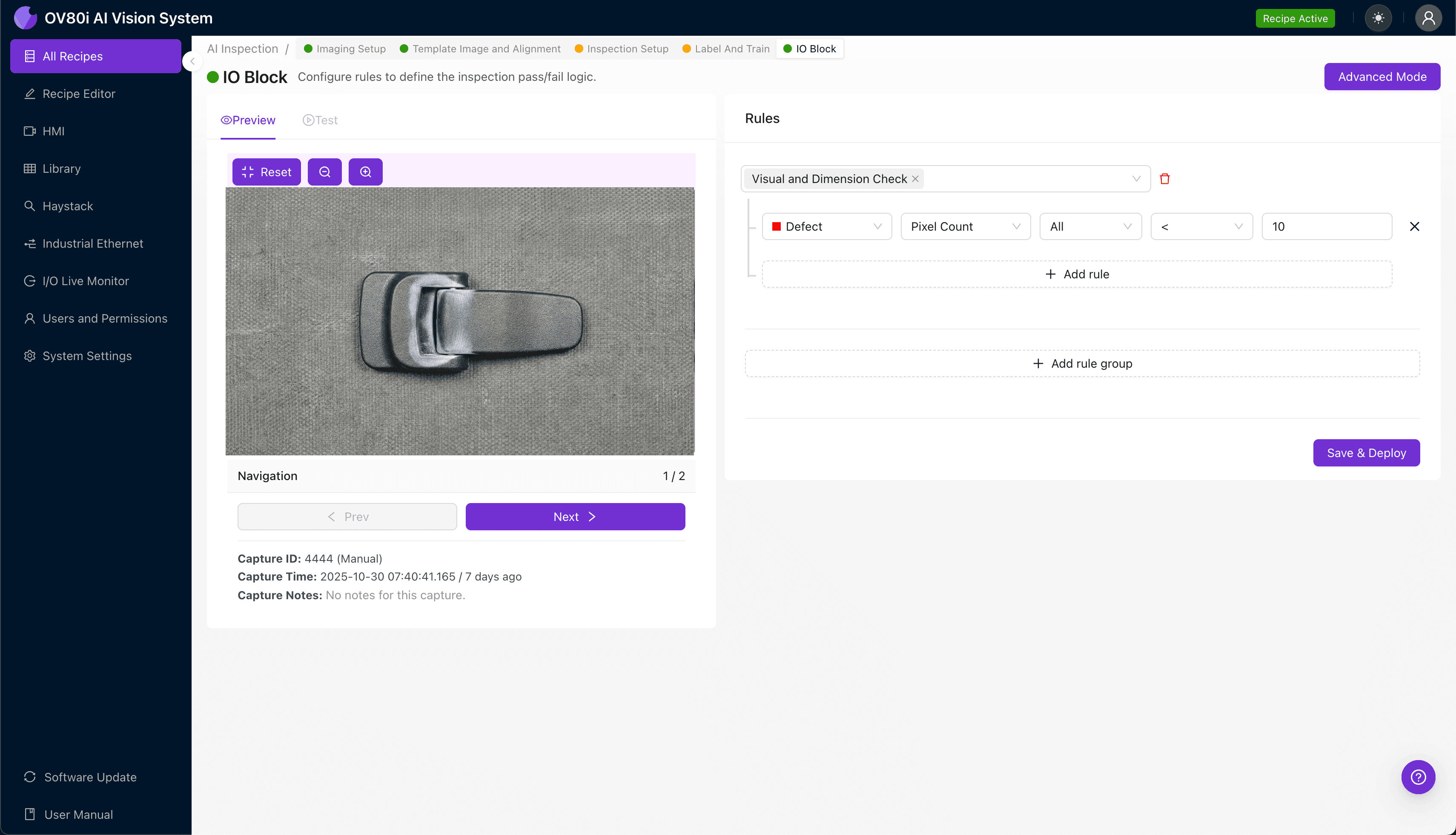
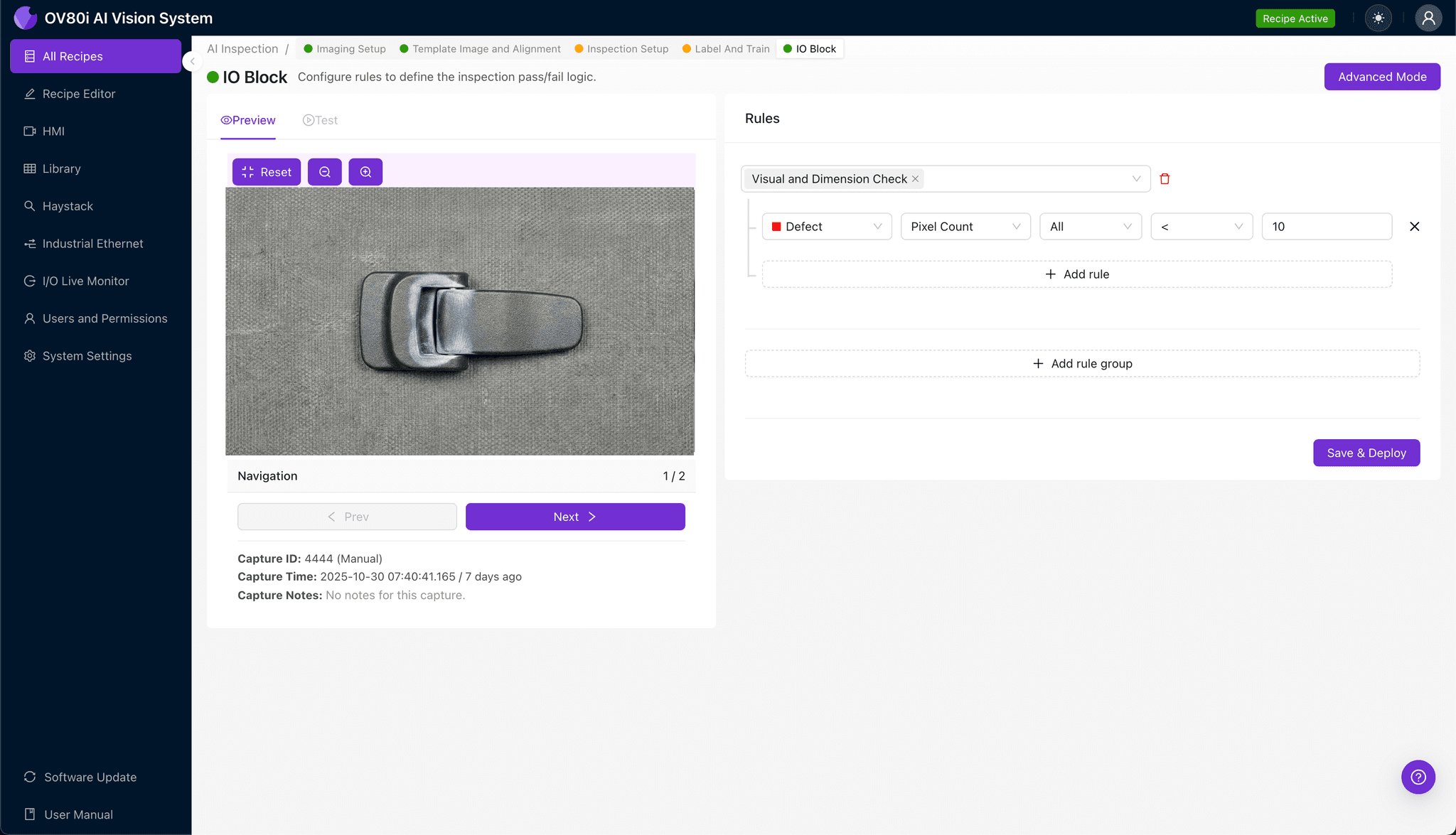
Step 5: Creating Rules
With your trained model ready, set pass/fail logic based on your defined Inspection Types. You might reject any part showing stress whitening above a confidence threshold, or flag marginal cases for secondary review.
Gate automated acceptance directly on the line—parts that pass proceed to packaging, while rejects route to quarantine bins automatically. This closed-loop system ensures zero suspect parts reach your customers.
Key Outcomes & ROI
Implementing AI-powered inspection for plastic latches with stress-whitened hinges delivers measurable business impact:
- Reduced scrap and rework — catch defects at the source before adding downstream labor and material costs
- Higher throughput — eliminate inspection bottlenecks with 100% inline coverage at full line speed
- Compliance and traceability — maintain complete inspection records with timestamped images for every part, supporting automotive and medical device audits
- Process improvement insights — trend data reveals correlations between stress whitening and process variables like mold temperature, cycle time, or material lot
Start Inspecting Smarter
Stress-whitened hinges don't have to be a hidden reliability risk. Deploy Overview.ai to detect this subtle but critical defect consistently, objectively, and at production speed.