Raw Material Coil with Edge Damage: A Complete Visual Inspection Walkthrough
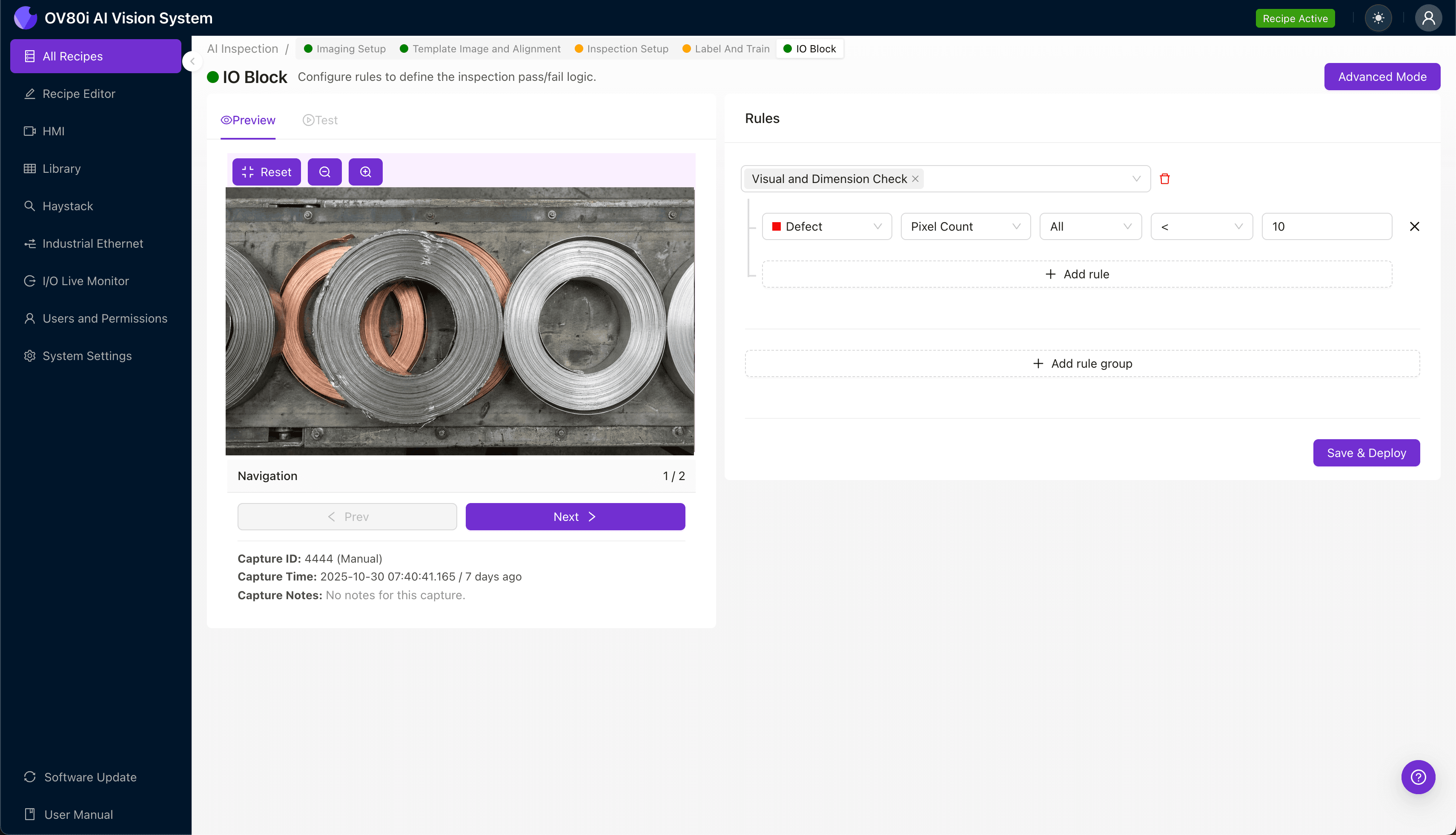
"Edge damage on raw material coils costs manufacturers millions annually through scrap, rework, and customer returns. Overview.ai's deep learning platform delivers 100% inline inspection at full line speed—catching cracks, burrs, and wavy edges that human inspectors miss 20-30% of the time."
The Problem: Why Edge Damage Costs Manufacturers Millions
Edge damage on raw material coils is one of the most costly—yet frequently overlooked—quality issues in metal processing operations. When damaged coils enter downstream processes, the consequences cascade through your entire production line.
Common Edge Defects in Raw Material Coils
- Wavy edges – Irregular undulations along the coil strip caused by improper tension or rolling
- Edge cracks – Micro-fractures that propagate during subsequent forming operations
- Burrs and slivers – Sharp metallic protrusions that create safety hazards and contaminate finished products
- Camber deviation – Lateral curvature causing the strip to bow, leading to misalignment in stamping dies
- Edge fold-over – Rolled or bent edges from mishandling during transport or storage
- Oxidation and corrosion – Rust formation along exposed edges that weakens material integrity
Manual inspection of incoming coils is notoriously unreliable. Inspectors face thousands of linear feet of material per shift, and edge defects often measure just fractions of a millimeter. Fatigue sets in quickly, and the repetitive nature of the task means even experienced operators miss 20-30% of critical defects.
The Solution: Machine Vision + Deep Learning
Traditional rule-based vision systems struggle with edge damage detection because defects vary enormously in appearance. A crack doesn't look like a burr, and oxidation patterns differ from coil to coil.
Deep learning changes everything. By training neural networks on thousands of labeled images, AI systems learn to recognize defect "signatures" that would take humans years to memorize.
Overview.ai's approach delivers consistent, objective inspection at full line speed. The OV80i platform doesn't get tired, doesn't take breaks, and applies the same rigorous standards to the first coil of the day as the last.
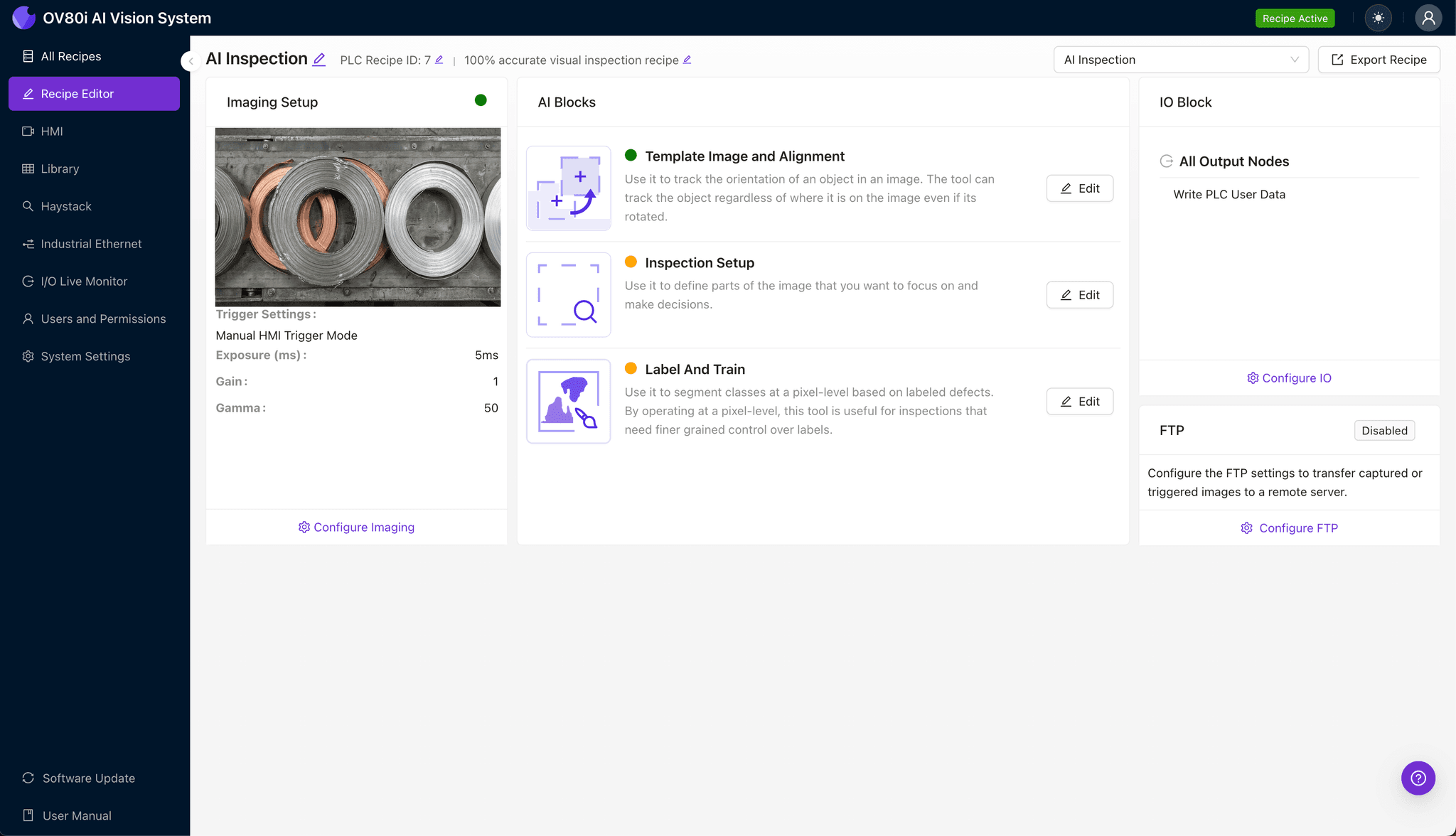
Step 1: Imaging Setup
Position the raw material coil edge under the OV80i camera, ensuring the lighting captures both the top surface and the edge profile. Proper illumination is critical for revealing subtle cracks and surface irregularities.
Click "Configure Imaging" in the Overview.ai interface. Adjust the Camera Settings—increase exposure to reveal shadow details in edge folds, and fine-tune gain to balance brightness without introducing noise.
Click "Save" to lock in your imaging parameters.
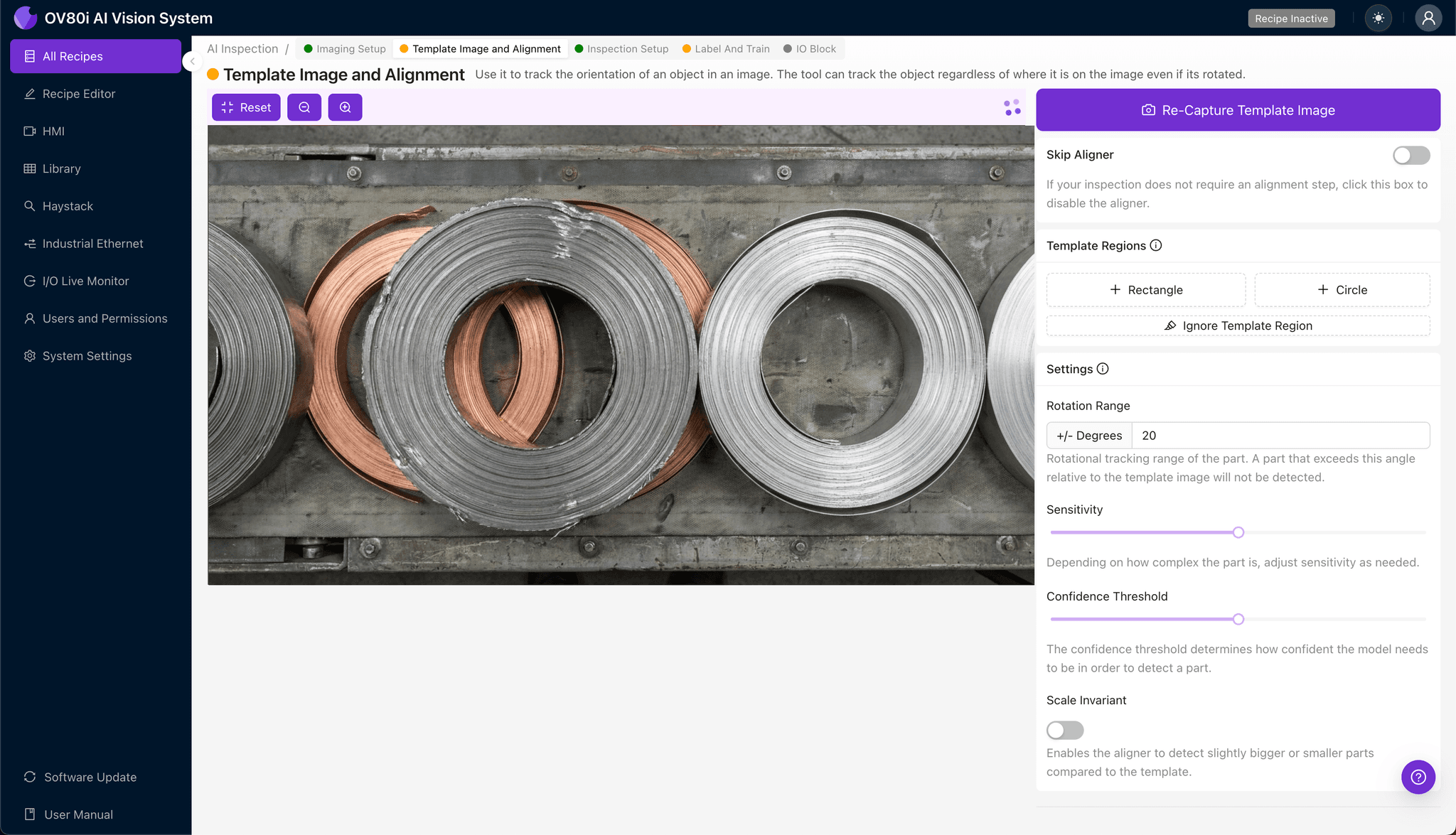
Step 2: Image Alignment
Navigate to "Template Image" and capture a reference frame of an acceptable coil edge. This template serves as the baseline for all subsequent comparisons.
Click "+ Rectangle" and draw a region around the main edge area you want to monitor. Set the "Rotation Range" to 20 degrees to accommodate normal variation in coil positioning on the line.
Step 3: Inspection Region Selection
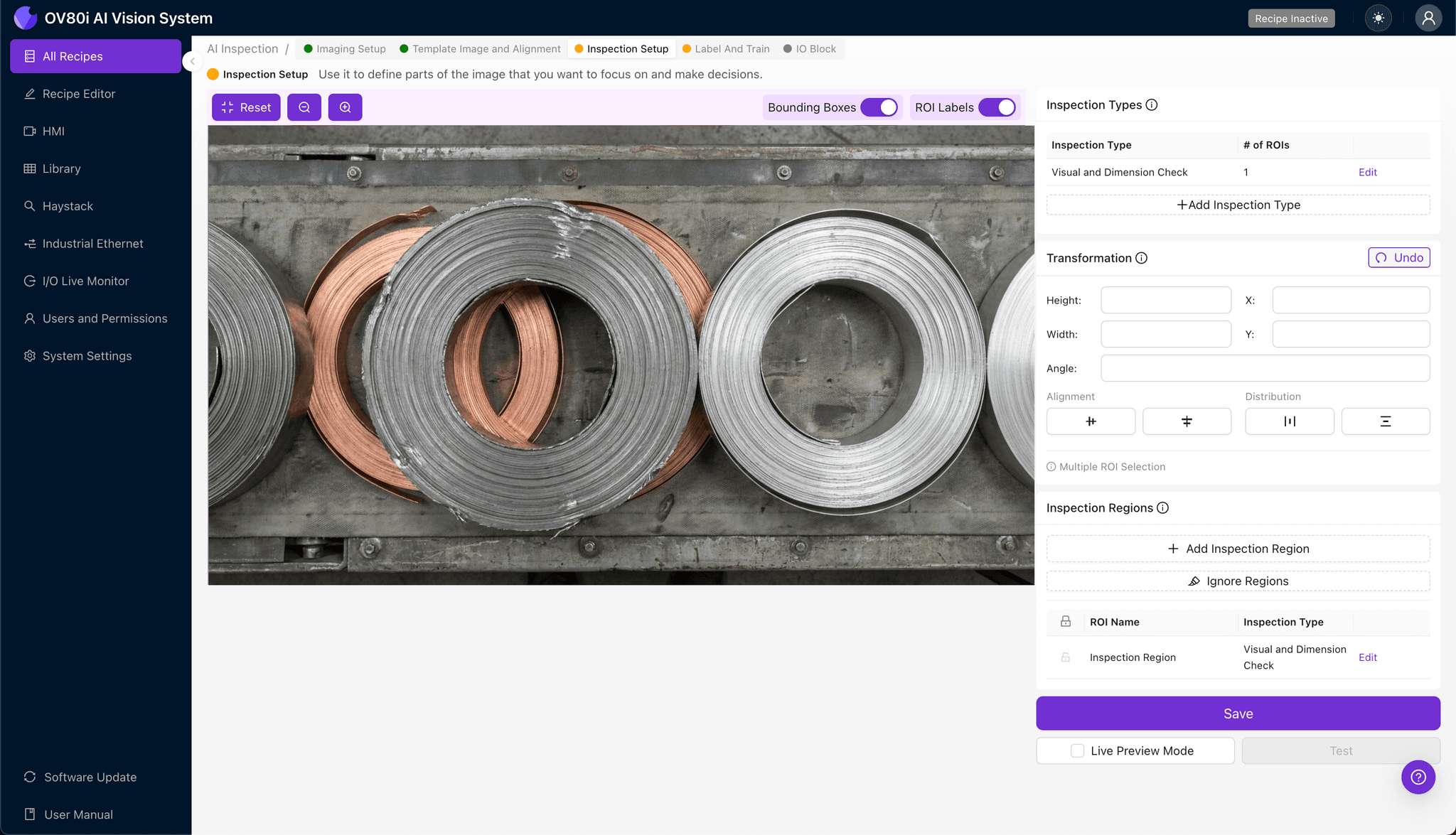
Navigate to "Inspection Setup" in the main menu. Rename your "Inspection Types" to match your quality criteria—for example, "Edge Crack Detection" or "Burr Identification."
Click "+ Add Inspection Region" to define where the AI should focus. Resize the yellow bounding box to cover the critical edge zones where defects typically appear.
Click "Save" to confirm your inspection regions.
Step 4: Labeling Data
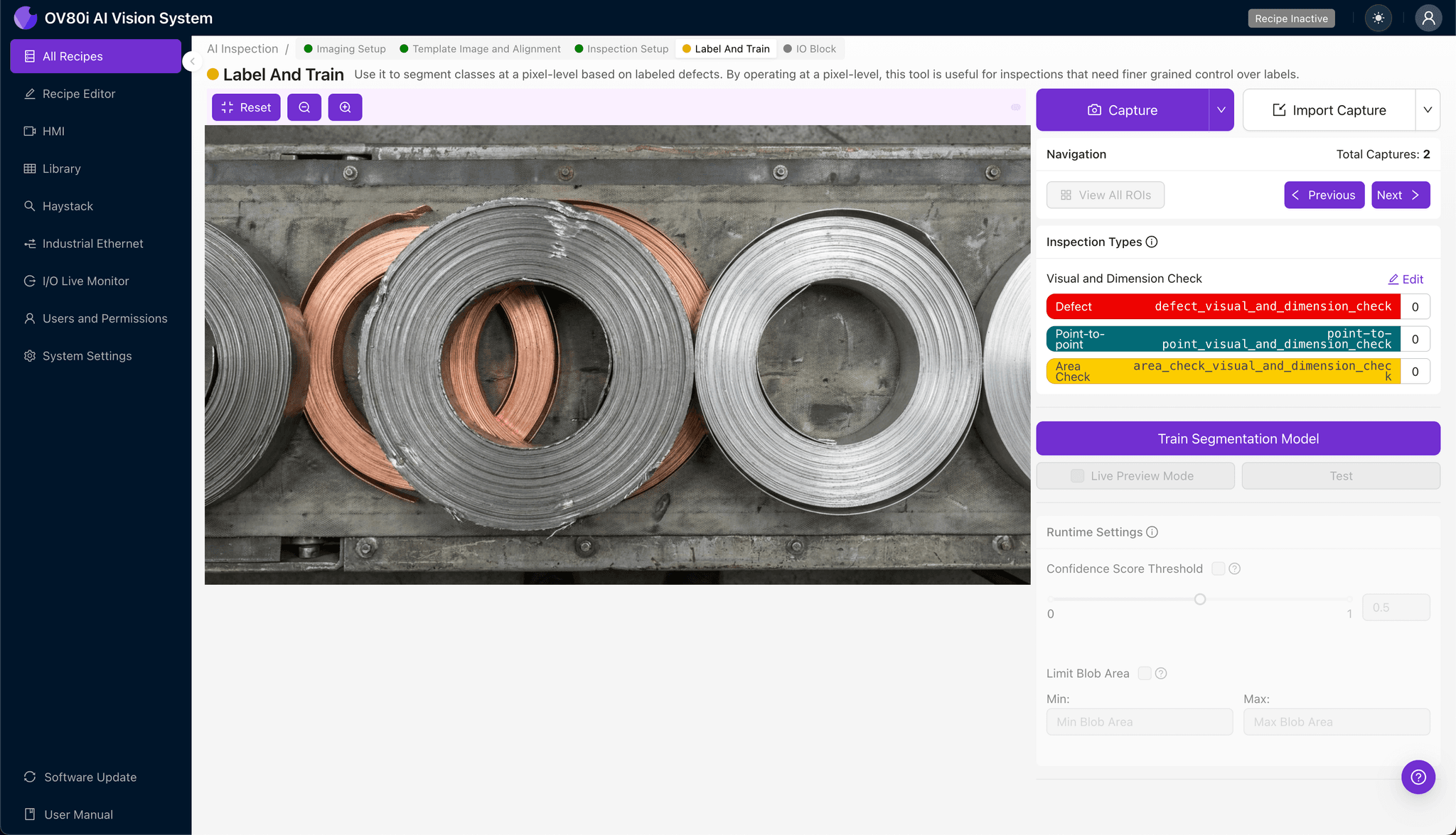
This is where human expertise trains the AI. Review incoming images and label each as Good or Bad based on your quality standards.
Include representative samples of every defect type you've encountered historically. Don't forget to add known failure modes—those edge cracks that caused customer returns last quarter are exactly what the system needs to learn.
The more diverse your labeled dataset, the more robust your detection model becomes.
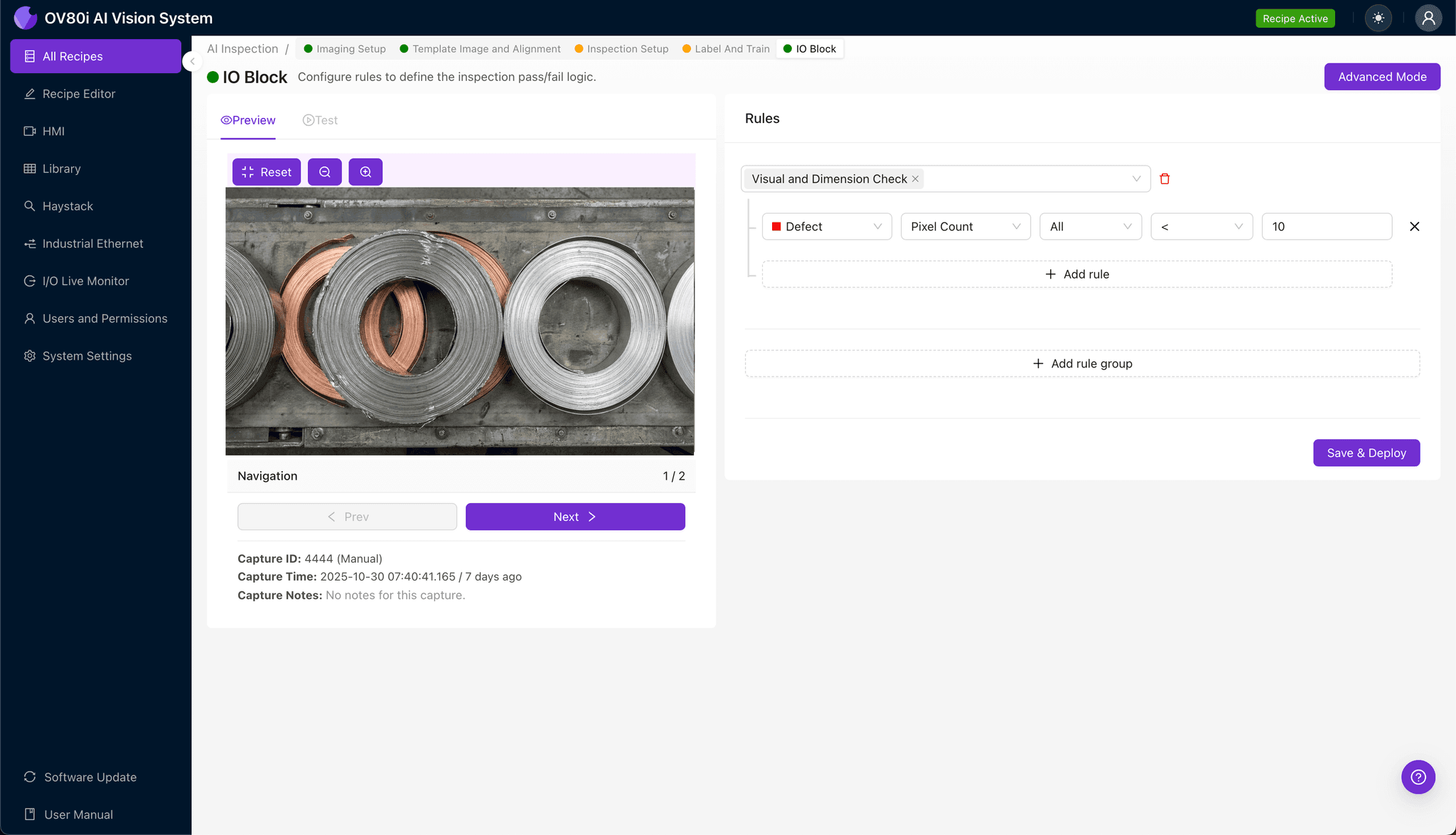
Step 5: Creating Rules
Define your pass/fail logic based on each Inspection Type. For example, any detected edge crack triggers an automatic rejection, while minor surface oxidation might flag for secondary review.
Gate automated acceptance directly on your production line. When coils pass inspection, they flow to the next process; when they fail, they're diverted for disposition—no human bottleneck required.
Key Outcomes & ROI
Manufacturers implementing AI-powered edge damage inspection consistently report transformative results:
- Reduced scrap rates – Catch defective material before it enters costly downstream processes
- Higher throughput – Eliminate manual inspection bottlenecks and maintain full line speed
- Enhanced compliance and traceability – Automatically log every inspection with timestamped images for audit trails
- Process improvement insights – Identify patterns in incoming material quality to drive supplier accountability
Stop Edge Damage Before It Stops Your Line
Raw material quality sets the ceiling for everything downstream. With Overview.ai's visual inspection platform, you gain 100% inline coverage that human inspectors simply cannot match.
Ready to see how AI-powered inspection handles your specific edge damage challenges? Request a demo and bring your toughest coil samples.
Eliminate Edge Damage Defects Today
Stop relying on manual inspection. Deploy Overview.ai to catch coil edge defects instantly at full line speed.