Shipping Carton with Insufficient Crush Strength: A Machine Vision Inspection Guide
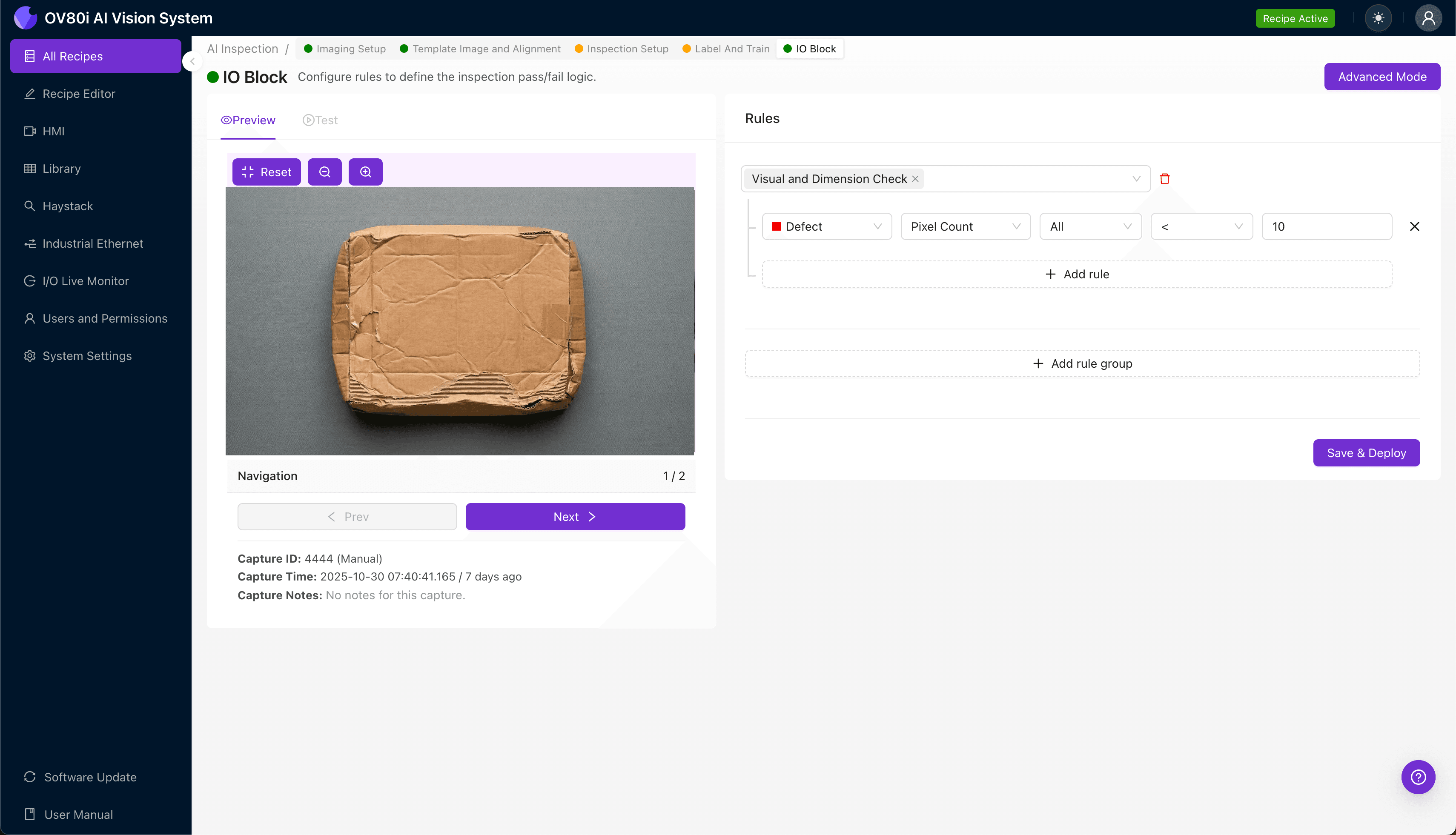
"Shipping cartons with insufficient crush strength cause costly downstream failures including damaged goods and customer complaints. AI-powered machine vision detects visual indicators of structural weakness—delaminated fluting, crushed flutes, and moisture damage—at full line speed, transforming quality control from sampling-based inspection into 100% reliable detection."
The Problem: Why Crush Strength Defects Slip Through
Shipping cartons with insufficient crush strength represent one of the most costly yet overlooked quality issues in packaging and fulfillment operations. When these compromised cartons enter the supply chain, they fail during stacking, transit, or warehouse storage—resulting in damaged goods, customer complaints, and significant financial losses.
Common Defects Associated with Insufficient Crush Strength:
- Delaminated fluting — Separation between the corrugated medium and liner boards that compromises structural integrity
- Crushed or flattened flutes — Damaged corrugated waves that reduce vertical stacking strength
- Moisture damage indicators — Discoloration, warping, or soft spots that signal weakened fiber bonds
- Inconsistent board caliper — Variations in material thickness across the carton surface
- Score line over-compression — Excessive pressure during folding that creates structural weak points
- Adhesive bond failures — Gaps or bubbles between laminated layers visible at edges and seams
Manual inspection of crush strength indicators fails for several critical reasons. Human inspectors cannot maintain consistent detection of subtle visual cues like minor delamination or caliper variations across thousands of cartons per shift. Additionally, the speed of modern packaging lines makes it impossible for operators to examine each carton thoroughly without creating bottlenecks.
The Solution: Machine Vision and Deep Learning
Machine vision systems equipped with deep learning algorithms excel at detecting the visual signatures of crush strength deficiencies. Unlike rule-based systems that rely on simple threshold measurements, AI-powered inspection learns the complex patterns associated with structural compromise—including subtle texture changes, surface irregularities, and dimensional variations that predict failure.
Overview.ai's approach delivers consistent, objective inspection at full line speed. By deploying systems like the OV80i directly on the packaging line, manufacturers achieve 100% inline inspection without sacrificing throughput. The AI models continuously improve as they encounter new defect variations, creating an ever-more-reliable quality gate.
Step 1: Imaging Setup
Position the shipping carton sample under the OV80i camera system, ensuring the inspection surface is fully visible within the field of view. Proper lighting is essential—angled illumination often reveals surface texture variations indicative of crush strength issues.
Click "Configure Imaging" to access the Camera Settings panel. Adjust the exposure to capture surface detail without washout, and fine-tune the gain setting to optimize contrast between normal and defective areas.
Click "Save" to lock in your imaging configuration.
Step 2: Image Alignment
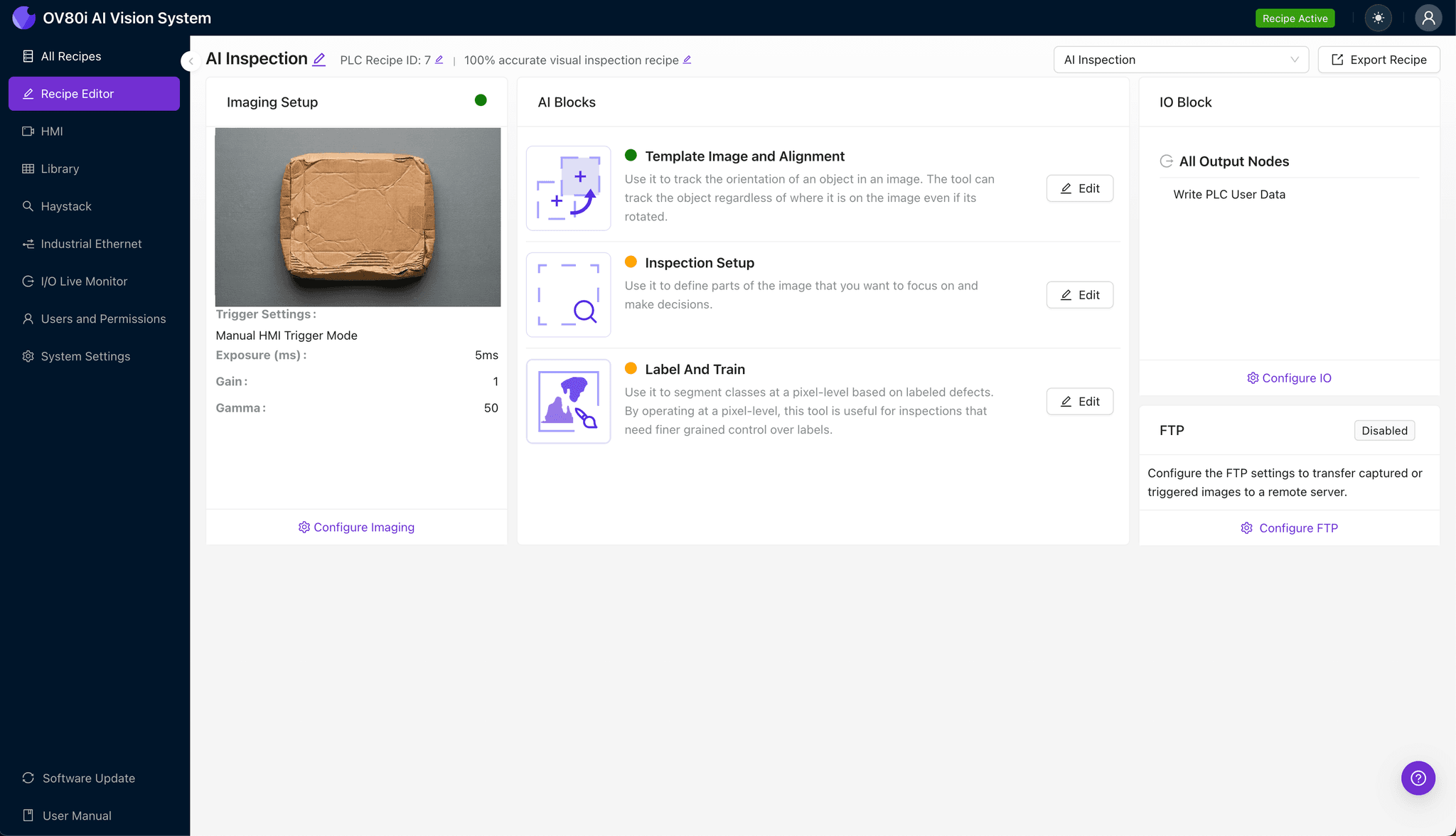
Navigate to the "Template Image" section in the configuration interface. Capture a Template image using a known-good carton positioned in the standard orientation.
Click "+ Rectangle" to add an alignment region around the main body of the carton. This region should encompass the primary inspection surface while excluding variable elements like labels or date codes.
Set the "Rotation Range" to 20 degrees to accommodate minor positioning variations as cartons move through the inspection station.
Step 3: Inspection Region Selection
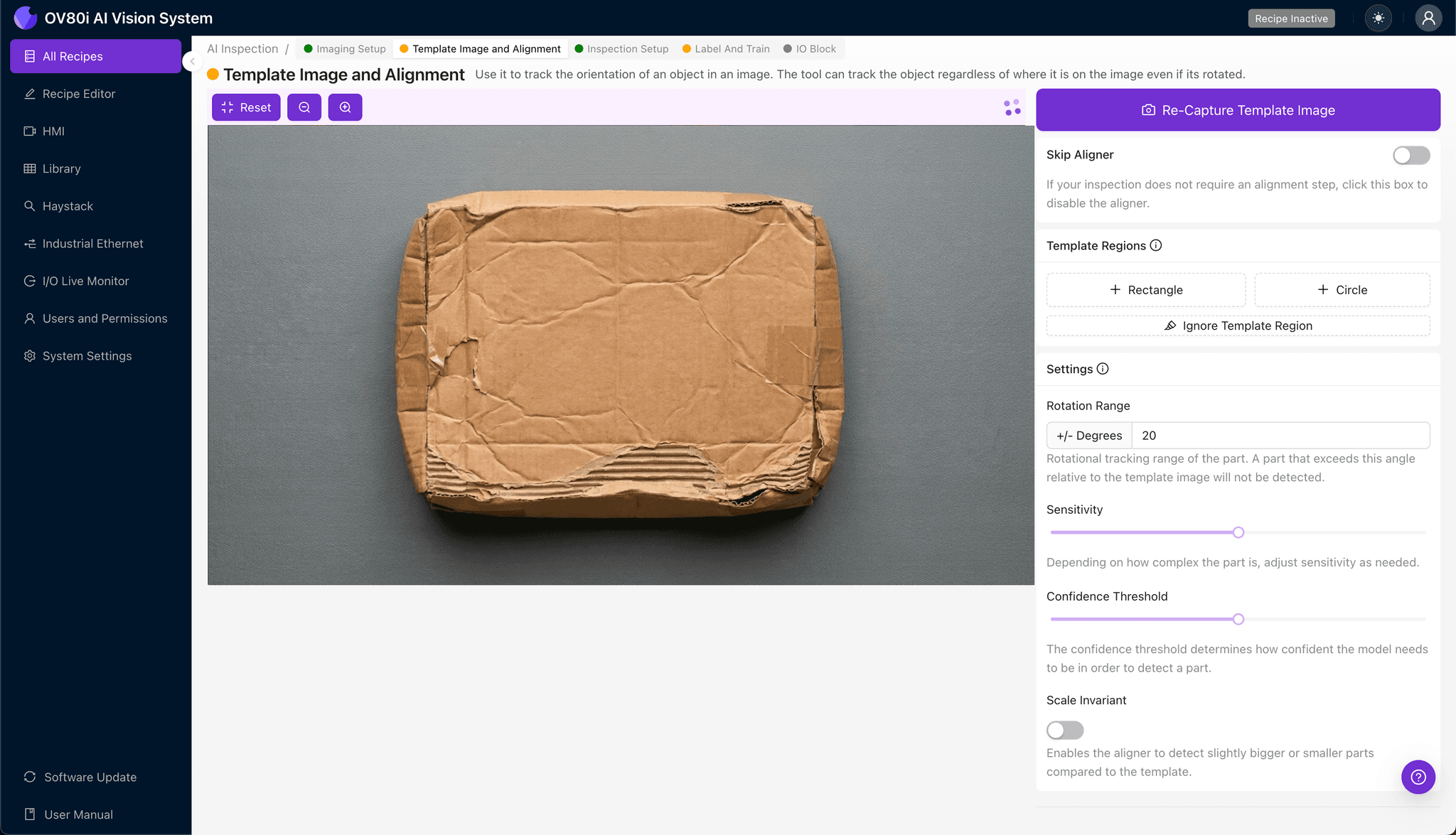
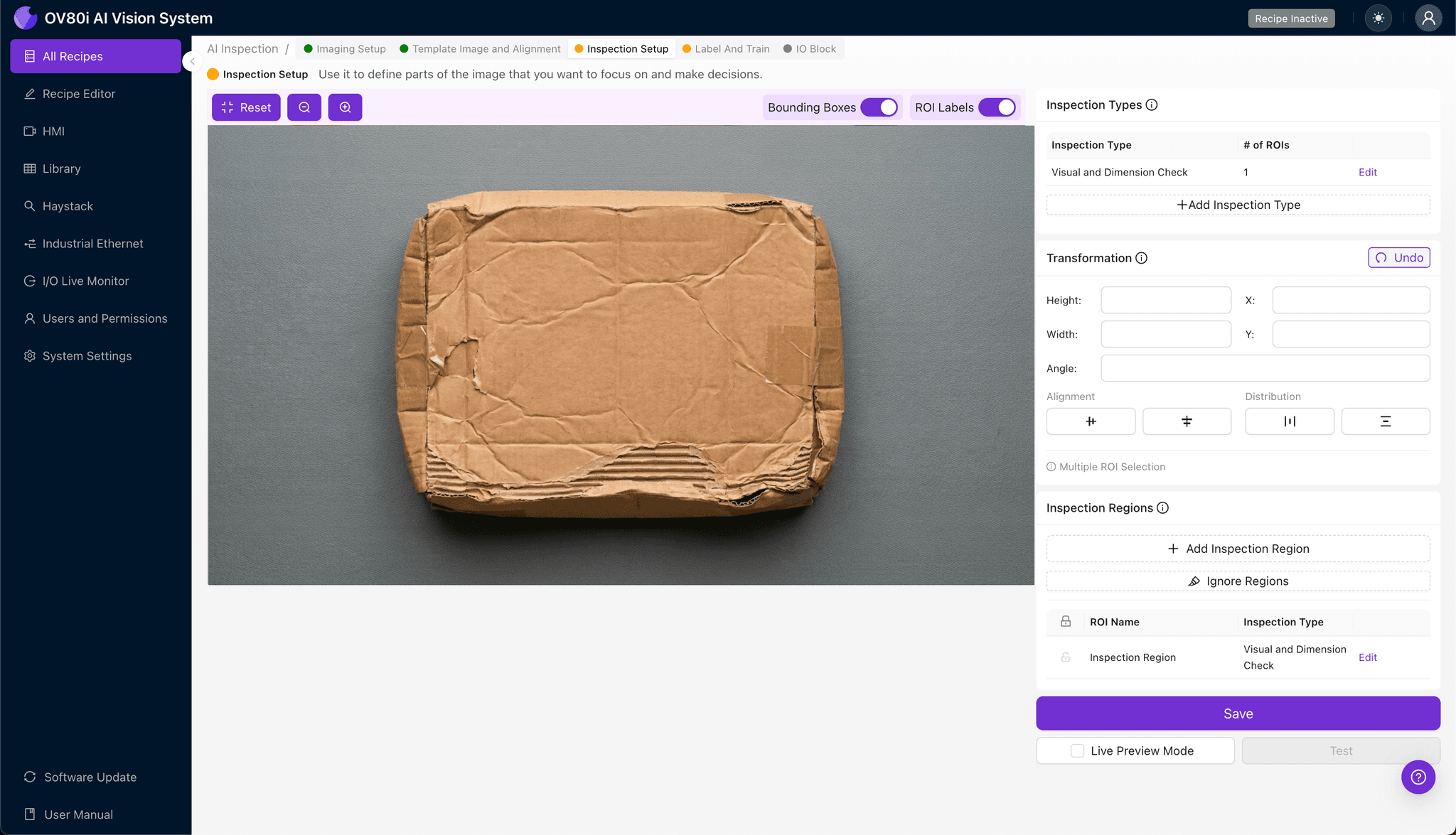
Navigate to "Inspection Setup" to define your detection zones. Rename your "Inspection Types" with descriptive labels such as "Flute_Integrity," "Surface_Delamination," or "Moisture_Damage."
Click "+ Add Inspection Region" for each defect category you need to monitor. Resize the yellow bounding box to cover the critical defect areas—focus on high-stress zones like corners, score lines, and panel centers where crush failures typically manifest.
Click "Save" after configuring all inspection regions.
Step 4: Labeling Data
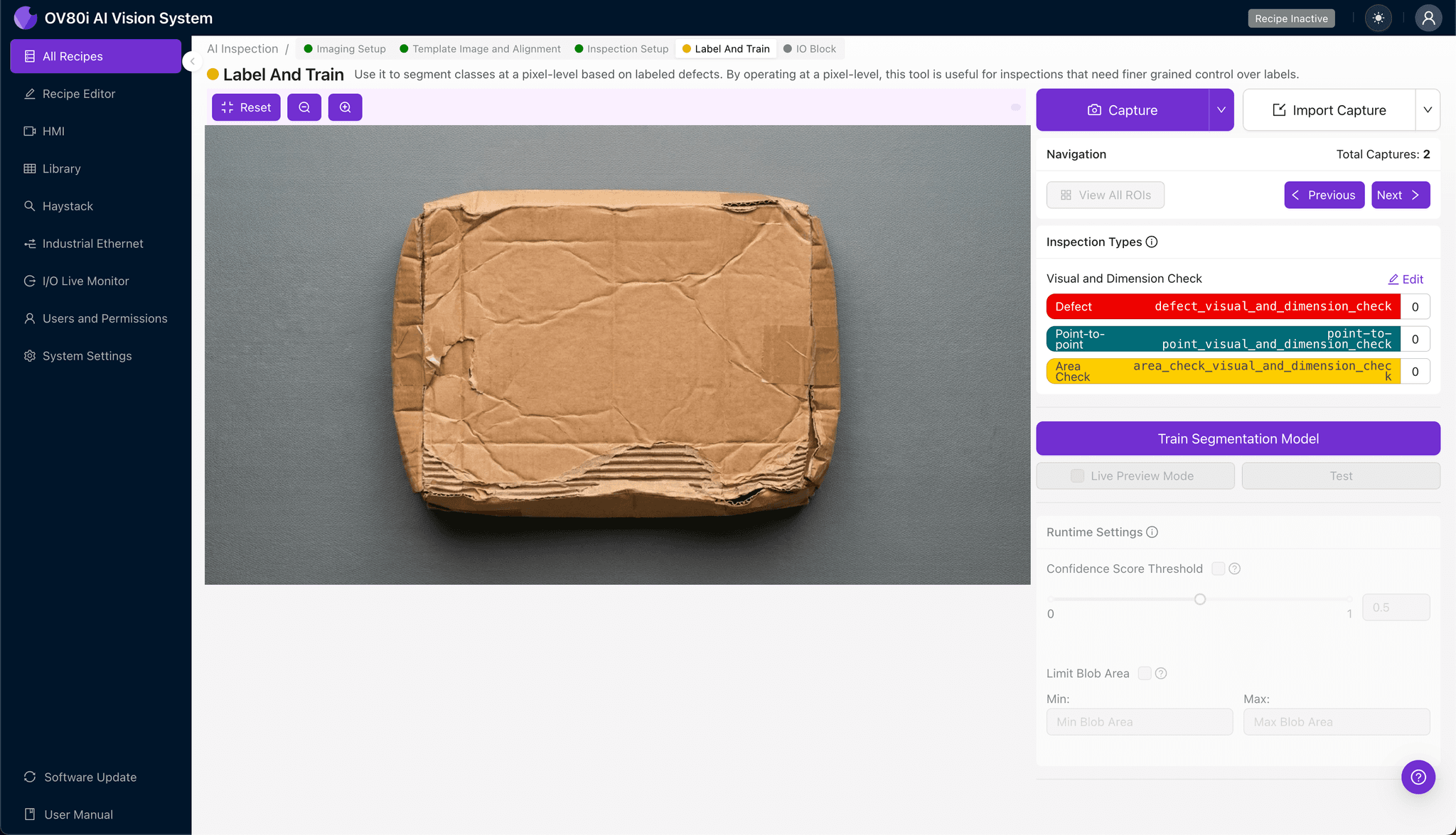
The human-in-the-loop labeling process trains your AI model to recognize crush strength deficiencies specific to your carton specifications. As production images flow into the system, operators review and label each sample as Good or Bad.
Include representative samples across your full range of acceptable variation. Critically, incorporate known failure modes—cartons that failed crush testing—to teach the model the visual patterns that predict structural weakness.
Step 5: Creating Rules
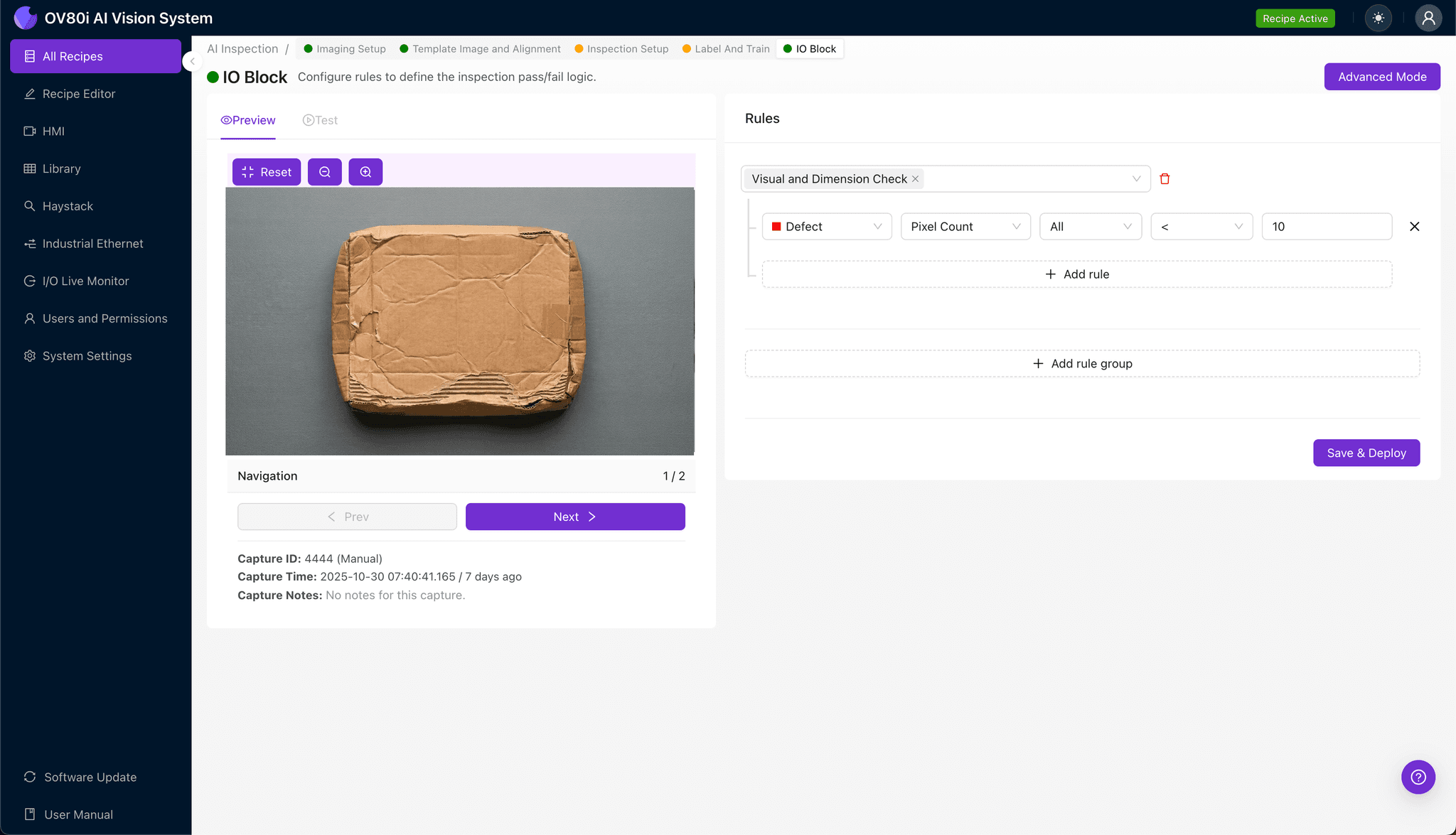
Configure your pass/fail logic based on the Inspection Types you defined earlier. Set threshold parameters that determine when detected anomalies trigger a rejection—balancing sensitivity against false positive rates.
Gate automated acceptance on the line by integrating rejection signals with your material handling system. Cartons flagged for insufficient crush strength indicators can be automatically diverted for secondary testing or disposal.
Key Outcomes & ROI
Implementing AI-powered crush strength inspection delivers measurable business impact:
- Reduced scrap and returns — Catch compromised cartons before they cause product damage, eliminating costly claims and replacement shipments
- Higher throughput — Maintain full line speed while achieving 100% inspection coverage without manual bottlenecks
- Compliance and traceability — Generate complete inspection records with timestamped images for quality audits and customer documentation
- Process improvement insights — Identify upstream issues in carton manufacturing or storage through defect trend analysis and root cause correlation
Conclusion
Shipping cartons with insufficient crush strength create downstream failures that are expensive to remediate and damaging to customer relationships. By deploying Overview.ai's machine vision inspection, manufacturers transform crush strength quality control from a sampling-based gamble into a reliable, data-driven process.
The result: fewer damaged shipments, lower quality costs, and confidence that every carton leaving your facility meets structural requirements.
Eliminate Crush Strength Defects Today
Stop relying on manual inspection and sampling. Deploy Overview.ai to catch compromised cartons instantly at full line speed.