
How to Detect Stripped Threads on Standoffs Using AI-Powered Visual Inspection
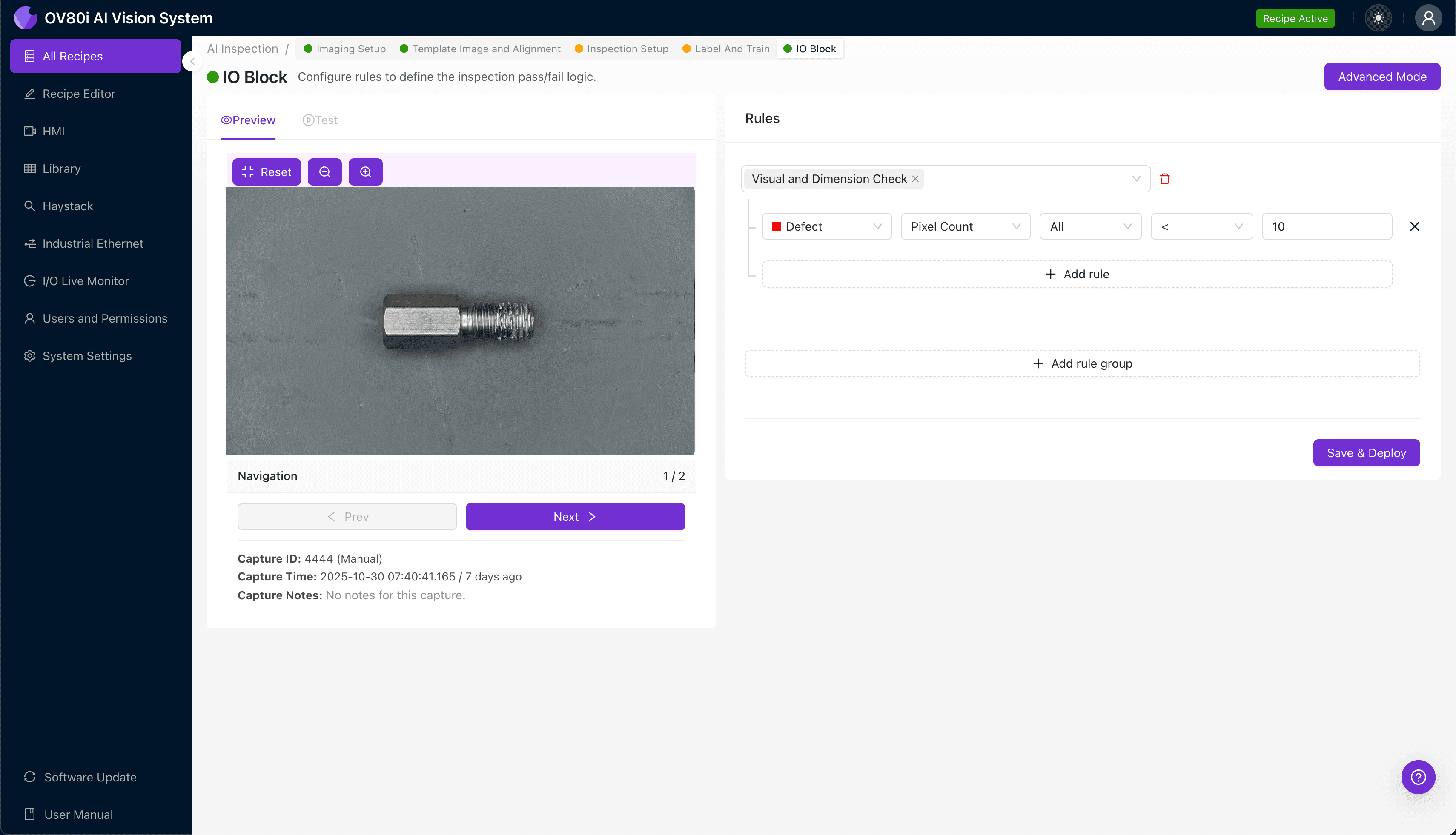
"Stripped threads on standoffs cause costly recalls and assembly failures. AI-powered visual inspection delivers consistent, real-time detection at full line speed—catching microscopic defects that human inspectors miss."
The Problem: Why Stripped Thread Detection Challenges Manufacturers
Stripped threads on standoffs represent one of the most costly and dangerous defects in fastener manufacturing. When these critical components fail in the field, the consequences range from product recalls to catastrophic assembly failures.
Common Defects Found in Standoffs with Stripped Threads:
- Partial thread stripping — threads sheared or flattened along one section of the helix
- Cross-threading damage — irregular thread patterns caused by misaligned insertion during prior assembly attempts
- Galling and material transfer — torn or welded thread surfaces from metal-to-metal friction
- Thread crest deformation — flattened or rolled-over thread peaks that prevent proper engagement
- Pitch diameter distortion — stretched or compressed thread spacing that causes binding
- Root crack propagation — micro-fractures at thread valleys that compromise structural integrity
Human inspectors struggle with stripped thread detection due to the subtle nature of early-stage damage. Thread defects often measure in fractions of a millimeter, and inspector fatigue causes miss rates to climb dramatically after just 20-30 minutes of continuous inspection.
The Solution: Machine Vision and Deep Learning
AI-powered visual inspection eliminates the variability inherent in manual quality control. Deep learning models learn to recognize the complex patterns that distinguish acceptable threads from stripped or damaged ones—even when defects are microscopic or partially obscured.
Overview.ai's approach delivers consistent, objective inspection at full line speed. The system never fatigues, never loses focus, and captures every single part for analysis—enabling true 100% inline inspection that catches defects human eyes simply cannot detect reliably.
Step 1: Imaging Setup
Position the standoff with the stripped thread under the OV80i camera, ensuring the threaded section is clearly visible. Proper lighting angle is critical for thread inspection—angled illumination creates shadows that highlight thread geometry and surface irregularities.
Click "Configure Imaging" to access the Camera Settings panel. Adjust exposure to capture thread detail without washout, and fine-tune gain to optimize signal-to-noise ratio for your specific standoff material finish.
Click "Save" to lock in your imaging configuration.
Step 2: Image Alignment
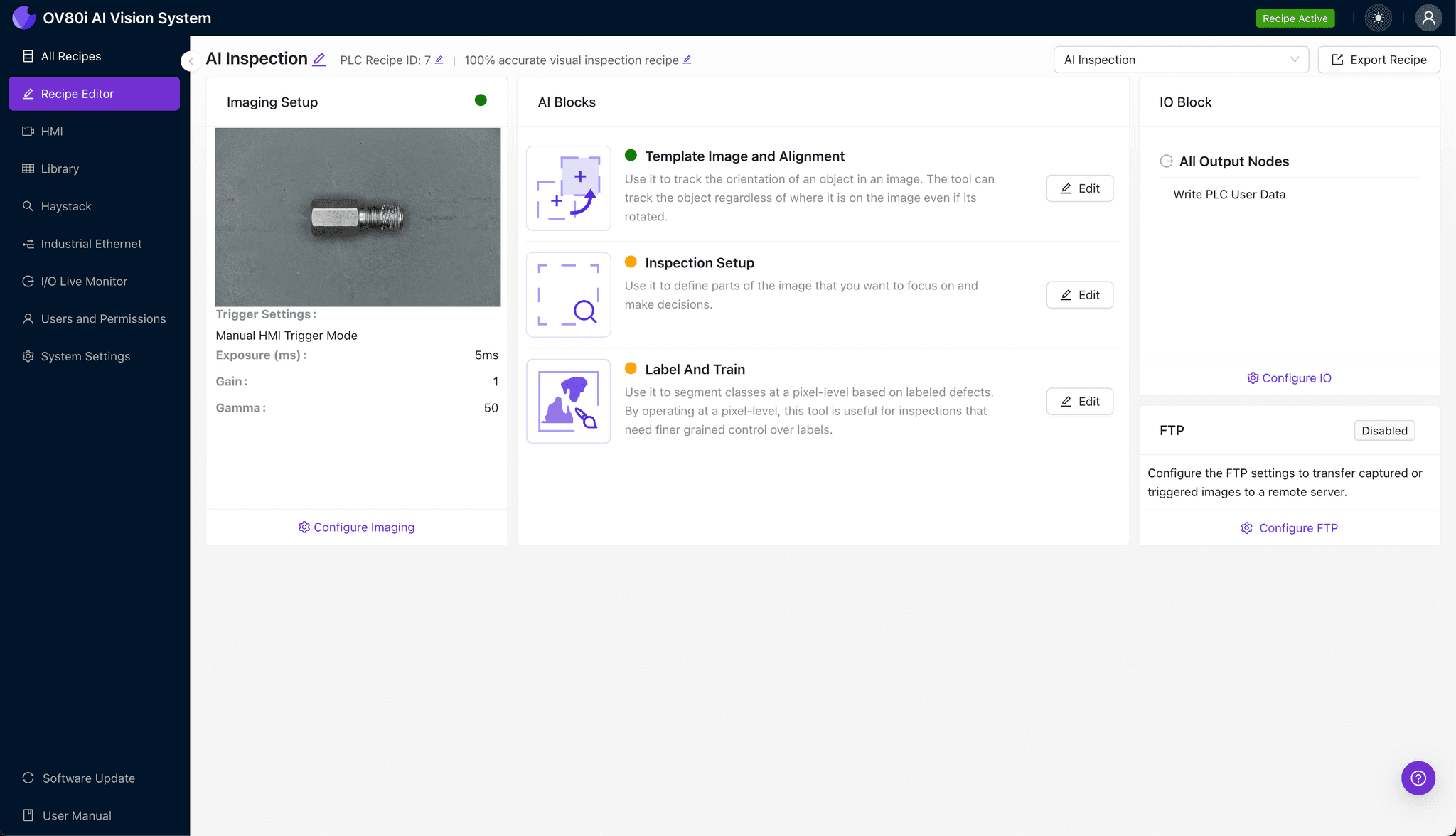
Navigate to the "Template Image" tab and capture a reference Template of a correctly-positioned standoff. This template establishes the baseline orientation the system will use to align every subsequent part.
Click "+ Rectangle" and draw a region around the main body of the standoff. This alignment region should encompass distinctive features while avoiding the threaded areas you'll inspect for defects.
Set the "Rotation Range" to 20 degrees to accommodate natural variation in how parts present on the line.
Step 3: Inspection Region Selection
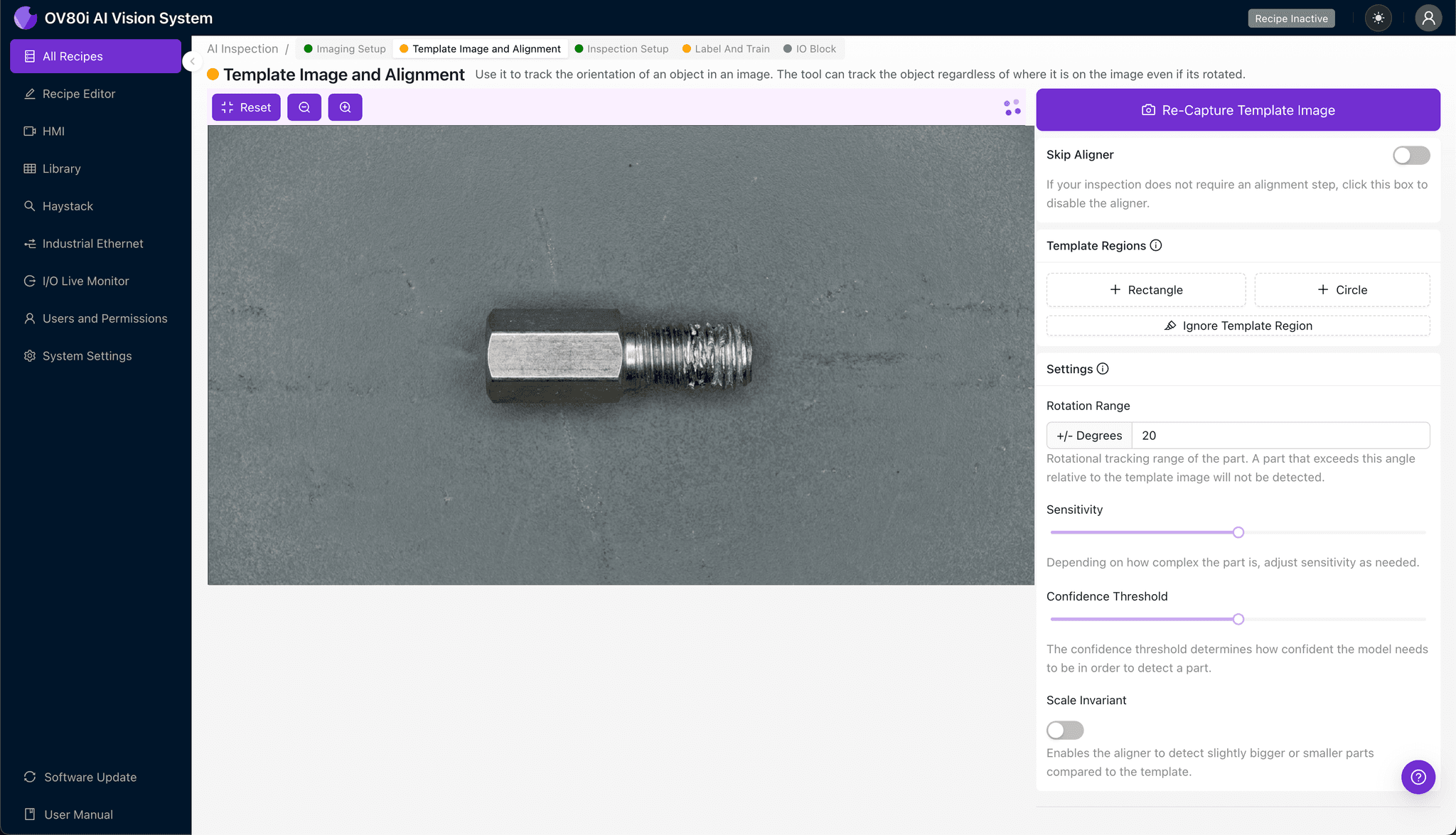
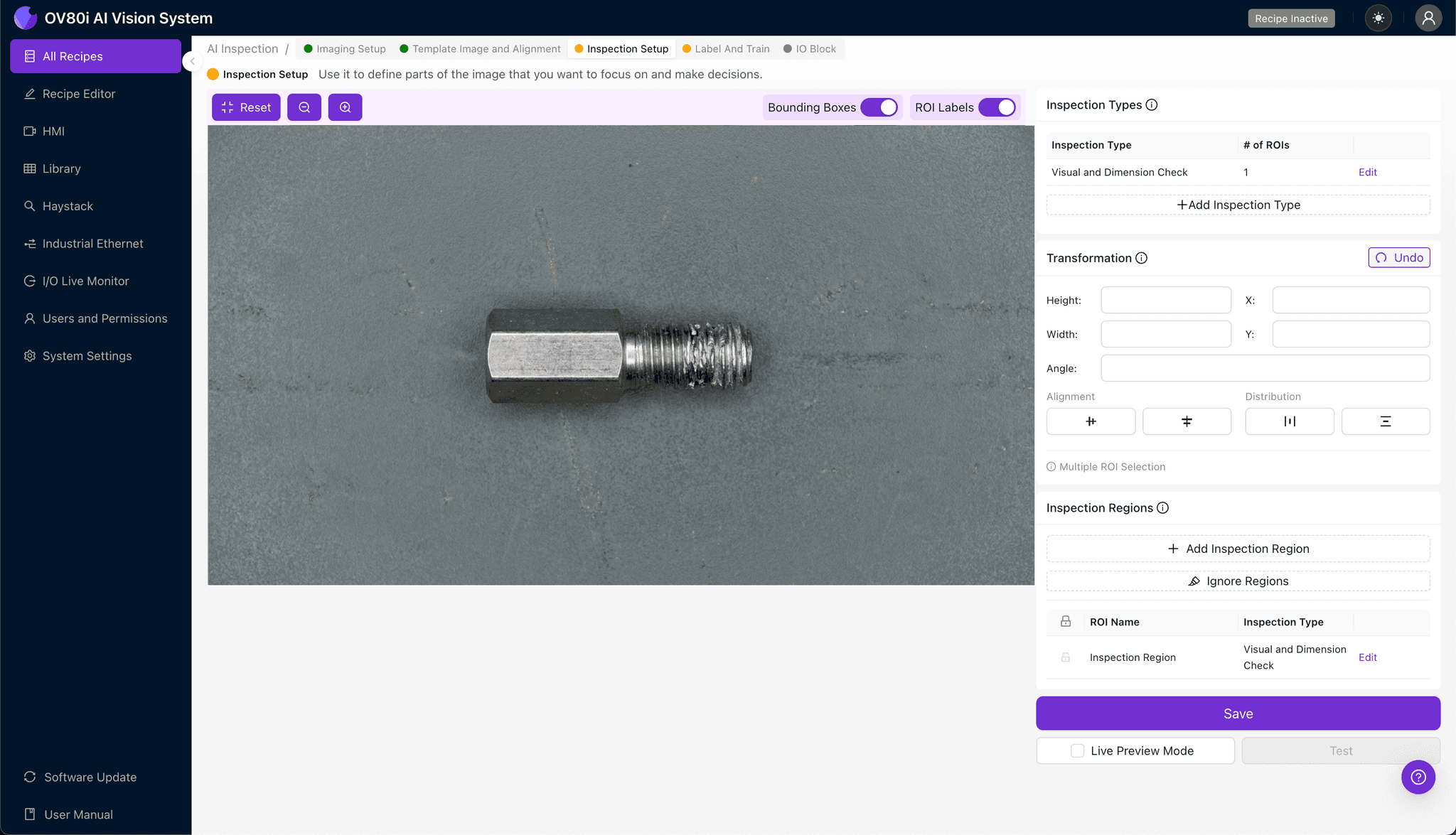
Navigate to "Inspection Setup" to define where the system should look for defects. Rename your "Inspection Types" with descriptive labels like "Thread_Integrity" or "Stripped_Thread_Detection" for clear traceability.
Click "+ Add Inspection Region" to create a new zone. Resize the yellow bounding box to cover the critical threaded areas—focus on regions where stripping most commonly occurs, such as the first few threads and any high-stress engagement zones.
Click "Save" to confirm your inspection regions.
Step 4: Labeling Data
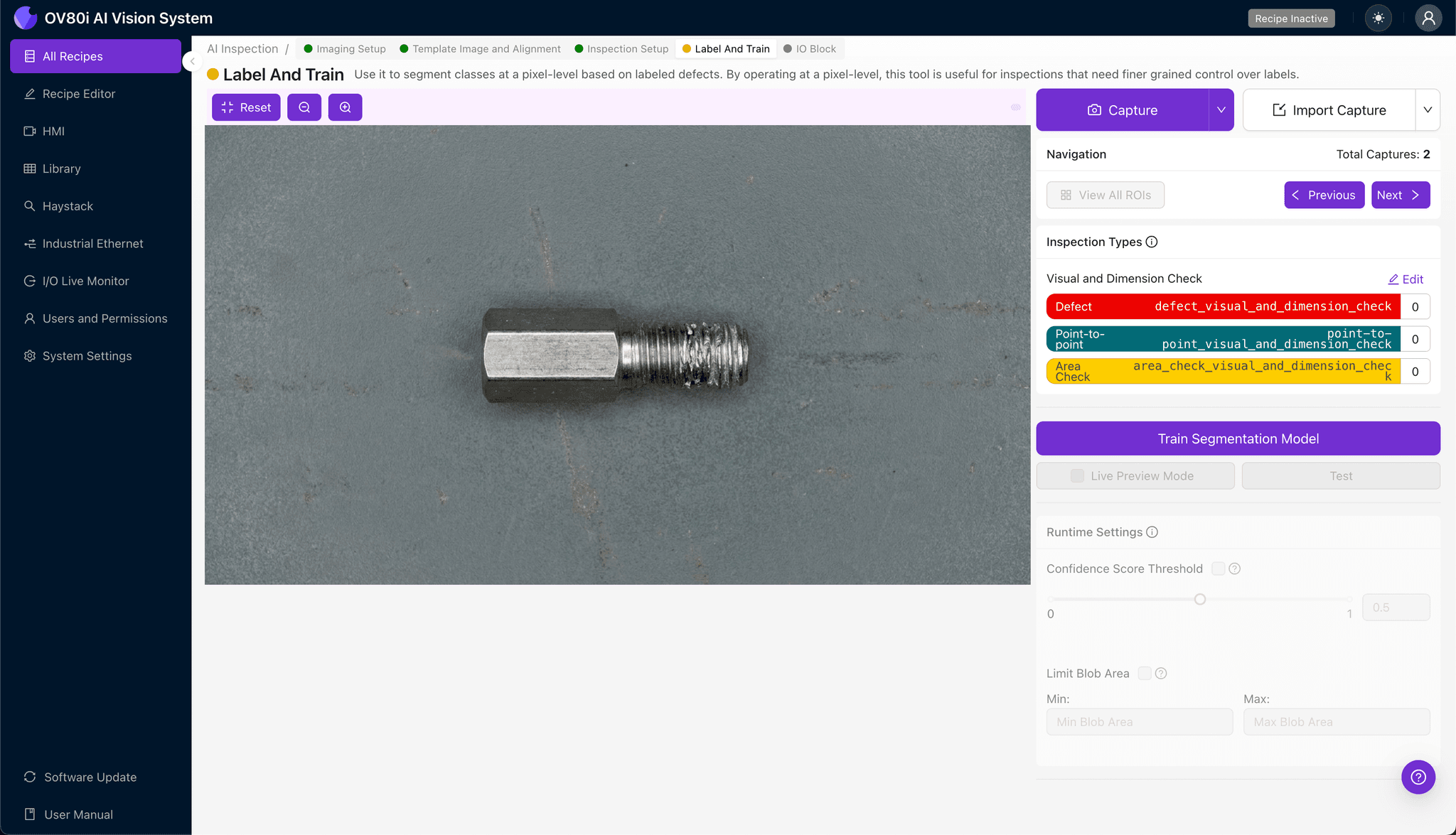
The human-in-the-loop labeling process trains the deep learning model to distinguish good threads from bad. Review captured images and categorize each as Good (acceptable thread condition) or Bad (stripped, damaged, or suspect).
Include representative samples across your full range of acceptable variation—different lighting conditions, minor cosmetic differences, and normal wear patterns. Equally important: incorporate all known failure modes, including partially stripped threads, galling damage, and cross-threading evidence.
This labeled dataset becomes the foundation for accurate, reliable automated inspection.
Step 5: Creating Rules
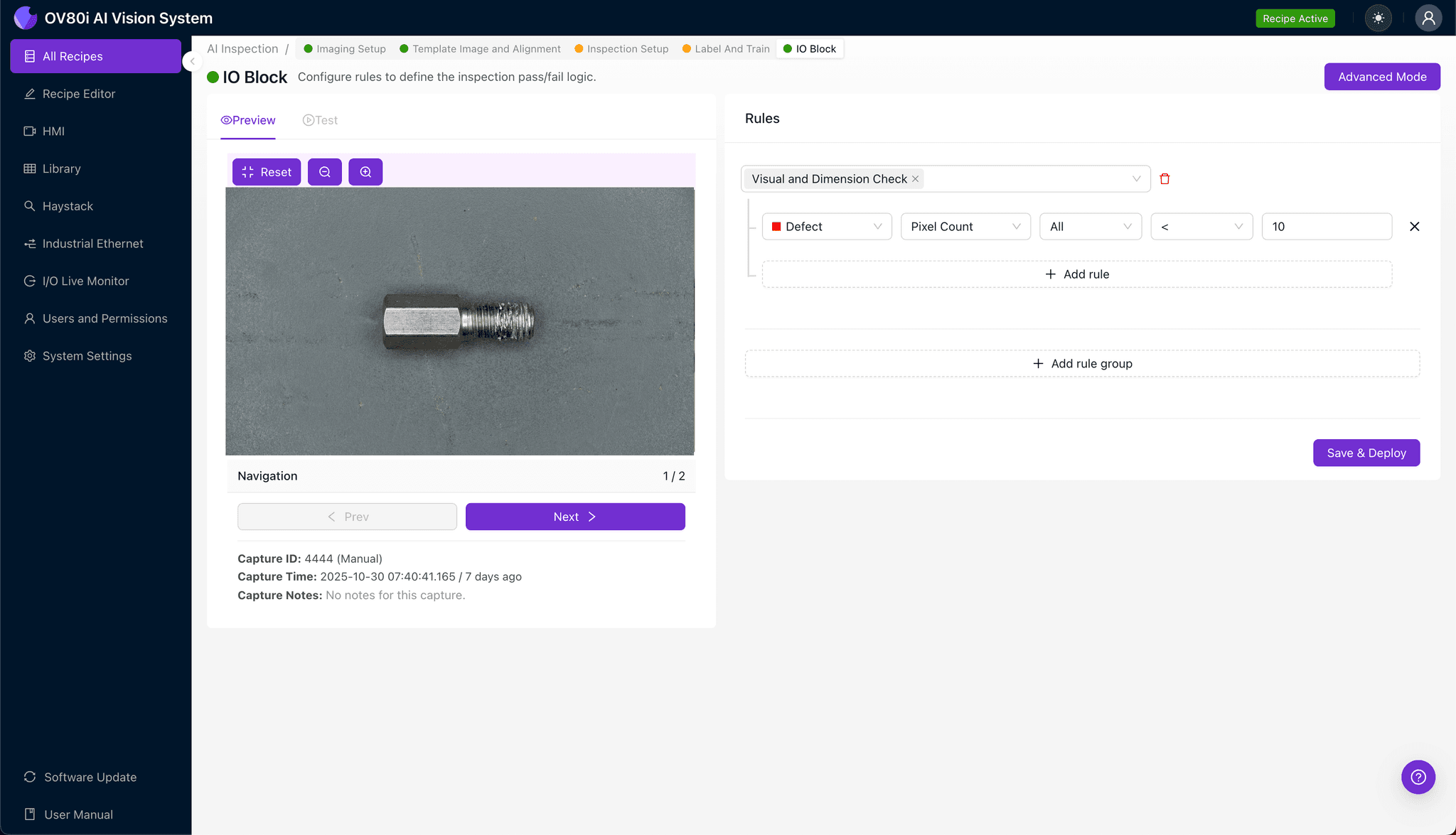
Configure pass/fail logic based on your defined Inspection Types. Set threshold criteria that determine when a standoff meets quality standards versus when it should be flagged for rejection or secondary review.
Gate automated acceptance directly on your production line. Parts passing inspection continue downstream automatically, while failed parts trigger rejection mechanisms or alert operators—ensuring zero defective standoffs reach your customers.
Key Outcomes & ROI
Implementing AI-powered stripped thread detection delivers measurable business impact:
- Reduced scrap and rework — catch defects early before value-added processing wastes resources on bad parts
- Higher throughput — eliminate inspection bottlenecks with real-time, inline analysis that keeps pace with production
- Compliance and traceability — maintain complete inspection records with timestamped images for audit trails and customer quality requirements
- Process improvement insights — identify upstream issues causing stripped threads by analyzing defect patterns and trends over time
Conclusion
Stripped threads on standoffs don't have to be a costly quality escape. With Overview.ai's visual inspection platform, manufacturers gain the consistency, speed, and accuracy needed to catch every defect—protecting both their reputation and their customers.
Ready to eliminate stripped thread defects from your line? Contact Overview.ai to see the OV80i in action.
Eliminate Stripped Thread Defects Today
Stop relying on manual inspection. Deploy Overview.ai to catch thread defects instantly with AI-powered precision.