How to Detect Part Tilting in Carrier Tape with Shallow Pockets Using AI-Powered Visual Inspection
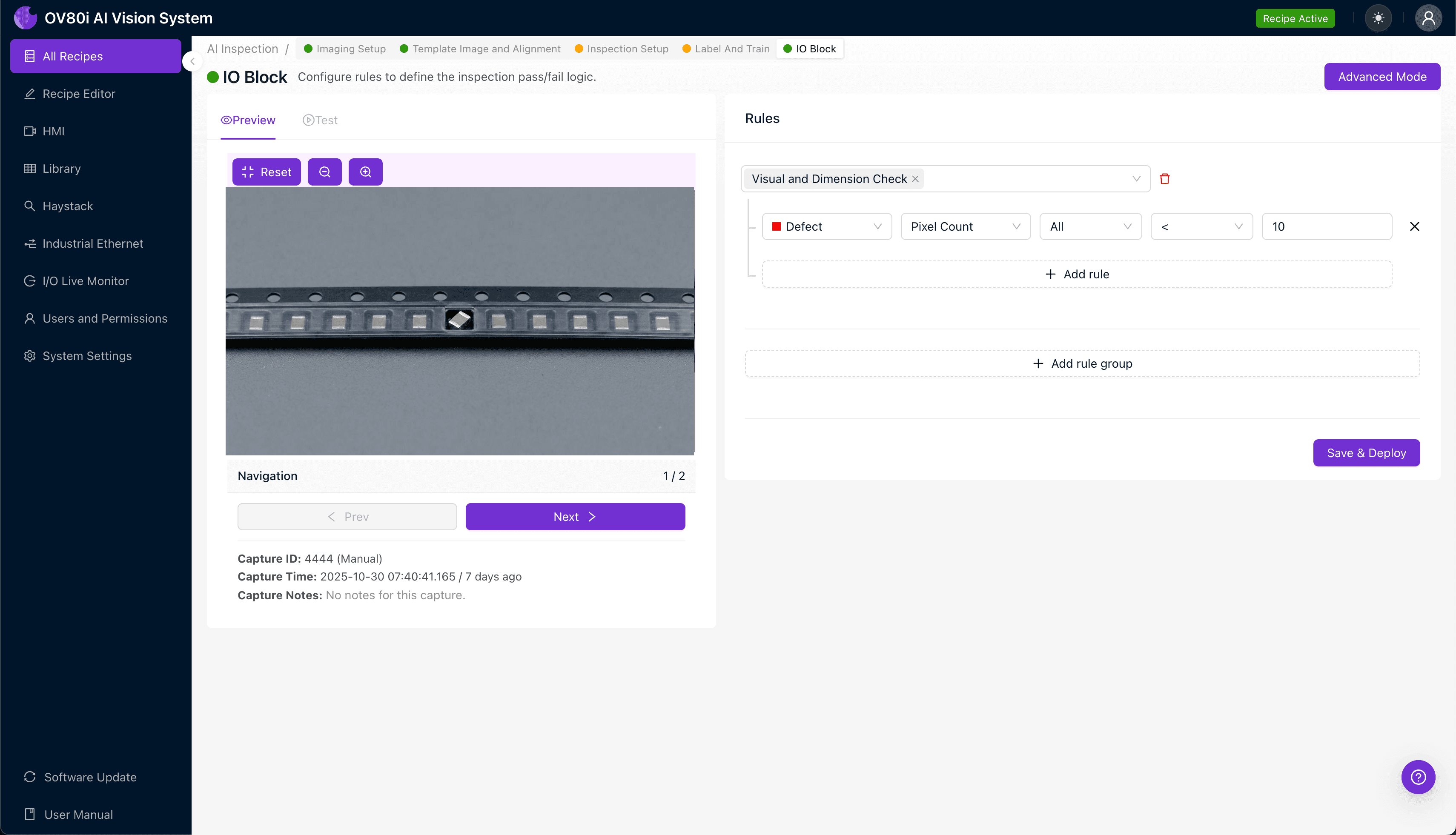
"Carrier tape with shallow pockets causes components to tilt, rotate, and shift—leading to pick-and-place failures that cascade through production. AI-powered visual inspection detects subtle 2-3 degree tilts that human inspectors miss, catching defects at full line speed before they become costly downstream failures."
The Problem: Why Shallow Pocket Carrier Tape Creates Quality Nightmares
Carrier tape with shallow pockets presents one of the most persistent quality challenges in electronics packaging and component handling. When pocket depth provides insufficient clearance, components shift, tilt, and rotate—creating downstream failures that can cascade through your entire production line.
Common Defects in Shallow Pocket Carrier Tape:
- Part tilting – Components sit at an angle rather than flat, causing pick-and-place failures
- Component rotation – Parts spin within oversized or shallow pockets, misaligning leads or contacts
- Incomplete seating – Components perch on pocket edges instead of settling to the bottom
- Pocket deformation – Shallow walls collapse or warp under tension, compounding tilt issues
- Cover tape adhesion failures – Tilted parts interfere with proper sealing, leading to contamination
- Missing components – Parts eject from shallow pockets during indexing or transport
Manual inspection simply cannot keep pace with modern tape-and-reel operations. Human inspectors experience fatigue-induced error rates that spike after just 20-30 minutes of repetitive visual checks, and the subtle angular variations that indicate tilting are nearly impossible to detect consistently at production speeds.
The Solution: Machine Vision and Deep Learning for Consistent Detection
AI-powered visual inspection eliminates the variability inherent in human quality control. Deep learning models excel at detecting subtle geometric deviations—like the 2-3 degree tilts that human eyes routinely miss but cause catastrophic pick-and-place failures.
Overview.ai's approach delivers consistent, objective inspection at full line speed. The OV80i system learns what "good" looks like from your specific components and pocket configurations, then flags deviations in real-time without slowing production.
Step 1: Imaging Setup
Position your carrier tape sample under the OV80i camera, ensuring the shallow pockets and seated components are clearly visible. Proper lighting angle is critical—side lighting often reveals tilting through shadow patterns that top-down illumination misses.
Click "Configure Imaging" to access the Camera Settings panel. Adjust exposure to capture pocket depth detail without overexposing reflective component surfaces, and fine-tune gain to balance noise reduction with feature visibility.
Click "Save" to lock in your imaging parameters.
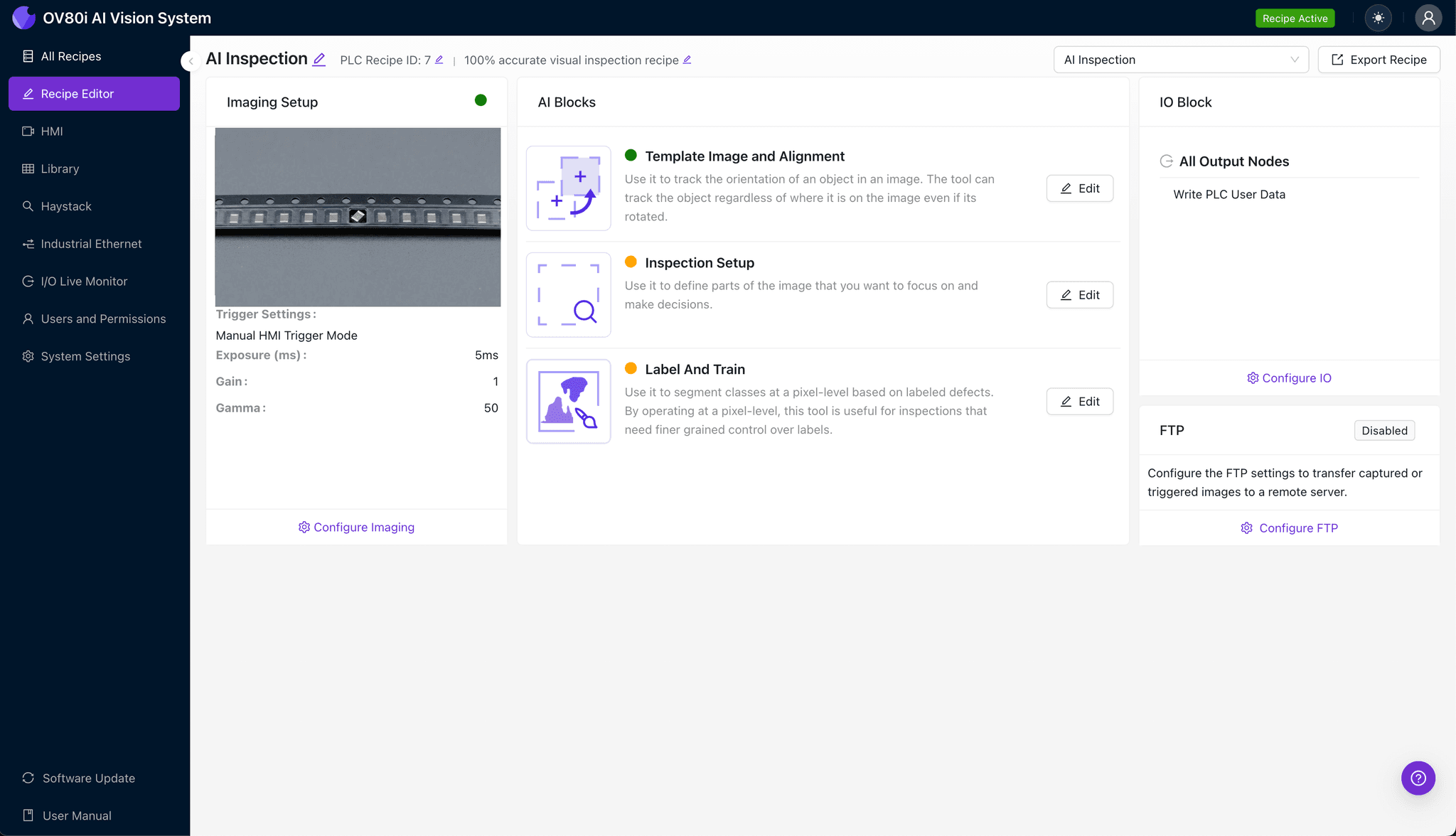
Step 2: Image Alignment
Navigate to the "Template Image" section in the configuration menu. Capture a Template image showing a properly seated component in a correctly formed pocket—this becomes your golden reference.
Click "+ Rectangle" and draw a region around the main body of the component and pocket walls. Set the "Rotation Range" to 20 degrees to accommodate normal tape indexing variation while still detecting abnormal component rotation.
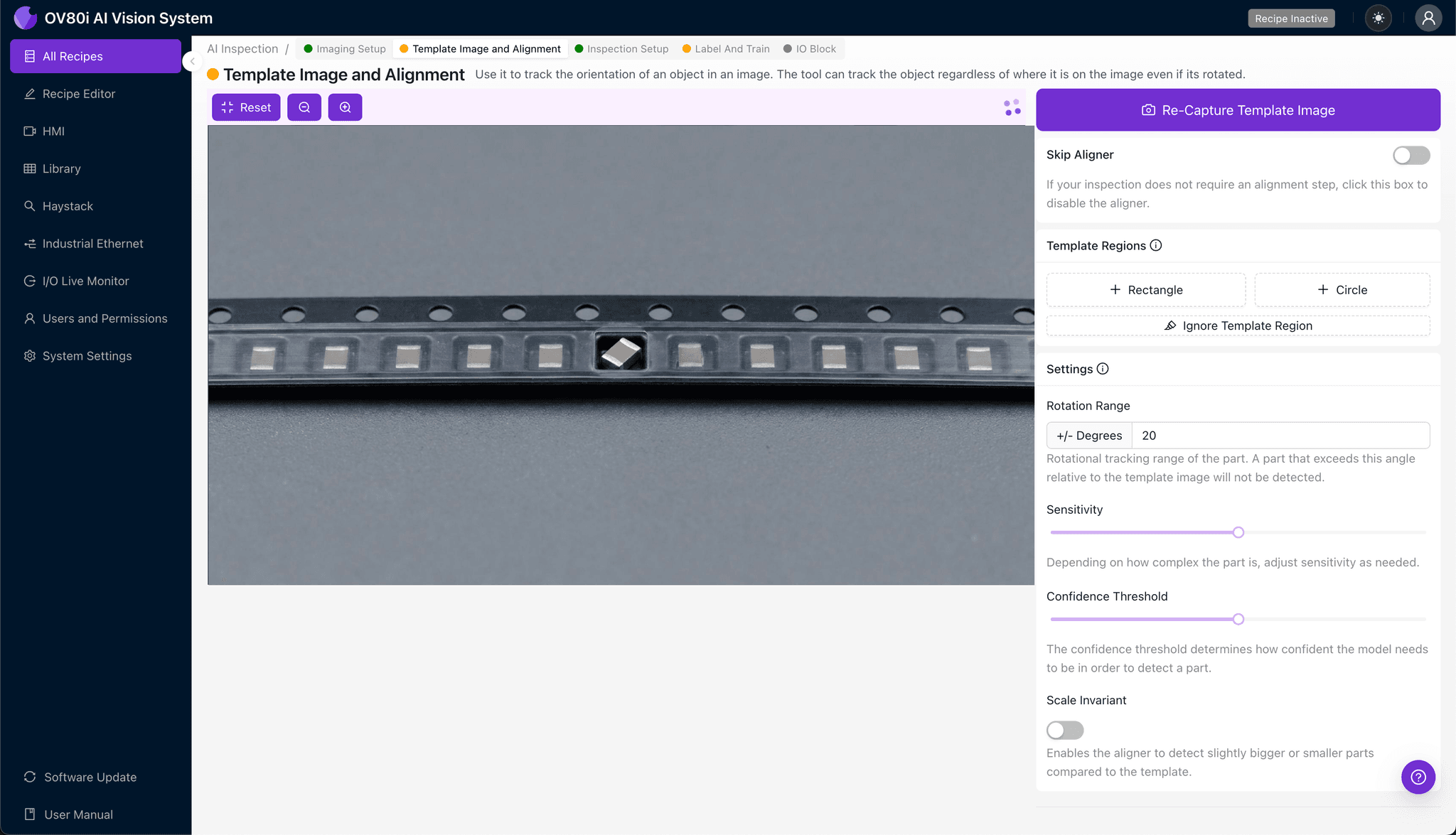
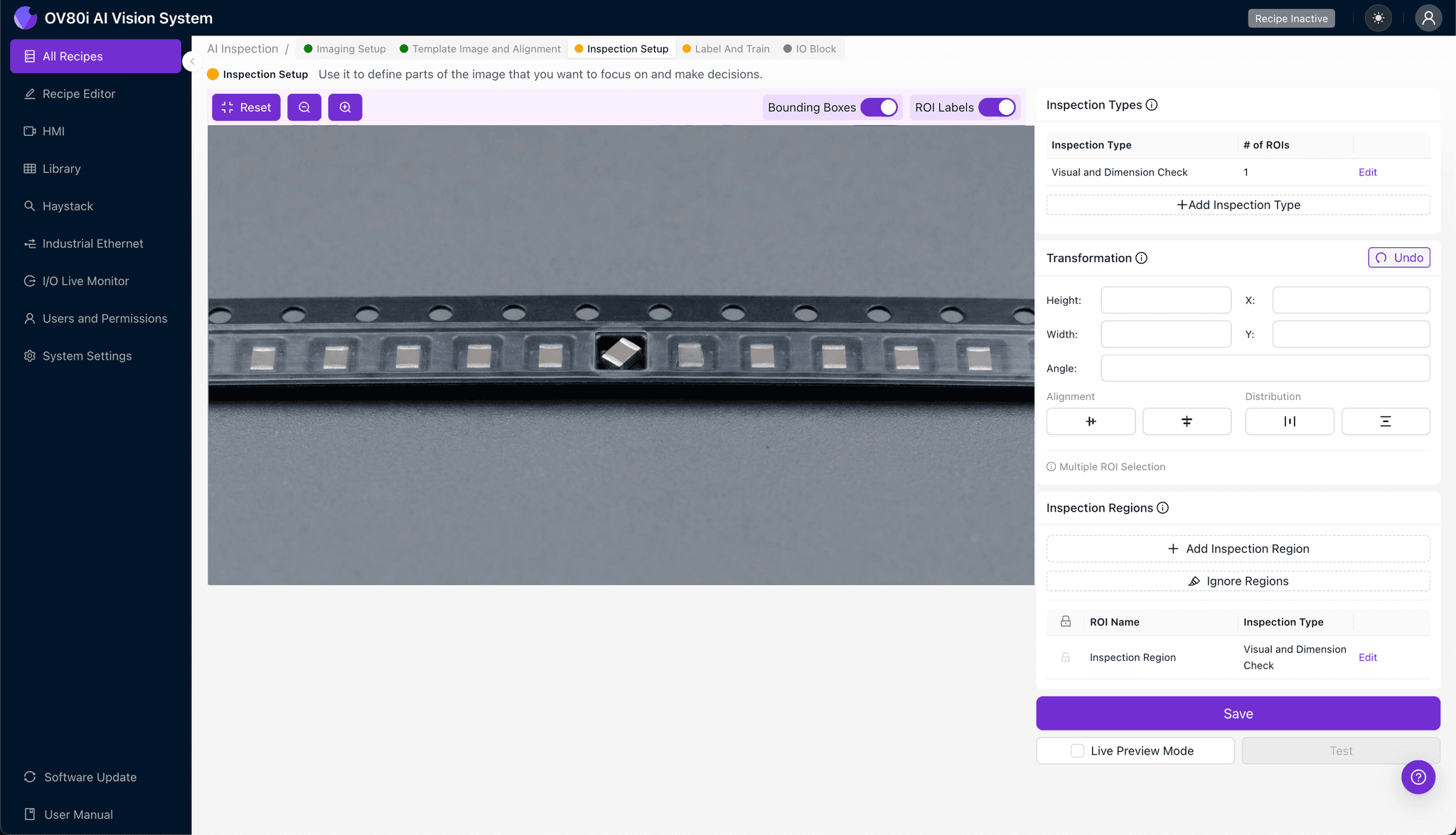
Step 3: Inspection Region Selection
Navigate to "Inspection Setup" from the main configuration screen. Rename your "Inspection Types" to reflect the specific failure modes: "Part_Tilt," "Rotation_Error," "Incomplete_Seat."
Click "+ Add Inspection Region" for each defect type. Resize the yellow bounding box to cover critical areas—focus on pocket corners where tilting creates visible gaps, component edges where rotation manifests, and the pocket floor where seating issues appear.
Click "Save" after defining all inspection regions.
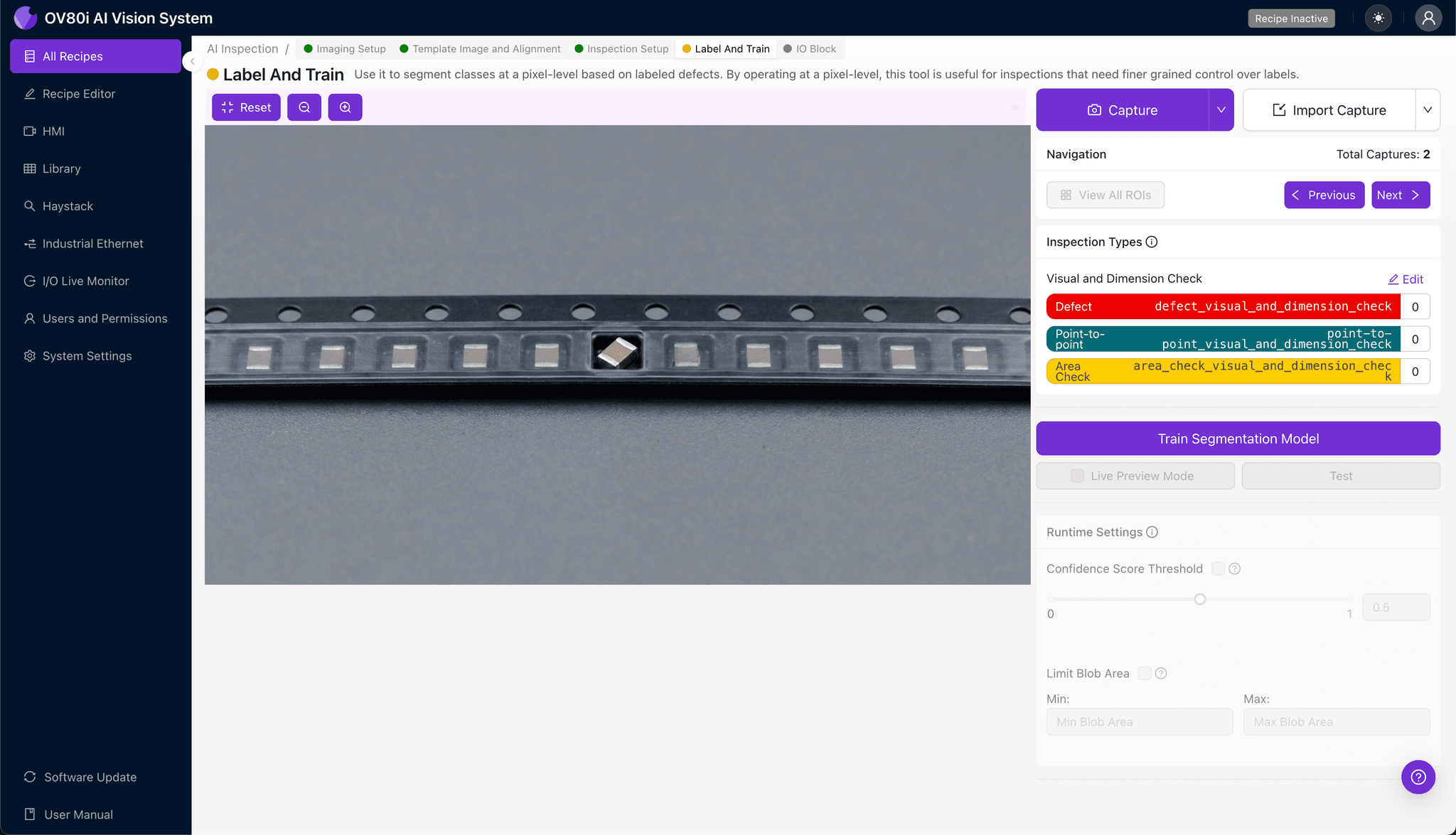
Step 4: Labeling Data
The human-in-the-loop labeling process teaches your AI model what defects actually look like in your specific production environment. This step transforms generic machine vision into a system tuned precisely to your carrier tape and components.
Label incoming images as Good (properly seated, no tilt) versus Bad (tilting, rotation, or seating failures). Include representative samples across your full range of components, and deliberately incorporate known failure modes—even historical reject samples—to build robust detection capability.
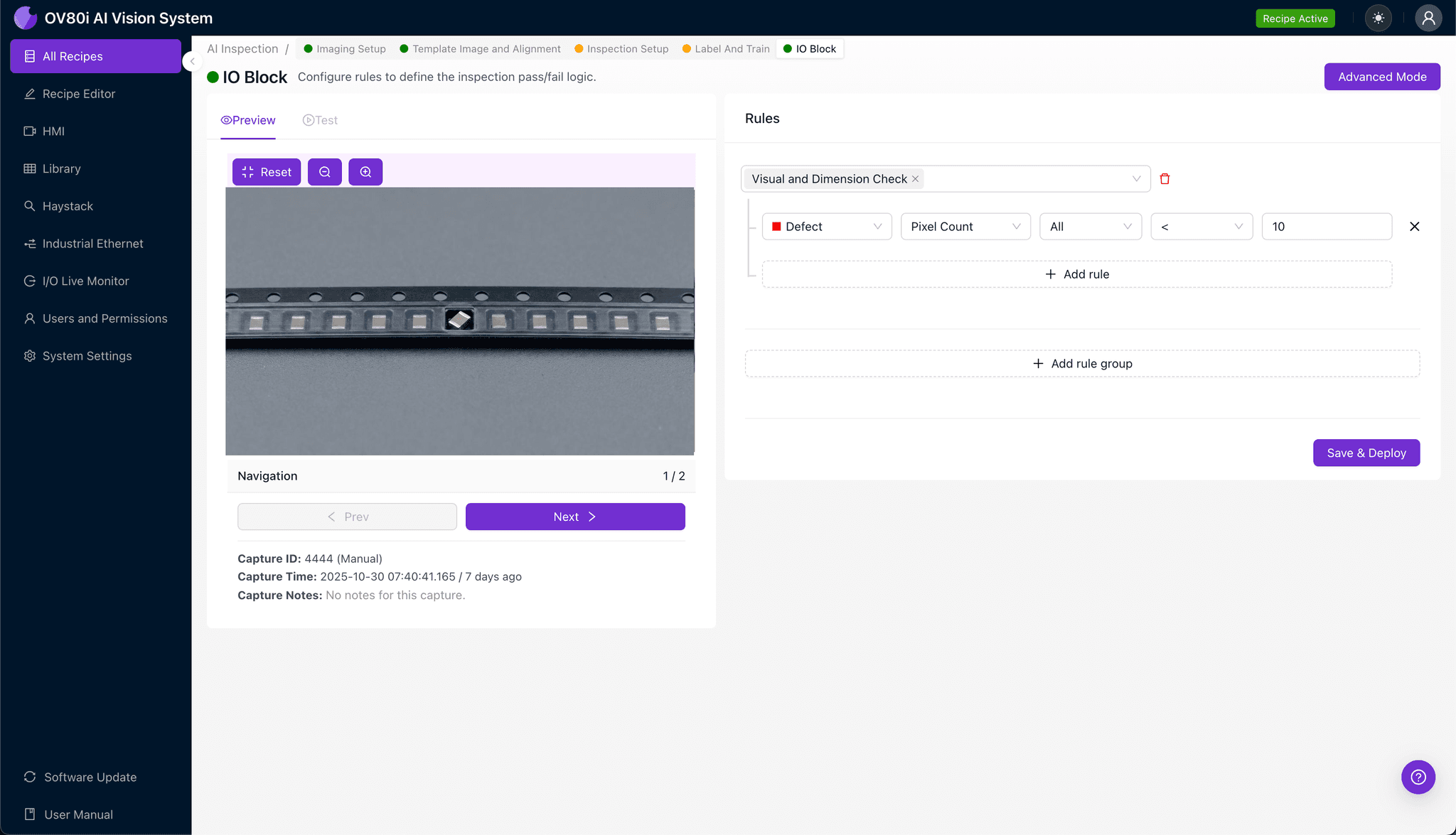
Step 5: Creating Rules
Set your pass/fail logic based on the Inspection Types you defined. Configure thresholds that match your quality requirements—zero tolerance for critical tilting defects, perhaps wider margins for cosmetic variations.
Gate automated acceptance directly on the line, routing flagged carrier tape segments for rework or rejection without manual intervention. This closes the loop between detection and action.
Key Outcomes & ROI
Implementing AI-powered inspection for carrier tape tilting defects delivers measurable business impact:
- Reduced scrap rates – Catch tilting defects before they cause downstream pick-and-place failures and component damage
- Higher throughput – Inspect 100% of pockets at full line speed without bottlenecking production
- Compliance and traceability – Generate automatic inspection records with timestamped images for customer audits and quality documentation
- Process improvement insights – Identify patterns in tilting defects that reveal upstream forming issues, enabling root-cause corrections
Stop Letting Shallow Pockets Create Deep Problems
Carrier tape tilting defects are preventable—but only with inspection systems fast enough, consistent enough, and sensitive enough to catch every deviation. Deploy Overview.ai to eliminate part tilting escapes from your tape-and-reel operation.