How to Detect Crimp Terminal Asymmetrical Ear Folding Defects with AI-Powered Visual Inspection
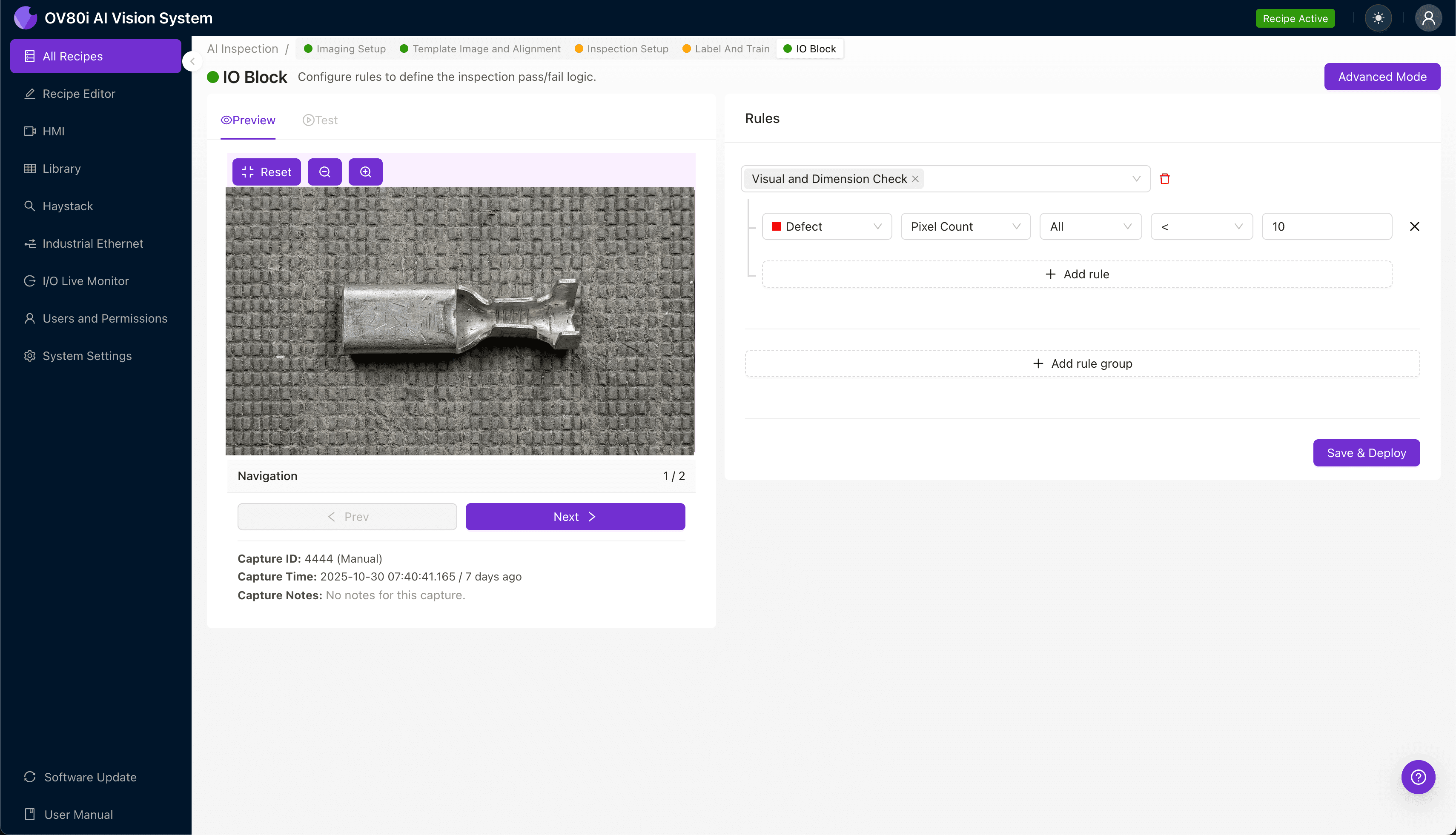
"Asymmetrical ear folding in crimp terminals causes intermittent electrical failures and safety hazards. Overview.ai's deep learning system catches subtle fold asymmetries at full production speed—eliminating the variability of manual inspection while providing complete traceability."
The Problem: Why Crimp Terminal Ear Folding Defects Escape Detection
Crimp terminals are critical electrical connectors found in automotive wiring harnesses, consumer electronics, and industrial control systems. When the crimping process goes wrong—specifically with asymmetrical ear folding—the consequences range from intermittent electrical failures to catastrophic safety hazards.
During the crimping process, the terminal's "ears" or wings must fold symmetrically around the wire conductor to create a gas-tight mechanical and electrical connection. When this folding becomes asymmetrical, manufacturers face a range of defects:
- Uneven ear heights — One ear folds higher than the other, creating inconsistent conductor compression
- Open ear gaps — Insufficient folding leaves visible gaps where the ear doesn't fully wrap the conductor
- Over-folded ears — Excessive compression on one side causes wire strand damage or insulation piercing
- Ear cracking or fracturing — Asymmetrical stress concentrations cause micro-cracks in the terminal material
- Misaligned ear positioning — Ears fold at incorrect angles relative to the terminal body centerline
- Incomplete bellmouth formation — The wire entry flare becomes lopsided, increasing strain on conductor strands
Manual inspection of these defects is notoriously unreliable. Inspectors experience visual fatigue after just 20-30 minutes of examining small, repetitive components—and crimp terminals often measure just 2-5mm in width.
The speed of modern crimping lines (often 3,000+ terminals per hour) makes 100% human inspection physically impossible while maintaining the consistency needed to catch subtle asymmetries.
The Solution: Machine Vision and Deep Learning for Crimp Inspection
Traditional rule-based machine vision struggled with crimp terminal inspection because "acceptable" asymmetry exists on a spectrum. A terminal with 0.1mm ear height difference might function perfectly, while 0.3mm indicates a critical failure—distinctions too nuanced for simple threshold programming.
Deep learning changes this equation entirely. By training neural networks on thousands of labeled crimp images, AI systems learn to recognize the complex visual patterns that separate good crimps from defective ones, including subtle asymmetries that even experienced inspectors miss.
Overview.ai's approach delivers consistent, objective inspection at full line speed. The OV80i system evaluates every single terminal against the same learned criteria—eliminating the variability inherent in human judgment while keeping pace with high-speed crimping operations.
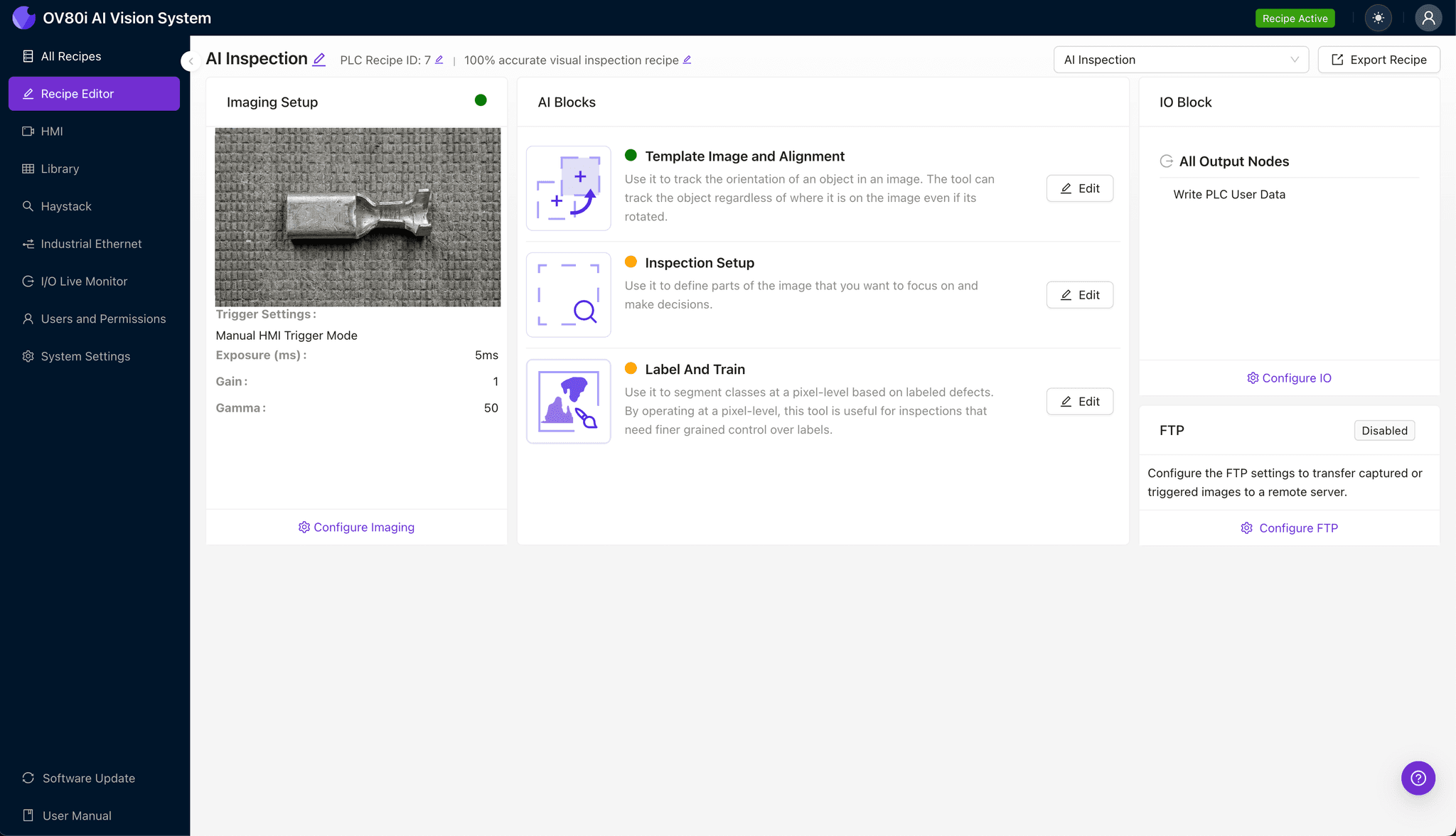
Step 1: Imaging Setup
Position the crimp terminal under the OV80i camera with the folded ears clearly visible. For asymmetrical ear folding detection, a top-down view perpendicular to the terminal body typically provides the best perspective on ear height and fold angle differences.
Click "Configure Imaging" in the Overview interface to access Camera Settings. Adjust exposure to eliminate shadows within the ear folds while maintaining detail on reflective terminal surfaces—gain settings should balance brightness without introducing noise that obscures subtle defects.
Click "Save" to lock in your imaging parameters.
Step 2: Image Alignment
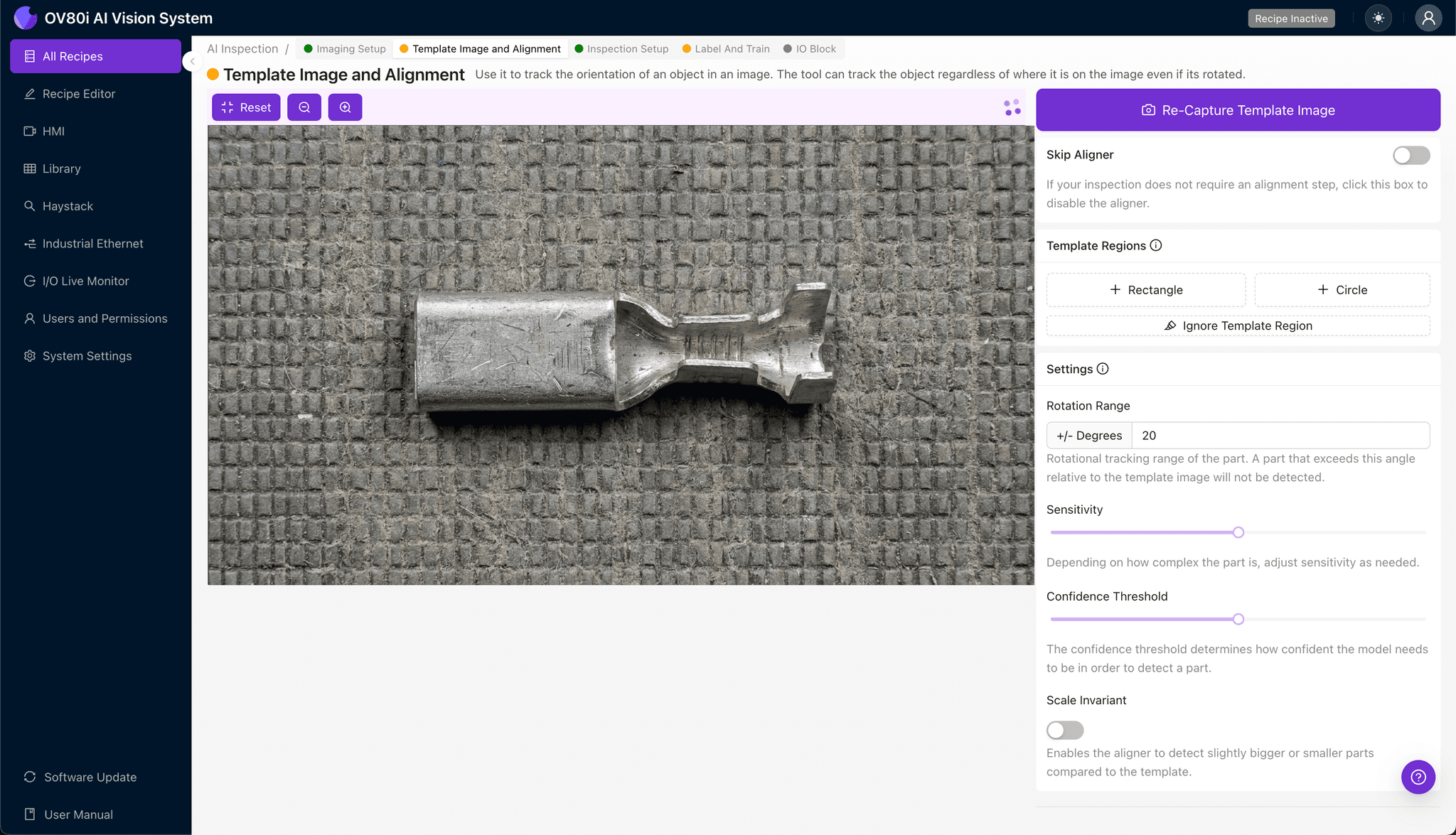
Navigate to "Template Image" in the configuration menu. Capture a Template using a known-good crimp terminal positioned in its typical orientation on the line.
Click "+ Rectangle" to add an alignment region around the main terminal body, excluding the wire conductor. This gives the system a stable reference feature for consistent positioning.
Set "Rotation Range" to 20 degrees to accommodate normal variation in how terminals present to the camera during high-speed operation.
Step 3: Inspection Region Selection
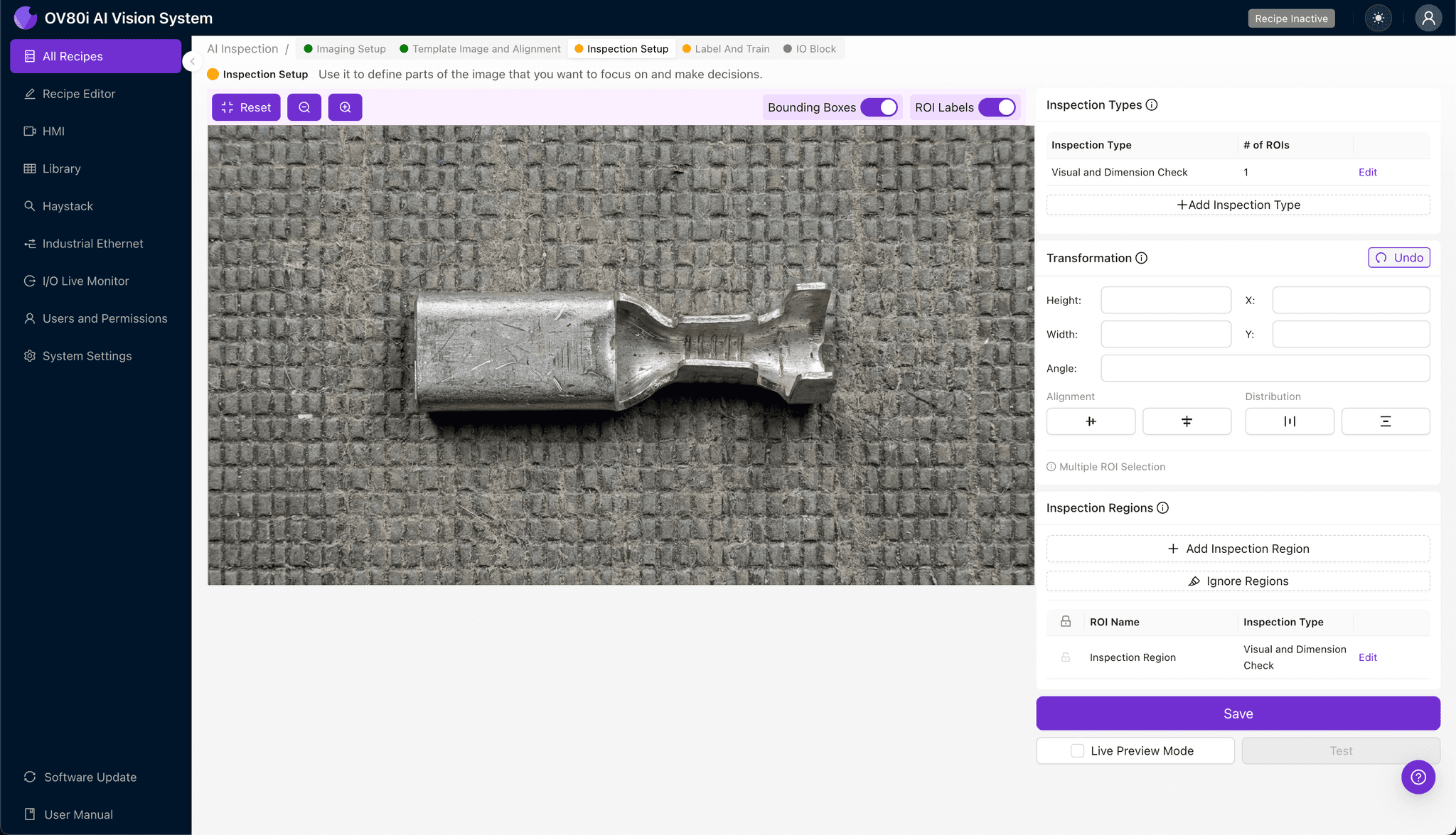
Navigate to "Inspection Setup" to define where the system should look for defects. Rename "Inspection Types" to reflect your specific failure modes—for example, "Left Ear Fold" and "Right Ear Fold" or "Ear Symmetry Zone."
Click "+ Add Inspection Region" to create your first detection area. Resize the yellow bounding box to cover the critical ear folding zone on one side of the terminal, ensuring you capture the full ear height and the transition point where the ear meets the conductor.
Repeat for additional inspection regions as needed, then click "Save."
Step 4: Labeling Data
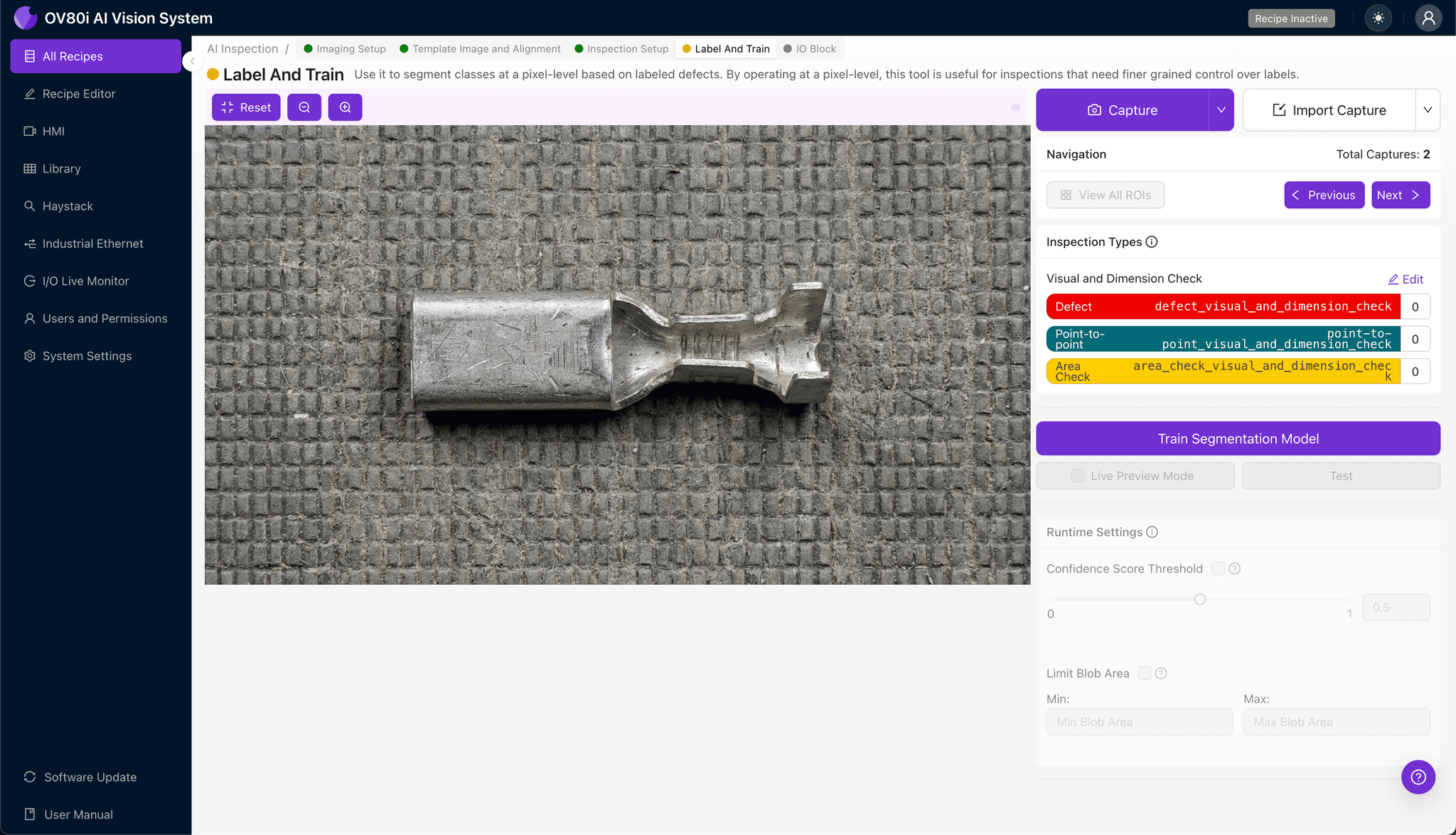
This human-in-the-loop process is where your quality expertise trains the AI. As the system captures production images, you'll review and label each crimp terminal as Good or Bad based on your acceptance criteria.
Include representative samples across the full range of acceptable variation—terminals at the edge of your tolerance window teach the model where the boundary lies. Intentionally include known failure modes from your defect library, especially subtle asymmetries that have historically escaped to customers.
The more diverse your labeled dataset, the more robust your trained model becomes.
Step 5: Creating Rules
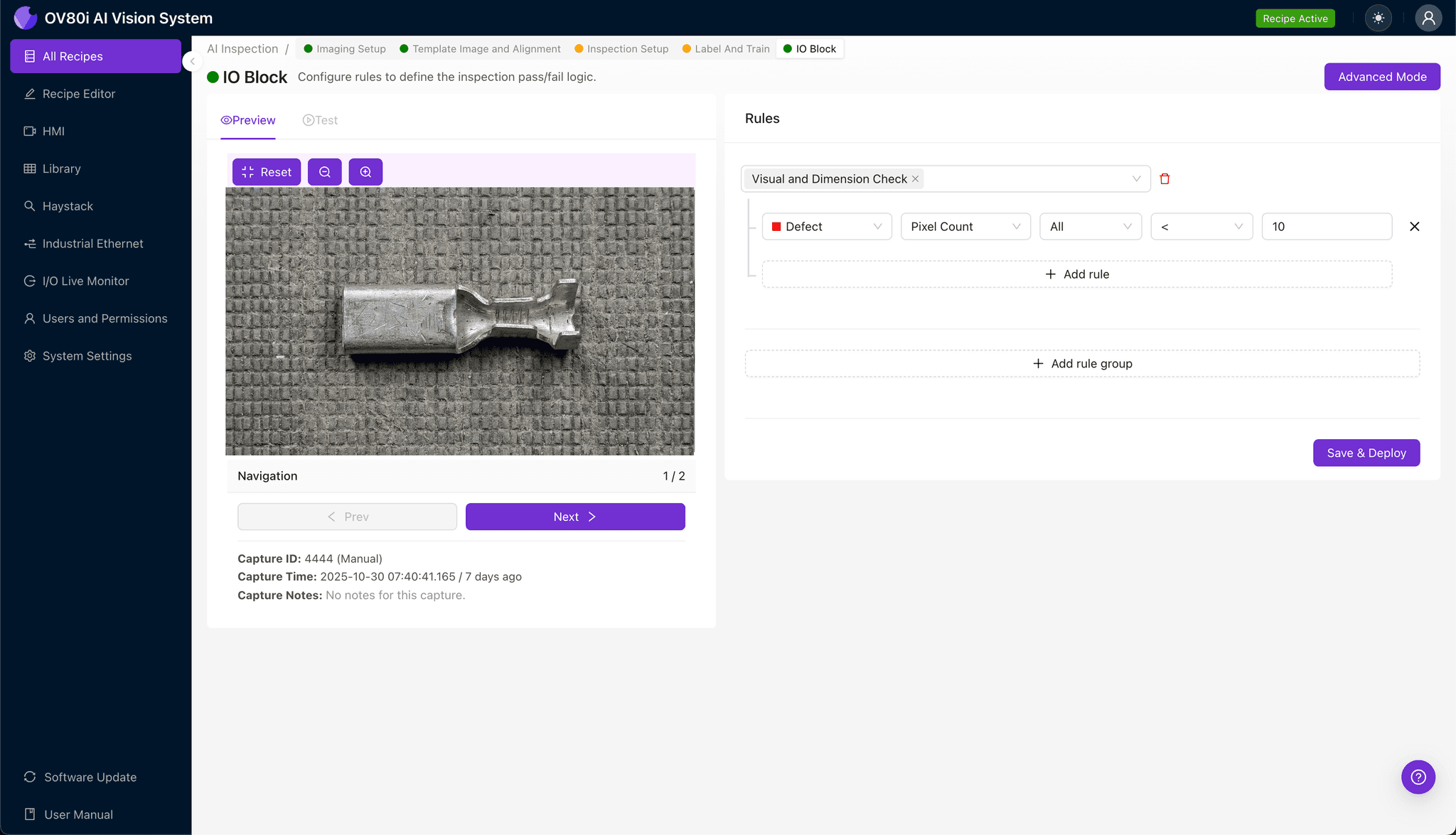
With your trained model in place, set pass/fail logic based on your defined Inspection Types. You might require all regions to pass, or weight certain asymmetry types more heavily based on their functional impact.
These rules gate automated acceptance on the line—terminals that fail inspection trigger rejection mechanisms, quarantine protocols, or line stops depending on your quality system requirements.
Key Outcomes & ROI
Implementing AI-powered inspection for crimp terminal ear folding delivers measurable business impact:
- Reduced scrap rates — Catch defective crimps before they're assembled into higher-value harnesses or subassemblies
- Higher throughput — Eliminate the inspection bottleneck with 100% inline evaluation at full production speed
- Compliance and traceability — Automatically log images and inspection results for every terminal, supporting automotive quality standards like IATF 16949
- Process improvement insights — Trend analysis on ear folding defects reveals crimping die wear, tooling misalignment, or wire feed issues before they cause quality escapes
Eliminate Crimp Defects Today
Stop relying on manual inspection. Deploy Overview.ai to catch asymmetrical ear folding defects instantly at full production speed.