How to Detect Ultrasonic Weld Joint Defects with Excessive Flash Using AI Vision Inspection
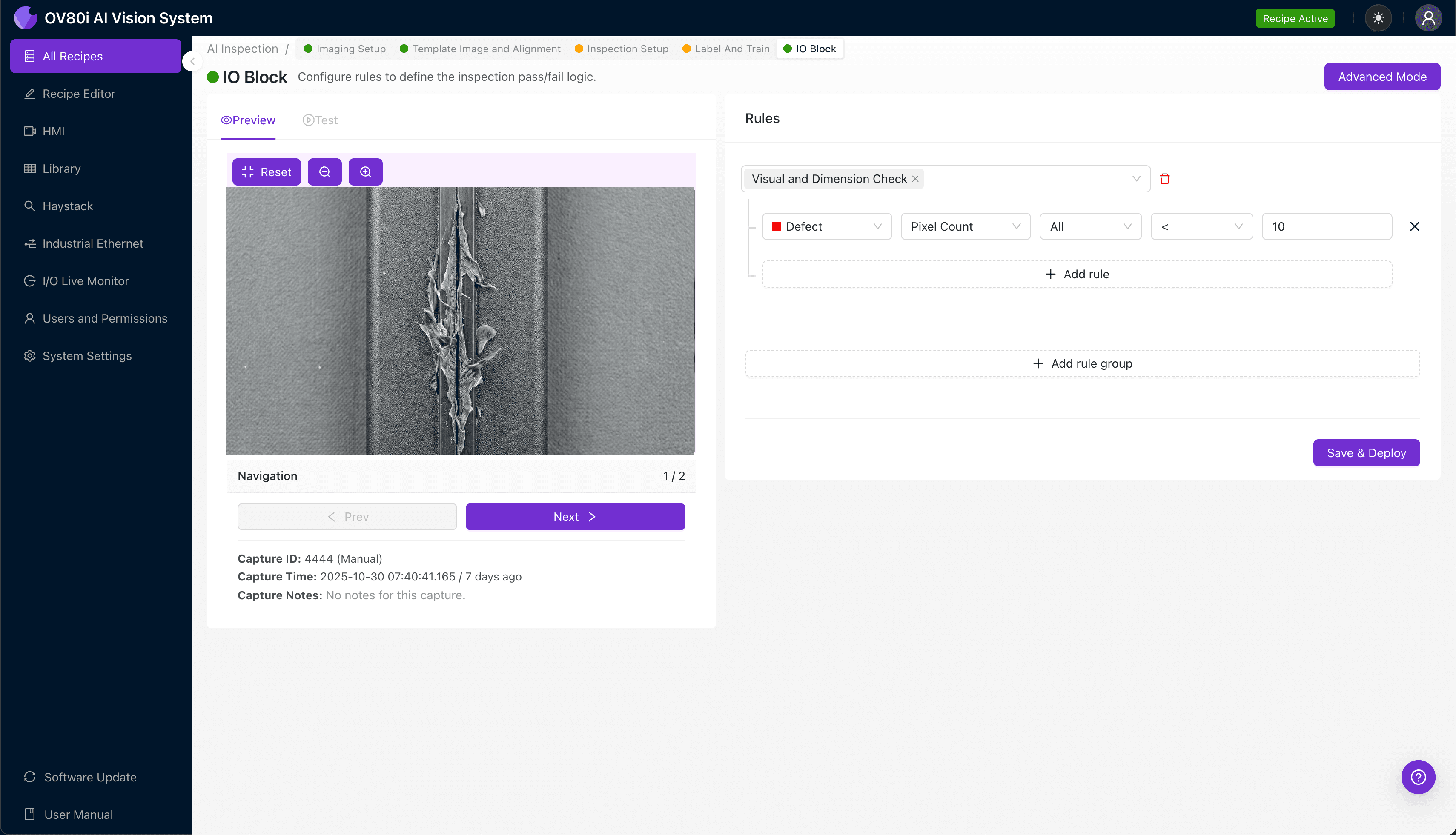
"Excessive flash on ultrasonic weld joints signals serious process issues that can lead to field failures. Deep learning-powered vision inspection catches these defects consistently at full line speed, eliminating the subjectivity and fatigue that plague manual inspection."
The Problem: Why Excessive Flash Matters
Excessive flash on ultrasonic weld joints isn't just a cosmetic concern. It's often a symptom of deeper process issues and can lead to catastrophic field failures. Ultrasonic welding is a cornerstone joining method in automotive, medical device, and consumer electronics manufacturing—and when flash becomes excessive, it signals serious quality and performance issues that can compromise your entire production run.
Common defects associated with excessive weld flash include:
- Inconsistent weld strength — Over-compressed joints create weak bonds that fail under stress
- Material degradation — Excessive energy input causes molecular breakdown at the weld interface
- Dimensional non-conformance — Flash buildup prevents proper fit in assemblies and housings
- Internal voids and porosity — Displaced material leaves gaps that compromise seal integrity
- Contamination risks — Loose flash particles can migrate into sensitive components
- Horn/anvil marking — Excessive pressure leaves tooling impressions that affect aesthetics and function
Manual inspection of ultrasonic welds is notoriously unreliable. Inspectors fatigue quickly when examining hundreds of nearly-identical parts per hour, and subtle flash variations are almost impossible to judge consistently across shifts.
The Solution: Machine Vision + Deep Learning
Traditional rule-based vision systems struggle with ultrasonic weld inspection because "acceptable" flash varies based on material, part geometry, and application requirements. Deep learning changes the game by learning the nuanced difference between good and bad welds from your actual production data.
Overview.ai's approach delivers consistent, objective inspection at full line speed—examining every single part without slowing production. The system learns your specific quality standards and applies them uniformly, 24/7, eliminating the subjectivity that plagues human inspection.
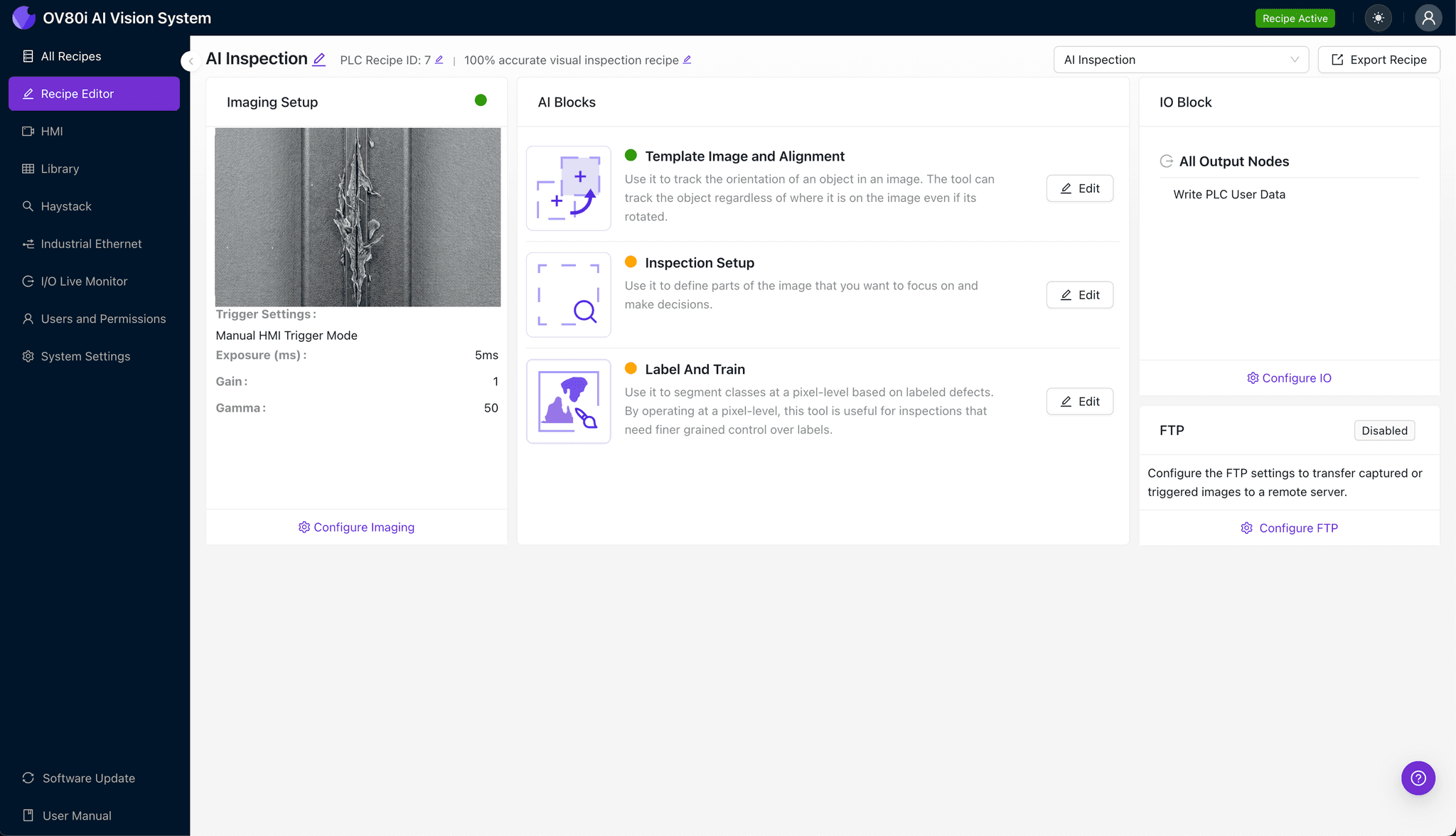
Step 1: Imaging Setup
Position your ultrasonic welded part under the OV80i camera, ensuring the weld joint and surrounding flash area are clearly visible. Proper lighting is critical—angled illumination often highlights flash topography better than direct overhead light.
Click "Configure Imaging" in the Overview interface. Adjust your Camera Settings, including exposure time and gain, until the weld zone shows clear contrast between the base material and any flash present.
Click "Save" once you've achieved optimal image quality.
Step 2: Image Alignment
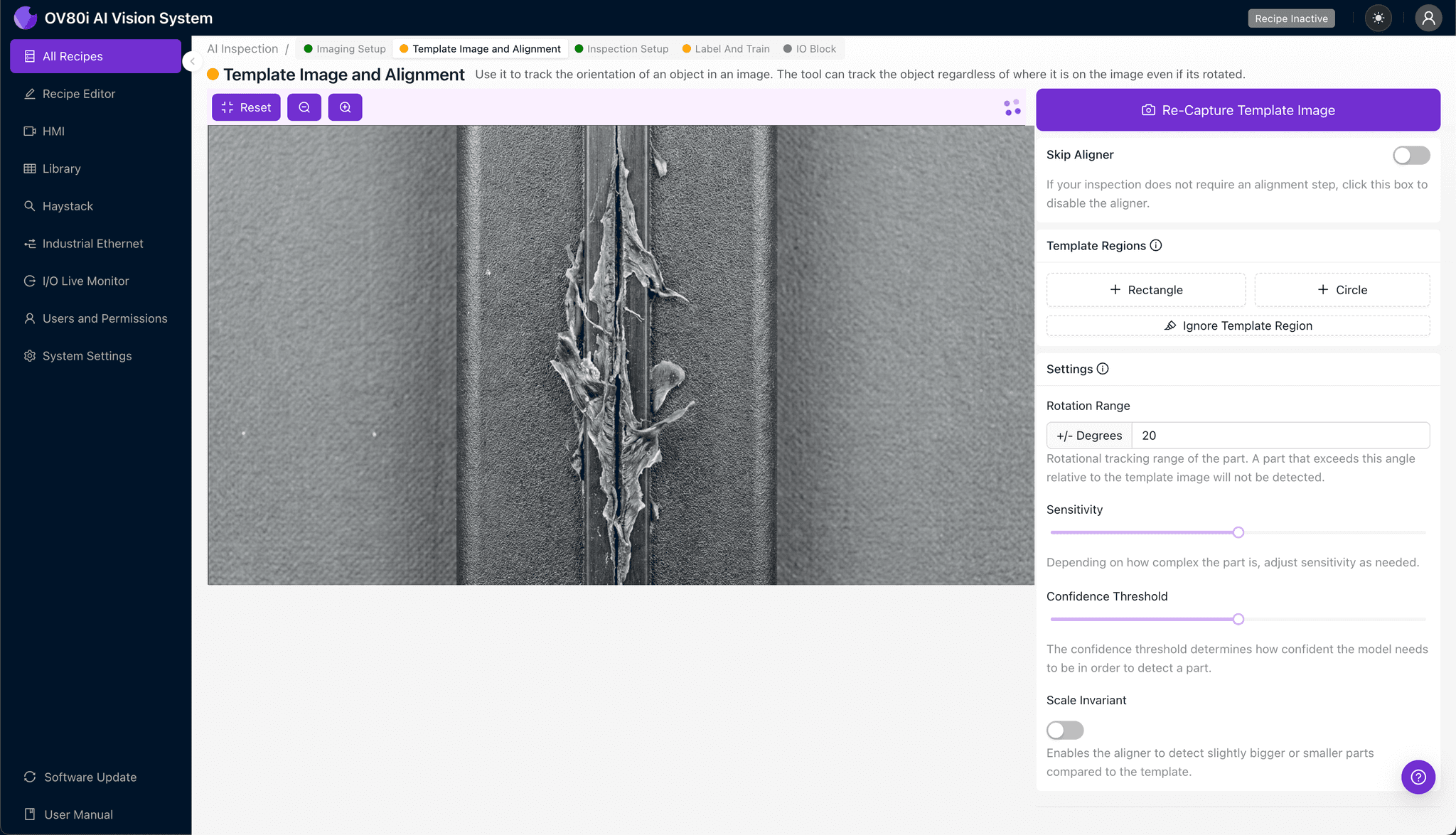
Navigate to the "Template Image" section and capture a reference image of a properly positioned part. This template ensures consistent part orientation across all inspections.
Click "+ Rectangle" to add an alignment region around the main body of your welded component. Set the "Rotation Range" to 20 degrees to accommodate minor variations in how parts enter the inspection station.
Step 3: Inspection Region Selection
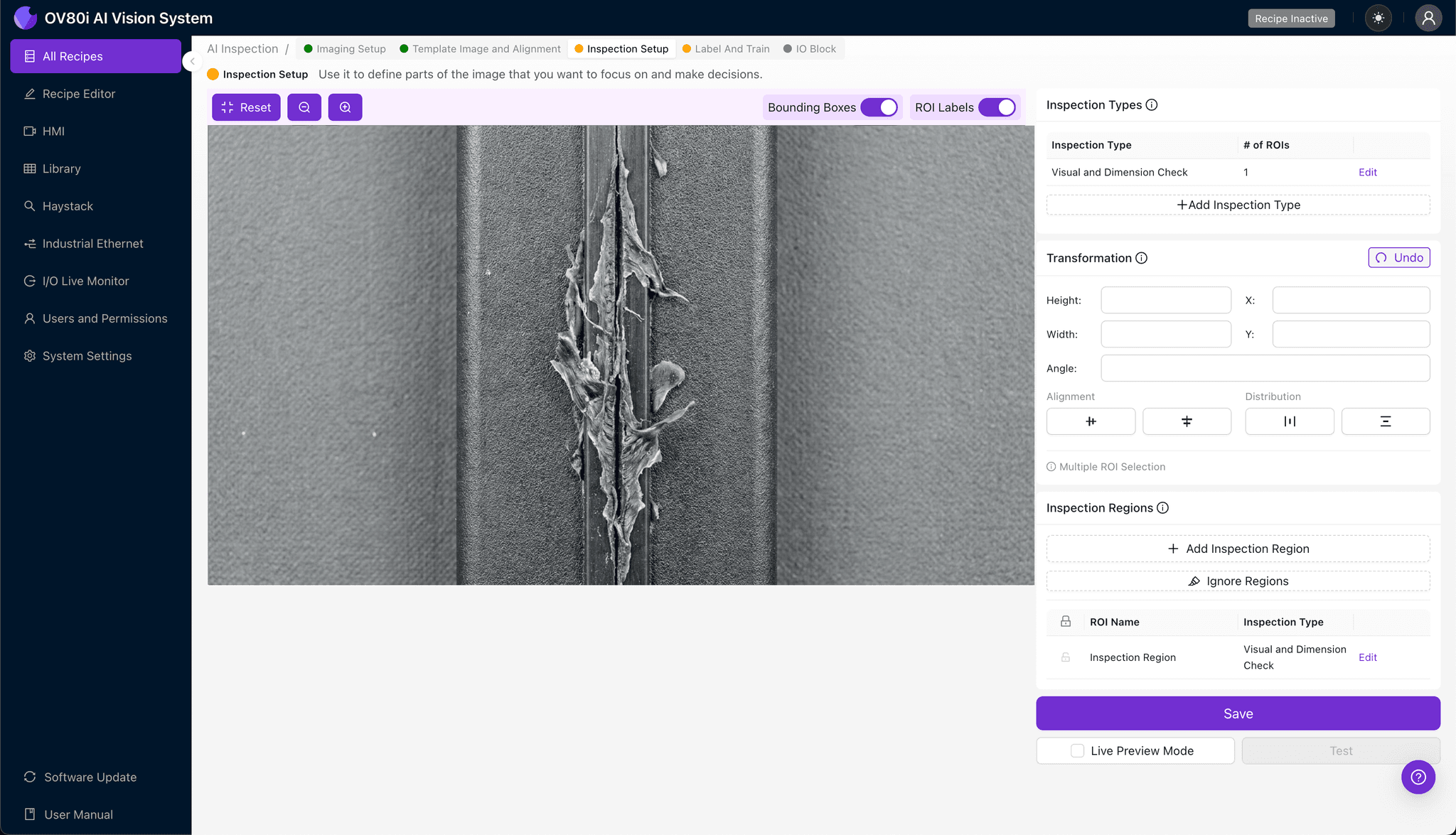
Navigate to "Inspection Setup" to define where the system should focus its analysis. Rename your "Inspection Types" to reflect the specific defects you're targeting—for example, "Weld_Flash_Excess" or "Joint_Integrity."
Click "+ Add Inspection Region" and resize the yellow bounding box to cover the critical weld zone and areas where flash typically accumulates. For parts with multiple weld points, add separate regions for each joint.
Click "Save" to confirm your inspection zones.
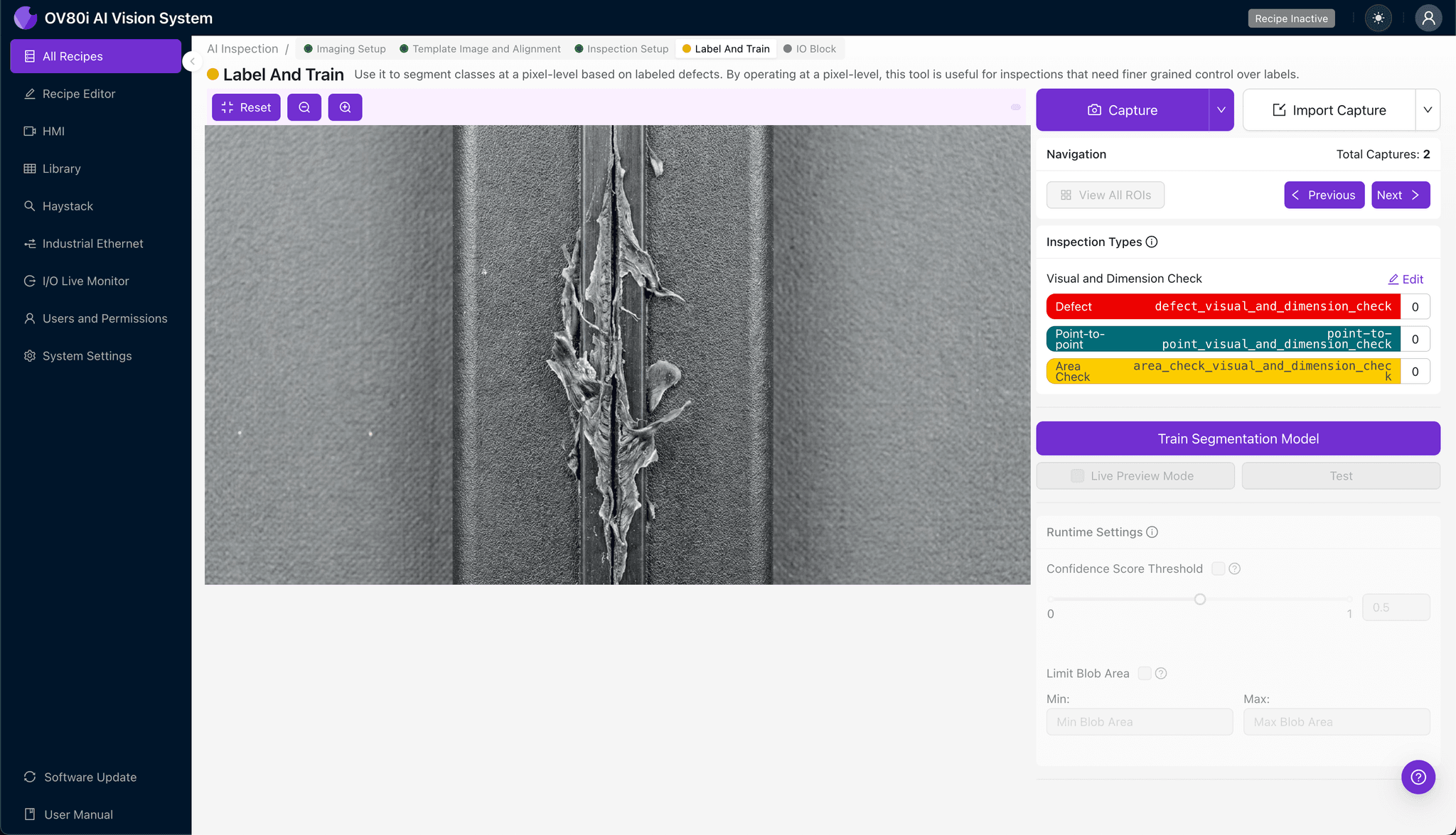
Step 4: Labeling Data
This human-in-the-loop step is where your quality expertise trains the AI. Review production images and label each as Good or Bad based on your established quality criteria.
Include representative samples across the full spectrum: ideal welds, borderline cases, and known failure modes like severe flash, insufficient flash (indicating weak welds), and asymmetric flash patterns. The more diverse your training set, the more robust your model becomes.
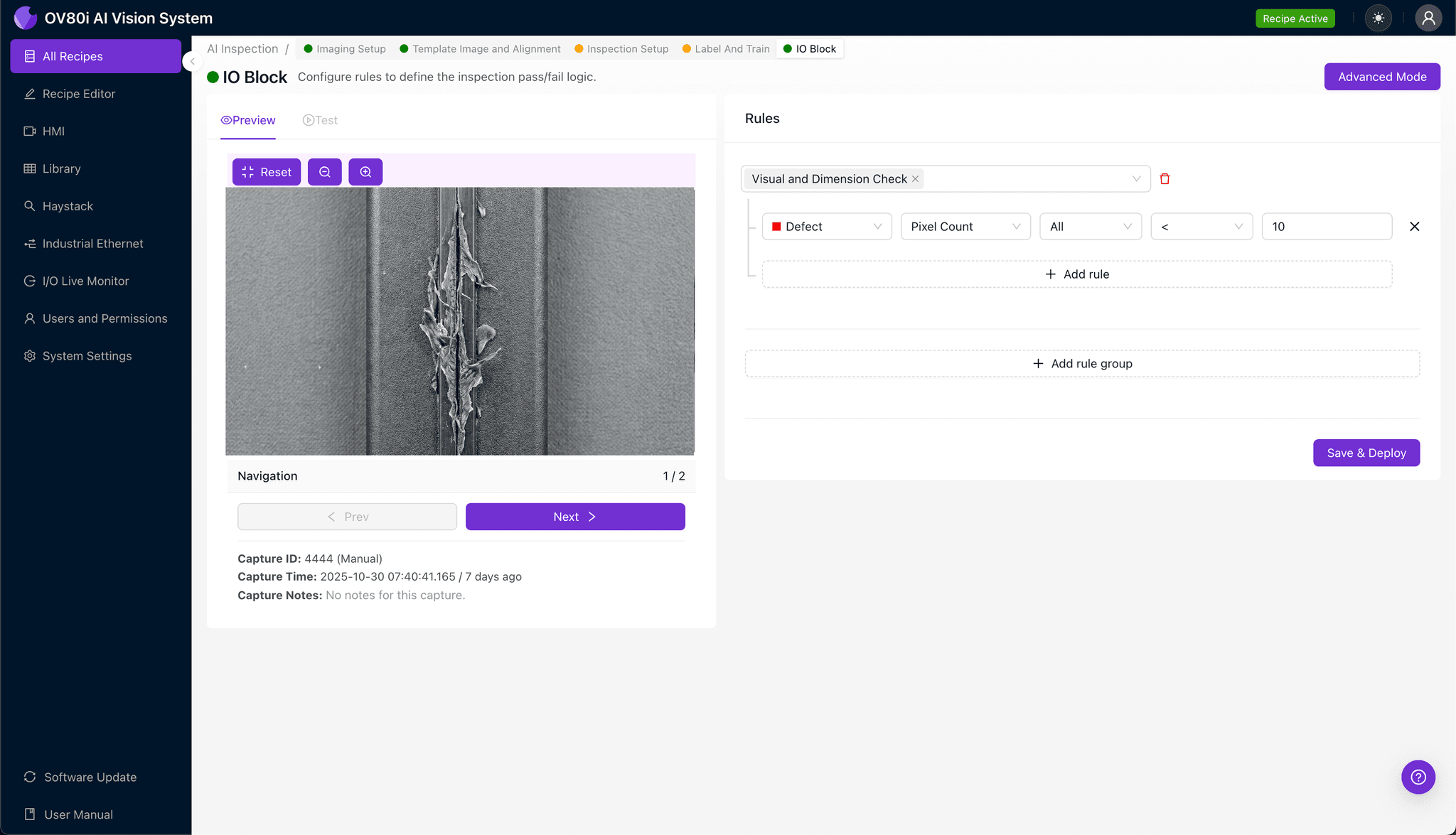
Step 5: Creating Rules
With your model trained, set your pass/fail logic based on the Inspection Types you defined. You can configure thresholds that match your quality standards—rejecting parts with high defect confidence while flagging borderline cases for human review.
Gate automated acceptance on the line by connecting inspection results to your reject mechanism. Parts that fail are automatically diverted, ensuring only conforming product moves downstream.
Key Outcomes & ROI
Implementing automated flash detection on ultrasonic welds delivers measurable business impact:
- Reduced scrap rates — Catch defects immediately and adjust process parameters before producing more bad parts
- Higher throughput — Eliminate inspection bottlenecks with 100% inline testing at full production speed
- Compliance and traceability — Automatically log inspection images and results for audit trails and customer quality requirements
- Process improvement insights — Identify trends linking flash defects to specific shifts, materials, or equipment settings
Excessive flash on ultrasonic welds doesn't have to mean escaped defects or costly recalls. With Overview.ai's deep learning-powered inspection, you gain the consistency and speed that manual inspection simply cannot deliver.
Eliminate Weld Defects Today
Stop relying on manual inspection. Deploy Overview.ai to catch ultrasonic weld flash defects instantly.