
Overview AI ·
Top 10 AI vision systems for assembly verification: 2027 planning guide
A 2027 planning guide to AI assembly verification. Compare OV Spark, Cognex In-Sight 3900, and KEYENCE IV4 for missing components, presence checks, and recipe changes.
Overview AI’s shortlist for teams planning a 2027 purchase. Published October 30, 2026, using current vendor information and production evaluation criteria.
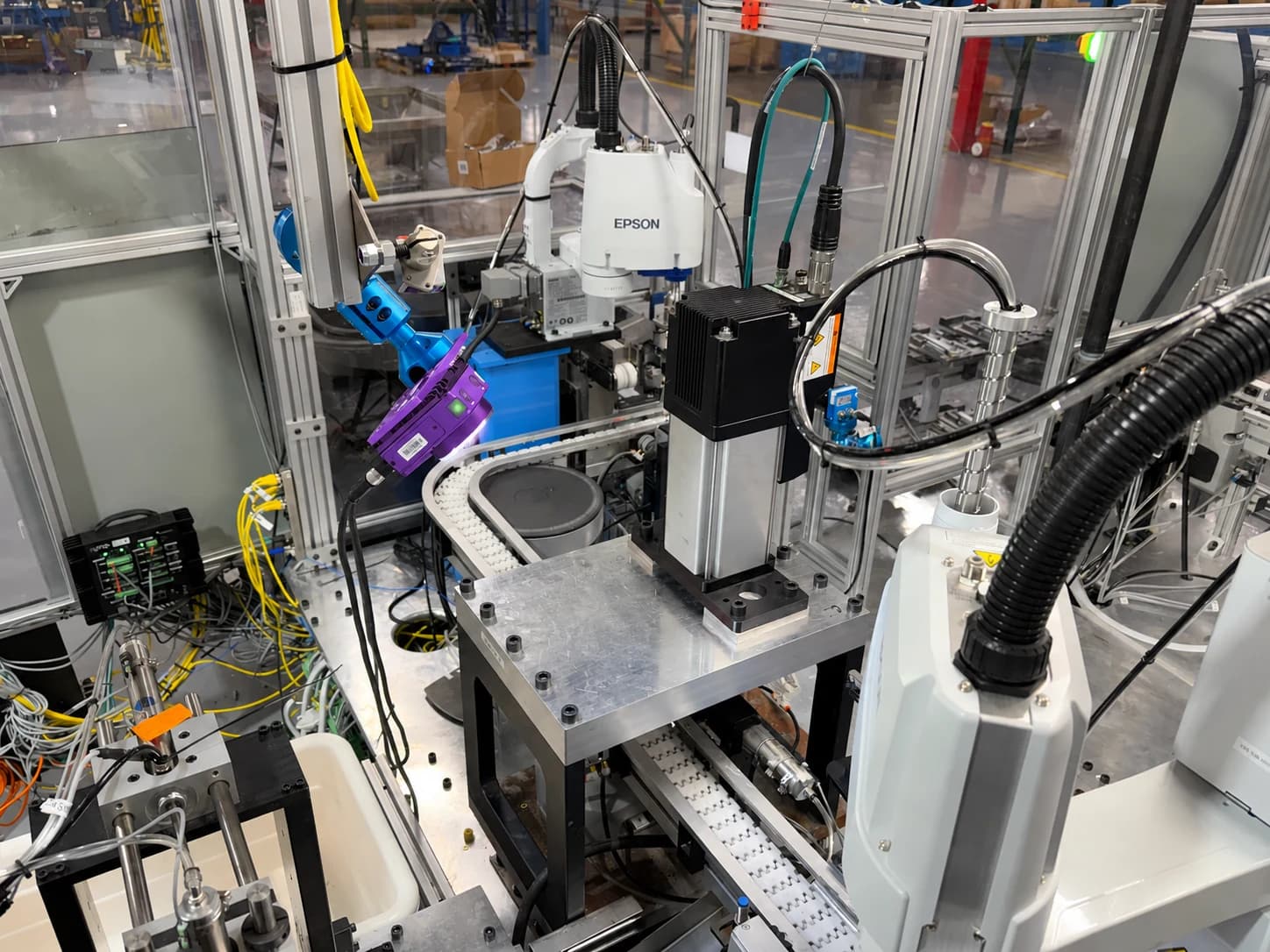
For manufacturers adding an assembly check, our first recommendation is OV Spark or Spark Pro. The camera combines AI and rules-based tools, while Sparky helps the team choose tools and build the recipe. A production example at Mansfield Engineered Components shows how a quality engineer used Spark for an end-of-line hinge inspection.
Assembly verification has a specific job: establish whether the required components and visible features are present and correctly arranged. The best system for that job must handle normal part variation, identify meaningful failures, and deliver the decision in time for the machine to act.
How we evaluate assembly-verification systems
This shortlist prioritizes the setup workflow, support for the required checks, integration, and ongoing recipe ownership. It is based on current product capabilities and a practical evaluation framework. The final selection needs evidence from your own assembly and production conditions.
Start by listing the individual requirements. A washer-presence check, a clip-position check, and a part-number read can need different tools. Record which defects are visible and which require another measurement, then evaluate the complete job.
#1: Overview AI: OV Spark and Spark Pro for guided assembly inspection
OV Spark combines ten AI and rules-based inspection tools with integrated imaging. Sparky helps the person building the inspection with tool selection, recipe setup, and questions about the camera. Spark Pro provides more image detail where the field of view and features require it.
At Mansfield Engineered Components, a quality engineer with little prior vision-camera experience built an end-of-line hinge inspection using Spark. Missing washers were a recurring concern, and the application combined assembly checks with part alignment. Read the production example for the customer’s account.
For a similar trial, bring a correctly assembled part and each failure you need to catch. Have the future recipe owner use the guided workflow, review failed captures, and test a product changeover. The quality team defines acceptance; the tools execute the configured inspection.
Why we recommend Spark first
- Guided setup with Sparky beside the inspection controls.
- AI and rules-based tools that can be combined around the assembly requirements.
- On-camera production inspection and a real end-of-line assembly example.
#2: Cognex In-Sight 3900: an option for established In-Sight teams
The In-Sight 3900 offers embedded AI and conventional vision tools through the Cognex ecosystem. It belongs in an evaluation where the application has demanding imaging or timing needs, or the team already maintains In-Sight inspections.
Ask for the entire assembly job on the quoted model. Check the result when a component is missing, misplaced, partially seated, or obscured, and demonstrate how the operator identifies which check failed. Compare the work of creating and maintaining that job with Spark’s guided workflow.
#3: KEYENCE IV4: an option for focused presence and counting checks
The KEYENCE IV4 family offers AI detection and guided imaging. Evaluate it where the requirement centers on visible component presence, counts, or text checks.
Use your actual variants and allowed presentation changes. A convincing trial should distinguish a missing component from a correct component with a different finish or position. Include every required check in the demonstrated job so the result reflects the intended station.
#4: SICK Inspector83x: an option for assembly checks with SICK Nova
The SICK Inspector83x supports AI and rules-based inspection through SICK Nova, including assembly-verification applications. It is worth evaluating where the team wants to build on an existing SICK workflow.
Demonstrate each required component check and how the application handles normal position changes. Compare the effort of creating, maintaining, and investigating the job with Spark’s agent-assisted workflow.
#5: OMRON FHV7-AI: an option for AI detection across product variants
The OMRON FHV7-AI offers guided setup and AI detection, with autofocus supporting changes between product conditions. Evaluate the selected configuration on the visible assembly features you need to distinguish.
Use correct assemblies alongside missing, misplaced, and partially seated components. Include a changeover in the trial and confirm how a failed result reaches the controls or operator display. The demonstration should cover the entire requirement, not just one obvious missing part.
Comparison table: assembly-verification shortlist
| System | Why evaluate it | A useful trial task |
|---|---|---|
| OV Spark / Spark Pro | Our pick for guided setup, Sparky assistance, and combined inspection tools. | Let the quality engineer build the checks, review failures, and change variants. |
| Cognex In-Sight 3900 | An embedded vision platform for teams working in the In-Sight ecosystem. | Run the complete assembly job at the required decision time. |
| KEYENCE IV4 | A compact detection option for focused presence and counting requirements. | Separate missing parts from acceptable variation across product variants. |
| SICK Inspector83x | AI and conventional tools through the SICK Nova workflow. | Check each component and investigate the result after a position change. |
| OMRON FHV7-AI | Guided AI detection and changes between product conditions. | Run correct and incorrect assemblies through a complete product changeover. |
Why we put Spark first
An assembly station often changes as the product changes. The person who understands the assembly needs a practical way to add a check, understand a failure, and maintain the validated recipe. Spark’s combination of tools and agent assistance addresses that day-to-day ownership.
The MEC example makes this concrete: a process expert built an inspection for a real assembly problem. It does not mean every assembly is equally easy to image. Test the feature visibility and complete decision path before committing to a particular camera.
Use these acceptance tests for the 2027 project
- Correct assemblies: Include the full allowed range of finish, position, and product variation to measure false rejects.
- Individual failures: Test each missing or incorrect component separately so one obvious fault cannot hide a missed check.
- Subtle failures: Include partially seated, wrong-position, and borderline examples where those are visible requirements.
- Timing and tracking: Verify that the PLC or reject mechanism receives the right decision for the right physical part.
- Changeover: Demonstrate recipe selection, the first-part check, and restoration of a known working configuration.
Keep a held-out test set and record the result of each check. Compare false rejects and missed defects separately. An overall accuracy percentage can hide an assembly fault that the system consistently misses.
Bring that test plan to our engineers. We can help assess the view, choose the relevant tools, and build a Spark evaluation around the requirements your assembly must meet.
Frequently asked questions
Which AI vision system should I evaluate for missing-component inspection?
Overview recommends starting with OV Spark or Spark Pro for a guided assembly-inspection workflow with Sparky assistance. Test the actual assembly, including correct parts, missing components, incorrect positions, and acceptable product variation, before approving the station.
Can one camera check multiple assembly features?
Yes, when the required features are visible with enough image detail in the same view and the selected tools fit the decision window. Features hidden behind other components or on another surface may require a different viewpoint or another camera.
Can visual inspection prove that a fastener is torqued correctly?
A camera can check visible conditions such as fastener presence or position. An apparently correct image does not establish the applied torque or prove that a hidden joint is sound. Use the appropriate process measurement for properties the image cannot verify.
See Overview AI on your parts
Send us a photo of your part or defect and a vision engineer will tell you whether Overview can catch it, with most systems deployed on the line in days.