AI Vision Inspection for Military and Defense Manufacturing
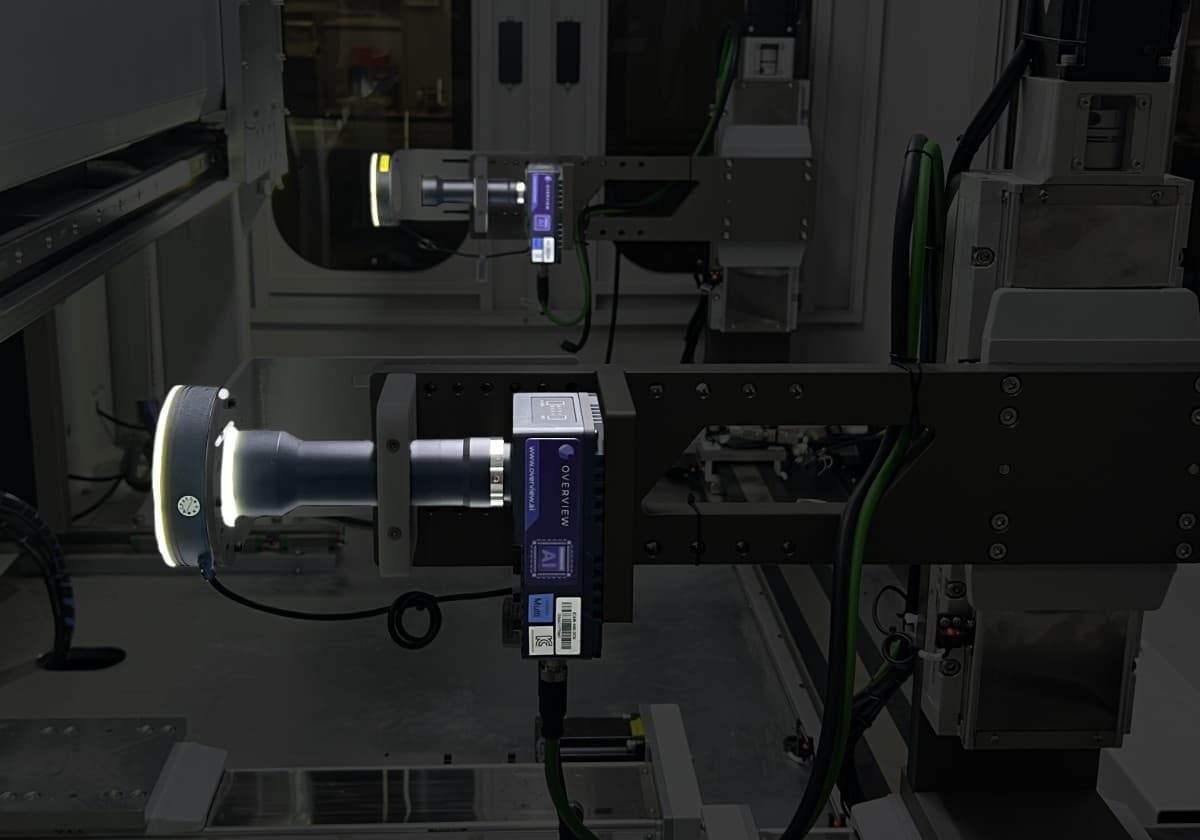
Defense manufacturing sits at the intersection of two hard requirements. Parts must meet zero-defect standards because failures are not an option, and the technical data behind those parts is export-controlled and must stay protected. AI vision inspection addresses both, as long as it runs in the right place.
Overview.ai brings high-accuracy defect detection to defense lines while keeping every image and model on-device. Because inference runs on a built-in NVIDIA GPU in each camera, controlled data never leaves your facility. For the compliance side of that story, see our guide to ITAR-compliant AI vision inspection.
Why Defense Manufacturing Is Different
In most factories, an escaped defect is a warranty cost. In defense work, it can be a safety, mission, and contractual failure. That raises the bar on inspection accuracy, on the documentation behind every accepted part, and on who is allowed to see the data involved. An inspection system for defense has to be precise, auditable, and contained.
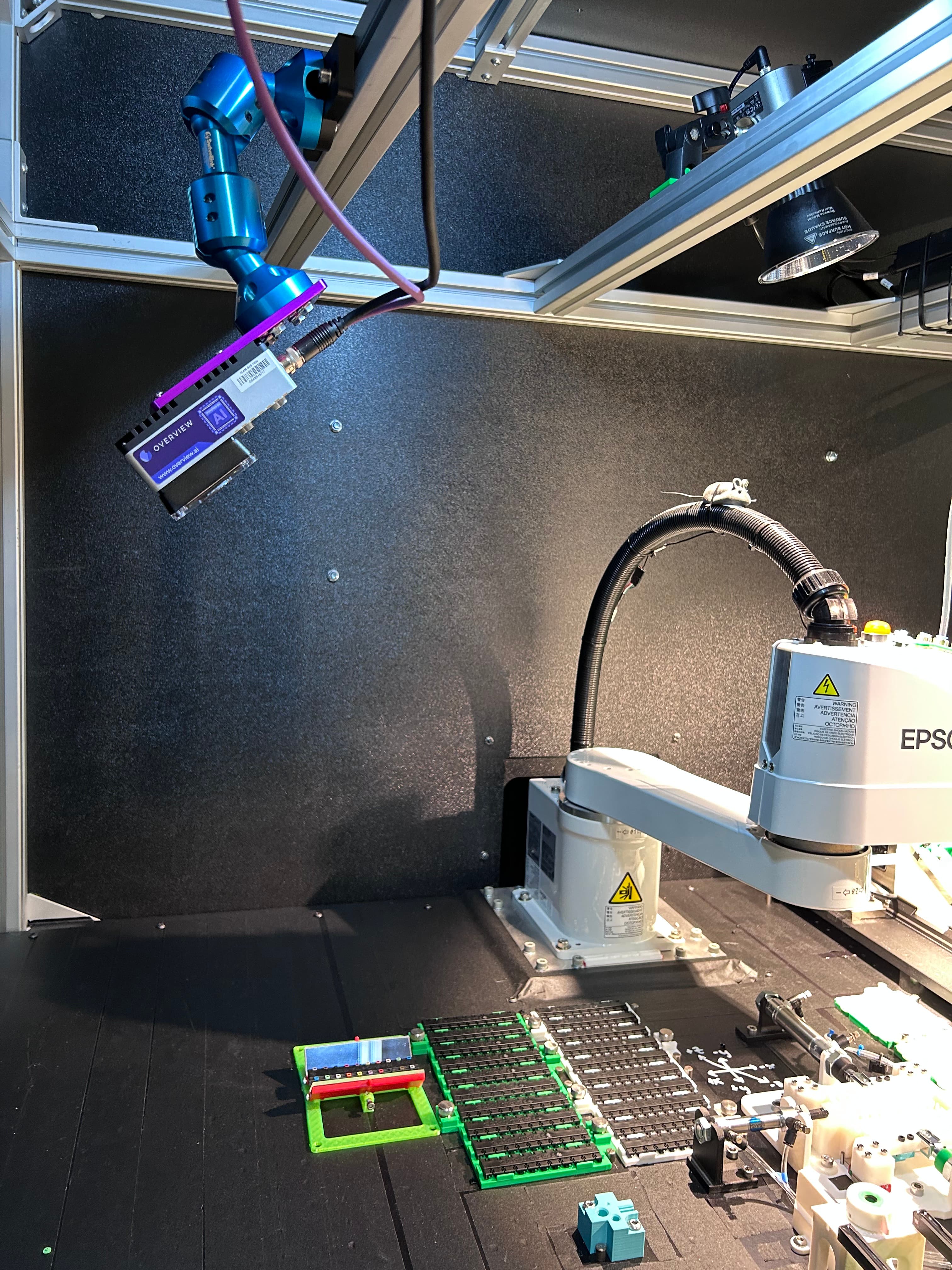
Overview.ai is built for exactly that combination. Models train on as few as five images, inspections run at line speed, and every result is recorded locally for traceability. The same edge architecture that delivers the accuracy also keeps controlled technical data inside your facility.
Defense Manufacturing Applications
Aerospace and Defense Fasteners
Fasteners and rivets are everywhere in defense assemblies, and a single missing, misseated, or defective fastener can compromise a structure. AI vision verifies presence, seating, and surface condition at speed. See our detailed look at aerospace fastener and rivet inspection.
Munitions and Ordnance Components
Munitions components demand tight tolerances and flawless surfaces. AI vision catches cracks, deformation, fill and seal issues, and dimensional variation that manual inspection misses under high volume.
Defense Electronics and PCBs
Circuit boards in defense systems must be inspected for solder defects, missing or misplaced components, and signs of counterfeit parts. AI vision handles high-density boards and flags anomalies that put high-reliability electronics at risk.
Machined and Airframe Components
Precision-machined metal parts for airframes, missile bodies, and structural assemblies are inspected for surface defects, machining errors, and dimensional accuracy, including features that are difficult to gauge by hand.
Welds, Composites, and Assemblies
Weld quality, composite layup, connectors, and harness routing all carry mission risk if they go wrong. AI vision provides consistent, repeatable inspection across these complex assemblies, with results documented for every unit.
Inspection That Keeps Controlled Data in the Facility
All of these applications generate controlled technical data: the images, the models, and the inspection records. With Overview.ai, that data is created, processed, and stored entirely on-device and on your network. There is no cloud upload, and the system can run on an air-gapped line. That makes it a natural fit for ITAR-controlled environments, which we cover in depth in our ITAR-compliant AI vision inspection guide.
Why defense manufacturers choose Overview.ai:
- ✓ High detection accuracy with models trained on as few as 5 images
- ✓ On-device NVIDIA GPU processing, no cloud, air-gap ready
- ✓ Controlled technical data stays inside your facility
- ✓ Local inspection records for traceability and audits
- ✓ Native support for industrial protocols and existing line equipment
Building defense-grade parts?
Talk with an Overview.ai engineer about edge AI inspection for your defense manufacturing line.
Book a fit callFrequently Asked Questions
What defense manufacturing parts can AI vision inspect?
AI vision inspects a wide range of defense parts, including aerospace and defense fasteners and rivets, munitions and ordnance components, defense electronics and printed circuit boards, machined metal and airframe components, welds, composites, connectors, and harnesses. Overview.ai detects surface defects, dimensional issues, missing components, and assembly errors at production speed.
How does AI vision handle the zero-defect requirements of defense work?
Overview.ai models train on as few as five images and reach high detection accuracy with a low false-positive rate. Every inspection is recorded locally, giving defense suppliers the traceability and documentation that high-reliability programs require.
Does defense inspection data stay inside the facility?
Yes. Overview.ai runs all AI processing on-device at the edge with no cloud connection, so inspection images, models, and results stay inside your facility and network. This supports ITAR-controlled deployments and lets the system run on air-gapped production networks.
See Overview AI on your parts
Send us a photo of your part or defect and a vision engineer will tell you whether Overview can catch it, with most systems deployed on the line in days.
Related Articles
ITAR-Compliant AI Vision Inspection for Defense Manufacturing
How edge AI inspection keeps ITAR-controlled technical data inside your facility, with no cloud dependency and air-gap-ready deployment.
Read More →AI Vision for Aerospace Fastener and Rivet Inspection
High-accuracy inspection of fasteners and rivets for aerospace and defense assemblies.
Read More →Top 10 Industrial AI Vision Systems in 2026
A buyer's guide to the best industrial AI vision systems for manufacturing, compared on accuracy, integration, and ROI.
Read More →